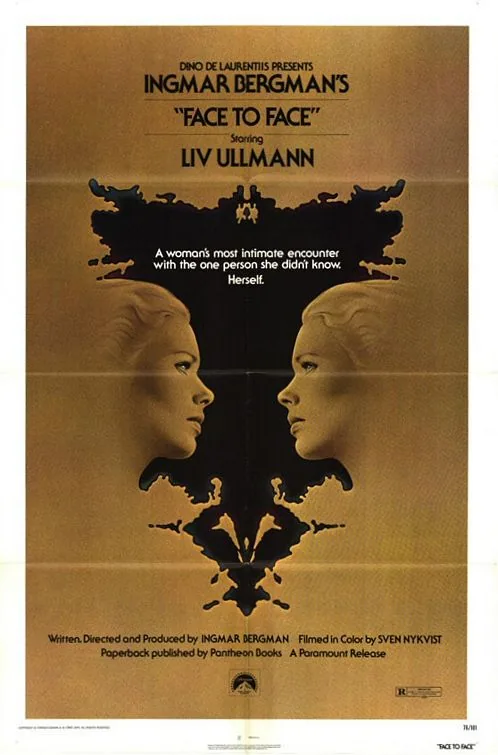
Jenny's temporary work and return to a childhood home bring unresolved memories into a present already under emotional strain.
Why this matches +
Selected for the central appeal: Psychological dramas about mental illness, institutional care and difficult relationships.
Genres: Drama / Psychological drama
Shared film traits
Based on recorded story, mood and style. Your preferences can change the order.
What changes Face to Face follows a psychiatrist confronting a personal mental health crisis and treatment.
Dr. Jenny Isaksson, a psychiatrist, takes a temporary post in a mental hospital while her husband and daughter are away. Staying in her grandparents' old home awakens painful childhood memories, and visions intrude on her daily life. As Jenny's professional duties and strained relationships press closer, the story moves between waking reality, dreams and crisis, examining the instability beneath a life built around understanding other people's minds.
Don repeatedly tries to drink secretly and resume writing, but each failed attempt increases the pressure on the people trying to help him.
Why this matches +
These offer a related experience with a meaningful difference in story, tone, or presentation.
An adjacent discovery: a related idea with a different viewing experience.
Genres: Drama / Flashback
Shared film traits
Based on recorded story, mood and style. Your preferences can change the order.
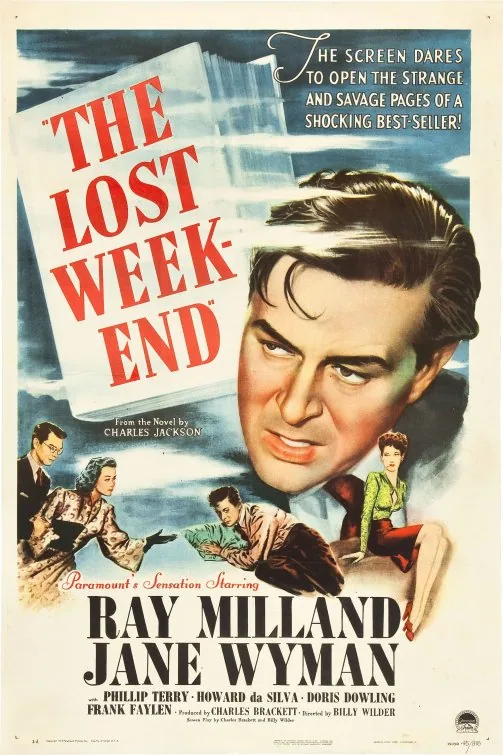
What changes The Lost Weekend depicts a person confronting addiction and the limits of institutional intervention.
Writer Don Birnam tries to leave New York for a drinking trip, but his brother Wick and girlfriend Helen keep attempting to support him. A delayed departure and a lost bottle pull Don back into a cycle of drinking, lies and missed chances to write. As he moves through bars, his apartment and a hospital ward, the film shows how addiction damages his relationships and distorts his sense of time and possibility. Billy Wilder’s adaptation of Charles R. Jackson’s novel treats alcoholism as the central drama rather than a side plot to Don’s artistic ambitions.
Powell’s effort to identify Prot’s past alternates with the patient’s own timetable for departure. The investigation collects suggestive details but never produces a neutral test that settles the alien-versus-trauma interpretation.
Why this matches +
These offer a related experience with a meaningful difference in story, tone, or presentation.
An adjacent discovery: a related idea with a different viewing experience.
Genres: Drama / Science Fiction
Shared film traits
Based on recorded story, mood and style. Your preferences can change the order.
What changes K-PAX follows a psychiatric institution through relationships among patients and their doctor.
A man calling himself Prot arrives in a Manhattan psychiatric hospital and calmly says he is an alien from the planet K-PAX. Psychiatrist Mark Powell treats the claim as a case to investigate, while Prot’s composure and knowledge unsettle the clinic’s routines and attract other patients. Interviews and experiments gather clues without deciding whether the visitor is extraterrestrial or a traumatized human whose identity has fractured. The question becomes harder when other patients appear to improve around him, but their changes do not function as clinical proof of an alien cause. The film’s mystery depends on holding competing readings open; its depiction of psychiatric diagnosis and treatment is a speculative dramatic device, not a guide to real clinical practice.
Henry tries to teach and help people at a school where many adults and students feel overwhelmed.
Why this matches +
These offer a related experience with a meaningful difference in story, tone, or presentation.
An adjacent discovery: a related idea with a different viewing experience.
Genres: Drama
Shared film traits
Based on recorded story, mood and style. Your preferences can change the order.
What changes Detachment examines vulnerable young people and strained professional care within an institution.
Henry Barthes works as a substitute teacher and moves from school to school without becoming attached to colleagues or students. At an underfunded public high school, he encounters students, teachers, and administrators under strain, while his own memories of family trauma surface through narration and flashback. Tony Kaye’s drama links classroom disorder to a wider portrait of people who feel unseen, following Henry as he attempts to support a troubled student and a young woman living on the street. Its episodic form emphasizes emotional distance and brief acts of care.
Mia’s desire for independence and dance is complicated by family routines and an adult whose intentions she misreads.
Why this matches +
These offer a related experience with a meaningful difference in story, tone, or presentation.
An adjacent discovery: a related idea with a different viewing experience.
Genres: Drama
Shared film traits
Based on recorded story, mood and style. Your preferences can change the order.
Coming of age
What changes Fish Tank follows an isolated young woman's turbulent search for identity and connection.
Fifteen-year-old Mia lives with her mother and younger sister in an Essex housing estate, feeling restless and isolated from the people around her. Dance is one of the few things that gives her a sense of direction. When her mother’s new boyfriend enters the household, Mia becomes drawn into a complicated relationship that changes her understanding of trust and adulthood. Andrea Arnold’s British drama follows her through a compressed period of family tension and self-discovery, using close observation and a young protagonist’s perspective to depict a life with few easy choices.
After a suicide attempt, Susanna is admitted to a psychiatric hospital where her relationships with patients, staff and the charismatic Lisa challenge the diagnoses and accounts she has brought with her. Lisa’s rebellion gives Susanna a model of resistance but also exposes how manipulation can travel inside a language of freedom. The film’s adaptation of Susanna Kaysen’s memoir turns institutional life into an ensemble story about care, illness and identity, yet its focus on one young woman’s crisis cannot stand for all psychiatric treatment or diagnoses. Recovery is neither simply obedience nor glamorous rejection of help.
What drives the story
Hospital admission forces Susanna to test her self-description against clinical authority and the competing forms of belonging offered by other patients. Lisa offers a form of belonging that can turn into manipulation, complicating Susanna’s search for autonomy.
The people at its centre
Lisa’s charisma can feel liberating and become coercive, while Susanna’s growing agency depends on learning to distinguish a friend’s invitation from an imposed identity. The ward’s friendships provide care but cannot replace clinical judgment or make all patients alike.
What it feels like
Ensemble scenes, period textures and dark humor soften some institutional edges while keeping the hospital’s authority and patients’ vulnerability in view. Period interiors and ensemble performances keep confinement social as well as medical.
Worth knowing
Compare with memoir adaptations about diagnosis and identity, not as a general account of mental illness or care; neither compliance nor refusal alone defines recovery. Memoir adaptation and dramatic compression limit how broadly the film can represent diagnosis or treatment.