Based on recorded story, mood and style. Your preferences can change the order.
What changes Face to Face: slow, fragmented and intensifying. A Dangerous Method: measured.
A young woman enters psychiatric treatment under Carl Jung and becomes both an intellectual contributor and an intimate disruption in his life. Jung's relationship with Sigmund Freud initially offers a framework for exploring the mind, but professional disagreements and private desire strain their alliance. The film follows the overlap of therapeutic authority, sexual transgression, and competing ambitions during an early period of psychoanalysis.
Based on recorded story, mood and style. Your preferences can change the order.
Memory and identity
What changes Face to Face: slow, fragmented and intensifying. K-PAX: measured.
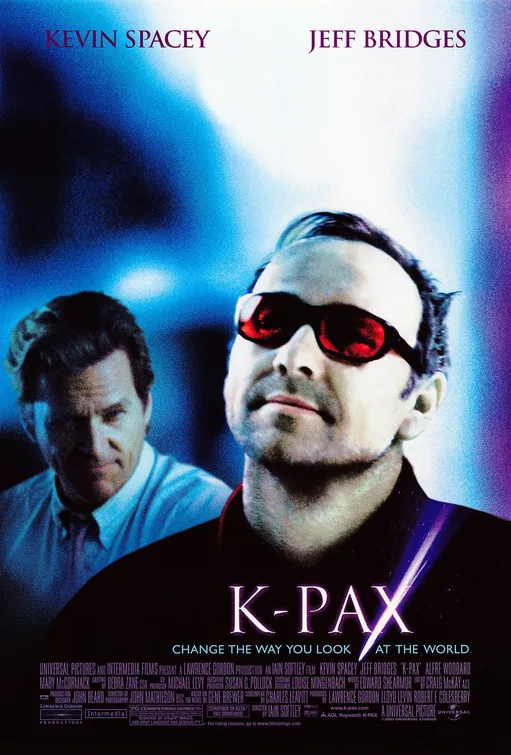
A man calling himself Prot arrives in a Manhattan psychiatric hospital and calmly says he is an alien from the planet K-PAX. Psychiatrist Mark Powell treats the claim as a case to investigate, while Prot’s composure and knowledge unsettle the clinic’s routines and attract other patients. Interviews and experiments gather clues without deciding whether the visitor is extraterrestrial or a traumatized human whose identity has fractured. The question becomes harder when other patients appear to improve around him, but their changes do not function as clinical proof of an alien cause. The film’s mystery depends on holding competing readings open; its depiction of psychiatric diagnosis and treatment is a speculative dramatic device, not a guide to real clinical practice.
Both share themes of family, plus an intimate atmosphere.
Why this matches +
Genres: Drama
Shared film traits
Based on recorded story, mood and style. Your preferences can change the order.
Memory and identity
What changes Face to Face: slow, fragmented and intensifying. Queen at Sea: measured.
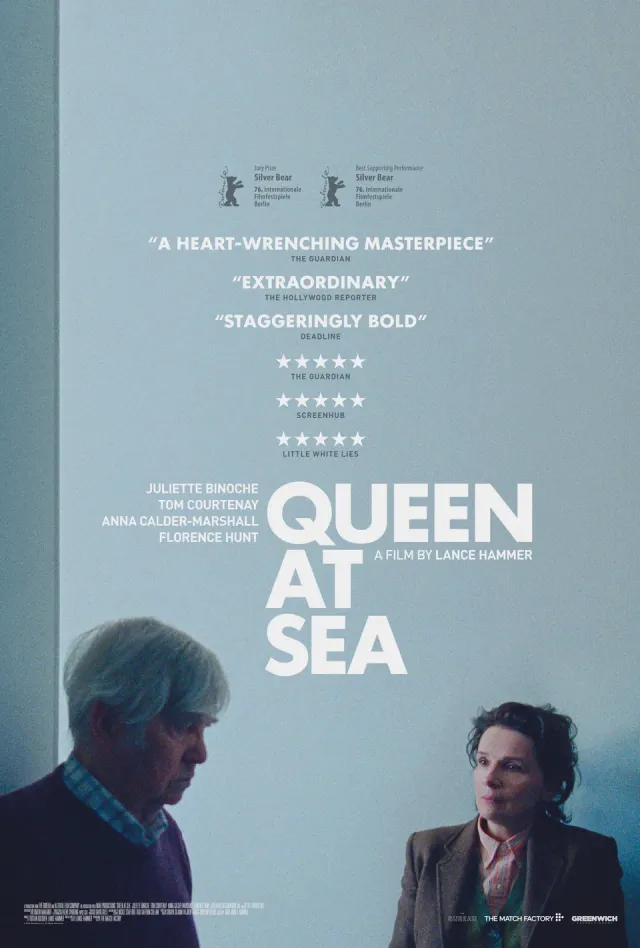
Amanda and her stepfather Martin disagree over how to care for Leslie, whose dementia makes questions of consent and independence increasingly difficult. Each believes they are acting in her interests, but their decisions expose divisions within the family. This drama follows the uncertain boundary between protecting someone and taking control of their life, with no easy agreement about who should decide.
Both share themes of care, plus an intimate atmosphere.
Why this matches +
Genres: Drama / Psychological
Shared film traits
Based on recorded story, mood and style. Your preferences can change the order.
Memory and identity
What changes Face to Face: slow, fragmented and intensifying. The Father: repetition and rupture and gradual destabilization.
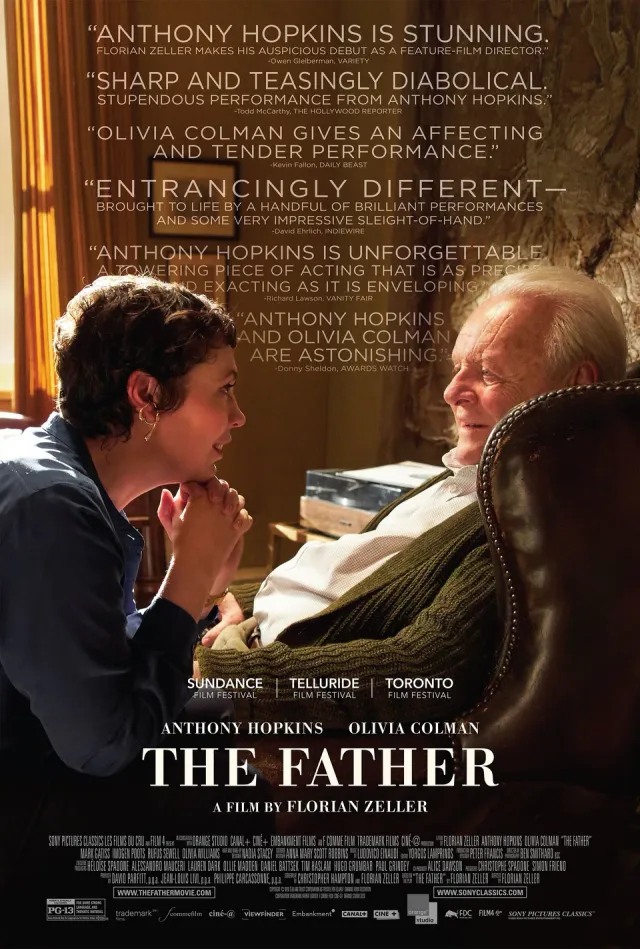
Anthony, an older man living alone in London, insists he does not need help even as his daughter Anne struggles to find a caregiver he will accept. He is certain his watch has been stolen and that Anne is still married, but the people and rooms around him begin to change without warning. A man who claims to be Anne’s husband appears in Anthony’s flat; Anne herself seems to have a different face, and dates and memories refuse to line up. The film stays close to Anthony’s perception, making the audience share his uncertainty rather than explain it from outside. As Anne weighs her responsibilities and her own life, Anthony searches for the familiar home and mother he can no longer locate.
Both share themes of mental health, plus an intimate atmosphere.
Why this matches +
Genres: Drama
Shared film traits
Based on recorded story, mood and style. Your preferences can change the order.
What changes Face to Face: slow, fragmented and intensifying. Girl, Interrupted: measured and episodic.
After a suicide attempt, Susanna is admitted to a psychiatric hospital where her relationships with patients, staff and the charismatic Lisa challenge the diagnoses and accounts she has brought with her. Lisa’s rebellion gives Susanna a model of resistance but also exposes how manipulation can travel inside a language of freedom. The film’s adaptation of Susanna Kaysen’s memoir turns institutional life into an ensemble story about care, illness and identity, yet its focus on one young woman’s crisis cannot stand for all psychiatric treatment or diagnoses. Recovery is neither simply obedience nor glamorous rejection of help.
Both share themes of care and family, plus an intimate atmosphere.
Why this matches +
Genres: Drama / Biography
Shared film traits
Based on recorded story, mood and style. Your preferences can change the order.
Expect raw and intimate, with fragmented and recurrent pacing.
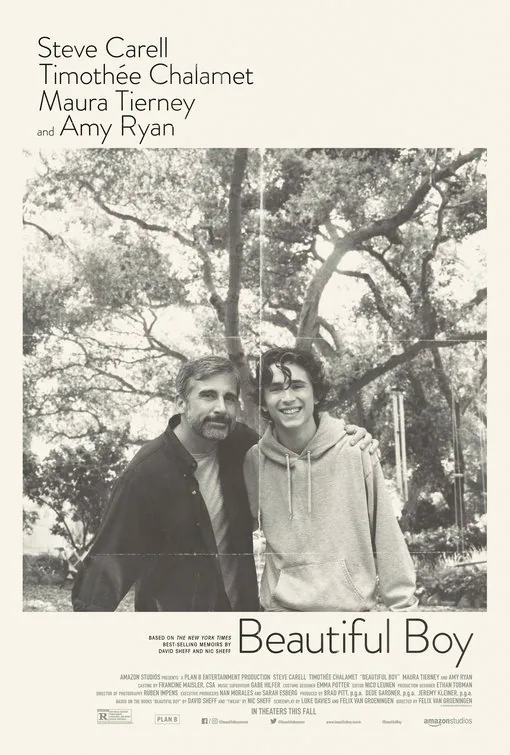
Journalist David Sheff tries to understand and help his teenage son Nic through repeated cycles of drug use, treatment and relapse. The story shifts between the father's perspective and Nic's experience, showing how affection can persist alongside exhaustion and uncertainty. Felix van Groeningen adapts a family memoir into an intimate drama about addiction that avoids a simple recovery arc, focusing instead on care, fear and the limits of control.
Based on recorded story, mood and style. Your preferences can change the order.
Memory and identity
What changes Face to Face: slow, fragmented and intensifying. A Single Man: measured and interior.
In 1960s Los Angeles, a British professor is grieving the sudden death of his partner and tries to move through one day while deciding whether he can continue living alone. Encounters with a friend, a student and strangers alter the emotional texture of that day without undoing his loss. The film turns clothing, color and routine into close expressions of grief, loneliness and the fragile possibility of renewed attention.
Both share themes of family, plus an intimate atmosphere.
Why this matches +
Genres: Drama
Shared film traits
Based on recorded story, mood and style. Your preferences can change the order.
Mental health · Family and care
What changes Face to Face: slow, fragmented and intensifying. Interiors: measured, chamber-like and reflective.
Arthur, a New York attorney, tells his wife Eve that he wants to separate and begin a different life. Their three adult daughters respond in different ways: Renata, a poet, feels caught between sympathy for her mother and concern for her father; Joey struggles with her own direction; and Flyn is often away working as an actress. When Arthur returns from a trip with Pearl, a warm and outgoing woman unlike Eve, the family must confront grief, resentment, and the emotional distance that has long shaped their home.
Both share a character study, plus themes of memory and family.
Why this matches +
Genres: Drama / Flashback
Shared film traits
Based on recorded story, mood and style. Your preferences can change the order.
What changes Face to Face: slow, fragmented and intensifying. Wild Strawberries: meditative.
An elderly physician travels by car to receive an academic honour, accompanied by a daughter-in-law whose strained marriage exposes the emotional habits he would prefer not to examine. Encounters with hitchhikers, family and places from his youth interrupt the outward journey with memories and unsettling dreams. Public recognition becomes less significant than the possibility of acknowledging how distance and self-protection have passed through generations of his household.
Dr. Jenny Isaksson, a psychiatrist, takes a temporary post in a mental hospital while her husband and daughter are away. Staying in her grandparents' old home awakens painful childhood memories, and visions intrude on her daily life. As Jenny's professional duties and strained relationships press closer, the story moves between waking reality, dreams and crisis, examining the instability beneath a life built around understanding other people's minds.
What drives the story
Jenny's temporary work and return to a childhood home bring unresolved memories into a present already under emotional strain.
The people at its centre
The psychiatrist's role as a professional observer gives way to vulnerability, while patients and family members reflect different parts of her crisis.
What it feels like
Dream images and waking scenes blur together, making the film a close and disorienting study of one person's inner life.
Worth knowing
This is not a procedural about hospital cases; it uses the psychiatric setting to examine memory, fear and self-understanding.
Mental healthMemoryVulnerability
Mood
Psychological · Surreal · Anguished · Intimate
Pacing
Slow · Fragmented · Intensifying
Visual style
Stark · Intimate · Expressionist · Dreamlike
Storytelling
Psychiatric drama · Dream narrative · Personal crisis · Character study