The loss of language makes everyday work and family conversation newly difficult, so Alice's tools for holding onto agency become central to the story.
Why this matches +
Selected for the central appeal: Intimate dramas about cognitive decline, disorienting perception and family caregiving.
Genres: Drama
Shared film traits
Based on recorded story, mood and style. Your preferences can change the order.
Memory and identity
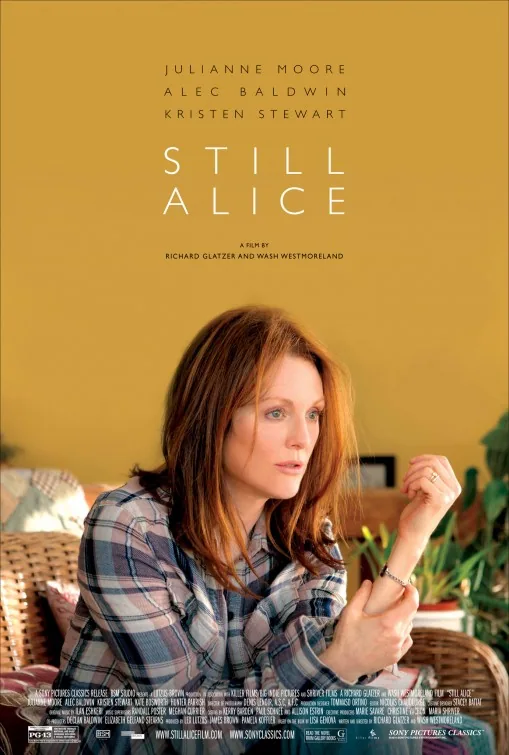
What changes Still Alice follows a person experiencing cognitive decline and the strain it places on family relationships.
Alice Howland is a successful linguistics professor whose occasional word loss and disorientation lead to a diagnosis of early-onset familial Alzheimer's disease. As she builds reminders and routines to preserve independence, her husband John and their adult children respond in different ways. Her daughter Anna learns she carries the inherited risk, while aspiring actress Lydia declines testing and remains closely involved with her mother. Alice's career, memory and ability to communicate change over time, shifting the family's idea of care and of who Alice is.
Progressive illness makes an intimate promise of care increasingly difficult to sustain.
Why this matches +
Selected for the central appeal: Intimate dramas about cognitive decline, disorienting perception and family caregiving.
Genres: Drama / Romance
Shared film traits
Based on recorded story, mood and style. Your preferences can change the order.
What changes Amour depicts an older couple confronting increasing dependence and the practical demands of care.
An elderly married couple's settled Parisian life changes after the wife suffers a stroke and becomes increasingly dependent on care. Her husband's promise to look after her at home brings routines of intimacy into contact with exhaustion, humiliation and fear. Visits from their daughter expose differences between observing decline from outside and living within its demands each day.
A deathbed vigil exposes the difference between family obligation and sustained bodily care, with memories and an uncanny episode testing what the survivors can bear.
Why this matches +
These offer a related experience with a meaningful difference in story, tone, or presentation.
An adjacent discovery: a related idea with a different viewing experience.
Genres: Drama
Shared film traits
Based on recorded story, mood and style. Your preferences can change the order.
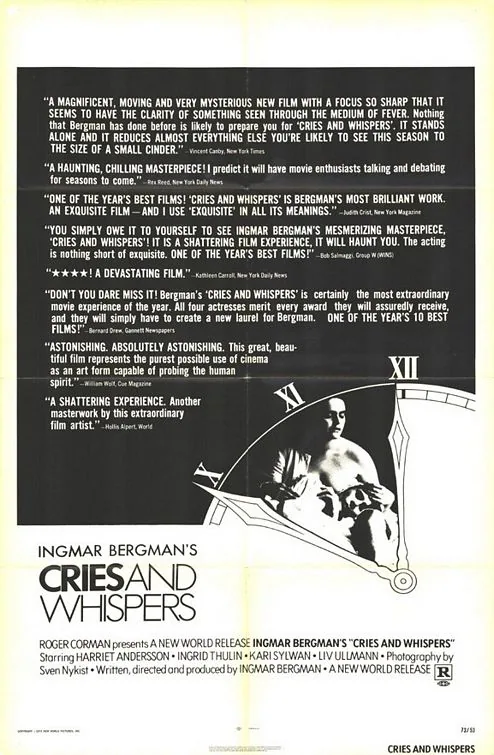
What changes Cries and Whispers examines illness and family caregiving within a close, emotionally fraught household.
Agnes is dying in a red-walled family house while her sisters Maria and Karin return, each carrying a different form of distance from her suffering. Anna, the maid, offers the physical comfort her relatives struggle to give, but her care does not grant her equal authority in the household. Memory and an uncanny return briefly reopen the possibility of tenderness before the sisters resume their separate lives. Bergman's close framing and saturated color make bodily pain intimate without resolving it into a reassuring story of reconciliation.
Nicholas moves into his father’s household after withdrawing from school, forcing separated adults to respond to a serious mental health crisis.
Why this matches +
These offer a related experience with a meaningful difference in story, tone, or presentation.
An adjacent discovery: a related idea with a different viewing experience.
Genres: Drama
Shared film traits
Based on recorded story, mood and style. Your preferences can change the order.
Memory and identity
What changes The Son follows a family struggling to respond to a loved one's distress and changing care needs.
Peter is building a new family with his second wife when his former partner asks him to take in their teenage son Nicholas, who has stopped attending school and is struggling with depression. Peter wants to offer the care he believes he lacked from his own father, but his attempts to help are complicated by old resentments and by the limits of his understanding. Florian Zeller’s family drama follows the strain of trying to support a young person in crisis while maintaining the appearance of ordinary domestic life.
A father's return from disappearance leads to a journey whose emotional destination is an account of past harm.
Why this matches +
These offer a related experience with a meaningful difference in story, tone, or presentation.
An adjacent discovery: a related idea with a different viewing experience.
Genres: Drama
Shared film traits
Based on recorded story, mood and style. Your preferences can change the order.
What changes Paris, Texas follows a disoriented man whose family tries to understand his absence and reconnect.
A silent man found wandering in the desert is reunited with a brother who has been raising his young son. Relearning conversation and parenthood brings fragments of a damaged family history into view. He and the boy eventually travel in search of the child's mother, but recovering contact requires confronting why the family separated and what a reunion can realistically repair.
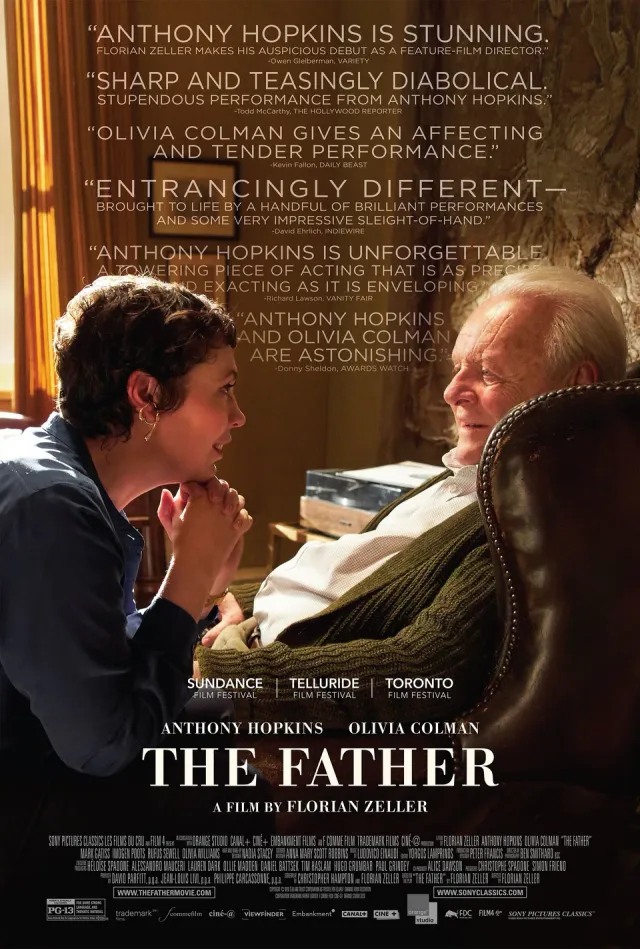
Anthony, an older man living alone in London, insists he does not need help even as his daughter Anne struggles to find a caregiver he will accept. He is certain his watch has been stolen and that Anne is still married, but the people and rooms around him begin to change without warning. A man who claims to be Anne’s husband appears in Anthony’s flat; Anne herself seems to have a different face, and dates and memories refuse to line up. The film stays close to Anthony’s perception, making the audience share his uncertainty rather than explain it from outside. As Anne weighs her responsibilities and her own life, Anthony searches for the familiar home and mother he can no longer locate.
What drives the story
Shifting actors, rooms and timelines are not a puzzle for Anthony to solve; they place viewers inside the disorientation that shapes his choices.
The people at its centre
Anne cares for her father while confronting the limits of what she can provide. Anthony’s insistence on independence is real to him, even as he becomes more dependent.
What it feels like
A chamber drama whose changing sets and performances turn memory loss into form. Small domestic details become unstable, and the emotional ending reframes earlier scenes.
Worth knowing
A fit for intimate dramas about dementia, caregiving and unreliable perception; its experience is emotionally intense and should not be treated as a universal account of dementia.