Both share road journey, plus themes of regret and family.
Why this matches +
Genres: Drama / Flashback
Shared film traits
Based on recorded story, mood and style. Your preferences can change the order.
What changes Paris, Texas: slow burn. Wild Strawberries: meditative.
An elderly physician travels by car to receive an academic honour, accompanied by a daughter-in-law whose strained marriage exposes the emotional habits he would prefer not to examine. Encounters with hitchhikers, family and places from his youth interrupt the outward journey with memories and unsettling dreams. Public recognition becomes less significant than the possibility of acknowledging how distance and self-protection have passed through generations of his household.
Both share themes of family, plus a melancholic atmosphere.
Why this matches +
Genres: Drama
Shared film traits
Based on recorded story, mood and style. Your preferences can change the order.
What changes Paris, Texas: slow burn. Pather Panchali: measured.
A boy grows up in a poor rural Bengali household with an older sister whose curiosity guides his encounters with the wider world. Their mother's daily effort to keep the family together contrasts with their father's hopes for work and advancement. Small discoveries, family tensions and material insecurity unfold through changing seasons, allowing wonder and loss to emerge from the same ordinary surroundings.
Based on recorded story, mood and style. Your preferences can change the order.
What changes Paris, Texas: slow burn. Lion: two-part and measured.
A small boy becomes separated from his brother and travels so far by train that the words he knows cannot guide him home. After danger and institutional care, adoption gives him a secure life in Australia, but remembered sensations later reopen the absence of the family who never learned where he went. Digital maps provide a means of searching without making memory precise. The biographical drama holds two forms of belonging together, making reunion an expansion of attachment rather than proof that one family was only a substitute.
Based on recorded story, mood and style. Your preferences can change the order.
What changes Paris, Texas: slow burn. A Single Man: measured and interior.
In 1960s Los Angeles, a British professor is grieving the sudden death of his partner and tries to move through one day while deciding whether he can continue living alone. Encounters with a friend, a student and strangers alter the emotional texture of that day without undoing his loss. The film turns clothing, color and routine into close expressions of grief, loneliness and the fragile possibility of renewed attention.
Based on recorded story, mood and style. Your preferences can change the order.
What changes Paris, Texas: slow burn. How Green Was My Valley: episodic and measured.
A man remembers childhood in a Welsh mining family before changes in work and landscape dissolved the world he knew. Wage conflict divides his father from older brothers, while schooling, romance and religious gossip expose other hierarchies inside a community he still loves. Injuries and departures accumulate beneath the warmth of song and family ritual. The drama makes recollection both a shelter and an admission of loss, presenting industrial change through the child who cannot yet understand every pressure shaping the adults around him.
Both share themes of family, plus a melancholic and intimate atmosphere.
Why this matches +
Genres: Drama
Shared film traits
Based on recorded story, mood and style. Your preferences can change the order.
What changes Paris, Texas: slow burn. Aftersun: meditative.
An adult woman revisits a childhood seaside holiday with her young father through video fragments and memories she cannot fully complete. The trip's small pleasures coexist with hints of financial strain and emotional trouble that the child could notice without understanding. Revisiting ordinary gestures becomes an attempt to recognise the parent's experience without pretending that later knowledge can restore a complete account of the person he was.
Both share themes of family, plus an intimate atmosphere.
Why this matches +
Genres: Drama / Coming-of-age
Shared film traits
Based on recorded story, mood and style. Your preferences can change the order.
What changes Paris, Texas: slow burn. Boyhood: measured.
A Texas boy grows from early childhood towards college while his family moves, changes partners and adapts to financial and emotional pressures. Ordinary conversations, sibling conflicts and shifting friendships accumulate without a single governing crisis. As the years pass, the adults' unfinished lives remain visible alongside his developing sense of identity, making growing up a process of observation as much as decisive action.
Based on recorded story, mood and style. Your preferences can change the order.
What changes Paris, Texas: slow burn. Room: measured.
A woman held captive for years raises her young son within the small room that constitutes his entire understanding of the world. As conditions become more precarious, she prepares him for an escape requiring him to accept realities beyond anything he has seen. Their release opens a second difficult story, in which unfamiliar freedom, relatives and public attention place new pressures on their close but traumatised relationship.
Both share themes of family, plus a melancholic and intimate atmosphere.
Why this matches +
Genres: Drama
Shared film traits
Based on recorded story, mood and style. Your preferences can change the order.
What changes Paris, Texas: slow burn. Ordinary People: measured and steady.
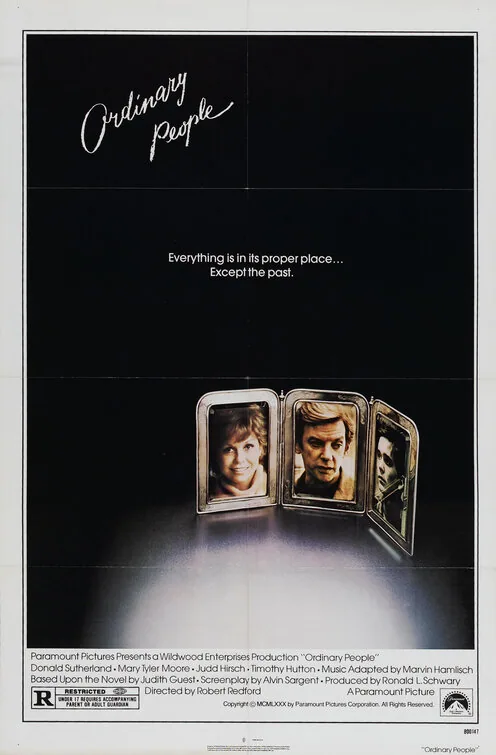
After the accidental drowning death of their eldest son Buck, the affluent Jarrett family tries to resume ordinary routines. Younger son Conrad returns home after a suicide attempt and psychiatric hospitalization, struggling with guilt and the belief that he should have died instead. Therapy with Dr. Berger helps him name grief and anger, while his father Calvin tries to reconnect with both sons’ absence. His mother Beth maintains control through social appearances and finds Conrad’s vulnerability intolerable. Their conflict forces Calvin to recognize that family recovery may not mean preserving the household intact.
A silent man found wandering in the desert is reunited with a brother who has been raising his young son. Relearning conversation and parenthood brings fragments of a damaged family history into view. He and the boy eventually travel in search of the child's mother, but recovering contact requires confronting why the family separated and what a reunion can realistically repair.
What drives the story
A father's return from disappearance leads to a journey whose emotional destination is an account of past harm.
The people at its centre
A withdrawn parent rebuilds trust with a child while relatives and an absent partner carry the consequences of his history.
What it feels like
Open landscapes and patient observation give way to prolonged, emotionally exposed conversation.
Worth knowing
Its reunion is morally complicated and restrained, rather than a comforting restoration of the original family.