An unexpected guardianship forces a grieving man to revisit the place and history he has been unable to re-enter.
Why this matches +
Selected for the central appeal: Intimate family dramas about bereavement, guilt and the difficult work of recovery.
Genres: Drama
Shared film traits
Based on recorded story, mood and style. Your preferences can change the order.
Memory and identity
What changes Manchester by the Sea follows a man whose family loss and guilt make reconnection painfully difficult.
After his brother Joe dies, Lee Chandler returns to the Massachusetts town he left and learns that he has been named guardian of Joe's teenage son, Patrick. The practical arrangements bring him face to face with an earlier catastrophe: a house fire accidentally killed Lee's three children, and he could not remain in the community afterward. Patrick wants to stay with friends and his band, while Lee cannot imagine rebuilding a life there. The two negotiate care without a consoling cure, settling on a future that preserves a relationship Lee can bear.
Becca and Howie’s differing coping strategies make grief a shared experience without a shared timetable.
Why this matches +
Selected for the central appeal: Intimate family dramas about bereavement, guilt and the difficult work of recovery.
Genres: Drama
Shared film traits
Based on recorded story, mood and style. Your preferences can change the order.
What changes Rabbit Hole follows parents whose grief after a child's death strains their relationship and routines.
Becca and Howie are grieving the death of their young son, but their responses to the loss pull them in different directions. Becca wants to clear reminders and avoid another pregnancy, while Howie preserves familiar routines and looks for ways to reconnect with his child. John Cameron Mitchell adapts David Lindsay-Abaire’s play as an intimate domestic drama about grief, marriage and the uncertain paths people take toward living with an absence.
The day’s ordinary encounters shift the professor’s attention without neatly resolving the loss he carries.
Why this matches +
These offer a related experience with a meaningful difference in story, tone, or presentation.
An adjacent discovery: a related idea with a different viewing experience.
Genres: Drama / LGBTQ-related
Shared film traits
Based on recorded story, mood and style. Your preferences can change the order.
Memory and identity
What changes A Single Man follows a grieving person whose controlled outward life conceals profound distress.
In 1960s Los Angeles, a British professor is grieving the sudden death of his partner and tries to move through one day while deciding whether he can continue living alone. Encounters with a friend, a student and strangers alter the emotional texture of that day without undoing his loss. The film turns clothing, color and routine into close expressions of grief, loneliness and the fragile possibility of renewed attention.
A child’s death alters Agnes and William’s marriage, while their separate responses to grief lead toward an imagined relation between family loss and theatrical creation. The film imagines grief across a marriage without access to the historical couple’s private interior lives.
Why this matches +
These offer a related experience with a meaningful difference in story, tone, or presentation.
An adjacent discovery: a related idea with a different viewing experience.
Genres: Drama / History
Shared film traits
Based on recorded story, mood and style. Your preferences can change the order.
What changes Hamnet follows a family struggling to live with the death of a child.
Chloé Zhao’s adaptation imagines the marriage of Agnes and William Shakespeare around the death of their young son Hamnet and the grief that follows. Agnes’s perspective keeps domestic care, intuitive knowledge and loss in the foreground, while the later theatre sequence proposes a powerful artistic response to bereavement. The connection between this private tragedy and Hamlet is the film’s imaginative premise, not a documented explanation of Shakespeare’s writing. Its intimate attention to family life builds toward an emotionally expansive performance, asking how art can give grief form without claiming to recover the historical couple’s private thoughts.
The letter lets Julieta revisit the story without assuming her daughter will read it.
Why this matches +
These offer a related experience with a meaningful difference in story, tone, or presentation.
An adjacent discovery: a related idea with a different viewing experience.
Genres: Drama
Shared film traits
Based on recorded story, mood and style. Your preferences can change the order.
Memory and identity
What changes Julieta examines a parent's guilt, emotional distance and efforts to reconnect after family loss.
Julieta’s plans to leave Madrid change when she encounters a friend of her estranged daughter Antía. She returns to the apartment she once shared with Antía and begins writing a letter that recalls their relationship from childhood onward. The drama unfolds as a mother’s account of grief, guilt, and the limits of explanation, tracing how one family’s silences can persist long after a person has disappeared from daily life.
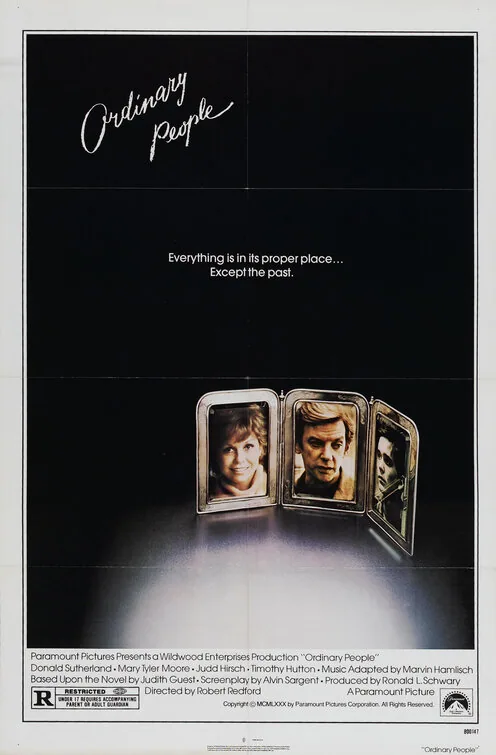
After the accidental drowning death of their eldest son Buck, the affluent Jarrett family tries to resume ordinary routines. Younger son Conrad returns home after a suicide attempt and psychiatric hospitalization, struggling with guilt and the belief that he should have died instead. Therapy with Dr. Berger helps him name grief and anger, while his father Calvin tries to reconnect with both sons’ absence. His mother Beth maintains control through social appearances and finds Conrad’s vulnerability intolerable. Their conflict forces Calvin to recognize that family recovery may not mean preserving the household intact.
What drives the story
The film’s central action is Conrad’s attempt to live with grief, while the family’s outward order repeatedly blocks honest mourning.
The people at its centre
Calvin’s care is constrained by his fear of conflict; Beth’s composure protects her from pain but isolates Conrad, whose therapy gives him language and agency.
What it feels like
Redford uses restrained domestic scenes, quiet suburbia and pauses between conversations to make emotional avoidance feel as consequential as argument.
Worth knowing
It is a family recovery drama about grief and mental health, not a mystery explaining the accident or a simple indictment of one parent.