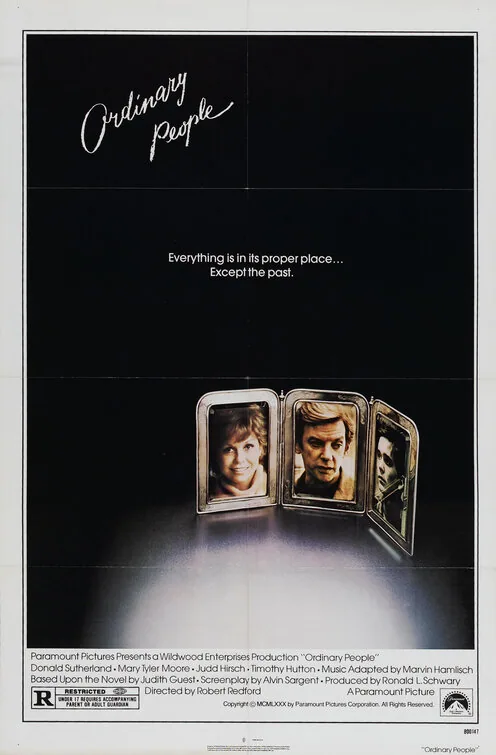
The film’s central action is Conrad’s attempt to live with grief, while the family’s outward order repeatedly blocks honest mourning.
Why this matches +
Selected for the central appeal: Intimate dramas about bereavement, guilt and caring for family without easy recovery.
Genres: Drama
Shared film traits
Based on recorded story, mood and style. Your preferences can change the order.
Memory and identity
What changes Ordinary People follows a family struggling with guilt and emotional distance after a child's death.
After the accidental drowning death of their eldest son Buck, the affluent Jarrett family tries to resume ordinary routines. Younger son Conrad returns home after a suicide attempt and psychiatric hospitalization, struggling with guilt and the belief that he should have died instead. Therapy with Dr. Berger helps him name grief and anger, while his father Calvin tries to reconnect with both sons’ absence. His mother Beth maintains control through social appearances and finds Conrad’s vulnerability intolerable. Their conflict forces Calvin to recognize that family recovery may not mean preserving the household intact.
Becca and Howie’s differing coping strategies make grief a shared experience without a shared timetable.
Why this matches +
Selected for the central appeal: Intimate dramas about bereavement, guilt and caring for family without easy recovery.
Genres: Drama
Shared film traits
Based on recorded story, mood and style. Your preferences can change the order.
What changes Rabbit Hole portrays parents trying to live with grief after losing a child.
Becca and Howie are grieving the death of their young son, but their responses to the loss pull them in different directions. Becca wants to clear reminders and avoid another pregnancy, while Howie preserves familiar routines and looks for ways to reconnect with his child. John Cameron Mitchell adapts David Lindsay-Abaire’s play as an intimate domestic drama about grief, marriage and the uncertain paths people take toward living with an absence.
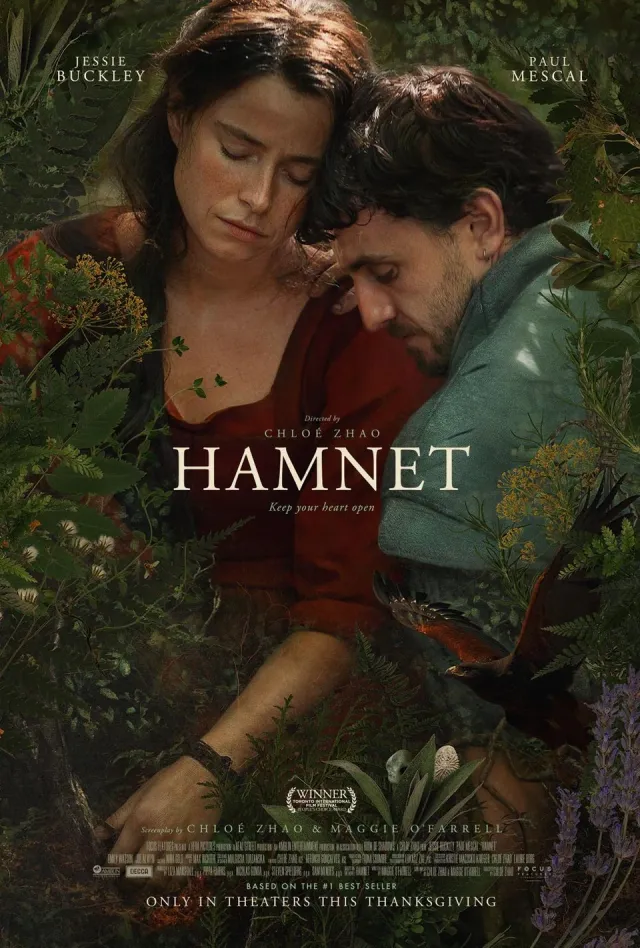
A child’s death alters Agnes and William’s marriage, while their separate responses to grief lead toward an imagined relation between family loss and theatrical creation. The film imagines grief across a marriage without access to the historical couple’s private interior lives.
Why this matches +
These offer a related experience with a meaningful difference in story, tone, or presentation.
An adjacent discovery: a related idea with a different viewing experience.
Genres: Drama / History
Shared film traits
Based on recorded story, mood and style. Your preferences can change the order.
What changes Hamnet follows a family whose relationships are transformed by a child's death.
Chloé Zhao’s adaptation imagines the marriage of Agnes and William Shakespeare around the death of their young son Hamnet and the grief that follows. Agnes’s perspective keeps domestic care, intuitive knowledge and loss in the foreground, while the later theatre sequence proposes a powerful artistic response to bereavement. The connection between this private tragedy and Hamlet is the film’s imaginative premise, not a documented explanation of Shakespeare’s writing. Its intimate attention to family life builds toward an emotionally expansive performance, asking how art can give grief form without claiming to recover the historical couple’s private thoughts.
A father's return from disappearance leads to a journey whose emotional destination is an account of past harm.
Why this matches +
These offer a related experience with a meaningful difference in story, tone, or presentation.
An adjacent discovery: a related idea with a different viewing experience.
Genres: Drama
Shared film traits
Based on recorded story, mood and style. Your preferences can change the order.
What changes Paris, Texas follows an emotionally damaged man attempting to reconnect with a child after a long absence.
A silent man found wandering in the desert is reunited with a brother who has been raising his young son. Relearning conversation and parenthood brings fragments of a damaged family history into view. He and the boy eventually travel in search of the child's mother, but recovering contact requires confronting why the family separated and what a reunion can realistically repair.
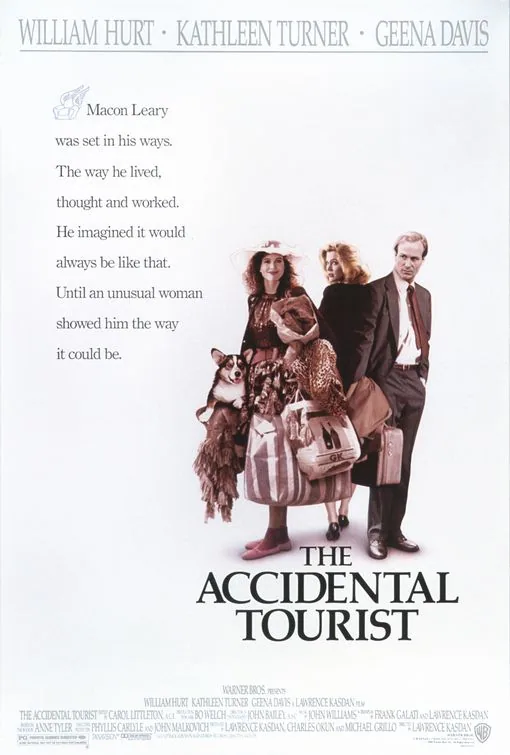
Macon's carefully organized life becomes difficult to maintain after bereavement alters his marriage and sense of purpose.
Why this matches +
These offer a related experience with a meaningful difference in story, tone, or presentation.
An adjacent discovery: a related idea with a different viewing experience.
Genres: Drama / Romance
Shared film traits
Based on recorded story, mood and style. Your preferences can change the order.
What changes The Accidental Tourist follows a grieving man whose routines and relationships change after family tragedy.
Travel writer Macon Leary returns to ordinary life after a family tragedy, finding that grief has unsettled his marriage and made daily routines feel remote. When his wife leaves and an energetic dog trainer named Muriel enters his life, Macon faces competing forms of comfort and disruption, while visits with his siblings reveal different ways a family can preserve old wounds or begin to live around them.
After his brother Joe dies, Lee Chandler returns to the Massachusetts town he left and learns that he has been named guardian of Joe's teenage son, Patrick. The practical arrangements bring him face to face with an earlier catastrophe: a house fire accidentally killed Lee's three children, and he could not remain in the community afterward. Patrick wants to stay with friends and his band, while Lee cannot imagine rebuilding a life there. The two negotiate care without a consoling cure, settling on a future that preserves a relationship Lee can bear.
What drives the story
An unexpected guardianship forces a grieving man to revisit the place and history he has been unable to re-enter.
The people at its centre
Lee's love for Patrick coexists with a trauma that limits what he can offer; Patrick's adolescent routines and anger give the nephew agency beyond being a reason for recovery.
What it feels like
Restrained performances, abrupt memory fragments and ordinary winter routines let grief surface without turning it into a mystery to solve.
Worth knowing
Lee's inability to recover is treated as a lasting limit, not a lack of love or a lesson that responsibility automatically heals trauma.