A father's return from disappearance leads to a journey whose emotional destination is an account of past harm.
Why this matches +
Selected for the central appeal: Family dramas about separation, fragmented memory and searching for a lost home.
Genres: Drama
Shared film traits
Based on recorded story, mood and style. Your preferences can change the order.
What changes Paris, Texas follows a separated family attempting to reconnect after years of absence.
A silent man found wandering in the desert is reunited with a brother who has been raising his young son. Relearning conversation and parenthood brings fragments of a damaged family history into view. He and the boy eventually travel in search of the child's mother, but recovering contact requires confronting why the family separated and what a reunion can realistically repair.
An object becomes the basis for a citywide search that promises continued contact with a dead parent, while repeated encounters complicate the belief that one solved clue can explain the loss. A found key becomes a citywide itinerary that promises connection while delaying recognition of surviving care.
Why this matches +
These offer a related experience with a meaningful difference in story, tone, or presentation.
An adjacent discovery: a related idea with a different viewing experience.
Genres: Drama
Shared film traits
Based on recorded story, mood and style. Your preferences can change the order.
Investigation
What changes Extremely Loud and Incredibly Close follows a child using clues to pursue a connection to a lost parent.
After his father dies in the September 11 attacks, a boy discovers a key among his belongings and interprets it as the beginning of another shared puzzle. Searching New York for the person whose name appears on its envelope gives grief a practical itinerary and introduces strangers whose losses exceed his initial question. The search also keeps him apart from his mother, making the possibility of an answer compete with recognizing care that does not arrive in his father's familiar form. Oskar’s search gives grief a task, but neither the key nor its answer can restore his father.
Daily needs and modest hopes shape a family's life while children discover possibilities beyond its immediate limits.
Why this matches +
These offer a related experience with a meaningful difference in story, tone, or presentation.
An adjacent discovery: a related idea with a different viewing experience.
Genres: Drama
Shared film traits
Based on recorded story, mood and style. Your preferences can change the order.
What changes Pather Panchali observes childhood, family hardship and separation through intimate details.
A boy grows up in a poor rural Bengali household with an older sister whose curiosity guides his encounters with the wider world. Their mother's daily effort to keep the family together contrasts with their father's hopes for work and advancement. Small discoveries, family tensions and material insecurity unfold through changing seasons, allowing wonder and loss to emerge from the same ordinary surroundings.
Repeated transitions in home, school and relationships accumulate into an emerging adult perspective.
Why this matches +
These offer a related experience with a meaningful difference in story, tone, or presentation.
An adjacent discovery: a related idea with a different viewing experience.
Genres: Drama / Coming-of-age
Shared film traits
Based on recorded story, mood and style. Your preferences can change the order.
What changes Boyhood follows a child's changing sense of family and belonging across years of moves and separation.
A Texas boy grows from early childhood towards college while his family moves, changes partners and adapts to financial and emotional pressures. Ordinary conversations, sibling conflicts and shifting friendships accumulate without a single governing crisis. As the years pass, the adults' unfinished lives remain visible alongside his developing sense of identity, making growing up a process of observation as much as decisive action.
The return to Afghanistan makes a past moral failure actionable, giving the protagonist a difficult chance to repair harm.
Why this matches +
These offer a related experience with a meaningful difference in story, tone, or presentation.
An adjacent discovery: a related idea with a different viewing experience.
Genres: Drama
Shared film traits
Based on recorded story, mood and style. Your preferences can change the order.
Memory and identity
What changes The Kite Runner follows someone returning toward a childhood home and relationships disrupted by separation.
A man living in the United States returns to Afghanistan after learning that a childhood friend’s son is in danger. The journey forces him to revisit a betrayal and the social upheaval that shaped their lives. The adaptation follows memory across decades and countries, linking personal guilt to family history, displacement and the consequences of choices made in childhood.
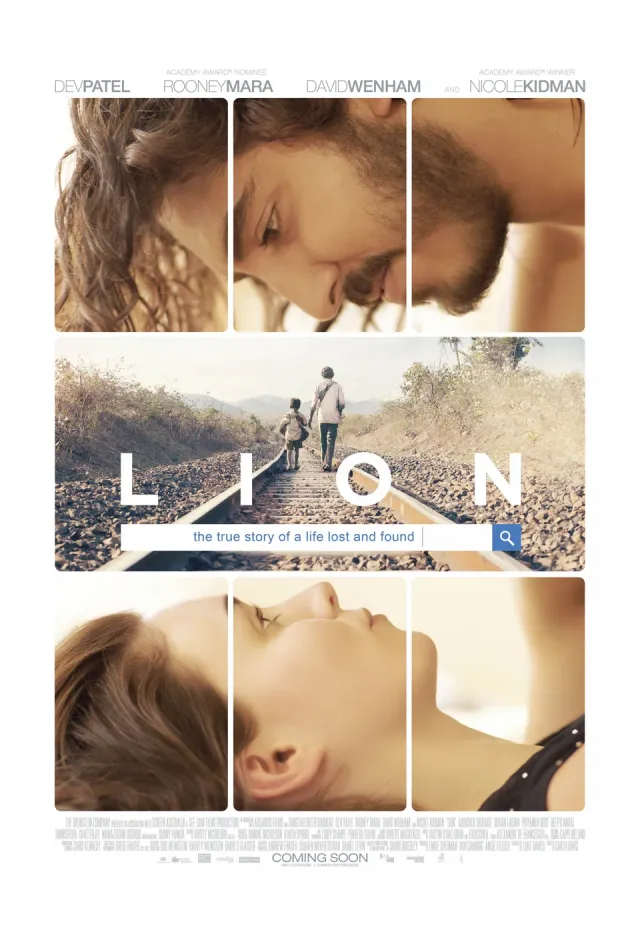
A small boy becomes separated from his brother and travels so far by train that the words he knows cannot guide him home. After danger and institutional care, adoption gives him a secure life in Australia, but remembered sensations later reopen the absence of the family who never learned where he went. Digital maps provide a means of searching without making memory precise. The biographical drama holds two forms of belonging together, making reunion an expansion of attachment rather than proof that one family was only a substitute.
What drives the story
An accidental childhood displacement is followed years later by a map-based search whose evidence comes from incomplete spatial and sensory memory.
The people at its centre
Saroo's attachment to his adoptive parents complicates disclosure of the search, while his mother's choices and his brother's difficulties resist a simple hierarchy of successful and failed belonging.
What it feels like
A long child-centered opening shifts toward an adult's inward, repetitive investigation, with emotional force accumulating through distance and uncertainty rather than continuous pursuit.
Worth knowing
Display the verified 2016 film year while preserving its established internal identity; the adapted life is not evidence that every separated or adopted person owes the same kind of reunion.
BelongingMemorySeparation
Mood
Heartfelt · Reflective · Anxious
Pacing
Two-part · Measured
Visual style
Child-centered urban survival · Repetitive digital investigation
Storytelling
Accidental child displacement · International adoption · Adult map search