Based on recorded story, mood and style. Your preferences can change the order.
Memory and identity
Expect unsettling and intimate, with measured and repetitive pacing.
Stage actress Elisabet Vogler stops speaking during a performance and is sent to recover at a seaside cottage with nurse Alma. As Alma talks through memories and private anxieties, Elisabet listens without offering the reassurance Alma expects. Their closeness becomes increasingly uneasy: Alma feels exposed, the actress appears to observe her, and scenes begin to unsettle the boundary between the women’s identities. The film returns to Elisabet’s motherhood and her rejection of her son, but it does not settle whether the women merge, mirror one another or remain in a painful struggle for control. Its broken framing keeps the act of watching visible.
Both share themes of family, plus a somber and intimate atmosphere.
Why this matches +
Genres: Drama / History
Shared film traits
Based on recorded story, mood and style. Your preferences can change the order.
Expect intimate and somber, with measured pacing.
Chloé Zhao’s adaptation imagines the marriage of Agnes and William Shakespeare around the death of their young son Hamnet and the grief that follows. Agnes’s perspective keeps domestic care, intuitive knowledge and loss in the foreground, while the later theatre sequence proposes a powerful artistic response to bereavement. The connection between this private tragedy and Hamlet is the film’s imaginative premise, not a documented explanation of Shakespeare’s writing. Its intimate attention to family life builds toward an emotionally expansive performance, asking how art can give grief form without claiming to recover the historical couple’s private thoughts.
Both share themes of family, plus an intimate atmosphere.
Why this matches +
Genres: Drama
Shared film traits
Based on recorded story, mood and style. Your preferences can change the order.
What changes Interiors: measured, chamber-like and reflective. Cries and Whispers: slow burn.
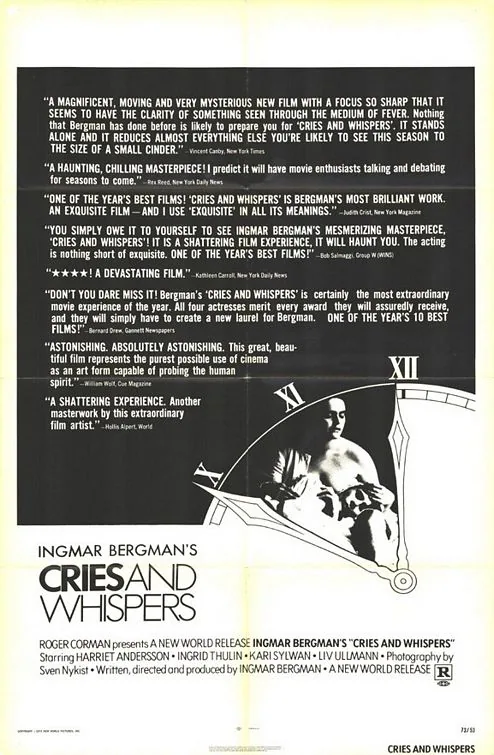
Agnes is dying in a red-walled family house while her sisters Maria and Karin return, each carrying a different form of distance from her suffering. Anna, the maid, offers the physical comfort her relatives struggle to give, but her care does not grant her equal authority in the household. Memory and an uncanny return briefly reopen the possibility of tenderness before the sisters resume their separate lives. Bergman's close framing and saturated color make bodily pain intimate without resolving it into a reassuring story of reconciliation.
Both share separation, plus themes of change and family.
Why this matches +
Genres: Drama
Shared film traits
Based on recorded story, mood and style. Your preferences can change the order.
Memory and identity
What changes Interiors: measured, chamber-like and reflective. Shoot the Moon: patient family drama with emotional confrontations.
Writer George and his wife Faith are separating in Marin County, while their four daughters try to understand the changing household. George's affair and Faith's new relationship make family loyalties unstable, especially for their eldest daughter Sherry, who sees the conflict more clearly than the adults expect. The drama observes marital collapse through domestic routines, anger and attempts at reconciliation.
Both share themes of family, plus an intimate atmosphere.
Why this matches +
Genres: Drama
Shared film traits
Based on recorded story, mood and style. Your preferences can change the order.
Expect intimate and emotional, with measured pacing.
An advertising executive's wife leaves their marriage, forcing him to become the everyday parent to a son whose routines he barely knows. Awkward practical tasks gradually create a deeper relationship, while the demands of his job begin to conflict with care. When the mother returns seeking custody, their private reassessment of family becomes an adversarial legal process that threatens to simplify both parents' motives.
Both share themes of family, plus an intimate atmosphere.
Why this matches +
Genres: Drama / Psychological drama
Shared film traits
Based on recorded story, mood and style. Your preferences can change the order.
Family and care · Mental health
What changes Interiors: measured, chamber-like and reflective. Face to Face: slow, fragmented and intensifying.
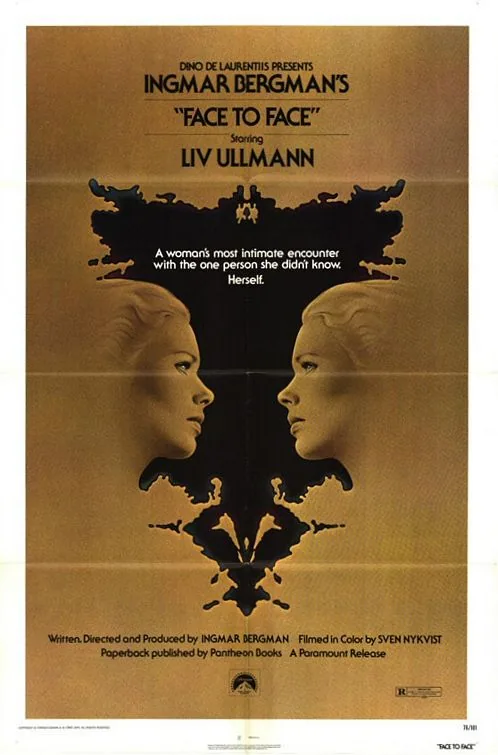
Dr. Jenny Isaksson, a psychiatrist, takes a temporary post in a mental hospital while her husband and daughter are away. Staying in her grandparents' old home awakens painful childhood memories, and visions intrude on her daily life. As Jenny's professional duties and strained relationships press closer, the story moves between waking reality, dreams and crisis, examining the instability beneath a life built around understanding other people's minds.
Both share themes of family, plus a somber atmosphere.
Why this matches +
Genres: Drama
Shared film traits
Based on recorded story, mood and style. Your preferences can change the order.
Memory and identity
Expect lyrical and somber, with episodic and measured pacing.
A man remembers childhood in a Welsh mining family before changes in work and landscape dissolved the world he knew. Wage conflict divides his father from older brothers, while schooling, romance and religious gossip expose other hierarchies inside a community he still loves. Injuries and departures accumulate beneath the warmth of song and family ritual. The drama makes recollection both a shelter and an admission of loss, presenting industrial change through the child who cannot yet understand every pressure shaping the adults around him.
Both share themes of family, plus an intimate atmosphere.
Why this matches +
Genres: Drama
Shared film traits
Based on recorded story, mood and style. Your preferences can change the order.
Memory and identity
What changes Interiors: measured, chamber-like and reflective. Julieta: a written recollection moves between decades of a mother’s life.
Julieta’s plans to leave Madrid change when she encounters a friend of her estranged daughter Antía. She returns to the apartment she once shared with Antía and begins writing a letter that recalls their relationship from childhood onward. The drama unfolds as a mother’s account of grief, guilt, and the limits of explanation, tracing how one family’s silences can persist long after a person has disappeared from daily life.
Based on recorded story, mood and style. Your preferences can change the order.
Memory and identity
What changes Interiors: measured, chamber-like and reflective. Still Alice: gradual decline and domestic observation.
Alice Howland is a successful linguistics professor whose occasional word loss and disorientation lead to a diagnosis of early-onset familial Alzheimer's disease. As she builds reminders and routines to preserve independence, her husband John and their adult children respond in different ways. Her daughter Anna learns she carries the inherited risk, while aspiring actress Lydia declines testing and remains closely involved with her mother. Alice's career, memory and ability to communicate change over time, shifting the family's idea of care and of who Alice is.
Arthur, a New York attorney, tells his wife Eve that he wants to separate and begin a different life. Their three adult daughters respond in different ways: Renata, a poet, feels caught between sympathy for her mother and concern for her father; Joey struggles with her own direction; and Flyn is often away working as an actress. When Arthur returns from a trip with Pearl, a warm and outgoing woman unlike Eve, the family must confront grief, resentment, and the emotional distance that has long shaped their home.
What drives the story
A father's decision to leave unsettles a family whose members have built their lives around an emotionally fragile mother.
The people at its centre
The daughters' differing responses expose old rivalries and conflicting loyalties, while Pearl changes the family's established balance.
What it feels like
The film uses quiet conversations and controlled domestic spaces to make emotional tensions feel close and persistent.
Worth knowing
This is a family ensemble drama with a restrained, theatrical style, not a plot-driven comedy.
FamilyDepressionChange
Mood
Restrained · Somber · Intimate
Pacing
Measured · Chamber-like · Reflective
Visual style
Carefully composed interiors · Muted palette · New York settings
Storytelling
Separation · Sibling tension · Depression · Family gathering