Jenny's temporary work and return to a childhood home bring unresolved memories into a present already under emotional strain.
Why this matches +
Selected for the central appeal: Intimate psychological dramas about identity, observation and unsettling dependence between women.
Genres: Drama / Psychological drama
Shared film traits
Based on recorded story, mood and style. Your preferences can change the order.
Memory and identity
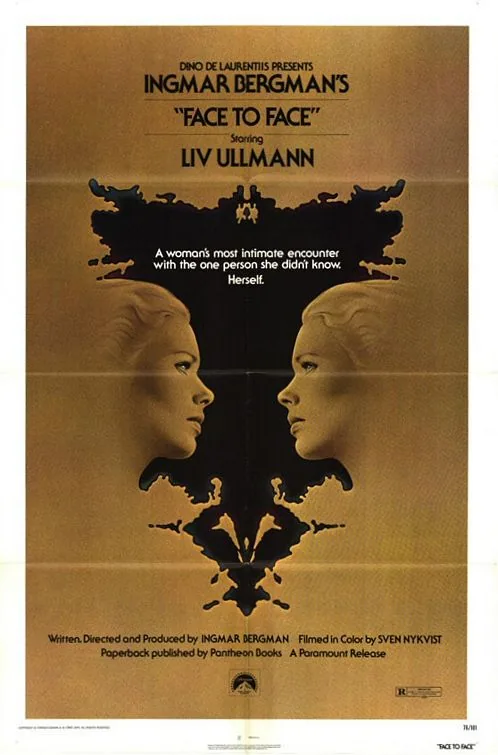
What changes Face to Face shares Bergman's focus on psychological distress and uncertain boundaries between perception and identity.
Dr. Jenny Isaksson, a psychiatrist, takes a temporary post in a mental hospital while her husband and daughter are away. Staying in her grandparents' old home awakens painful childhood memories, and visions intrude on her daily life. As Jenny's professional duties and strained relationships press closer, the story moves between waking reality, dreams and crisis, examining the instability beneath a life built around understanding other people's minds.
An encounter with a young family activates memories that make Leda reassess her choices and what she has hidden from herself.
Why this matches +
These offer a related experience with a meaningful difference in story, tone, or presentation.
An adjacent discovery: a related idea with a different viewing experience.
Genres: Drama / Psychological thriller
Shared film traits
Based on recorded story, mood and style. Your preferences can change the order.
Memory and identity
What changes The Lost Daughter examines motherhood, observation and the uncomfortable meanings one woman projects onto another.
On a Greek island holiday, professor and translator Leda Caruso observes a young mother, Nina, struggling with the demands of caring for her daughter. A missing doll becomes an unsettling focus for Leda, while memories of her own years as a mother return through flashbacks. As Leda and Nina speak, the film explores choices, resentment, desire, and the parts of motherhood people rarely admit aloud. Maggie Gyllenhaal’s adaptation of Elena Ferrante’s novel is a psychological character study with a deliberately uneasy view of intimacy and maternal identity.
Elizabeth’s research makes the act of watching feel consequential for the family being observed.
Why this matches +
These offer a related experience with a meaningful difference in story, tone, or presentation.
An adjacent discovery: a related idea with a different viewing experience.
Genres: Drama
Shared film traits
Based on recorded story, mood and style. Your preferences can change the order.
Memory and identity
What changes May December follows an actress whose observation of another woman becomes intrusive and unsettling.
Actor Elizabeth travels to Georgia to research Gracie, a woman whose relationship with teenage Joe once drew national attention and scandal. As Elizabeth observes the family and prepares to portray Gracie, the visit unsettles the couple’s routines and exposes how each person has learned to perform a version of the past. The drama examines looking, reenactment and power, letting quiet social encounters carry the tension of an unresolved history.
The mushroom illness transforms Reynolds’s demand for control into a deliberate dependence, a pattern Alma uses to claim room inside his routines.
Why this matches +
These offer a related experience with a meaningful difference in story, tone, or presentation.
An adjacent discovery: a related idea with a different viewing experience.
Genres: Drama / Romance
Shared film traits
Based on recorded story, mood and style. Your preferences can change the order.
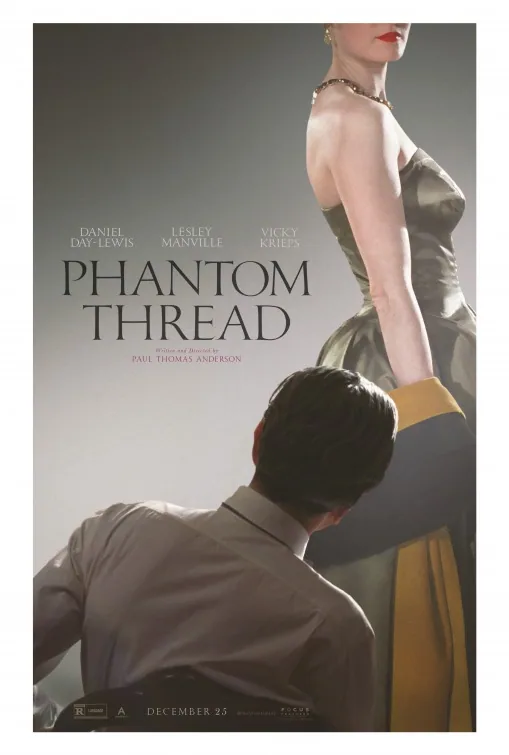
What changes Phantom Thread explores intimacy as an unstable negotiation over dependence and control.
In 1950s London, celebrated dressmaker Reynolds Woodcock runs a demanding couture house with his sister Cyril, whose practical authority protects his routines. He meets Alma, a waitress who becomes his partner and model, but the intimacy quickly takes on the same controlling rules that govern his work. Alma’s effort to care for Reynolds on her own terms leads her to poison him with mushrooms, making him dependent on her during illness. Their relationship develops through repeated negotiations over vulnerability, power and creative control, with Reynolds ultimately accepting a form of care that he might otherwise reject.
The film follows Jeanne's precise daily routine until tiny practical disruptions make its rigid pattern increasingly difficult to sustain.
Why this matches +
These offer a related experience with a meaningful difference in story, tone, or presentation.
An adjacent discovery: a related idea with a different viewing experience.
Genres: Drama / Experimental
Shared film traits
Based on recorded story, mood and style. Your preferences can change the order.
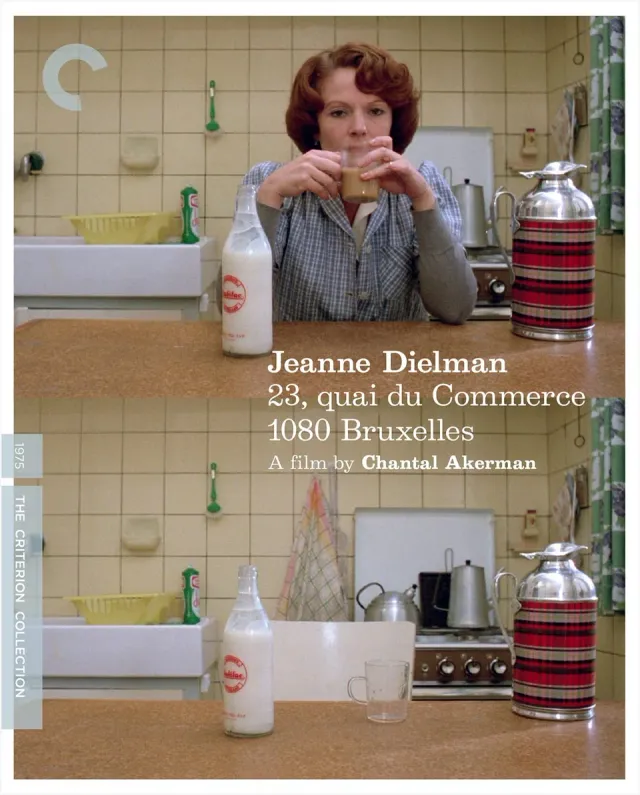
What changes Jeanne Dielman uses close observation of a woman's routine to make interior distress visible through form.
For several days in Brussels, widowed Jeanne Dielman moves through a carefully repeated schedule of cooking, cleaning, shopping and caring for her teenage son. She also receives a client at home each afternoon, fitting that work into the same disciplined routine. Small disruptions accumulate—a meal overcooks, an errand goes wrong, a task slips—until the rituals that structure her life no longer hold. The drama stays close to ordinary time and domestic labor.
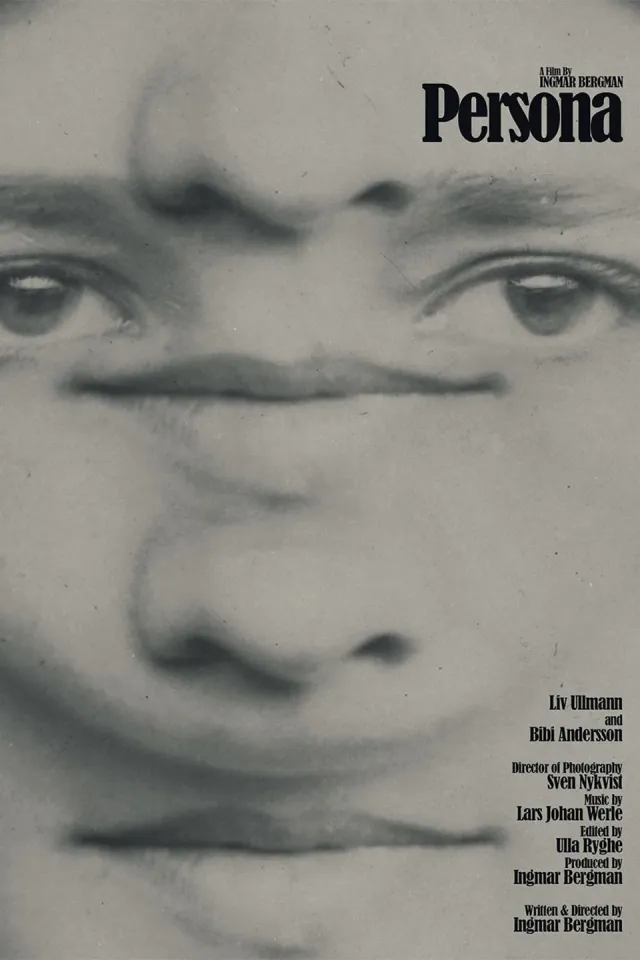
Stage actress Elisabet Vogler stops speaking during a performance and is sent to recover at a seaside cottage with nurse Alma. As Alma talks through memories and private anxieties, Elisabet listens without offering the reassurance Alma expects. Their closeness becomes increasingly uneasy: Alma feels exposed, the actress appears to observe her, and scenes begin to unsettle the boundary between the women’s identities. The film returns to Elisabet’s motherhood and her rejection of her son, but it does not settle whether the women merge, mirror one another or remain in a painful struggle for control. Its broken framing keeps the act of watching visible.
What drives the story
Alma’s confidences create the intimacy and imbalance that propel the story, while Elisabet’s silence prevents a stable account of what she wants.
The people at its centre
The nurse’s need for recognition meets the actress’s refusal to respond; the film lets that asymmetry become both attraction and threat.
What it feels like
Bergman interrupts the story with a film projector, fractured images, close-ups and repeated versions of a confession, making form part of the uncertainty.
Worth knowing
Its psychological force depends on unresolved identity and performance; a definitive explanation of the women’s relationship would flatten the film’s design.
IdentitySilencePerformance
Mood
Unsettling · Intimate · Ambiguous
Pacing
Measured · Repetitive · Reflective
Visual style
Black and white · Avant-garde · Close-up
Storytelling
Psychological drama · Unreliable boundaries · Character study