1989 · Woody Allen & Francis Ford Coppola & Martin Scorsese
Runtime: 2h 3mMPA rating: PG
An urban anthology shifts among artistic dependence, a child's autonomy and surreal family anxiety, making changes of scale and comic register part of the appeal.
What should feel similar?
Find your next favourite
9 of 20 films · Closest overall matches
Hide films you’ve seen or don’t want. Saved on this device.
No matches for this combination yet.
Try another option or reset your choices to see more films.
Interwoven affairs, career uncertainty and existential panic repeatedly rearrange a family's alliances between recurring holiday gatherings.
Why this matches +
These films share important themes, atmosphere or storytelling interests with this selection.
Genres: Comedy / Drama
Shared film traits
Based on recorded story, mood and style. Your preferences can change the order.
What changes Its own story: Interwoven affairs, career uncertainty and existential panic repeatedly rearrange a family's alliances between recurring holiday gatherings.
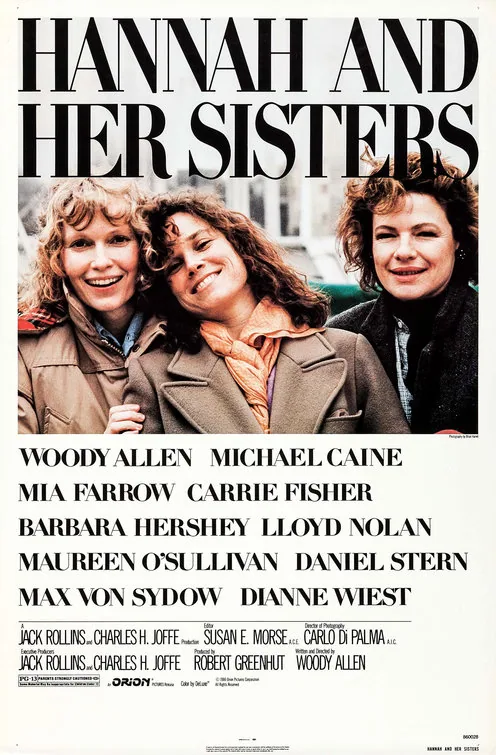
Family gatherings frame two years in which three sisters and their partners seek reassurance through work, affairs, borrowed money and explanations for mortality. The sister who appears most stable becomes the object around which other people's resentment and dependency circulate. Elsewhere, a former husband's health anxiety leads into a search for meaning that alternates panic with comic discovery. The ensemble comedy makes intimacy difficult to separate from self-justification, allowing genuine attachment to coexist with betrayals that the family never fully names.
Separate short films use a Paris neighborhood or encounter to explore a distinct form of love, loneliness, or recognition.
Why this matches +
These films share important themes, atmosphere or storytelling interests with this selection.
Genres: Romance / Drama
Shared film traits
Based on recorded story, mood and style. Your preferences can change the order.
What changes Its own story: Separate short films use a Paris neighborhood or encounter to explore a distinct form of love, loneliness, or recognition.
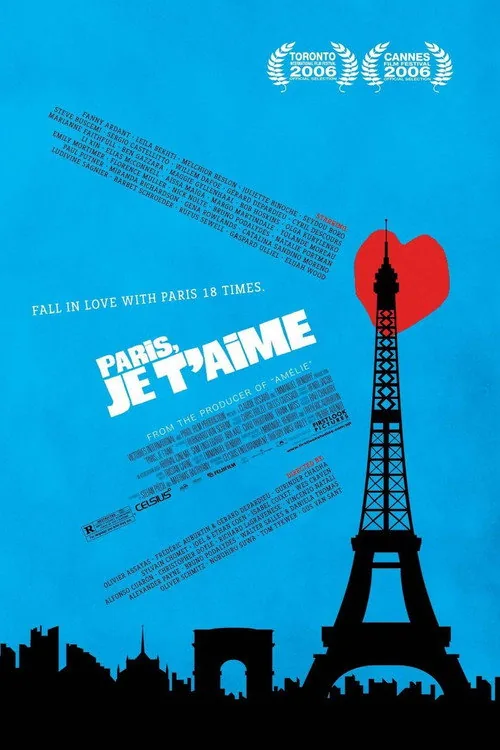
This anthology gathers short stories set in different Paris neighborhoods, each exploring a moment of connection, loss, attraction, or misunderstanding. Twenty filmmakers use varied casts and styles to turn the city into a shared setting rather than follow one continuous protagonist. The segments range from comic encounters to intimate dramas and fantastical episodes, creating a portrait of urban life through brief meetings, strangers, couples, and people whose private experiences intersect with familiar streets and landmarks.
Several unrelated residents navigate daily crises as chance meetings and the citywide medfly spraying connect their lives.
Why this matches +
These films share important themes, atmosphere or storytelling interests with this selection.
Genres: Comedy / Drama
Shared film traits
Based on recorded story, mood and style. Your preferences can change the order.
What changes Its own story: Several unrelated residents navigate daily crises as chance meetings and the citywide medfly spraying connect their lives.
A large group of Los Angeles residents move through intersecting routines, relationships, infidelities, and losses as their stories brush against one another. A helicopter spraying for medflies crosses the city above couples, families, artists, police officers, and workers whose private problems gradually surface. Adapted from short fiction by Raymond Carver, the ensemble film avoids a single central protagonist and instead builds a mosaic of ordinary lives, where small decisions and chance encounters create emotional consequences.
A final issue gathers three reported stories after the death of the magazine's American editor in France.
Why this matches +
These films share important themes, atmosphere or storytelling interests with this selection.
Genres: Drama / Romance
Shared film traits
Based on recorded story, mood and style. Your preferences can change the order.
What changes Its own story: A final issue gathers three reported stories after the death of the magazine's American editor in France.
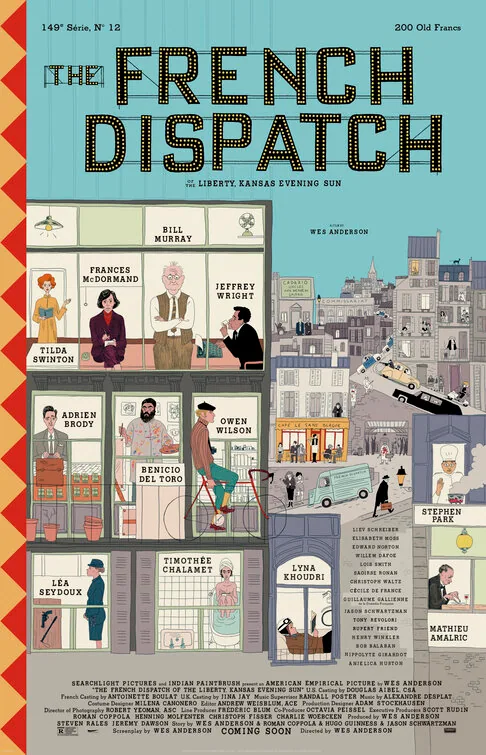
At a fictional American newspaper's French outpost, the death of its editor prompts a final issue assembled from stories written by the staff. The film moves through an art-world profile, a student revolt and a crime report, each with its own characters and visual language. Together the episodes celebrate the eccentric craft of journalism while showing how an editor's attention gives separate observations a shared home.
Each vignette starts from an ordinary meeting and lets pauses, misunderstandings, or competing obsessions shape the exchange.
Why this matches +
These films share important themes, atmosphere or storytelling interests with this selection.
Genres: Comedy / Drama
Shared film traits
Based on recorded story, mood and style. Your preferences can change the order.
What changes Its own story: Each vignette starts from an ordinary meeting and lets pauses, misunderstandings, or competing obsessions shape the exchange.
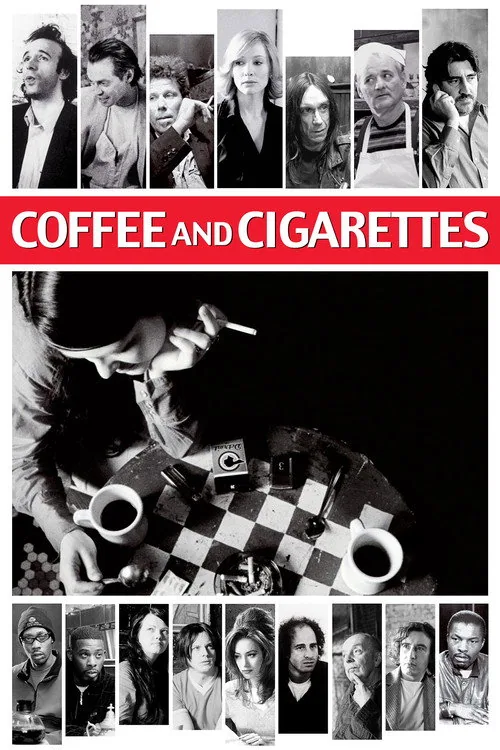
Eleven black-and-white vignettes pair musicians, actors, relatives, and strangers around coffee and cigarettes. Their conversations wander through small obsessions, awkward silences, celebrity, health, and the rituals people use to fill a pause. Some scenes reprise short films made years earlier, giving the anthology a loose sense of time without imposing one continuous plot. Jim Jarmusch’s deliberately minimal comedy-drama treats the table as a stage for personality, conversational rhythm, and the odd intimacy of sitting with someone over a drink.
A sequence of rides creates a loose structure in which brief encounters and conversation carry each episode.
Why this matches +
These films share important themes, atmosphere or storytelling interests with this selection.
Genres: Comedy / Drama
Shared film traits
Based on recorded story, mood and style. Your preferences can change the order.
What changes Its own story: A sequence of rides creates a loose structure in which brief encounters and conversation carry each episode.
Five taxi rides unfold during one night in Los Angeles, New York, Paris, Rome, and Helsinki. Each vignette pairs a driver with passengers whose brief conversation reveals differences in language, work, class, family, or temperament. Jim Jarmusch keeps the action largely inside the taxis, making the rides feel like small temporary worlds where strangers can talk more freely than they might elsewhere. The film is an ensemble anthology of comic, awkward, and unexpectedly intimate encounters rather than one continuous plot.
Each episode gives a new traveler or performer a brief encounter with the frontier’s risks and arbitrary turns.
Why this matches +
These films share important themes, atmosphere or storytelling interests with this selection.
Genres: Western / Comedy
Shared film traits
Based on recorded story, mood and style. Your preferences can change the order.
What changes Its own story: Each episode gives a new traveler or performer a brief encounter with the frontier’s risks and arbitrary turns.
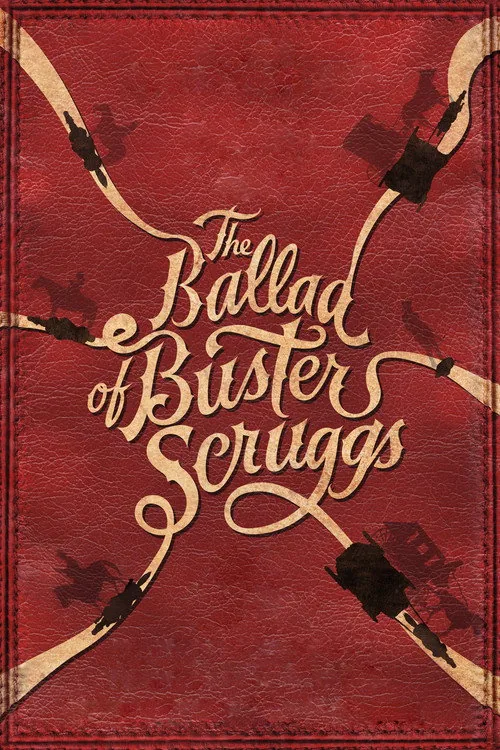
The Coen brothers’ Western anthology moves through six separate stories about performers, prospectors, travelers, outlaws, and strangers crossing a harsh frontier. A jaunty singing gunfighter opens the collection, but the later episodes shift between comedy, hardship, sudden violence, and quiet uncertainty. Rather than build one continuous plot, the film uses changing characters and situations to explore how people bargain with danger, fate, and their own limited prospects.
Separate visitors and residents navigate romance, celebrity and performance during an eventful stay in Rome.
Why this matches +
These films share important themes, atmosphere or storytelling interests with this selection.
Genres: Comedy / Romance
Shared film traits
Based on recorded story, mood and style. Your preferences can change the order.
What changes Its own story: Separate visitors and residents navigate romance, celebrity and performance during an eventful stay in Rome.
Several stories unfold in Rome: an ordinary man becomes a sudden celebrity, a young couple are separated by a visit from relatives, an architect revisits the city of his youth, and an opera director pursues an unusual stage idea. Woody Allen's ensemble comedy uses the city as both backdrop and participant, moving among tourists, residents and performers in a light collection of romantic and comic episodes.
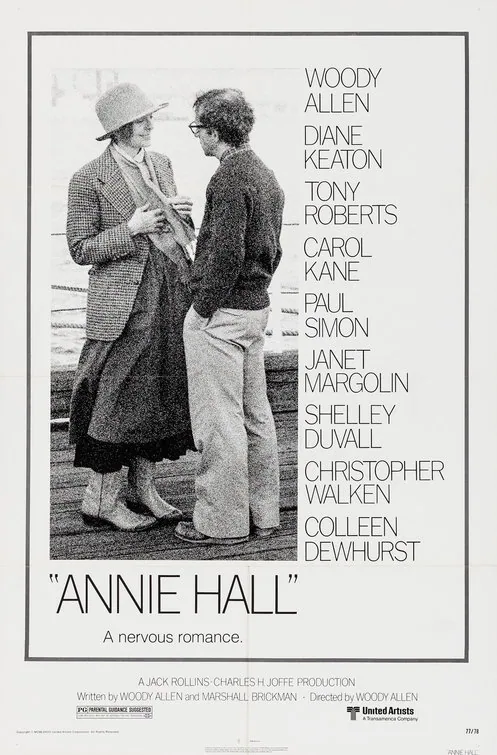
Isaac’s attraction to Mary repeats the kind of betrayal he condemns in Yale, while the relationship with Tracy exposes his ability to treat a teenager’s feelings as temporary and available to his own story.
Why this matches +
These films explore a related idea in a different setting, genre or style.
An adjacent discovery: a related idea with a different viewing experience.
Genres: Comedy / Drama
Shared film traits
Based on recorded story, mood and style. Your preferences can change the order.
What changes Its own story: Isaac’s attraction to Mary repeats the kind of betrayal he condemns in Yale, while the relationship with Tracy exposes his ability to treat a teenager’s feelings as temporary and available to his own story.
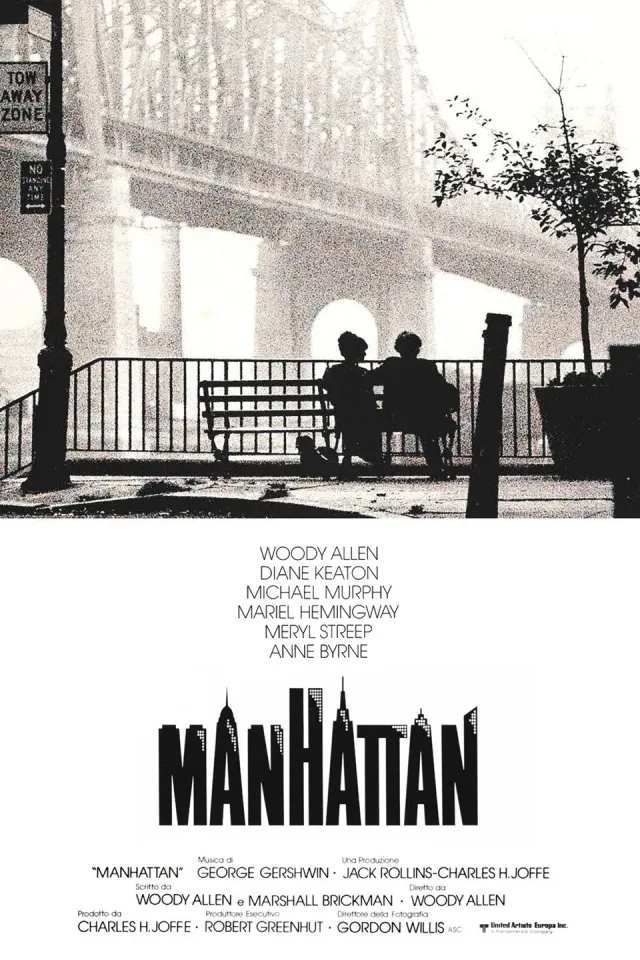
Forty-two-year-old television writer Isaac Davis dates seventeen-year-old Tracy while criticizing his friend Yale for having an affair with Mary. Isaac then becomes involved with Mary himself, repeating the self-serving behavior he had judged in Yale. His ex-wife’s memoir makes his private conduct a public story, and Tracy’s plan to study in London reveals how casually he assumes her feelings will wait for him. The comedy’s idealized New York surface—black-and-white cinematography, Gershwin and a lyrical opening voice—sits uneasily beside its age and power imbalance. Isaac’s self-description is not a neutral guide to what Tracy experiences. The film can be admired as a formal portrait of a city and a cohort while still asking viewers to notice whom its romantic framing protects.
A friendship's changed practical arrangements expose a precarious creative career, turning repeated moves into a test of whether adaptation can occur without interpreting every change as abandonment.
Why this matches +
These films explore a related idea in a different setting, genre or style.
An adjacent discovery: a related idea with a different viewing experience.
Genres: Drama / Comedy
Shared film traits
Based on recorded story, mood and style. Your preferences can change the order.
What changes Its own story: A friendship's changed practical arrangements expose a precarious creative career, turning repeated moves into a test of whether adaptation can occur without interpreting every change as abandonment.
A dancer in New York assumes that the life she shares with her closest friend can continue while each moves toward a creative future. Changes in housing, money and the friend's relationship expose how much stability that imagined partnership has supplied. Drifting through temporary rooms and impractical gestures, Frances must distinguish preserving an attachment from requiring it to keep confirming an identity her working life no longer supports in the same way.
Each self-contained grievance escalates until private anger collides with the limits of social order, turning the anthology into a study of revenge.
Why this matches +
These films explore a related idea in a different setting, genre or style.
An adjacent discovery: a related idea with a different viewing experience.
Genres: Drama / Thriller
Shared film traits
Based on recorded story, mood and style. Your preferences can change the order.
What changes A more violent anthology of explosive grievance and revenge replaces the source's mixed urban registers, while abrupt shifts between self-contained darkly comic stories remain relevant.
This Argentine anthology comprises six separate stories in which ordinary people reach a breaking point after encountering an insult, injustice or betrayal. Passengers discover an unexpected shared grievance on a flight; a diner, a highway, a government office, a wealthy family and a wedding each become settings for a different escalation. The stories do not build toward one shared protagonist or a single resolution. Instead, their arrangement invites comparison between forms of rage, revenge and social power. The film’s comedy is often dark and its violence can be abrupt. Because segments reset the cast and premise, viewers compare how far each grievance is taken. The wedding finale turns private betrayal into a crowd's uncontrolled spectacle.
A boy recalls his family and the radio voices that filled their home.
Why this matches +
These films explore a related idea in a different setting, genre or style.
An adjacent discovery: a related idea with a different viewing experience.
Genres: Comedy
Shared film traits
Based on recorded story, mood and style. Your preferences can change the order.
Memory and identity · Music and performance
What changes A warmer childhood-and-family recollection replaces adult artistic dependence and surreal maternal anxiety, while episodic urban cultural life supplies the connection.
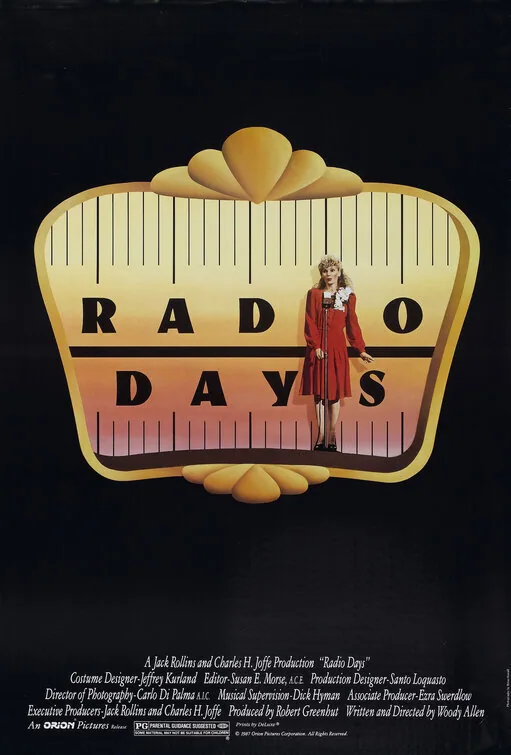
A boy growing up in a working-class New York family remembers the people, songs and programs that shaped daily life when radio was the dominant entertainment. The film strings together comic and affectionate episodes around family members and radio personalities, moving between neighborhood routines and the imagined glamour of broadcast fame. Woody Allen treats memory as an ensemble of small scenes rather than a single plot.
Paul's attempt to make one social visit becomes a night-long struggle to get safely back home.
Why this matches +
These films explore a related idea in a different setting, genre or style.
An adjacent discovery: a related idea with a different viewing experience.
Genres: Comedy / Thriller
Shared film traits
Based on recorded story, mood and style. Your preferences can change the order.
What changes Its own story: Paul's attempt to make one social visit becomes a night-long struggle to get safely back home.
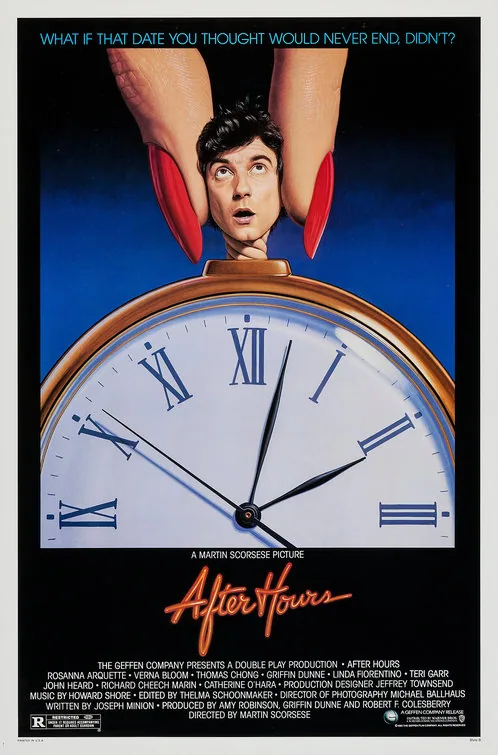
After meeting a woman who invites him to SoHo, computer specialist Paul Hackett leaves his ordinary Manhattan routine for what should be a short evening visit. A chain of misunderstandings, strange encounters, and escalating mishaps leaves him unable to get home as the neighborhood grows more hostile and unpredictable. Each attempted solution creates another complication, turning a single night into an anxious comedy of chance, embarrassment, and urban disorientation.
Rupert’s belief that he is owed a stage turns rejection into a hostage scheme; the broadcast is both his forced entry into show business and an act with serious consequences.
Why this matches +
These films explore a related idea in a different setting, genre or style.
An adjacent discovery: a related idea with a different viewing experience.
Genres: Crime / Drama
Shared film traits
Based on recorded story, mood and style. Your preferences can change the order.
Music and performance
What changes Its own story: Rupert’s belief that he is owed a stage turns rejection into a hostage scheme; the broadcast is both his forced entry into show business and an act with serious consequences.
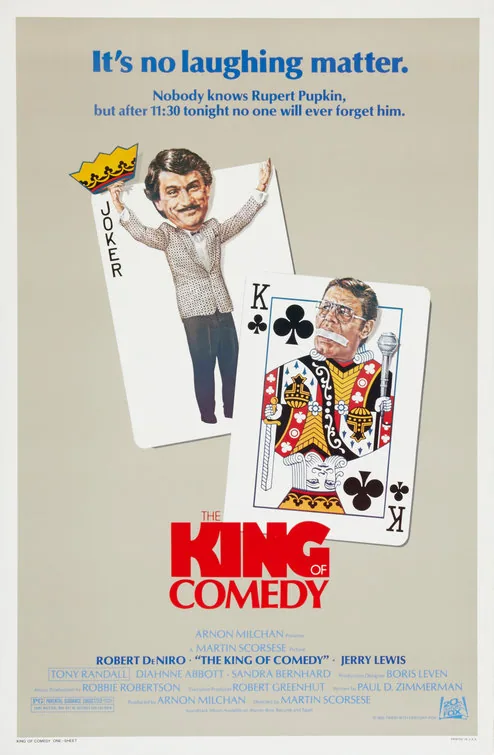
Aspiring comedian Rupert Pupkin becomes fixated on successful talk-show host Jerry Langford after a brief encounter. Rupert treats the meeting as the start of a friendship even as Langford’s staff reject his repeated requests for a performance slot. When ordinary persistence fails, Rupert and fellow stalker Masha kidnap Langford and demand that the network broadcast Rupert’s stand-up routine. The hostage plan gives Rupert the audience he has spent the film imagining, but its cost and aftermath remain troubling. Martin Scorsese’s film follows the gap between Rupert’s fantasy of celebrity and the actual isolation of a person who mistakes access to a famous stranger for intimacy.
A movie character leaves his film for a spectator, bringing the studio, the actor and the stalled picture into Cecilia's private life.
Why this matches +
These films explore a related idea in a different setting, genre or style.
An adjacent discovery: a related idea with a different viewing experience.
Genres: Fantasy / Romance
Shared film traits
Based on recorded story, mood and style. Your preferences can change the order.
What changes Its own story: A movie character leaves his film for a spectator, bringing the studio, the actor and the stalled picture into Cecilia's private life.
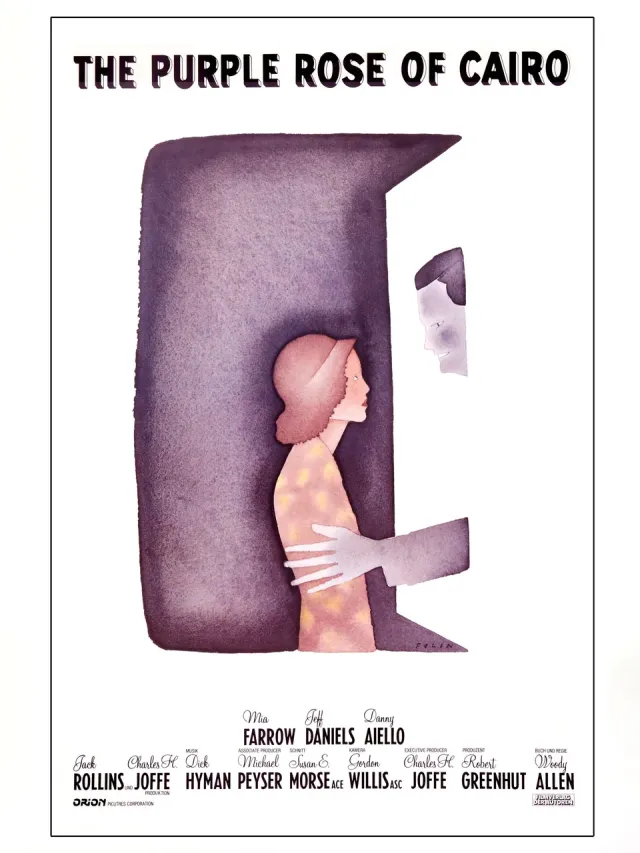
During the Depression, New Jersey waitress Cecilia escapes an abusive marriage and an exhausting job by returning to the cinema. A character in her favorite picture, archaeologist Tom Baxter, notices her and steps out of the screen, leaving the other film characters unable to continue. The studio sends Tom's actor, Gil Shepherd, to bring him back, and Cecilia becomes the focus of competing affections from the fictional adventurer and the man who portrays him. As the movie's producer threatens to destroy copies unless Tom returns, Cecilia must decide whether she wants a life with someone who belongs to fantasy or with someone who can move through the real world. The story's play with cinema is also a melancholic account of how little escape can change material circumstances.
A disruptive paternal return brings separate, stalled adult lives back into contact and tests the terms on which reconciliation might occur.
Why this matches +
These films explore a related idea in a different setting, genre or style.
An adjacent discovery: a related idea with a different viewing experience.
Genres: Comedy / Drama
Shared film traits
Based on recorded story, mood and style. Your preferences can change the order.
What changes Its own story: A disruptive paternal return brings separate, stalled adult lives back into contact and tests the terms on which reconciliation might occur.
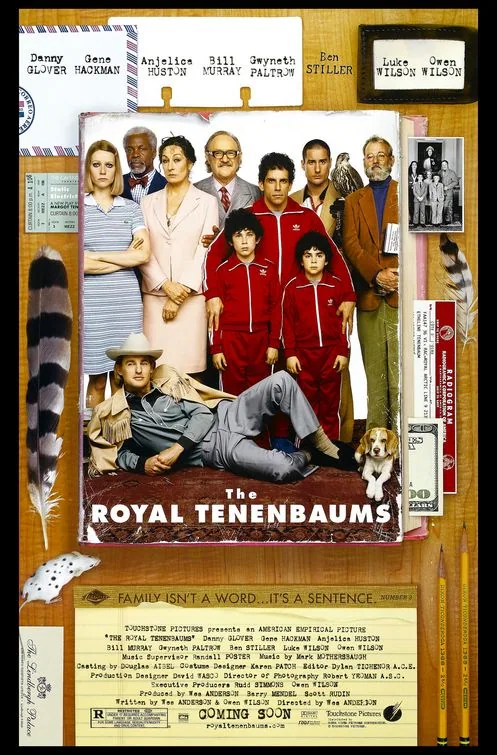
An estranged father returns to the household of his once-celebrated children with a claim that requires their attention and care. Their adult lives already carry disappointment, grief and attachments left unresolved beneath the public memory of early brilliance. His attempt to regain a place in the family forces everyone to negotiate whether acknowledging harm can coexist with accepting an imperfect possibility of connection.
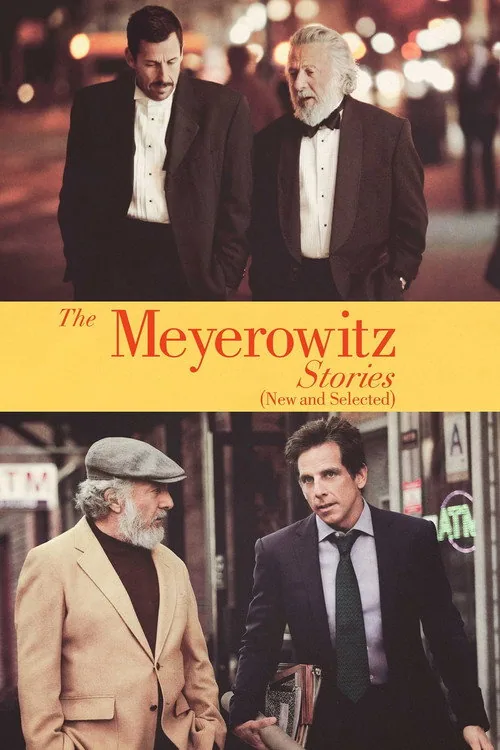
A family reunion and their father's health pull the Meyerowitz siblings into repeated negotiations over attention and legacy.
Why this matches +
These films explore a related idea in a different setting, genre or style.
An adjacent discovery: a related idea with a different viewing experience.
Genres: Comedy / Drama
Shared film traits
Based on recorded story, mood and style. Your preferences can change the order.
Memory and identity
What changes Its own story: A family reunion and their father's health pull the Meyerowitz siblings into repeated negotiations over attention and legacy.
The adult children of aging sculptor Harold Meyerowitz reunite in New York as family events expose old resentments and competing memories. Danny, recently separated, returns to his father's home with his daughter; Jean revisits her own long-standing distance from the family; and Matthew arrives from Los Angeles with a more successful career. Their father remains the emotional center, demanding attention while resisting honest reflection. Noah Baumbach's ensemble drama finds comedy in sibling friction and the complicated wish to be recognized by a parent.
Retrospective narration revisits a romance through a self-questioning performance that can explain a relationship more easily than recover it.
Why this matches +
These films explore a related idea in a different setting, genre or style.
An adjacent discovery: a related idea with a different viewing experience.
Genres: Drama / Romance
Shared film traits
Based on recorded story, mood and style. Your preferences can change the order.
What changes Its own story: Retrospective narration revisits a romance through a self-questioning performance that can explain a relationship more easily than recover it.
A New York comedian looks back over a failed relationship with a woman whose interests and confidence changed during their time together. Shared routines, sexual anxiety and professional opportunity become material for an account that repeatedly interrupts itself to argue with memory and the audience. His attempt to explain the breakup exposes both affection and the limits of a personality more practised at analysing dissatisfaction than making room for another person's independence.
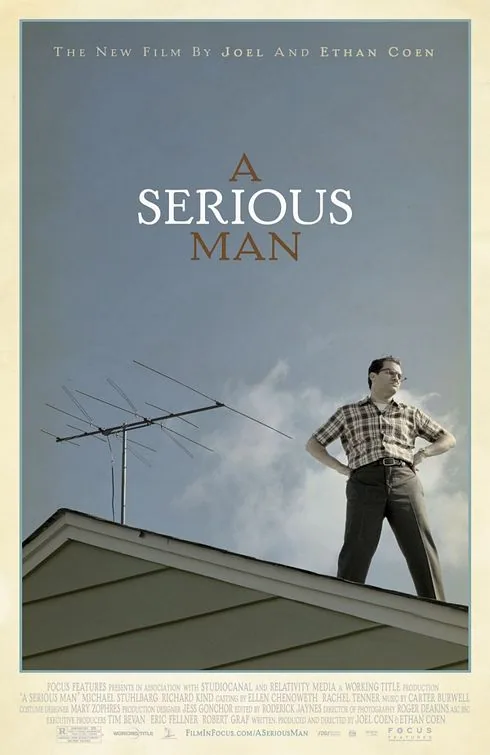
Larry's accumulating family, work and community problems lead him to seek explanations from rabbis, but each answer changes the scale of the question rather than revealing a cause. The structure makes his desire for a usable moral formula part of the comedy and keeps the prologue and ending unresolved.
Why this matches +
These films explore a related idea in a different setting, genre or style.
An adjacent discovery: a related idea with a different viewing experience.
Genres: Comedy / Drama
Shared film traits
Based on recorded story, mood and style. Your preferences can change the order.
What changes Its own story: Larry's accumulating family, work and community problems lead him to seek explanations from rabbis, but each answer changes the scale of the question rather than revealing a cause. The structure makes his desire for a usable moral formula part of the comedy and keeps the prologue and ending unresolved.
In 1960s Minnesota, physics professor Larry Gopnik's life comes apart through his wife's demand for a divorce, his brother's dependence, trouble at work and the growing distance of his children. He seeks advice from rabbis, hoping that an authority can show what these events mean or what he must do. Each encounter gives him a different kind of response without settling whether the crises are punishment, coincidence or simply life beyond his control. The Coens turn a search for moral explanation into a dry, increasingly anxious comedy about the limits of interpretation.
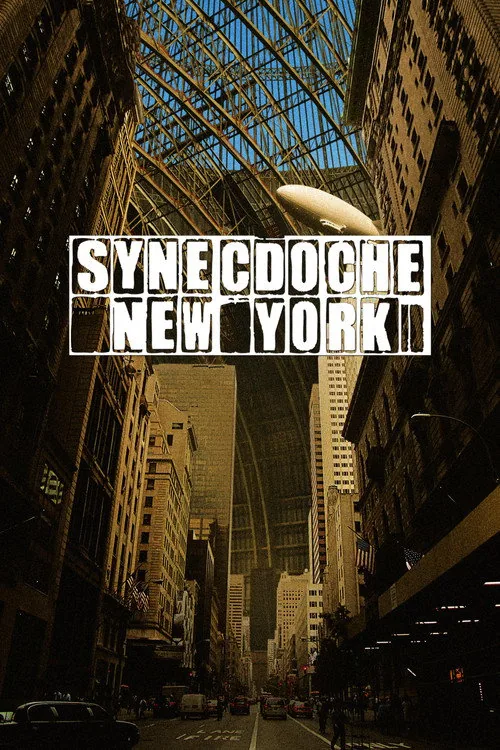
Caden’s effort to make his play truthful blurs the difference between directing life and living it.
Why this matches +
These films explore a related idea in a different setting, genre or style.
An adjacent discovery: a related idea with a different viewing experience.
Genres: Drama
Shared film traits
Based on recorded story, mood and style. Your preferences can change the order.
Memory and identity
What changes Its own story: Caden’s effort to make his play truthful blurs the difference between directing life and living it.
Theater director Caden Cotard receives a large arts grant and decides to create a radically realistic play based on his life. He builds a full-scale replica of New York inside a warehouse, hires actors to play people he knows, and eventually casts doubles who reenact the actors themselves. As Caden’s relationships falter and decades pass, the boundaries between his life and the production become increasingly difficult to locate. Charlie Kaufman’s drama uses an expanding theatrical project to explore mortality, artistic ambition, memory, and the impossibility of representing a whole life.
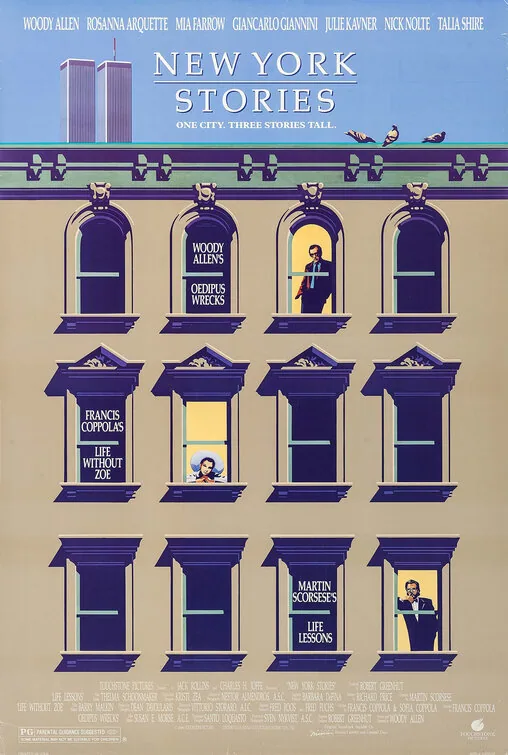
Three New York-set short films explore adults negotiating ambition, family and desire. In Life Lessons, a painter uses a turbulent relationship as fuel for his work; Life Without Zoë centers on a wealthy child navigating her parents' separation; and Oedipus Wrecks follows a man whose overbearing mother becomes the focus of an extraordinary public episode. The anthology varies in tone while remaining rooted in urban relationships.
What drives the story
Three stories examine artistic dependency, childhood independence and a son's family anxiety.
The people at its centre
Each segment pairs a central character with relatives or partners whose needs conflict.
What it feels like
The anthology shifts from adult romantic unease to child-centered comedy and surreal family farce.
Worth knowing
Its three-director structure differs from a single-protagonist urban drama and shifts attention among independent stories.
ArtFamilyDesire
Mood
Varied · Wry · Reflective
Pacing
Three distinct short narratives place intimate conflicts in one city
Visual style
Contrasting directorial styles · urban locations and performance-led staging
Storytelling
Three-part anthology · Artist and muse · Parent-child tension