The parallel relationships show how the same need for reassurance recurs across generations.
Why this matches +
Selected for the central appeal: Wry urban relationship dramas about intellectual self-deception, infidelity and changing attachments.
Genres: Comedy / Romance
Shared film traits
Based on recorded story, mood and style. Your preferences can change the order.
What changes You Will Meet a Tall Dark Stranger shares Woody Allen's comic attention to infidelity and self-deception among urban couples.
Alfie leaves his long marriage to Helena and pursues a younger partner, while their daughter Sally struggles with her own marriage and a new attraction. Helena turns to a fortune-teller for reassurance, and Sally’s husband Roy becomes absorbed by a neighbor and the manuscript he hopes will revive his career. Woody Allen interweaves these lives as a comic drama about aging, desire, self-deception and the stories people tell themselves to make uncertain choices feel destined.
Three stories examine artistic dependency, childhood independence and a son's family anxiety.
Why this matches +
Selected for the central appeal: Wry urban relationship dramas about intellectual self-deception, infidelity and changing attachments.
Genres: Drama / Romance
Shared film traits
Based on recorded story, mood and style. Your preferences can change the order.
What changes New York Stories contains intertwined urban perspectives on relationships, art and self-image.
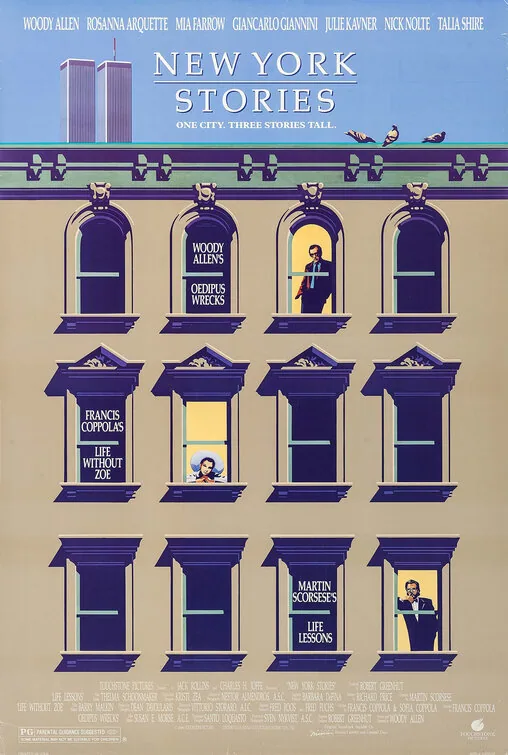
Three New York-set short films explore adults negotiating ambition, family and desire. In Life Lessons, a painter uses a turbulent relationship as fuel for his work; Life Without Zoë centers on a wealthy child navigating her parents' separation; and Oedipus Wrecks follows a man whose overbearing mother becomes the focus of an extraordinary public episode. The anthology varies in tone while remaining rooted in urban relationships.
An adult's pursuit of personal liberation destabilises a household already organised around incompatible performances of success.
Why this matches +
These offer a related experience with a meaningful difference in story, tone, or presentation.
An adjacent discovery: a related idea with a different viewing experience.
Genres: Drama / Comedy
Shared film traits
Based on recorded story, mood and style. Your preferences can change the order.
What changes American Beauty exposes dissatisfaction and self-serving desires behind a polished social surface.
A suburban advertising worker responds to dissatisfaction with work and marriage by attempting a dramatic reinvention of his daily life. His fixation on his daughter's friend becomes one expression of a wish to recover a younger, less constrained self. Neighbouring households reveal other gaps between appearances and private experience, while narration from beyond the story's endpoint makes ordinary grievances unfold beneath an approaching death.
A series of career and relationship choices tests Julie’s belief that she can keep changing without paying a cost in intimacy or time.
Why this matches +
These offer a related experience with a meaningful difference in story, tone, or presentation.
An adjacent discovery: a related idea with a different viewing experience.
Genres: Drama / Romance
Shared film traits
Based on recorded story, mood and style. Your preferences can change the order.
What changes The Worst Person in the World follows a person's uncertain romantic choices and self-understanding in a vividly observed city.
Over four years in Oslo, Julie changes direction from medical studies to psychology and then photography, while trying to understand what kind of work and relationship she wants. She begins a life with the older comic-book artist Aksel, whose readiness for commitment does not settle her uncertainty. At a party, she meets Eivind, who is also involved with someone else, and their impulsive attraction opens a different possibility. The film moves through chapter-like episodes, fantasies and time shifts as Julie confronts how choices affect other people and how time limits the promise of reinvention. One chapter interrupts ordinary time as Julie moves toward a man already committed elsewhere, making choice itself visible.
A temporary stay abroad creates an emotional interval in which two dissatisfied people can recognise feelings their ordinary routines conceal.
Why this matches +
These offer a related experience with a meaningful difference in story, tone, or presentation.
An adjacent discovery: a related idea with a different viewing experience.
Genres: Drama / Romance
Shared film traits
Based on recorded story, mood and style. Your preferences can change the order.
What changes Lost in Translation explores loneliness and an emotionally complicated connection amid urban life.
An American actor working on an advertisement in Tokyo meets a young woman accompanying a husband whose work leaves her largely alone. Dislocation, insomnia and uncertainty about their marriages create a companionship neither expected to find. Their shared movement through the city offers temporary relief from the roles awaiting them elsewhere, while the knowledge that the encounter is brief keeps affection poised between possibility and restraint.
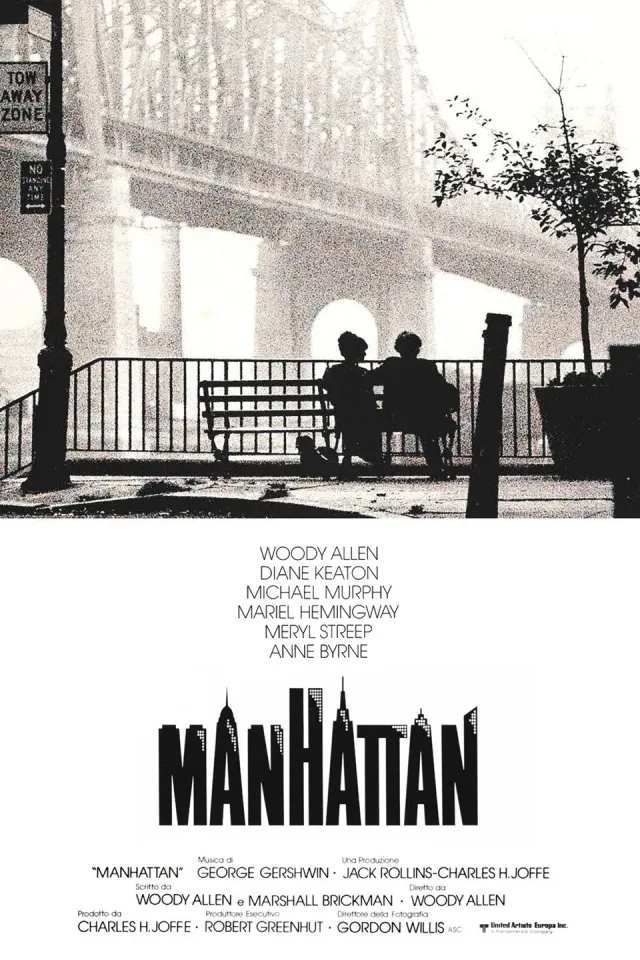
Forty-two-year-old television writer Isaac Davis dates seventeen-year-old Tracy while criticizing his friend Yale for having an affair with Mary. Isaac then becomes involved with Mary himself, repeating the self-serving behavior he had judged in Yale. His ex-wife’s memoir makes his private conduct a public story, and Tracy’s plan to study in London reveals how casually he assumes her feelings will wait for him. The comedy’s idealized New York surface—black-and-white cinematography, Gershwin and a lyrical opening voice—sits uneasily beside its age and power imbalance. Isaac’s self-description is not a neutral guide to what Tracy experiences. The film can be admired as a formal portrait of a city and a cohort while still asking viewers to notice whom its romantic framing protects.
What drives the story
Isaac’s attraction to Mary repeats the kind of betrayal he condemns in Yale, while the relationship with Tracy exposes his ability to treat a teenager’s feelings as temporary and available to his own story.
The people at its centre
Tracy’s sincerity and plans place her in a different position from Isaac’s adult relationships. His final appeal asks her to return to an arrangement on his timetable, but she retains her own future and judgment.
What it feels like
Black-and-white widescreen images, Gershwin and the opening voiceover establish a polished city myth. The romantic surface is part of the film’s appeal and a reason to assess how the camera naturalizes its central relationship.
Worth knowing
Name the age gap directly: Tracy is seventeen and Isaac is forty-two. Do not let nostalgic music or the character’s comic self-criticism turn the relationship into an equal romance or substitute for discussing the power imbalance.