An episodic Oslo portrait uses comic fantasy, restless career changes and romantic choices to show how uncertainty affects the people around a young woman.
What should feel similar?
Find your next favourite
3 films · Closest overall matches
Hide films you’ve seen or don’t want. Saved on this device.
No matches for this combination yet.
Try another option or reset your choices to see more films.
Julie’s relationship with Anthony and her developing film project reshape how she sees her own judgment and creative voice.
Why this matches +
Related viewing experiences with the specific differences recorded for each pair.
An adjacent discovery: a related idea with a different viewing experience.
Genres: Drama / Romance
Shared film traits
Based on recorded story, mood and style. Your preferences can change the order.
What changes A young artist’s uncertain sense of herself changes through an intimate relationship and the consequences of choices she only partly understands. Restrained recollection and a destructive dependency replace comic fantasies and movement between possible lives.
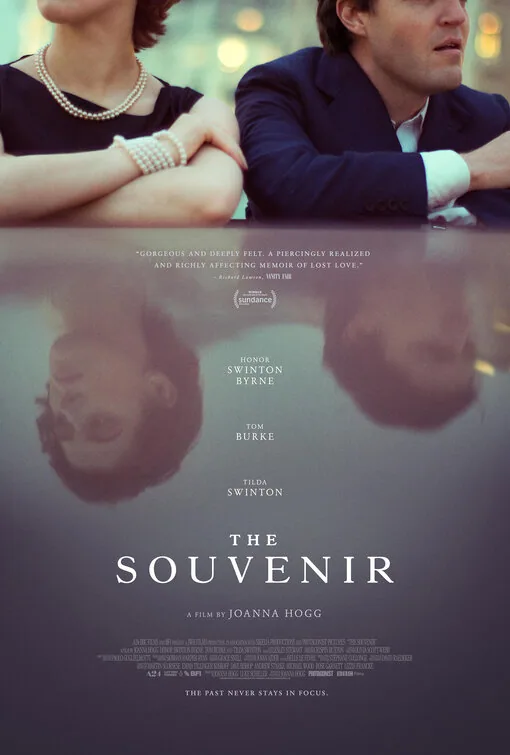
In 1980s London, Julie is a young film student trying to develop a project about working-class life while sharing a flat with friends. She begins a relationship with Anthony, a polished Foreign Office worker whose explanations and absences leave her uncertain. As Julie gives him money and adjusts her plans around the relationship, she struggles to distinguish care from dependence and gradually learns how to turn experience into a film of her own.
A friendship's changed practical arrangements expose a precarious creative career, turning repeated moves into a test of whether adaptation can occur without interpreting every change as abandonment.
Why this matches +
Related viewing experiences with the specific differences recorded for each pair.
An adjacent discovery: a related idea with a different viewing experience.
Genres: Drama / Comedy
Shared film traits
Based on recorded story, mood and style. Your preferences can change the order.
What changes A young woman’s stop-start artistic ambitions and uneven commitments become funny and painful through episodic city life. Friendship and professional insecurity drive the New York story, while romantic choices and mortality give the Oslo chapters a different weight.
A dancer in New York assumes that the life she shares with her closest friend can continue while each moves toward a creative future. Changes in housing, money and the friend's relationship expose how much stability that imagined partnership has supplied. Drifting through temporary rooms and impractical gestures, Frances must distinguish preserving an attachment from requiring it to keep confirming an identity her working life no longer supports in the same way.
Dorothea asks Abbie and Julie to help her connect with Jamie, and their imperfect guidance reshapes the household's understanding of growing up.
Why this matches +
Related viewing experiences with the specific differences recorded for each pair.
An adjacent discovery: a related idea with a different viewing experience.
Genres: Comedy / Drama
Shared film traits
Based on recorded story, mood and style. Your preferences can change the order.
What changes An ensemble portrait connects personal reinvention to relationships and uses shifts of perspective to imagine where lives lead. A mother recruiting others to help raise her son anchors a period household, whereas Julie’s decisions organize a contemporary romantic portrait.
In 1979 Santa Barbara, single mother Dorothea worries that she cannot reach her teenage son Jamie, so she asks two younger women living in their house to help guide him. Photographer Abbie and Jamie's close friend Julie bring different ideas about adulthood, sexuality, and the changing world, while Dorothea's own perspective is shaped by the era in which she grew up. Their shared household becomes a loose education for all of them, built from arguments, music, and attempts to understand one another across generations.
Over four years in Oslo, Julie changes direction from medical studies to psychology and then photography, while trying to understand what kind of work and relationship she wants. She begins a life with the older comic-book artist Aksel, whose readiness for commitment does not settle her uncertainty. At a party, she meets Eivind, who is also involved with someone else, and their impulsive attraction opens a different possibility. The film moves through chapter-like episodes, fantasies and time shifts as Julie confronts how choices affect other people and how time limits the promise of reinvention. One chapter interrupts ordinary time as Julie moves toward a man already committed elsewhere, making choice itself visible.
What drives the story
A series of career and relationship choices tests Julie’s belief that she can keep changing without paying a cost in intimacy or time.
The people at its centre
Julie’s spontaneity can be both curiosity and avoidance; Aksel and Eivind represent different forms of desire, but neither functions simply as the correct answer to her indecision.
What it feels like
Chapter breaks, tonal shifts and an imagined sequence make an ordinary romantic drama feel formally playful while keeping aging and illness emotionally concrete.
Worth knowing
For viewers drawn to adult romantic comedy-drama about identity, indecision and time. Its ambivalence differs from a neat soulmate story or a judgmental portrait of a woman who changes her mind.
identityromantic choicetime
Mood
wry · tender · melancholic
Pacing
chaptered · episodic
Visual style
Oslo realism · fantasy interlude
Storytelling
career changes · love triangle · adult self-discovery