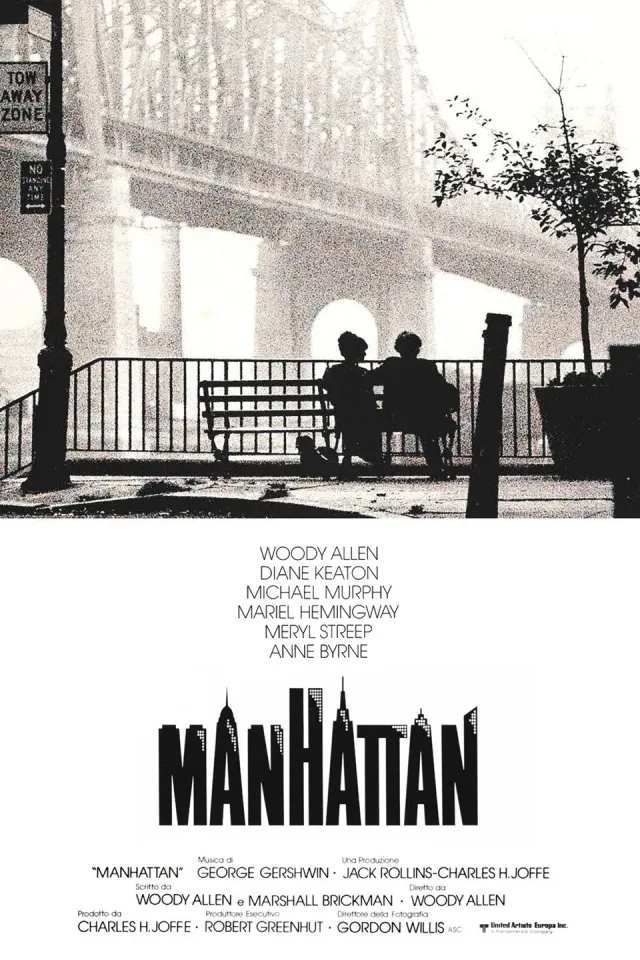
Isaac’s attraction to Mary repeats the kind of betrayal he condemns in Yale, while the relationship with Tracy exposes his ability to treat a teenager’s feelings as temporary and available to his own story.
Why this matches +
These offer a related experience with a meaningful difference in story, tone, or presentation.
An adjacent discovery: a related idea with a different viewing experience.
Genres: Comedy / Drama
Shared film traits
Based on recorded story, mood and style. Your preferences can change the order.
What changes Interconnected adults navigate romantic dissatisfaction, attraction and self-justification through Woody Allen's conversational comedy.
Forty-two-year-old television writer Isaac Davis dates seventeen-year-old Tracy while criticizing his friend Yale for having an affair with Mary. Isaac then becomes involved with Mary himself, repeating the self-serving behavior he had judged in Yale. His ex-wife’s memoir makes his private conduct a public story, and Tracy’s plan to study in London reveals how casually he assumes her feelings will wait for him. The comedy’s idealized New York surface—black-and-white cinematography, Gershwin and a lyrical opening voice—sits uneasily beside its age and power imbalance. Isaac’s self-description is not a neutral guide to what Tracy experiences. The film can be admired as a formal portrait of a city and a cohort while still asking viewers to notice whom its romantic framing protects.
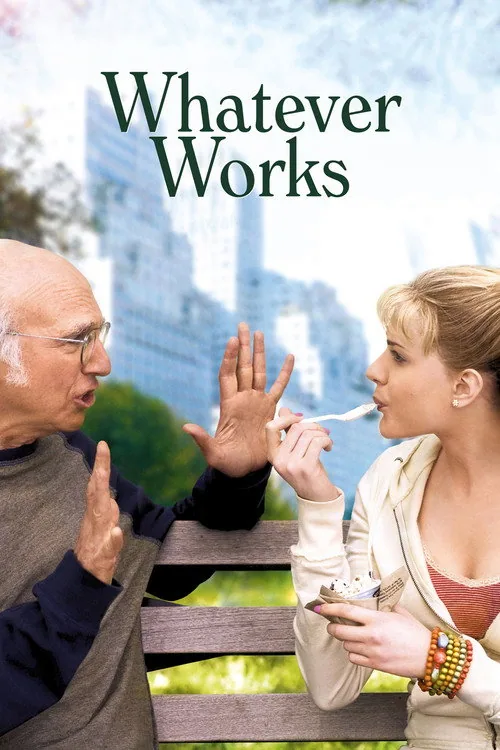
Melody’s arrival unsettles Boris’s carefully defended worldview, and her parents’ visit adds pressure to their unconventional arrangement.
Why this matches +
These offer a related experience with a meaningful difference in story, tone, or presentation.
An adjacent discovery: a related idea with a different viewing experience.
Genres: Comedy / Romance
Shared film traits
Based on recorded story, mood and style. Your preferences can change the order.
What changes Woody Allen follows an ensemble whose unconventional relationships and confident explanations collide with the unpredictability of desire.
Boris Yellnikoff, a misanthropic former physics professor living in New York, takes in Melody, a young runaway from Mississippi who has left her conventional family behind. Their unlikely relationship changes when Melody’s parents arrive and begin questioning the life she has chosen. Woody Allen’s comedy follows a collection of people who reconsider their identities and relationships, using Boris’s cynical narration to contrast intellectual certainty with the unpredictability of love and everyday life.
The film's engine follows old marriage gives Jane and Jake a shorthand both comforting and troubling; this keeps the stakes tied to observable choices.
Why this matches +
These offer a related experience with a meaningful difference in story, tone, or presentation.
An adjacent discovery: a related idea with a different viewing experience.
Genres: Comedy / Drama
Shared film traits
Based on recorded story, mood and style. Your preferences can change the order.
What changes A divorced couple and their family navigate new relationships, unresolved attraction and the complications of starting over later in life.
Years after their divorce, Jane Adler and her former husband Jake find themselves drawn back into an affair, though Jake is now remarried and Jane has begun seeing another man. Their adult children and new relationships add pressure to a situation nobody can keep private. The comedy of remarriage explores desire and independence without pretending affection erases consequences.
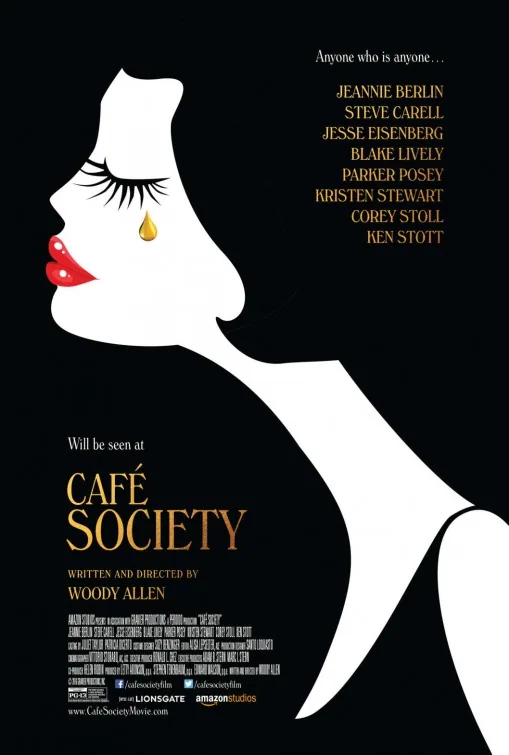
A young man moves from Hollywood to New York and discovers that success cannot settle every romantic choice.
Why this matches +
These offer a related experience with a meaningful difference in story, tone, or presentation.
An adjacent discovery: a related idea with a different viewing experience.
Genres: Romance / Comedy
Shared film traits
Based on recorded story, mood and style. Your preferences can change the order.
What changes Woody Allen's bittersweet ensemble comedy explores ambition, romantic choices and the stories people tell themselves about missed opportunities.
In the 1930s, young New Yorker Bobby Dorfman travels to Hollywood hoping to work for his powerful uncle, a talent agent. He falls for Vonnie, the uncle's secretary, and later returns east to help his brother's nightclub as his romantic and professional choices take new shape. Woody Allen's period comedy-drama moves between Hollywood and New York, observing ambition, family ties and the afterlife of first love.
A series of career and relationship choices tests Julie’s belief that she can keep changing without paying a cost in intimacy or time.
Why this matches +
These offer a related experience with a meaningful difference in story, tone, or presentation.
An adjacent discovery: a related idea with a different viewing experience.
Genres: Drama / Romance
Shared film traits
Based on recorded story, mood and style. Your preferences can change the order.
What changes A series of relationships and career choices exposes uncertainty about identity and the future in an episodic romantic drama.
Over four years in Oslo, Julie changes direction from medical studies to psychology and then photography, while trying to understand what kind of work and relationship she wants. She begins a life with the older comic-book artist Aksel, whose readiness for commitment does not settle her uncertainty. At a party, she meets Eivind, who is also involved with someone else, and their impulsive attraction opens a different possibility. The film moves through chapter-like episodes, fantasies and time shifts as Julie confronts how choices affect other people and how time limits the promise of reinvention. One chapter interrupts ordinary time as Julie moves toward a man already committed elsewhere, making choice itself visible.
Alfie leaves his long marriage to Helena and pursues a younger partner, while their daughter Sally struggles with her own marriage and a new attraction. Helena turns to a fortune-teller for reassurance, and Sally’s husband Roy becomes absorbed by a neighbor and the manuscript he hopes will revive his career. Woody Allen interweaves these lives as a comic drama about aging, desire, self-deception and the stories people tell themselves to make uncertain choices feel destined.
What drives the story
The parallel relationships show how the same need for reassurance recurs across generations.
The people at its centre
Helena’s fortune-telling offers comfort without resolving the choices she avoids.
What it feels like
The interwoven structure emphasizes coincidence and wishful thinking over a single central protagonist.
Worth knowing
Its adult romantic comedy blends dry humor with more rueful reflections on aging and regret.
DesireAgeingSelf-deception
Mood
Wry · Restless · Melancholy
Pacing
Interwoven · Conversational
Visual style
London streets · Domestic interiors · Ensemble staging
Storytelling
Divorce · Romantic entanglements · Parallel family stories