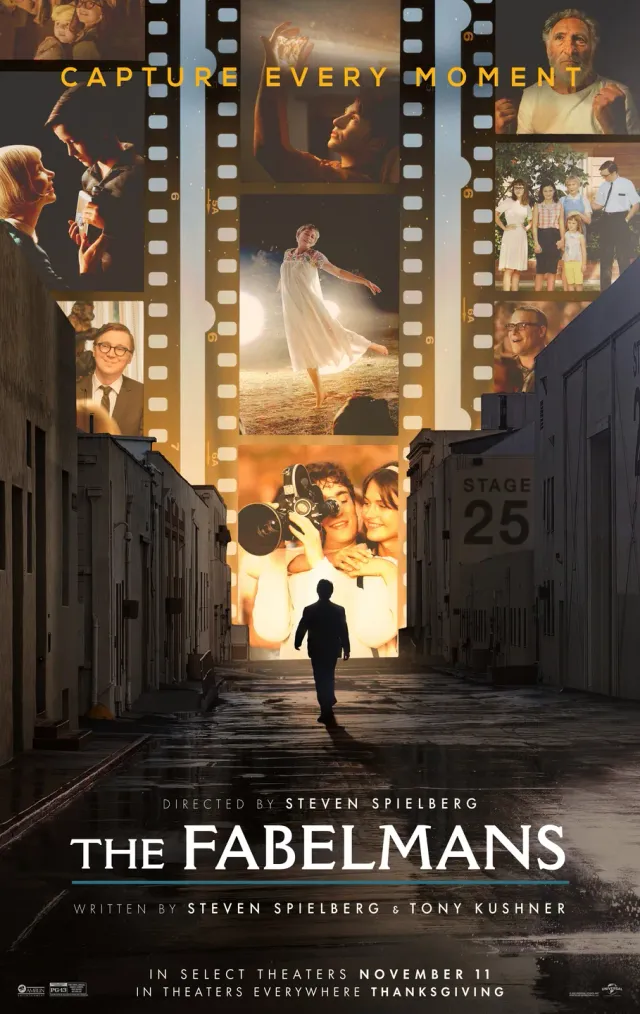
Sammy’s camera shifts from toy to instrument of understanding; filming lets him notice family tensions he is too young to interpret directly.
Why this matches +
Selected for the central appeal: Reflective family dramas about childhood memories, loss and the search for meaning.
Genres: Drama / Coming-of-age
Shared film traits
Based on recorded story, mood and style. Your preferences can change the order.
Memory and identity
What changes The Fabelmans revisits a childhood shaped by conflicting parents, family changes and an adult's reflective perspective.
Young Sammy Fabelman becomes fascinated with filmmaking after seeing a train crash in a movie and recreates it with his toy set and camera. As his family moves from New Jersey to Arizona and later California, the hobby grows into a way to understand what he sees at home. Sammy’s mother Mitzi is an expressive pianist; his father Burt is a practical engineer, and the household’s closeness is strained by changes neither parent can easily explain to their children. Sammy discovers that his camera can preserve details adults would rather avoid, placing him in a painful position between them. The coming-of-age story follows how making films becomes both an artistic calling and a way to process family fracture.
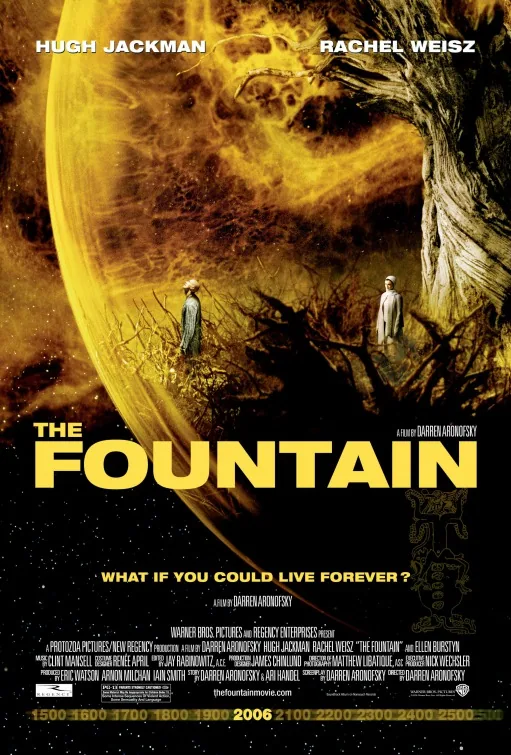
The layered strands transform a search for a cure into a broader question about whether love can coexist with mortality.
Why this matches +
Selected for the central appeal: Reflective family dramas about childhood memories, loss and the search for meaning.
Genres: Drama / Romance
Shared film traits
Based on recorded story, mood and style. Your preferences can change the order.
Memory and identity
What changes The Fountain uses expansive cosmic imagery and nonlinear storytelling to explore love, mortality and grief.
A scientist searches for a way to save his dying wife, while a writer creates a story about a conquistador seeking a tree of life and a later figure journeys through space. The film intertwines these strands without settling every connection between them. Darren Aronofsky’s drama uses recurring images and a compressed structure to explore love, mortality, grief and the desire to defeat loss.
Communal violence and economic pressure make a family's local belonging harder to sustain, turning migration into a decision whose costs cannot be shared evenly.
Why this matches +
These offer a related experience with a meaningful difference in story, tone, or presentation.
An adjacent discovery: a related idea with a different viewing experience.
Genres: Drama
Shared film traits
Based on recorded story, mood and style. Your preferences can change the order.
What changes Belfast reflects on childhood through vivid family memories amid wider social upheaval.
Buddy grows up in a working-class Belfast neighborhood at the start of the Troubles, where play, family routines and moviegoing continue alongside sectarian intimidation. His parents disagree about whether to stay, and employment, safety and attachment to the street make leaving a practical as well as emotional question. Buddy sees events partially, through the adults he loves and the films he watches, so the black-and-white images create a remembered childhood viewpoint rather than an exhaustive political history. The film's warmth does not erase the coercion that narrows the family's choices.
Therapy brings adult Otis back to memories of working as a child actor alongside his difficult father.
Why this matches +
These offer a related experience with a meaningful difference in story, tone, or presentation.
An adjacent discovery: a related idea with a different viewing experience.
Genres: Biography / Drama
Shared film traits
Based on recorded story, mood and style. Your preferences can change the order.
Memory and identity
What changes Honey Boy revisits a difficult father-child relationship through fragmented memories and adult reckoning.
Actor Otis Lort enters rehabilitation after a destructive incident, where therapy encourages him to revisit his childhood. In flashbacks, young Otis works on film sets while living with his father James, a former rodeo clown whose support and volatility are difficult to separate. The story moves between adult treatment and the boy’s memories, exploring how performance, work, and a complicated parent-child bond shape Otis’s understanding of himself.
Three separated stages of one life trace how protective habits form around experiences of shame, tenderness, violence and interrupted intimacy.
Why this matches +
These offer a related experience with a meaningful difference in story, tone, or presentation.
An adjacent discovery: a related idea with a different viewing experience.
Genres: Drama / Coming-of-age
Shared film traits
Based on recorded story, mood and style. Your preferences can change the order.
What changes Moonlight follows fragmented stages of a young person's life as family, love and identity leave lasting marks.
Across childhood, adolescence and adulthood, a quiet boy from Miami learns different ways to protect himself from bullying, instability at home and expectations of masculinity. A drug dealer and his partner offer care complicated by the economy harming his mother, while one friendship creates a vulnerable possibility of intimacy. The divisions between the three periods reveal how a hardened adult identity can preserve earlier wounds without extinguishing the desire to be known.
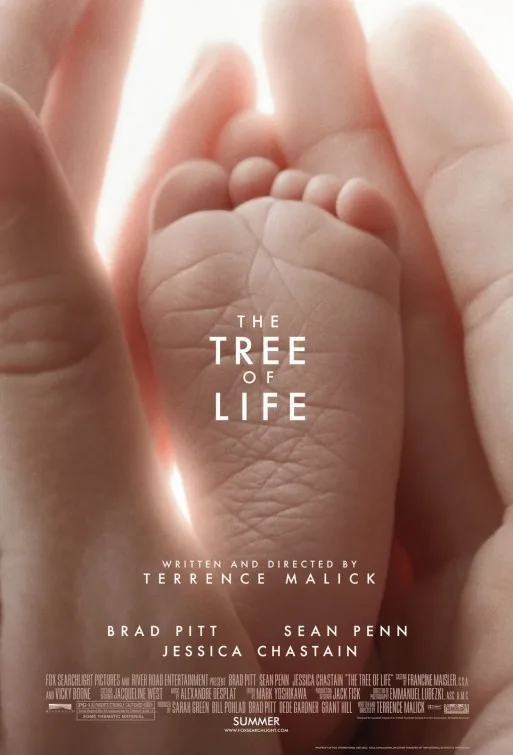
Adult Jack reflects on his childhood in 1950s Texas, where his mother's warmth and his father's strict, ambitious parenting shaped his ideas about love and power. The memory of a family loss runs through his recollections, making ordinary moments of play, discipline and sibling rivalry feel charged with questions he could not answer as a child. The film moves between Jack's present, fragmented family memories and vast images of the universe's origins, placing private grief beside the scale of creation. Rather than offer a single explanatory account of the past, it lets images, music and recurrence carry much of the emotional argument. Jack's adult search is for a way to hold anger, love and absence together.
What drives the story
An adult revisits family memories and a sibling's death while the film places his private grief beside an immense cosmic history.
The people at its centre
The mother and father represent contrasting ways of meeting the world, but neither is reduced to a simple moral; young Jack's shifting loyalties register a child's limited understanding.
What it feels like
A mosaic of childhood episodes, whispered voiceover, classical music and cosmic imagery replaces linear plot with associative movement.
Worth knowing
For viewers open to meditative, experimental family drama about grief and memory. Its abstraction and theological questions differ from conventional coming-of-age narratives.
Memorygriefcreation
Mood
Meditative · awe-filled · intimate
Pacing
Fragmented · contemplative
Visual style
Cosmic imagery · impressionistic family scenes · natural light
Storytelling
A man's childhood memories open into reflections on loss and the universe