A young boy and his Protestant family experience the onset of the Troubles in 1969 Belfast, weighing whether to leave their beloved neighborhood in an affectionate, largely black-and-white childhood memoir.
What should feel similar?
Find your next favourite
5 films · Closest overall matches
Hide films you’ve seen or don’t want. Saved on this device.
No matches for this combination yet.
Try another option or reset your choices to see more films.
An emigrant's established new attachments are tested by a return that makes her former home newly attractive without erasing obligations already accepted elsewhere.
Why this matches +
Pair notes distinguish story, setting and tone.
An adjacent discovery: a related idea with a different viewing experience.
Genres: Drama / Romance
Shared film traits
Based on recorded story, mood and style. Your preferences can change the order.
What changes A young woman emigrates to 1950s New York in a romantic drama rather than a child witnessing the onset of the Troubles.
A young Irish woman leaves limited work prospects for New York, where homesickness gradually gives way to employment, friendship, and a serious relationship. A family death draws her back to a place that now offers possibilities unavailable before she left. The return makes belonging a choice with consequences for commitments kept partly out of view, exposing how a newly formed identity can become difficult to explain when an older community imagines a different future for her.
Personal crises among a worker and her employers reveal the unequal labour sustaining a shared household.
Why this matches +
Pair notes distinguish story, setting and tone.
An adjacent discovery: a related idea with a different viewing experience.
Genres: Drama
Shared film traits
Based on recorded story, mood and style. Your preferences can change the order.
What changes A domestic worker’s experience in 1970s Mexico City is more adult and observational than Buddy’s childhood view of Belfast.
A domestic worker cares for a middle-class family in Mexico City while her own relationship exposes her to abandonment and uncertainty. Changes in the employers' marriage unfold alongside her pregnancy and the political tensions surrounding the household. Work, affection and class hierarchy remain inseparable as she supports children whose dependence on her does not erase the unequal conditions of their bond.
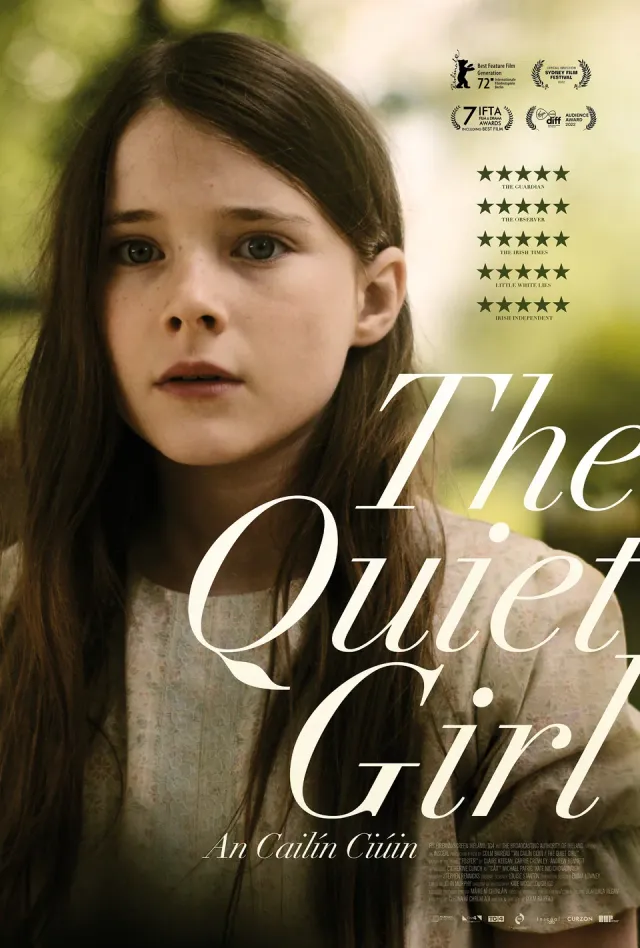
Cáit moves into a relative’s home for the summer, where daily chores and careful attention reveal a different model of family life.
Why this matches +
Pair notes distinguish story, setting and tone.
An adjacent discovery: a related idea with a different viewing experience.
Genres: Drama
Shared film traits
Based on recorded story, mood and style. Your preferences can change the order.
What changes A neglected girl spends a rural summer with relatives without the Troubles or Belfast’s close-knit urban neighborhood.
Nine-year-old Cáit is sent from her crowded home to stay with distant relatives in rural Ireland for the summer. Eibhlín welcomes her with patient care, while the more reserved Seán gradually makes room for the child in the routines of the farm. As Cáit learns the household’s silences and small acts of kindness, she discovers how attention can make a neglected child feel safe and how grief can remain present without being explained.
Episodic childhood play gradually reveals an unstable household whose economic pressures are approaching consequences the child cannot control.
Why this matches +
Pair notes distinguish story, setting and tone.
An adjacent discovery: a related idea with a different viewing experience.
Genres: Drama
Shared film traits
Based on recorded story, mood and style. Your preferences can change the order.
What changes A contemporary Florida motel community faces poverty and housing instability rather than sectarian conflict in 1969 Belfast.
A young girl spends a summer roaming the budget motels and improvised play spaces near a major Florida tourist resort. Her mother's precarious work and escalating conflicts remain only partly visible through the child's adventures, while a motel manager repeatedly balances compassion against practical limits. The pleasures of unsupervised friendship unfold beside the risk of losing a fragile home, exposing a gap between childhood imagination and the adult systems shaping it.
Separation from a protected colonial household forces a child to acquire survival networks, making each apparent source of paternal protection both useful and unreliable. Internment forces a child to barter and adapt, but apparent adult protection is unstable and self-interested.
Why this matches +
Pair notes distinguish story, setting and tone.
An adjacent discovery: a related idea with a different viewing experience.
Genres: War / Drama
Shared film traits
Based on recorded story, mood and style. Your preferences can change the order.
What changes A wartime Shanghai internment epic is far more sweeping and harrowing than Branagh’s warm neighborhood memoir.
A privileged British boy separated from his parents during the Japanese occupation of Shanghai learns to survive through exchanges he could not have imagined in his protected household. Internment gives him temporary mentors, precarious alliances and an intense fascination with aircraft that does not neatly distinguish beauty from destructive force. Adaptation keeps him alive while changing what childhood reunion could mean, as the end of fighting cannot simply restore the person who entered it. Jim’s privilege shapes the wartime story: he loses colonial protection while the film remains close to his experience.
Buddy grows up in a working-class Belfast neighborhood at the start of the Troubles, where play, family routines and moviegoing continue alongside sectarian intimidation. His parents disagree about whether to stay, and employment, safety and attachment to the street make leaving a practical as well as emotional question. Buddy sees events partially, through the adults he loves and the films he watches, so the black-and-white images create a remembered childhood viewpoint rather than an exhaustive political history. The film's warmth does not erase the coercion that narrows the family's choices.
What drives the story
Communal violence and economic pressure make a family's local belonging harder to sustain, turning migration into a decision whose costs cannot be shared evenly.
The people at its centre
Buddy's bond with grandparents, neighbors and parents gives both staying and leaving a human cost. His parents' different strategies reflect protection under pressure rather than a simple split between courage and cowardice.
What it feels like
Black-and-white photography and brief color passages frame the story as selective memory. Music, theater and cinema become ways a child encounters a wider world while violence changes the neighborhood outside.
Worth knowing
Compare childhood memories of migration and communal conflict, while distinguishing personal recollection from an exhaustive account of the Troubles. Affection for a place cannot resolve sectarian power by itself.
FamilyMemoryBelonging
Mood
Warm · Anxious · Bittersweet
Pacing
Measured
Visual style
Monochrome · Remembered intimacy · Selective color