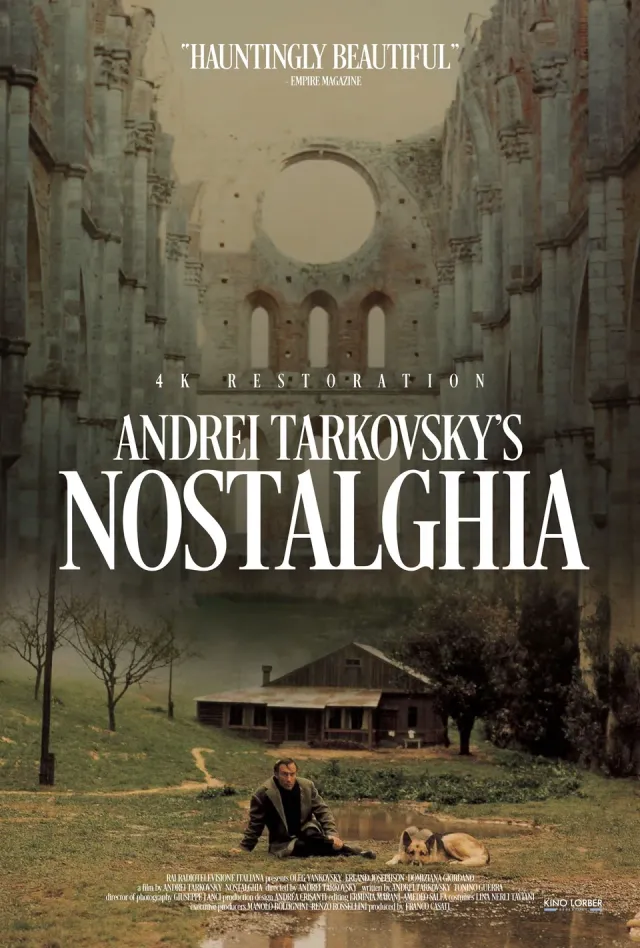
The candle promise gives a small physical task to Andrei’s diffuse homesickness and to Domenico’s desperate belief in shared responsibility.
Why this matches +
Selected for the central appeal: Poetic, fragmented reflections on childhood, family memory and historical change.
Genres: Drama
Shared film traits
Based on recorded story, mood and style. Your preferences can change the order.
Both directed by Andrei Tarkovsky.
Memory and identity
What changes Nostalghia shares Tarkovsky's meditative imagery and concern with memory, loss and displacement.
Russian writer Andrei Gorchakov travels through Tuscany with interpreter Eugenia while researching composer Pavel Sosnovsky, a countryman who died by suicide after returning from Italy. Andrei feels estranged from the landscape and from Eugenia’s attempts at closeness. He befriends Domenico, a man regarded as mad after locking his family indoors to save them from the end of the world, and accepts a candle with a promise to carry its flame across a drained mineral pool. As Domenico’s public protest ends in self-immolation, Andrei returns to complete the candle crossing, collapsing after he succeeds.
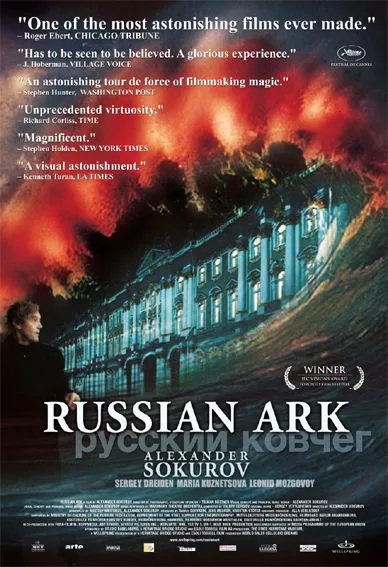
A wandering narrator’s passage through the palace makes historical periods coexist in one present-tense route.
Why this matches +
These offer a related experience with a meaningful difference in story, tone, or presentation.
An adjacent discovery: a related idea with a different viewing experience.
Genres: Fantasy / Historical
Shared film traits
Based on recorded story, mood and style. Your preferences can change the order.
Memory and identity
What changes Russian Ark moves through Russian history as a flowing, nontraditional reflection on cultural memory.
A disembodied narrator wanders through the Hermitage and Winter Palace, encountering figures from different periods of Russian history alongside a European diplomat. The journey unfolds as one continuous camera movement, connecting rooms, art and social rituals without conventional cuts. The film makes the museum’s architecture its organizing principle and turns a walk through accumulated history into a meditation on memory and cultural identity.
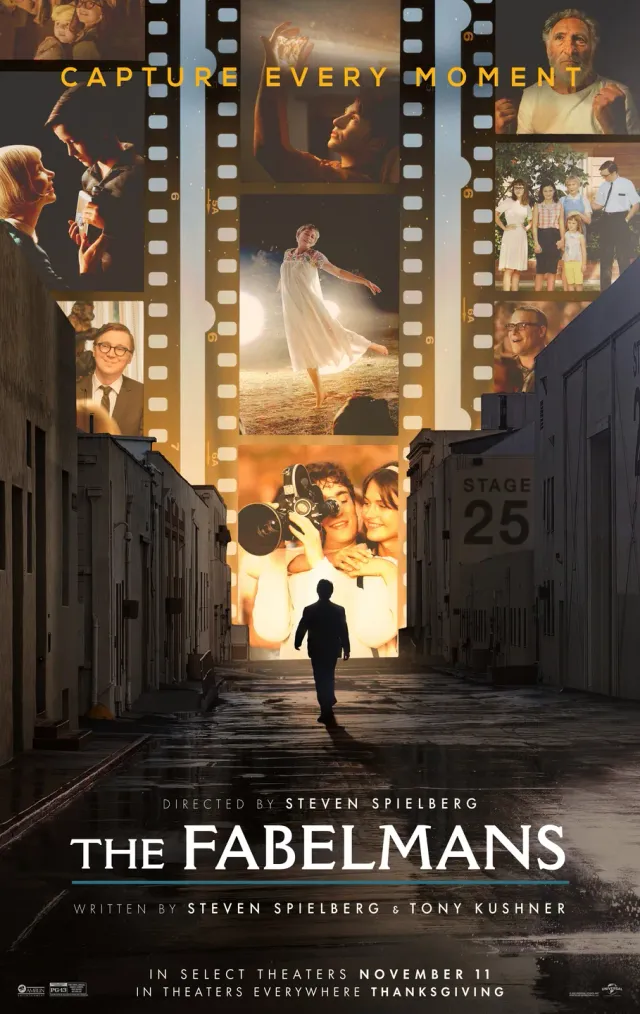
Sammy’s camera shifts from toy to instrument of understanding; filming lets him notice family tensions he is too young to interpret directly.
Why this matches +
These offer a related experience with a meaningful difference in story, tone, or presentation.
An adjacent discovery: a related idea with a different viewing experience.
Genres: Drama / Coming-of-age
Shared film traits
Based on recorded story, mood and style. Your preferences can change the order.
Memory and identity
What changes The Fabelmans reflects on childhood, family tensions and the formation of an artist's perspective.
Young Sammy Fabelman becomes fascinated with filmmaking after seeing a train crash in a movie and recreates it with his toy set and camera. As his family moves from New Jersey to Arizona and later California, the hobby grows into a way to understand what he sees at home. Sammy’s mother Mitzi is an expressive pianist; his father Burt is a practical engineer, and the household’s closeness is strained by changes neither parent can easily explain to their children. Sammy discovers that his camera can preserve details adults would rather avoid, placing him in a painful position between them. The coming-of-age story follows how making films becomes both an artistic calling and a way to process family fracture.
Therapy brings adult Otis back to memories of working as a child actor alongside his difficult father.
Why this matches +
These offer a related experience with a meaningful difference in story, tone, or presentation.
An adjacent discovery: a related idea with a different viewing experience.
Genres: Biography / Drama
Shared film traits
Based on recorded story, mood and style. Your preferences can change the order.
Memory and identity
What changes Honey Boy revisits childhood and a difficult parent-child relationship through fragmented recollection.
Actor Otis Lort enters rehabilitation after a destructive incident, where therapy encourages him to revisit his childhood. In flashbacks, young Otis works on film sets while living with his father James, a former rodeo clown whose support and volatility are difficult to separate. The story moves between adult treatment and the boy’s memories, exploring how performance, work, and a complicated parent-child bond shape Otis’s understanding of himself.
News from home opens a recollection in which apprenticeship, first love and departure shape the meaning of a later artistic life.
Why this matches +
These offer a related experience with a meaningful difference in story, tone, or presentation.
An adjacent discovery: a related idea with a different viewing experience.
Genres: Drama / Coming-of-age
Shared film traits
Based on recorded story, mood and style. Your preferences can change the order.
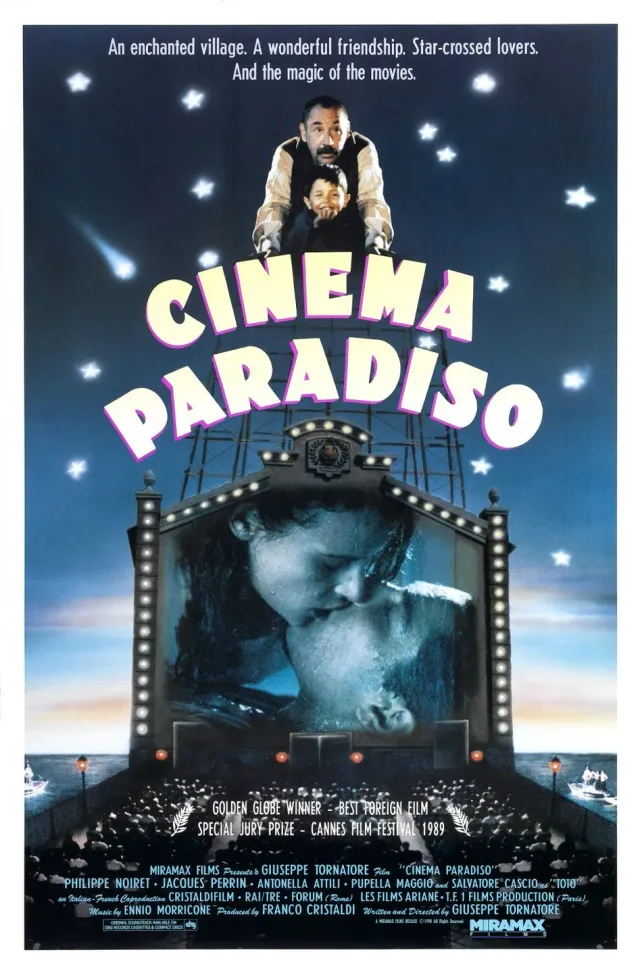
What changes Cinema Paradiso looks back on formative childhood relationships through memory and loss.
A successful filmmaker learns of a death in the Sicilian town he left decades earlier and revisits his childhood through memories of its cinema. Friendship with a projectionist introduced him to images, forbidden access and the communal life organised around a screen. Growing older brings romance and the difficult possibility that following a vocation may require leaving the place and people through which that vocation first became imaginable.
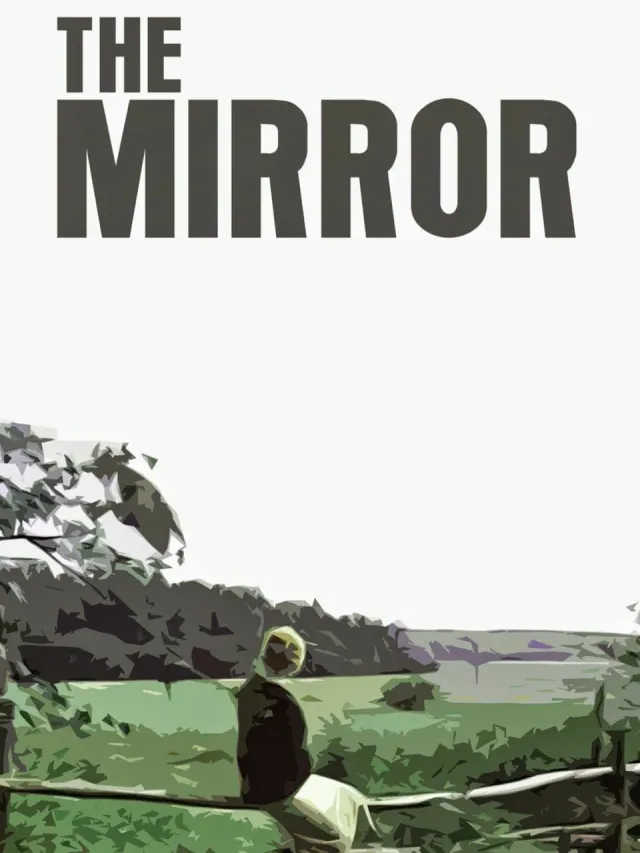
A dying man’s memories unfold in fragments across childhood, adulthood and wartime, with the film shifting between a boy named Alex, his mother and the adult voice remembering them. Images of a country house, a printing press and family separations recur without being arranged into a conventional chronological plot. Andrei Tarkovsky weaves autobiographical material, poetry and historical footage into a meditation on memory and inheritance. The scenes do not always clarify whether they belong to recollection, dream or present action; their emotional links matter more than a single explanatory mystery.
What drives the story
Recurring images and family memories accumulate associatively, connecting private experience with the upheavals of Soviet history rather than driving toward one external goal.
The people at its centre
The mother, the absent father and the remembered child appear across different ages and perspectives. The narrator’s longing and guilt shape how these figures return.
What it feels like
Long takes, natural elements, poetry and shifts between color and monochrome create a lyrical, elliptical viewing experience that rewards patient attention.
Worth knowing
For viewers comfortable with meditative, nonlinear cinema and autobiographical memory. It is not a conventional plot puzzle, and its images remain open rather than resolving into one definitive interpretation.
MemoryFamilyHistory
Mood
Lyrical · Reflective · Elliptical
Pacing
Associative montage · Nonlinear time shifts
Visual style
Long takes · Natural imagery · Color and monochrome shifts