A secret romance develops inside a production financed by a possessive patron, forcing the lovers to turn performance into a means of concealment and expression.
Why this matches +
Selected for the central appeal: Musical dramas about performers, intimate relationships and political danger beneath glamorous spectacle.
Genres: Drama / Romance
Shared film traits
Based on recorded story, mood and style. Your preferences can change the order.
Music and performance
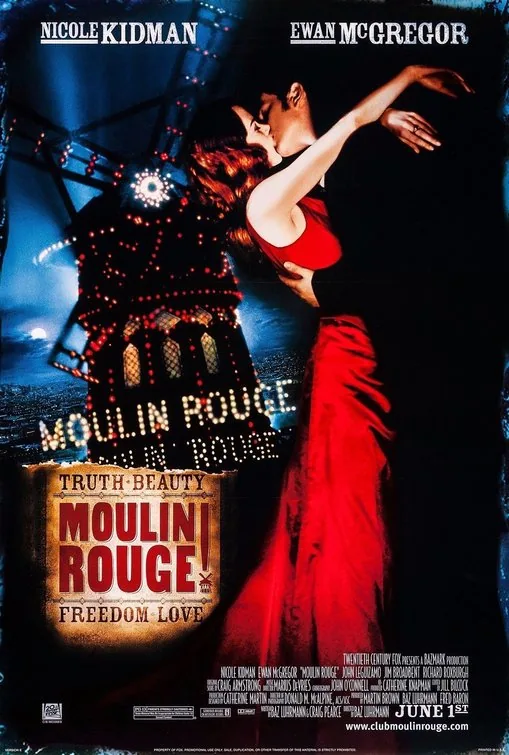
What changes Moulin Rouge! places performers and a complicated romance within a vivid nightclub world.
A young writer enters a Parisian cabaret hoping to join an artistic revolution and falls in love with its star performer. Their relationship must be concealed from a wealthy patron whose funding is expected to secure the venue's future and access to the woman he desires. A theatrical production becomes both cover and mirror for their romance, while illness and economic dependence make declarations of freedom increasingly fragile.
A performer's ascent converts publicity and intimate alliance into political influence, with a critical countervoice continually contesting the public narrative of service and belonging. Eva’s access to political power grows through performance, partnership and popular identification, while class resentment frames the story.
Why this matches +
These offer a related experience with a meaningful difference in story, tone, or presentation.
An adjacent discovery: a related idea with a different viewing experience.
Genres: Musical / Drama
Shared film traits
Based on recorded story, mood and style. Your preferences can change the order.
Music and performance
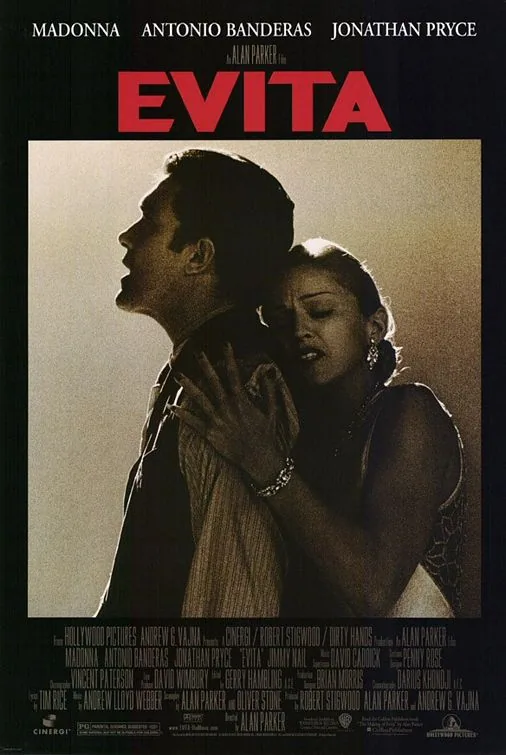
What changes Evita combines musical spectacle, personal ambition and the rise of political power.
An actress and radio performer rises from provincial exclusion into a central public role beside an ambitious Argentine political leader. Her ability to command attention turns personal transformation into an instrument of popular identification, while elite hostility and a skeptical commentator challenge the image being presented. Public devotion, material assistance and personal advancement remain difficult to disentangle, especially when illness makes the construction of a lasting symbol more urgent than the limits of an individual life. The sung-through form turns Eva Perón’s rise into a contest over public memory, with Che as a critical narrator.
The industry's transition to sound changes the conditions of employment, turning careers that seemed secure into uneven tests of adaptability and marketability. The plot connects private ambition to production systems rather than to talent alone.
Why this matches +
These offer a related experience with a meaningful difference in story, tone, or presentation.
An adjacent discovery: a related idea with a different viewing experience.
Genres: Drama / Comedy
Shared film traits
Based on recorded story, mood and style. Your preferences can change the order.
Music and performance
What changes Babylon uses exuberant performance and behind-the-scenes relationships to expose the costs of entertainment.
In late-1920s Hollywood, ambitious newcomers and established performers chase work inside an industry changing from silent pictures to sound. Manny's rise, Nellie's volatile stardom and Jack Conrad's established career each meet a different form of obsolescence; sound reorganizes not only technique but which voices and bodies studios will tolerate. Parties and huge productions display the industry's appetite for spectacle while the people who make it absorb humiliation and risk. Damien Chazelle's fictional ensemble is a feverish, often abrasive meditation on cinema's capacity to preserve images while discarding workers.
Victoria adopts a layered stage identity that opens career opportunities while complicating the relationships around her.
Why this matches +
These offer a related experience with a meaningful difference in story, tone, or presentation.
An adjacent discovery: a related idea with a different viewing experience.
Genres: Comedy / Musical
Shared film traits
Based on recorded story, mood and style. Your preferences can change the order.
Music and performance
What changes Victor/Victoria follows performers and unconventional relationships in a European cabaret setting.
In 1930s Paris, struggling singer Victoria takes the stage under the identity Victor, presented as a man who performs as a woman. The deception gives her work and acclaim, but it also attracts nightclub performer King Marchan, whose feelings conflict with his assumptions about gender and desire, while Victoria and her friend Toddy manage an increasingly public performance whose success depends on keeping private truth and stage persona in tension.
Gideon keeps moving between stage rehearsal, film editing and medical strain, trying to preserve work and appetite by editing out the evidence of collapse. The production process itself becomes the plot's accelerating clock.
Why this matches +
These offer a related experience with a meaningful difference in story, tone, or presentation.
An adjacent discovery: a related idea with a different viewing experience.
Genres: Drama / Musical
Shared film traits
Based on recorded story, mood and style. Your preferences can change the order.
Music and performance
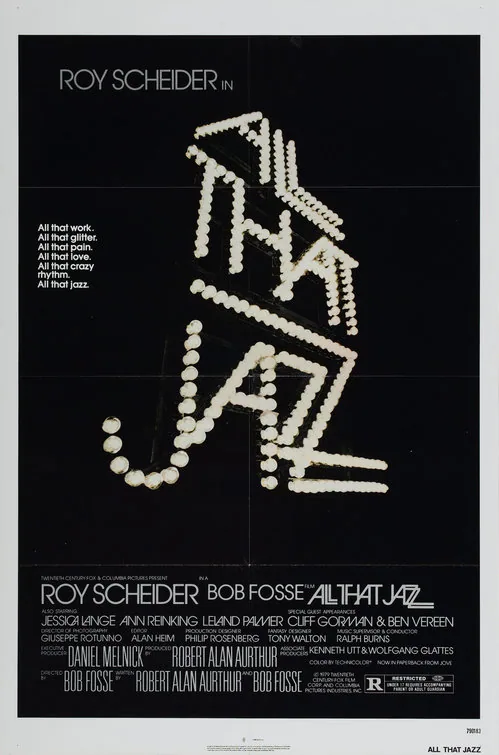
What changes All That Jazz uses stylized musical numbers to comment on a performer's troubled personal life.
Joe Gideon, a Broadway director and choreographer, juggles a new stage production, the editing of his latest film, family obligations and a punishing work routine. His theatrical discipline depends on treating exhaustion as something to be cut around, while the people close to him watch that self-image fail. Fantasies with an imagined figure of death interrupt rehearsals and daily life, making performance a way to control what he cannot admit. Bob Fosse's semi-autobiographical musical turns the labor of making a show into a show about the cost of making one.
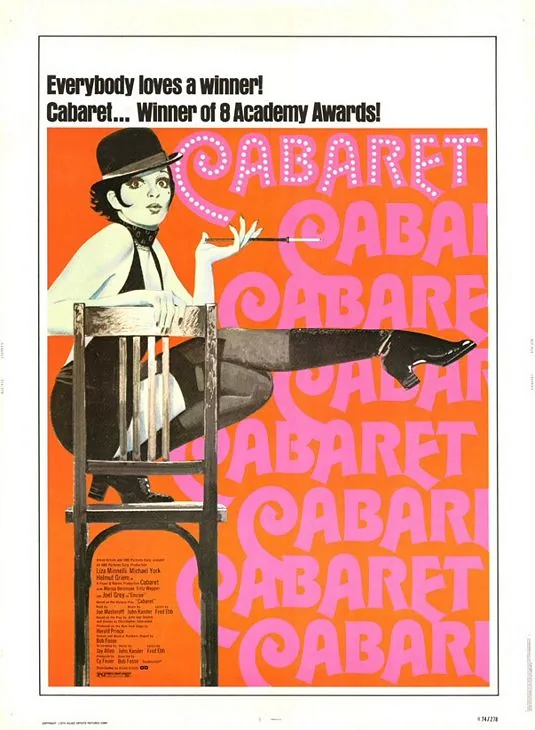
In 1931 Berlin, English academic Brian Roberts meets American performer Sally Bowles in the world around the Kit Kat Club. Their relationship, her attachment to a wealthy patron and the club's exuberant performances unfold as political exclusion becomes ordinary outside its stage. The musical numbers comment on the dramatic action without safely standing apart from it: spectacle can expose brutality while also helping a community treat it as someone else's problem. Personal freedom and romantic choice remain unequal as fascism tightens its hold. The Emcee's numbers can turn a casual audience's laughter into part of the film's critique.
What drives the story
Romantic and sexual experiments unfold alongside fascism's rise, with the club's stage translating political change into performance but not stopping it. The songs comment on events without making performers politically omniscient.
The people at its centre
Sally's ambition and financial dependence shape her choices with Brian and Max, while other characters' exposure to antisemitism shows how differently people navigate the same city. Intimacy cannot erase unequal freedom.
What it feels like
Cabaret numbers and dramatic scenes refract one another; seductive spectacle becomes increasingly uneasy as the political world narrows beyond the club. The Emcee's performance can implicate the audience in its own laughter.
Worth knowing
Compare art and private pleasure under rising authoritarianism, not a safe nightclub escape or a generic tale of resistance. The Kit Kat Club is a lens on the period, not a protected refuge from it.