The dark comedy depends on a double standard: Verdoux's efficient domestic murders are treated as monstrous while respectable economic and wartime systems normalize larger violence.
Why this matches +
Selected for the central appeal: A self-serving spouse turns social respectability and legal hypocrisy into an elaborate comic murder rationale.
Genres: Drama / Comedy
Shared film traits
Based on recorded story, mood and style. Your preferences can change the order.
What changes A polite man’s rationalized violence against women exposes respectable society’s accommodation of murder; serial financial calculation replaces a nobleman’s plan to exploit marital honor.
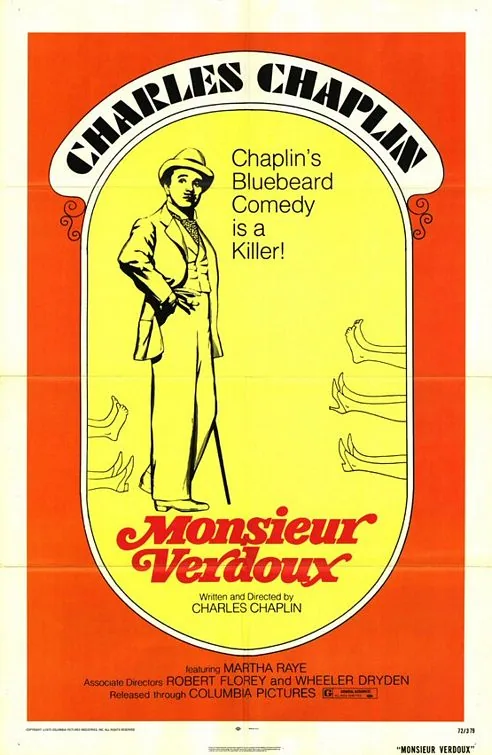
After losing a long-held bank job, Henri Verdoux secretly marries wealthy widows under assumed identities and murders them to support his disabled wife and child. His careful schemes repeatedly wobble: Annabella escapes his attempts, a flower seller's kindness leads him to spare her, and his pursuit of Marie Grosnay threatens to expose his real name. When financial collapse wipes out his investments, the increasingly desperate killer is eventually caught. At trial, Verdoux argues that his crimes are small beside the mass killing accepted in war, forcing the courtroom to hear the logic beneath his polished respectability.
A betrayed wife and her allies repeatedly try to kill the husband who keeps surviving.
Why this matches +
Selected for the central appeal: A self-serving spouse turns social respectability and legal hypocrisy into an elaborate comic murder rationale.
Genres: Crime / Drama
Shared film traits
Based on recorded story, mood and style. Your preferences can change the order.
What changes A marriage’s betrayal generates a grotesquely comic murder effort whose incompetence exposes domestic self-deception; a wronged wife’s retaliation reverses the source’s male entitlement.
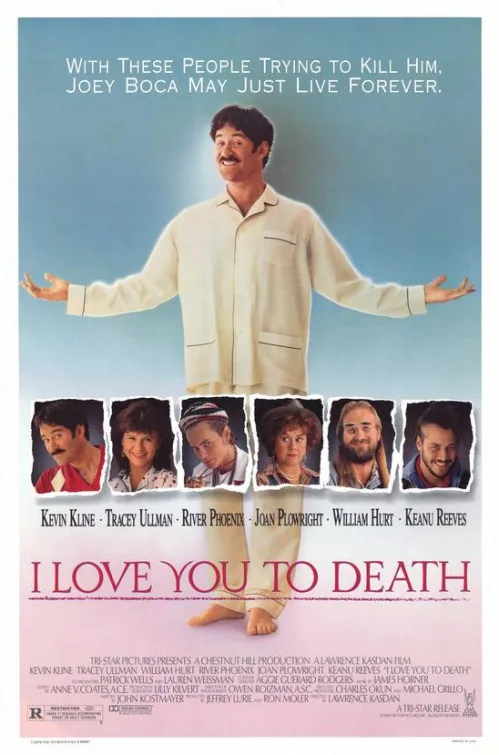
Pizza-parlor owner Joey Boca is habitually unfaithful, and his wife Rosalie eventually learns that his promises cannot be trusted. Her mother and a young admirer encourage a desperate plan to end the marriage permanently, but their attempts at murder become increasingly inept and entangled. The comedy draws on a real attempted murder case while keeping its attention on an eccentric household and the fallout of betrayal.
Kidnappers discover their hostage's husband is happier without her, derailing every participant's carefully laid plan.
Why this matches +
Selected for the central appeal: A self-serving spouse turns social respectability and legal hypocrisy into an elaborate comic murder rationale.
Genres: Comedy / Crime
Shared film traits
Based on recorded story, mood and style. Your preferences can change the order.
What changes A husband’s desire to eliminate his wife becomes an escalating black-comic scheme that exposes selfishness; kidnapping and money replace an honor-based excuse for a planned killing.
Unhappy millionaire Sam Stone is delighted when kidnappers take his wife Barbara, believing they will carry out his own plan to murder her. The kidnappers, Ken and Sandy, have their own motives and soon discover that Sam has no interest in paying a ransom. Their intersecting schemes spiral into misunderstandings and reversals, turning a domestic revenge plot into a farce about greed and selfishness.
Suzanne manipulates young admirers into removing the obstacle she sees in her path to fame.
Why this matches +
Related viewing experiences with the specific differences recorded for each pair.
An adjacent discovery: a related idea with a different viewing experience.
Genres: Crime / Drama
Shared film traits
Based on recorded story, mood and style. Your preferences can change the order.
What changes An ambitious spouse recruits other people into a murder that serves a flattering story about personal destiny; American media aspiration replaces Sicilian honor and a legally exploitable accusation.
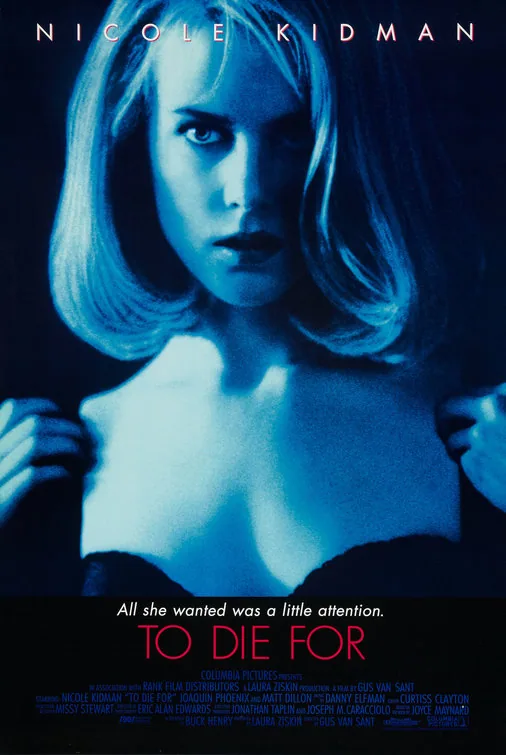
Suzanne Stone wants to become a television personality and treats her local reporting job as a step toward national attention. When her husband and his wish for a conventional life threaten her plans, she cultivates a group of teenagers and pulls them into a murder scheme. Documentary interviews and direct-address monologues expose how she packages ambition as a story for viewers.
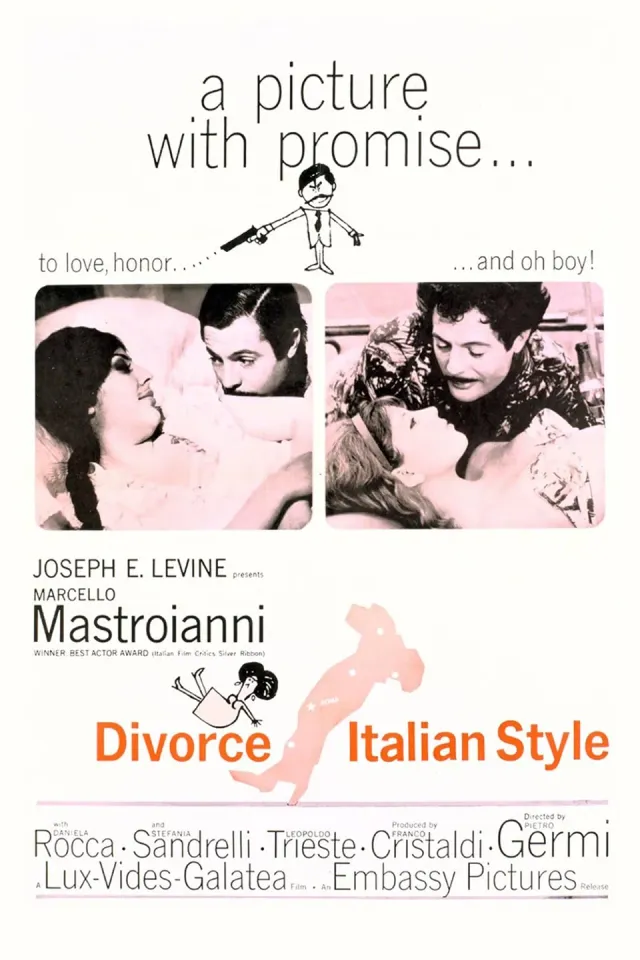
An impoverished Sicilian nobleman wants to leave his devoted wife for a younger relative, but divorce is unavailable. He begins arranging circumstances that would let him kill his wife and present the act as a socially excusable response to dishonor. Finding her a lover becomes a grotesque practical project, revealing how respectable language and selective law can turn a private appetite into a plan that requires someone else to appear guilty. Fefè’s narration packages entitlement as injured honor, asking viewers to notice how often his story flatters him.
What drives the story
A husband attempts to manufacture adultery so that a desired murder can fit an existing legal and cultural excuse, making social approval part of the crime's design.
The people at its centre
Ferdinando's narration reduces Rosalia to an obstacle, while the people he recruits have desires that exceed the roles his self-serving plan assigns them. Rosalia’s limited agency is obscured by the husband’s comic self-description and the culture that indulges him.
What it feels like
Black-and-white satire and exaggerated fantasy expose the distance between elaborate respectability and blunt opportunism, making comic alignment with the schemer intentionally uncomfortable.
Worth knowing
Match on a perpetrator arranging evidence to exploit institutional indulgence, while keeping historical honor-killing satire distinct from current legal guidance or endorsement of the narrator's view of his wife.