Both share a character study and social commentary, plus a humorous and unsettling atmosphere.
Why this matches +
Genres: Drama / Comedy
Shared film traits
Based on recorded story, mood and style. Your preferences can change the order.
Expect unsettling and humorous, with measured pacing.
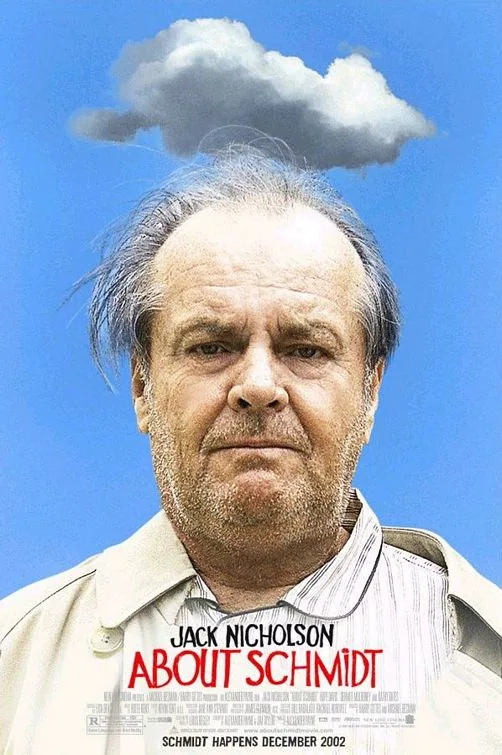
A suburban advertising worker responds to dissatisfaction with work and marriage by attempting a dramatic reinvention of his daily life. His fixation on his daughter's friend becomes one expression of a wish to recover a younger, less constrained self. Neighbouring households reveal other gaps between appearances and private experience, while narration from beyond the story's endpoint makes ordinary grievances unfold beneath an approaching death.
Based on recorded story, mood and style. Your preferences can change the order.
Expect humorous and unsettling, with measured pacing.
A financially desperate car salesman arranges his wife's kidnapping, expecting to extract money from her wealthy father while concealing his own role. The hired men bring incompatible temperaments and less control than his plan assumes, turning a private fraud into a chain of killings. A pregnant police chief follows the practical evidence with an attention to ordinary behaviour that contrasts sharply with the self-importance and denial driving the people she is trying to identify.
Based on recorded story, mood and style. Your preferences can change the order.
Expect humorous and hopeful, with steady pacing.
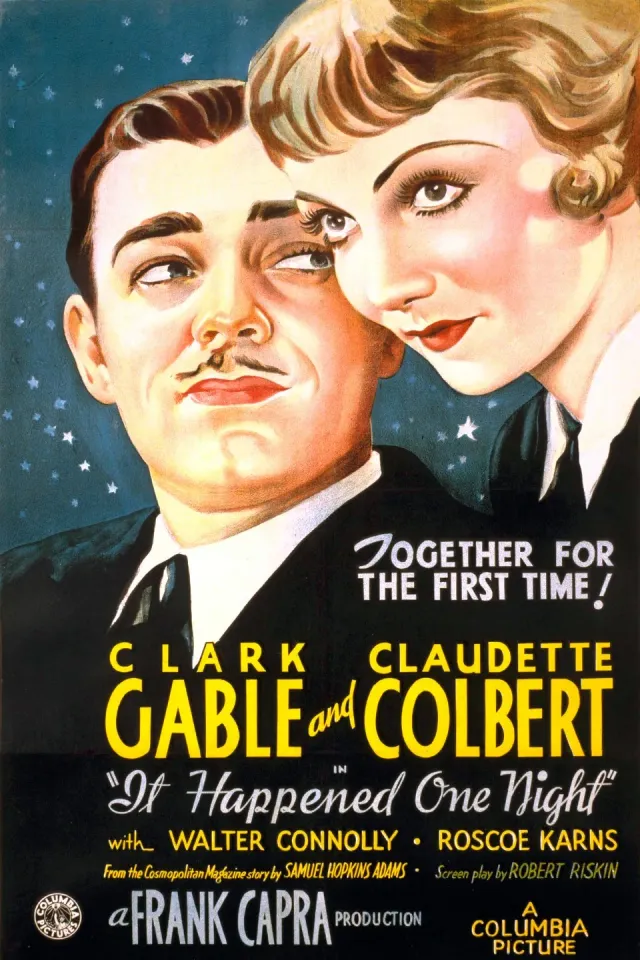
A sheltered heiress fleeing her father's control travels toward the man she has impulsively married, only to lose the money and privileges that usually smooth her way. An unemployed reporter recognises a story in her predicament and offers assistance in exchange for exclusive access. Their improvised journey forces two combative strangers to cooperate across class differences while their bargain becomes harder to keep emotionally impersonal.
Based on recorded story, mood and style. Your preferences can change the order.
Expect humorous and theatrical, with steady pacing.
A wealthy man's apparent murder leaves eight women isolated in a snowbound country house, each with a reason to hide something. Family members and servants interrogate one another as money, desire, and resentment complicate every accusation. Musical interludes interrupt the investigation, making the gradual exposure of relationships as important as the identity of a possible killer.
Based on recorded story, mood and style. Your preferences can change the order.
What changes Monsieur Verdoux is tagged wry and unsettling; Divorce, Italian Style is tagged satirical and macabre.
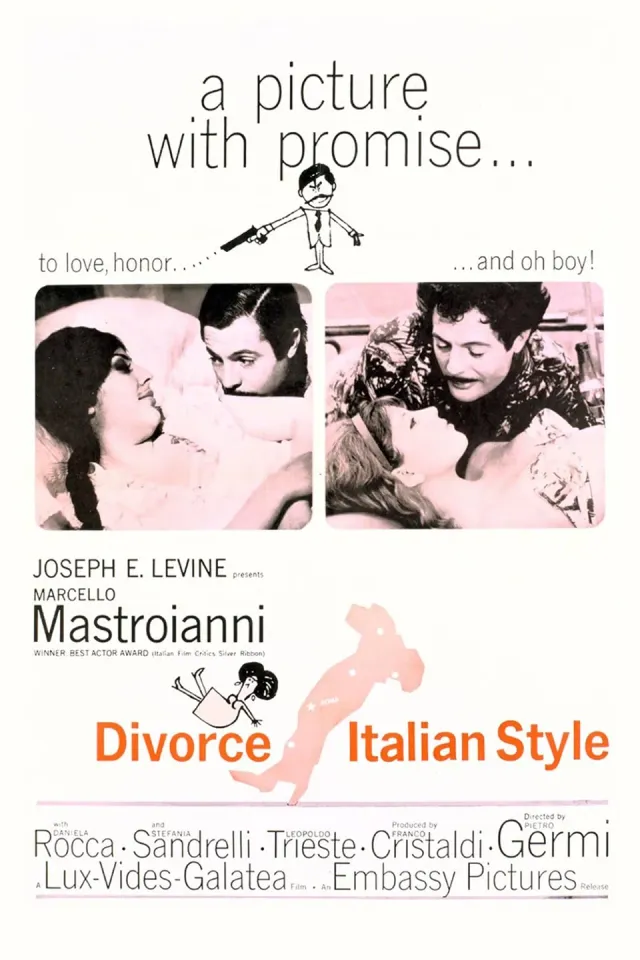
An impoverished Sicilian nobleman wants to leave his devoted wife for a younger relative, but divorce is unavailable. He begins arranging circumstances that would let him kill his wife and present the act as a socially excusable response to dishonor. Finding her a lover becomes a grotesque practical project, revealing how respectable language and selective law can turn a private appetite into a plan that requires someone else to appear guilty. Fefè’s narration packages entitlement as injured honor, asking viewers to notice how often his story flatters him.
Based on recorded story, mood and style. Your preferences can change the order.
Expect melancholic and humorous, with measured pacing.
A newly retired insurance employee loses his wife and begins questioning what his work and marriage have actually meant. Traveling toward his daughter's wedding gives him a chance to interfere with her plans while presenting his life to a distant sponsored child through letters. The gap between his self-description and the encounters around him exposes grief, resentment, and a need for significance he struggles to express generously.
Based on recorded story, mood and style. Your preferences can change the order.
Expect mysterious and humorous, with steady pacing.
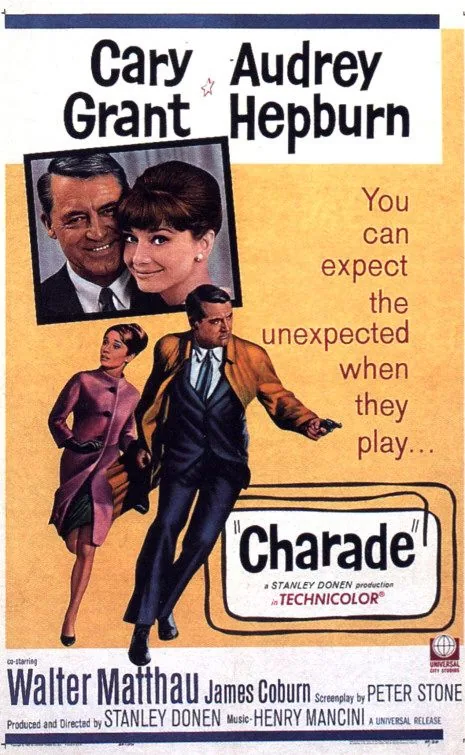
An American woman returns to Paris to find her apartment emptied and her estranged husband murdered. Several men claim that he held money stolen during the war, and believe she knows where it has gone. A charming stranger offers protection while repeatedly changing his own account of who he is, forcing her to negotiate an attraction she cannot separate from the possibility of another calculated deception.
Based on recorded story, mood and style. Your preferences can change the order.
What changes Monsieur Verdoux: measured and steady. Qu'est-ce qu'on a fait au Bon Dieu?: family gatherings escalate from polite misunderstanding into comic conflict.
Claude and Marie Verneuil are a traditional Catholic couple whose four daughters have married men from different religious and cultural backgrounds. They try to welcome the families while wrestling with assumptions they rarely recognize as their own. When the youngest daughter announces an engagement that appears to align with their hopes, the family’s expectations collide with the realities of love and identity. The French comedy uses a household ensemble to test tolerance.
Based on recorded story, mood and style. Your preferences can change the order.
Expect warm and humorous, with measured pacing.
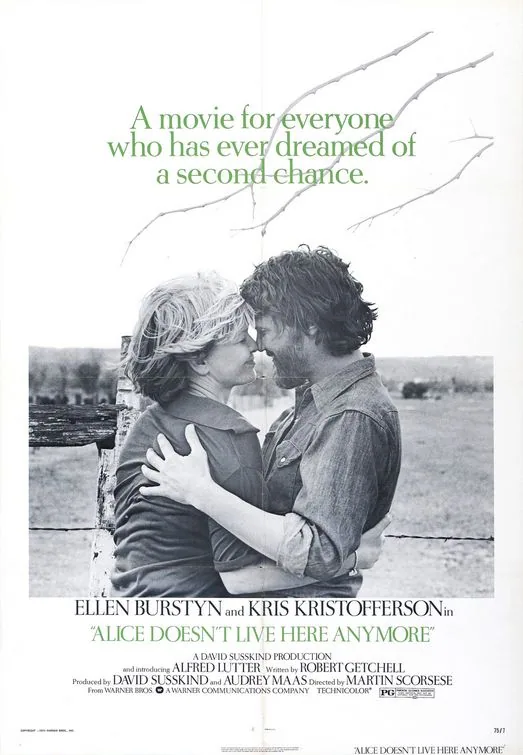
After her husband's death, a woman sets out with her son hoping to rebuild a singing career and a life less controlled by disappointment. Financial pressure and an unsafe romance interrupt the journey, leading her to restaurant work in another town. New friendship and attraction offer possibilities, but choosing companionship must be reconciled with economic survival, her child's needs, and an ambition she has not simply outgrown.
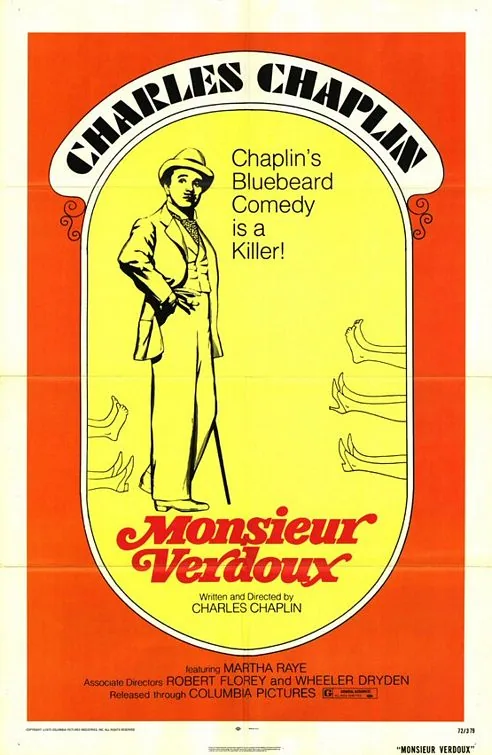
After losing a long-held bank job, Henri Verdoux secretly marries wealthy widows under assumed identities and murders them to support his disabled wife and child. His careful schemes repeatedly wobble: Annabella escapes his attempts, a flower seller's kindness leads him to spare her, and his pursuit of Marie Grosnay threatens to expose his real name. When financial collapse wipes out his investments, the increasingly desperate killer is eventually caught. At trial, Verdoux argues that his crimes are small beside the mass killing accepted in war, forcing the courtroom to hear the logic beneath his polished respectability.
What drives the story
The dark comedy depends on a double standard: Verdoux's efficient domestic murders are treated as monstrous while respectable economic and wartime systems normalize larger violence.
The people at its centre
His tenderness toward his family and moments of mercy complicate sympathy without excusing his calculated killing; the victims remain people his charm tries to erase.
What it feels like
Chaplin's precise physical comedy and genteel manners sit against a cold crime premise, producing satire that turns uncomfortable rather than cozy.
Worth knowing
It shares a serial-killer premise with crime films, but its governing mode is political black comedy about self-justification and respectable violence.