An unconventional care appointment challenges a household's routines and makes social recognition develop through shared daily adjustments rather than formal credentials.
Why this matches +
Selected for the central appeal: Character dramas about unlikely friendship, caregiving and relationships shaped by unequal circumstances.
Genres: Comedy / Drama
Shared film traits
Based on recorded story, mood and style. Your preferences can change the order.
What changes The Intouchables follows a wealthy disabled man and his hired caregiver developing an unlikely friendship across class differences.
A wealthy Parisian man paralysed after an accident interviews a young applicant who wants proof that he sought work rather than the position itself. Hiring him as a live-in caregiver creates a relationship neither man's social circle readily understands. Practical inexperience, direct humour and different expectations of dignity gradually produce mutual reliance, while money, family obligations and loneliness prevent the friendship from existing outside material differences.
A transactional marriage produces unchosen guardianship, and growing care must survive state suspicion before political change enables a painful family reunion.
Why this matches +
These offer a related experience with a meaningful difference in story, tone, or presentation.
An adjacent discovery: a related idea with a different viewing experience.
Genres: Drama / Comedy
Shared film traits
Based on recorded story, mood and style. Your preferences can change the order.
What changes Kolya follows a reluctant caregiver whose everyday responsibility becomes a close bond.
A politically sidelined Czech musician agrees to a sham marriage for money and is unexpectedly left caring for the woman's young son. Language differences and resentment make the arrangement awkward, while scrutiny of the marriage threatens both his freedom and the child's future. Everyday care gradually becomes an attachment neither had planned. Changes in the political order create a possible reunion with the child's mother, making the success of the bond depend partly on accepting an ending that does not preserve the substitute household intact.
The boy’s regular visits gradually reveal that Vincent’s apparent indifference is partly a shield against loss.
Why this matches +
These offer a related experience with a meaningful difference in story, tone, or presentation.
An adjacent discovery: a related idea with a different viewing experience.
Genres: Comedy / Drama
Shared film traits
Based on recorded story, mood and style. Your preferences can change the order.
What changes St. Vincent follows an initially reluctant older neighbor forming a caring bond through regular contact.
A lonely boy forms an unexpected bond with his elderly neighbor, a hard-drinking man whose rough manners conceal grief, debt and a complicated past. What begins as an after-school arrangement becomes a mentorship that changes how both see their lives. The comedy balances abrasive humor with tenderness, asking whether care can come from people who do not fit an idealized image of a role model.
A shared move to an overstated retirement destination forces several residents to reassess their expectations.
Why this matches +
These offer a related experience with a meaningful difference in story, tone, or presentation.
An adjacent discovery: a related idea with a different viewing experience.
Genres: Drama / Comedy
Shared film traits
Based on recorded story, mood and style. Your preferences can change the order.
What changes The Best Exotic Marigold Hotel follows older people forming new relationships as they adjust to changing circumstances.
Several British retirees move to a hotel in Jaipur that promises an affordable and appealing new life. The building and its young manager fall short of the advertisement, but the residents' responses reveal different capacities for change. New work, unfinished relationships and unexpected companionship develop as practical disappointments become opportunities to reconsider what remains possible after careers, marriages and familiar routines have ended.
Progressive illness makes an intimate promise of care increasingly difficult to sustain.
Why this matches +
These offer a related experience with a meaningful difference in story, tone, or presentation.
An adjacent discovery: a related idea with a different viewing experience.
Genres: Drama / Romance
Shared film traits
Based on recorded story, mood and style. Your preferences can change the order.
What changes Amour gives sustained attention to aging, dependence and the everyday demands of care.
An elderly married couple's settled Parisian life changes after the wife suffers a stroke and becomes increasingly dependent on care. Her husband's promise to look after her at home brings routines of intimacy into contact with exhaustion, humiliation and fear. Visits from their daughter expose differences between observing decline from outside and living within its demands each day.
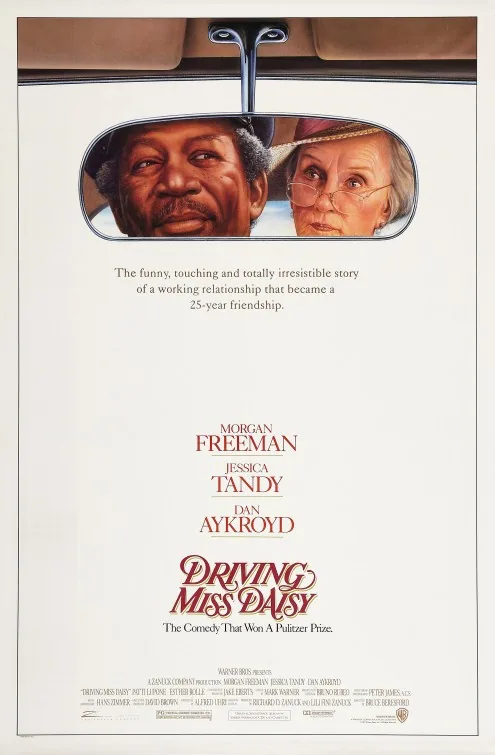
After a driving accident, an older Jewish woman in Atlanta reluctantly accepts the Black chauffeur her son employs. Repeated journeys turn suspicion and resistance into familiarity across decades, but the habits of an employment relationship remain embedded in segregation and unequal freedom. As age increases her dependence, small acts of care acquire weight without making affection sufficient to erase the structures that have shaped what each person can say or expect. Its domestic viewpoint leaves Hoke's working conditions less central than the relationship's emotional arc.
What drives the story
An imposed service arrangement develops through repeated ordinary encounters, gradually exposing how dependence and dignity change without removing the racial hierarchy around them. Boolie hires Hoke after Daisy’s crash, establishing an employment arrangement before affection changes its daily texture.
The people at its centre
Daisy's insistence on independence meets Hoke's patience and bargaining, while her son's role as employer gives another person control over terms presented as a private bond. Daisy’s growth matters, yet Hoke’s patience and bargaining carry much of the emotional labor inside a job he did not choose.
What it feels like
Measured time jumps, domestic detail and restrained humor build an intimate historical relationship rather than a continuous account of public civil-rights struggle. Brief scenes and time jumps favor small private gestures over sustained attention to the wider civil-rights movement.
Worth knowing
Match on care developing inside an unequal long-term working relationship, while examining whose perspective the film centers rather than treating friendship as proof that structural conflict has been resolved. Warmth between two people does not erase the employer-employee structure or the film’s limited historical perspective.
CarePrejudiceDignity
Mood
Warm · Reflective · Bittersweet
Pacing
Measured
Visual style
Period detail · Intimate · Grounded
Storytelling
Long-term service relationship · Reluctant accepted dependence · Historical time jumps