Based on recorded story, mood and style. Your preferences can change the order.
Expect disturbing and restrained, with nonlinear and measured pacing.
Eva tries to understand how her relationship with her son Kevin reached a devastating point, revisiting fragments of family life and the public aftermath of an act of violence. The story moves between memory, guilt and the strained routines of Eva's present, withholding easy explanations about nature, nurture or responsibility. Lynne Ramsay's adaptation uses images and sound to make recollection feel unstable and emotionally charged.
Based on recorded story, mood and style. Your preferences can change the order.
Expect austere and disturbing, with measured and relentless pacing.
Erika Kohut is a demanding piano professor in Vienna whose controlled public manner coexists with private compulsions, self-harm and a suffocating life with her mother. Student Walter Klemmer admires her playing and pursues her, but Erika tries to define the relationship through a written list of rules for sexual submission. Walter cannot accept the terms as Erika imagines them, and desire becomes a struggle over who controls the encounter. The film's conservatory world is also marked by performance pressure, jealousy and humiliation, as Erika harms another student's hand to prevent a rival from playing. Michael Haneke adapts Elfriede Jelinek's novel as a severe study of repression and power; its sexual violence is explicit and the ending refuses therapeutic closure.
Based on recorded story, mood and style. Your preferences can change the order.
What changes Elle: measured. Chinatown: slow burn.
A private investigator accepts what appears to be a routine marital surveillance job and becomes involved in a death connected to a dispute over water. A wealthy woman's inconsistent explanations seem to promise an ordinary deception, but the evidence points towards forms of power that control both public resources and intimate lives. His confidence in reading other people's motives becomes a liability when the harm he is approaching exceeds the categories of the job he thought he took.
Both share themes of secrecy, plus a disturbing atmosphere.
Why this matches +
Genres: Thriller / Drama
Shared film traits
Based on recorded story, mood and style. Your preferences can change the order.
What changes Elle: measured. Fatal Attraction: escalating.
A married lawyer tries to contain a brief affair as the other participant’s attempts to continue the relationship become threats against his household. His secrecy delays his wife’s chance to understand the danger, so the thriller’s suspense grows partly from his own choices rather than from Alex alone. Domestic rooms become sites of surveillance and siege, while the film increasingly aligns viewers with the family’s fear. The ending changed after test screenings, but director Adrian Lyne said he made the change for dramatic reasons rather than because audiences demanded a harsher fate; the alternate ending later circulated on home video.
Based on recorded story, mood and style. Your preferences can change the order.
What changes Elle is tagged disturbing and controlled; Blue Ruin is tagged unsettling and bleak.
A man living at the margins learns that the person convicted of killing his parents is being released from prison. His attempt at revenge succeeds in one immediate sense but exposes his lack of practical competence and puts his sister's household at risk. Learning more about the original crime does not offer an easy route back, as family loyalties and retaliatory assumptions make further violence seem like the only remaining protection.
Based on recorded story, mood and style. Your preferences can change the order.
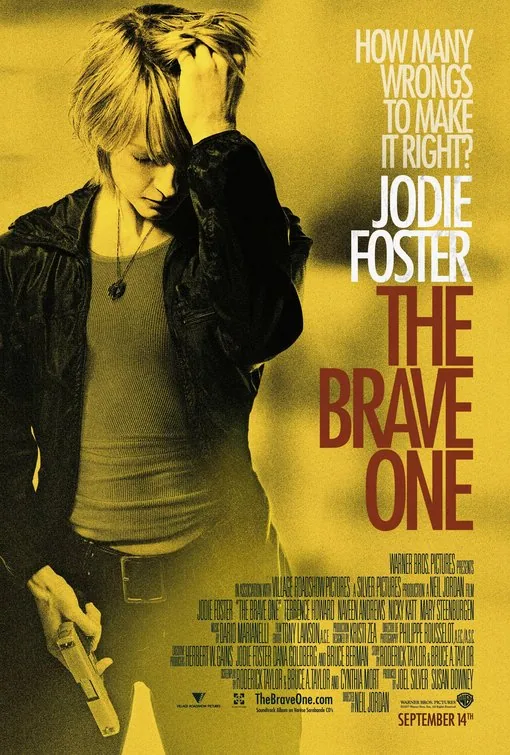
What changes Elle: measured. The Brave One: escalating and character-led.
After a brutal attack kills her fiancé and leaves her seriously injured, a radio host becomes increasingly fearful of the city she once knew. When she begins carrying a weapon and using it during encounters with violence, a detective investigates the cases and becomes drawn into her moral crisis. The film follows the unsettling shift from victimhood toward retaliation, asking whether self-protection can become a new identity organized around revenge.
Based on recorded story, mood and style. Your preferences can change the order.
What changes Elle: measured. Enough: escalating and character-led.
After escaping an abusive marriage, a young mother tries to build a safer life for herself and her daughter while her husband continues to pursue them. She changes her appearance, moves between places and eventually prepares to defend herself rather than depend on a system that has failed to keep her family safe. The thriller centers a survivor's agency and the frightening persistence of coercive control.
Both share themes of power, plus a controlled atmosphere.
Why this matches +
Genres: Action / Thriller
Shared film traits
Based on recorded story, mood and style. Your preferences can change the order.
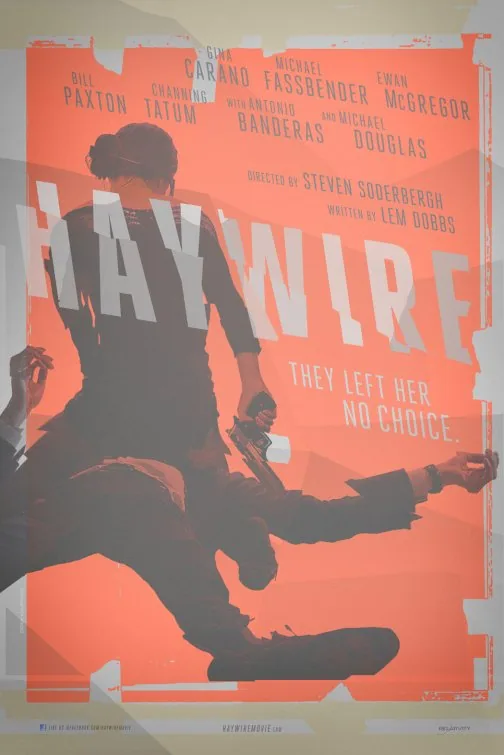
What changes Elle: measured. Haywire: a betrayal mystery is revealed through pursuit and mission flashbacks.
After a covert operative is betrayed during an assignment, Mallory Kane must evade former colleagues and uncover who arranged the betrayal. Moving between international locations and flashbacks, she retraces the mission that linked her to a politically sensitive target. The action thriller emphasizes physical skill and professional deception, centering a woman whose ability to fight does not protect her from a network of competing institutional interests.
Both centre on concealed violence and intimacy under pressure.
Why this matches +
Genres: Drama / Romance
Shared film traits
Based on recorded story, mood and style. Your preferences can change the order.
What changes Elle: measured. Talk to Her: flashback structure and quiet character study.
At a dance-theatre performance, journalist Marco notices nurse Benigno’s attention to the stage. Their lives later intersect when Marco’s partner Lydia, a matador, falls into a coma after a bullfight and Benigno cares for dancer Alicia, who is also unconscious. The men develop an unexpected friendship as they spend time in the hospital, but Benigno rapes Alicia while she is in a coma. The film’s lyrical framing explores loneliness and care, yet the assault is a violation of her consent and cannot be treated as romantic devotion.
After being raped in her home, a successful executive continues the routines through which she controls work, family and a complicated network of intimacy. Refusing a conventional public response does not end the threat: messages and renewed encounters make familiar relationships objects of suspicion. Her choices remain difficult to translate into a reassuring recovery arc, while the film's account of power, past exposure and renewed danger requires attention to the difference between agency and responsibility for another person's violence. Michèle’s composure and strategic choices belong to her specific character; they are not instructions for survivors.
What drives the story
An assault destabilizes a carefully managed life, but the protagonist's resistance to expected responses produces an inquiry whose course refuses a simple protection-and-resolution structure. An assault launches an investigation, but attention shifts among suspicion, power and the relationships she chooses to maintain.
The people at its centre
Michèle's authority in business coexists with fraught dependence and concealment elsewhere, while different men and women interpret her behavior through interests she does not fully explain. Her authority in a game studio coexists with family and sexual dynamics that resist a simple victim-versus-villain map.
What it feels like
Controlled social satire and explicit sexual violence create a deliberately disquieting thriller, denying the viewer an easy separation between composure, vulnerability and control. Cool social satire collides with explicit sexual violence, producing deliberate unease about the viewer’s access to her perspective.
Worth knowing
Match cautiously on opaque agency after assault and unstable social power; later behavior cannot retroactively make the initial violence consensual or authorize a universal account of how survivors should respond. Nothing that follows retroactively makes the assault consensual; agency in response is not responsibility for the attack.
PowerAutonomyViolence
Mood
Disturbing · Controlled · Ambiguous
Pacing
Measured
Visual style
Controlled · Grounded · Intimate
Storytelling
Assault without conventional response · Social suspicion · Opaque agency