An institution's claim of total containment is tested through incremental observation and improvised construction, with everyday routines supplying both cover and deadlines.
Why this matches +
Selected for the central appeal: Prison-escape thrillers about resourcefulness, confinement and unlikely cooperation.
Genres: Drama / Thriller
Shared film traits
Based on recorded story, mood and style. Your preferences can change the order.
Escape and pursuit
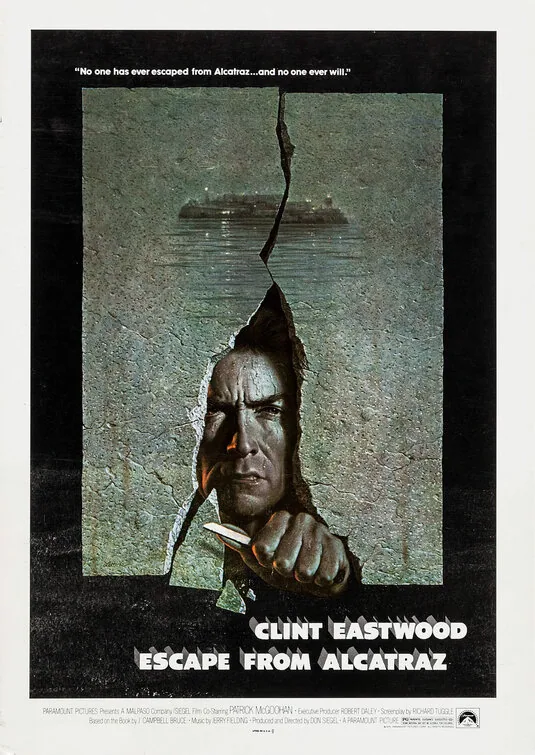
What changes Escape from Alcatraz follows prisoners studying an apparently secure facility and cooperating on an ingenious escape, without the security expert's undercover assignment.
A prisoner transferred to Alcatraz encounters a regime whose confidence depends on making escape seem materially and psychologically impossible. Small observations of objects, routines and deteriorating surfaces gradually reveal a different set of possibilities. Building an alliance allows repeated acts of patient preparation to become a collective plan, while the warden's treatment of other inmates makes departure a refusal of humiliation as well as a practical contest with walls and surveillance.
The researchers’ rules fail to contain the behavior their experiment encourages among participants.
Why this matches +
These offer a related experience with a meaningful difference in story, tone, or presentation.
An adjacent discovery: a related idea with a different viewing experience.
Genres: Drama / Thriller
Shared film traits
Based on recorded story, mood and style. Your preferences can change the order.
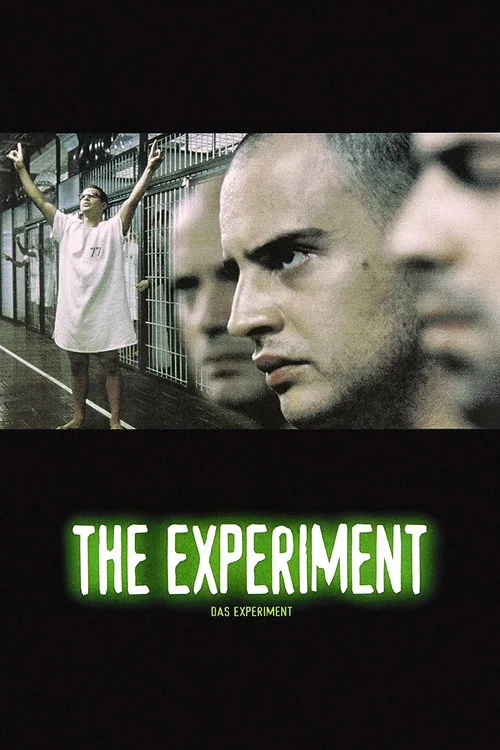
What changes Das Experiment traps participants in a prison simulation that turns abusive and dangerous, emphasizing psychological power rather than an engineered action escape.
Taxis arrive at a research facility where volunteers are assigned roles as guards or prisoners in a simulated jail. The participants are told to follow the rules of the experiment, but tensions grow as authority, humiliation, and group behavior begin to override the researchers’ expectations. Journalist Tarek Fahd enters the study under an assumed identity and attempts to document what is happening from inside. Oliver Hirschbiegel’s German psychological thriller draws on the Stanford prison experiment and escalates a controlled social study into a crisis about power and obedience.
A hijacked transport forces a released prisoner to conceal resistance, balancing opportunities to escape against obligations to people still trapped inside.
Why this matches +
These offer a related experience with a meaningful difference in story, tone, or presentation.
An adjacent discovery: a related idea with a different viewing experience.
Genres: Action / Thriller
Shared film traits
Based on recorded story, mood and style. Your preferences can change the order.
Escape and pursuit
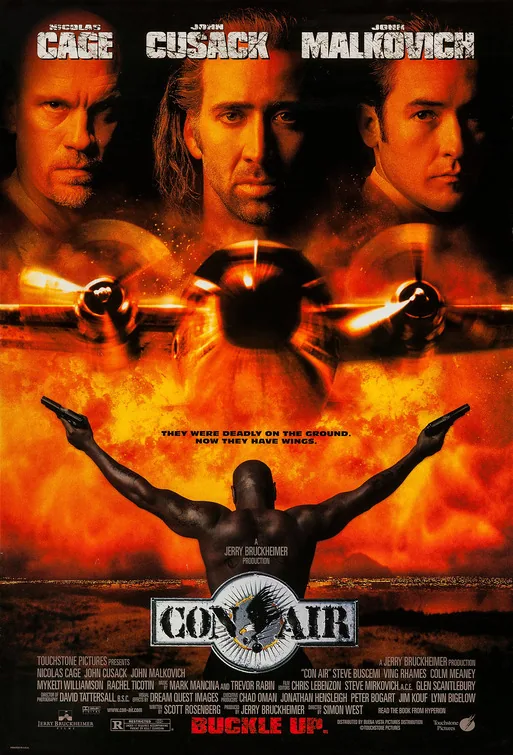
What changes Con Air puts dangerous prisoners and a resourceful protagonist inside a controlled transport that becomes a real crisis, shifting from a fixed prison to a hijacked aircraft.
A newly paroled former soldier boards a prison transport hoping to meet the daughter he has known only through letters. When prisoners seize the aircraft, his apparent freedom becomes another form of confinement. Remaining aboard to protect a vulnerable friend requires him to seem cooperative to the hijackers while finding a way to communicate with an official on the ground who may recognize the difference between his record and his present choices.
A disavowed agent stages an unauthorised operation to identify who framed him and why.
Why this matches +
These offer a related experience with a meaningful difference in story, tone, or presentation.
An adjacent discovery: a related idea with a different viewing experience.
Genres: Action / Thriller
Shared film traits
Based on recorded story, mood and style. Your preferences can change the order.
Escape and pursuit
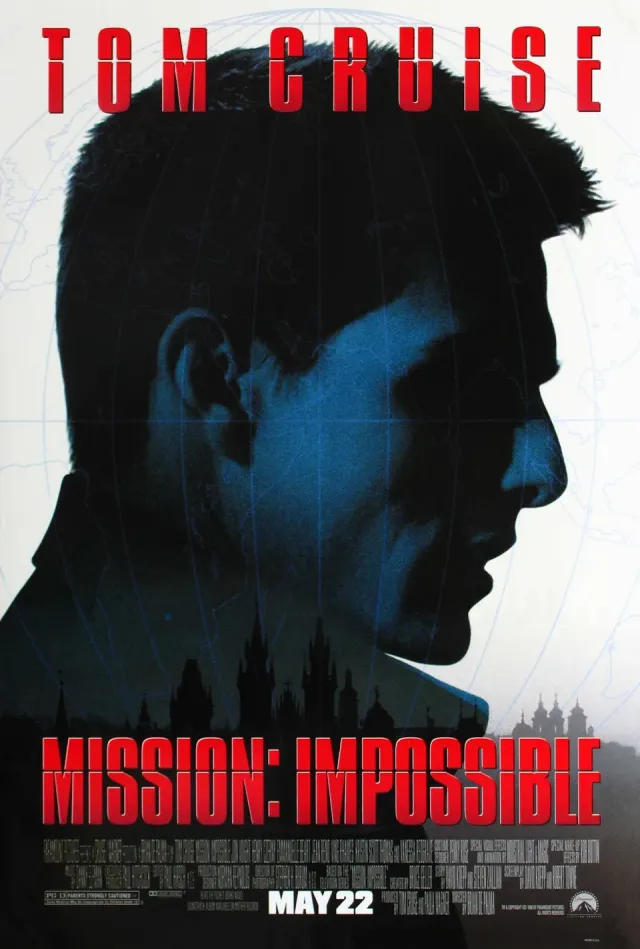
What changes Mission: Impossible follows an operative betrayed by his own side who must use planning and a recruited team to overcome security, with espionage rather than prison confinement.
An intelligence operative survives a mission in which his team is killed and then becomes the principal suspect in a security breach. Cut off from official support, he recruits an improvised group to obtain information that might expose the real betrayal. Deceptions within deceptions make both professional trust and the evidence used to establish it uncertain.
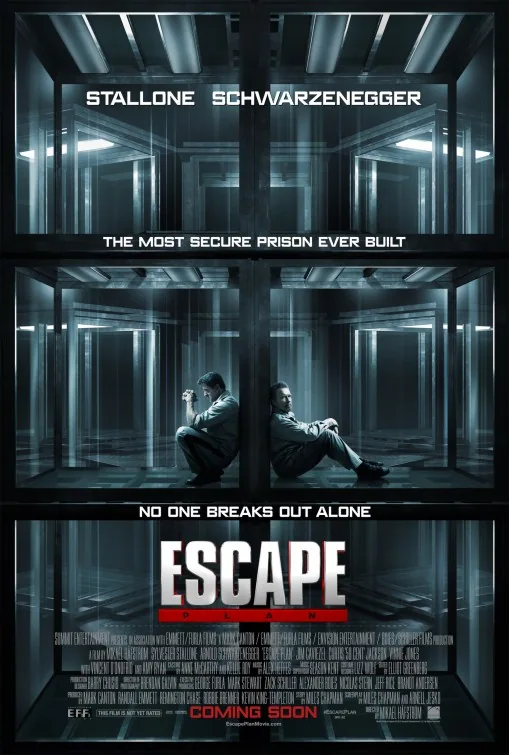
A professional prison-security tester agrees to enter a secret facility whose location and procedures are withheld from his team. Discovering that his emergency safeguards have been removed turns a controlled assignment into actual captivity. His published methods have helped design the prison around him, so understanding the architecture is no longer enough: escape requires cooperation with a prisoner whose identity and motives may be as carefully managed as the institution itself.
What drives the story
An expert's own knowledge becomes the blueprint for containing him, forcing him to supplement technical observation with trust after a supposedly reversible job is made permanent.
The people at its centre
Breslin's professional independence depends on an outside team he cannot reach, while Rottmayer's selective disclosures make their partnership useful without becoming fully transparent.
What it feels like
Clinical enclosure, repeated observation and increasingly expansive action turn procedural escape work into a contest against a privately controlled disappearance system.
Worth knowing
Match on expertise weaponized against its maker and concealed captivity defeated through partnership, not simply a superhuman escape artist overcoming interchangeable guards.
TrustKnowledgeFreedom
Mood
Tense · Defiant · Claustrophobic
Pacing
Fast
Visual style
Clinical · Industrial · Contained
Storytelling
Expert contained by own methods · Disappeared prisoner · Hidden-location breakout