Winston's work falsifying records and his relationship with Julia become intertwined acts of resistance against the Party.
Why this matches +
Selected for the central appeal: An enforcer of cultural suppression discovers the inner life his institution destroys.
Genres: Science fiction / Drama
Shared film traits
Based on recorded story, mood and style. Your preferences can change the order.
Political resistance
What changes A worker in an authoritarian information system develops a private life that the state treats as a threat; historical falsification and surveillance replace book burning and memorized preservation.
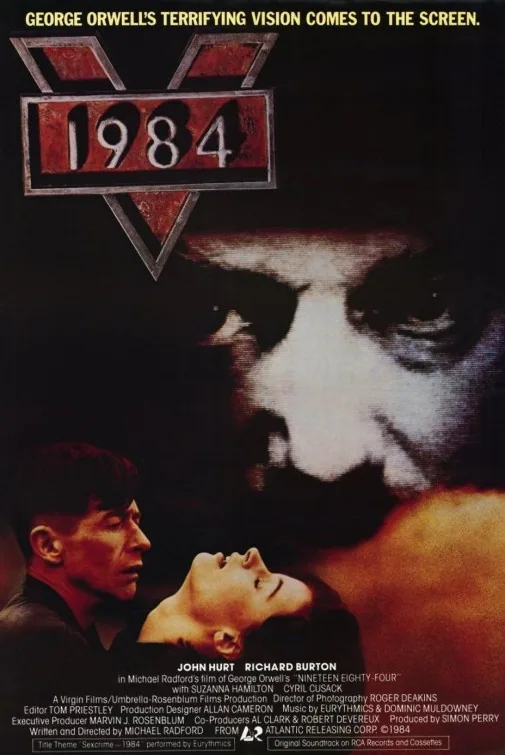
Winston Smith works at the Ministry of Truth in Oceania, where he rewrites past records to fit the ruling Party's current claims. In private he begins a forbidden relationship with Julia and imagines that a life beyond constant surveillance might still be possible. Their attempt to resist the state brings them into contact with underground opposition, but the Party's control of language, memory, and intimacy reaches far beyond the visible telescreens.
An enforcer's interrupted conditioning makes him recognize the harm of his assigned work, forcing clandestine disobedience inside an institution trained to detect emotional deviation.
Why this matches +
Related viewing experiences with the specific differences recorded for each pair.
An adjacent discovery: a related idea with a different viewing experience.
Genres: Science fiction / Action
Shared film traits
Based on recorded story, mood and style. Your preferences can change the order.
Political resistance
What changes An agent charged with destroying art and feeling begins questioning the system he serves; gun-fighting action and chemically regulated emotion are more kinetic than Truffaut’s literary unease.
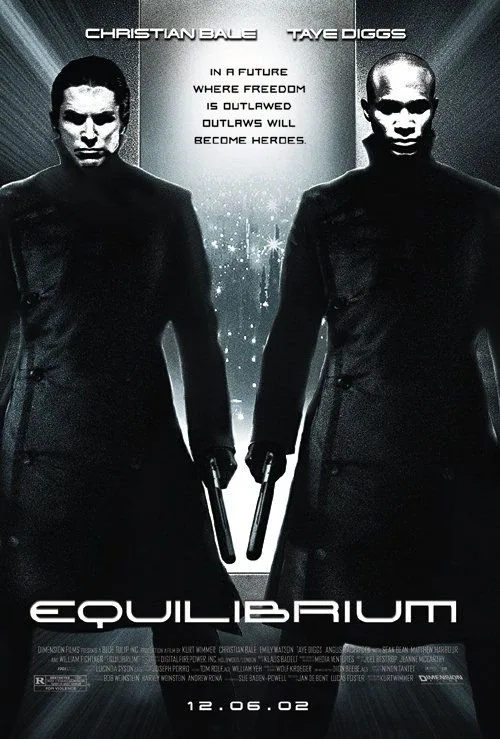
An elite officer in a society that suppresses emotion helps destroy the art and people its government defines as threats. Missing a dose of the required drug exposes feelings he has enforced against others, making routine obedience difficult to sustain. Concealing the change draws him toward resistance, but his professional role and the people watching it remain dangerous, turning personal awakening into a struggle over a system that presents control as collective safety.
A teenager chosen to inherit suppressed memories begins to question the society that raised him.
Why this matches +
Related viewing experiences with the specific differences recorded for each pair.
An adjacent discovery: a related idea with a different viewing experience.
Genres: Science fiction / Dystopian
Shared film traits
Based on recorded story, mood and style. Your preferences can change the order.
Political resistance
What changes A controlled society’s apparent harmony depends on withholding memory, sensation and cultural knowledge; a young initiate’s discovery replaces an adult book-burning official’s defection.
In a controlled community that has suppressed memory, strong emotion, and individual difference, teenager Jonas is selected to receive the memories preserved by the Receiver. His training with the older man exposes the beauty and pain erased from daily life, leading Jonas to question the system and protect a vulnerable child. Phillip Noyce's adaptation turns a young adult dystopia into a story about memory, conformity, and the cost of safety without choice.
An office worker's attempt to correct a bureaucratic injustice makes him increasingly vulnerable to the system he serves.
Why this matches +
Related viewing experiences with the specific differences recorded for each pair.
An adjacent discovery: a related idea with a different viewing experience.
Genres: Science fiction / Drama
Shared film traits
Based on recorded story, mood and style. Your preferences can change the order.
Political resistance
What changes A functionary’s private imagination becomes incompatible with an oppressive state’s routines; grotesque bureaucratic comedy replaces the more direct struggle over books and reading.
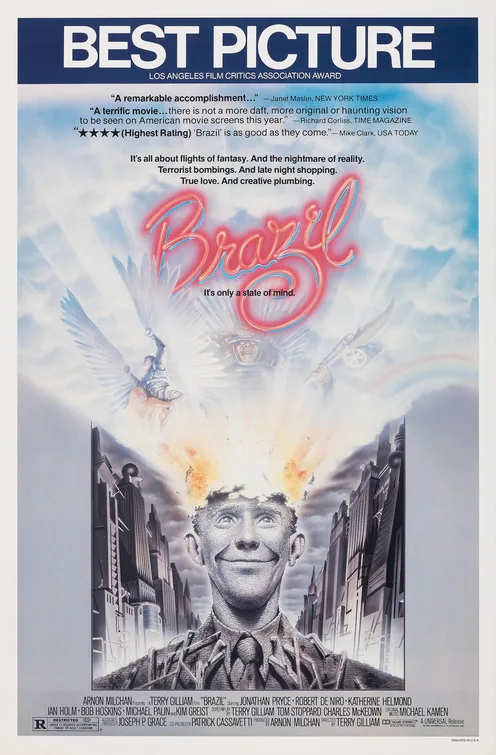
A low-ranking bureaucrat escapes a suffocating state through elaborate fantasies, until an administrative error draws him into the machinery of detention and interrogation. His search for a woman resembling his dream companion places romantic longing against an institution that treats responsibility as a paperwork problem. Absurd inventions, domestic vanity and casual official cruelty turn a personal escape story into a nightmare of organised incompetence.
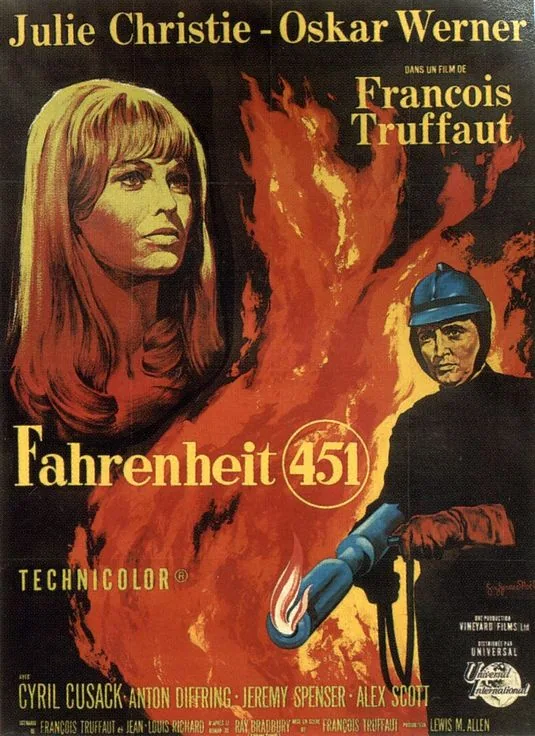
A fireman in a society that burns books begins secretly reading what he is paid to destroy. Encounters with a questioning neighbor and a reader willing to die with her library make his work harder to separate from the emotional and intellectual life it suppresses. Concealment turns his own home into a contested space, while a community beyond official routines offers preservation through memory rather than permanent possession of endangered objects.
What drives the story
An agent of censorship appropriates forbidden material, making private curiosity become an exposure risk before it can develop into a durable form of resistance.
The people at its centre
Montag's widening attention contrasts with his wife's investment in mediated belonging, while the captain's persuasive defense of uniformity makes repression more than a purely physical threat.
What it feels like
Controlled color, repetitive public routines and a curiously familiar future give cultural suppression an everyday texture, gradually shifting toward quieter acts of collective remembrance.
Worth knowing
Match on an enforcer's awakening through prohibited art and memory, preserving this adaptation's characters and choices rather than importing every event or explanation from the novel.