An agent of censorship appropriates forbidden material, making private curiosity become an exposure risk before it can develop into a durable form of resistance.
Why this matches +
Selected for the central appeal: A state employee's forbidden relationship and private dissent are crushed by pervasive surveillance and control of truth.
Genres: Science fiction / Drama
Shared film traits
Based on recorded story, mood and style. Your preferences can change the order.
Political resistance
What changes A functionary within an authoritarian society begins questioning enforced conformity and control of information; books and censorship are central.
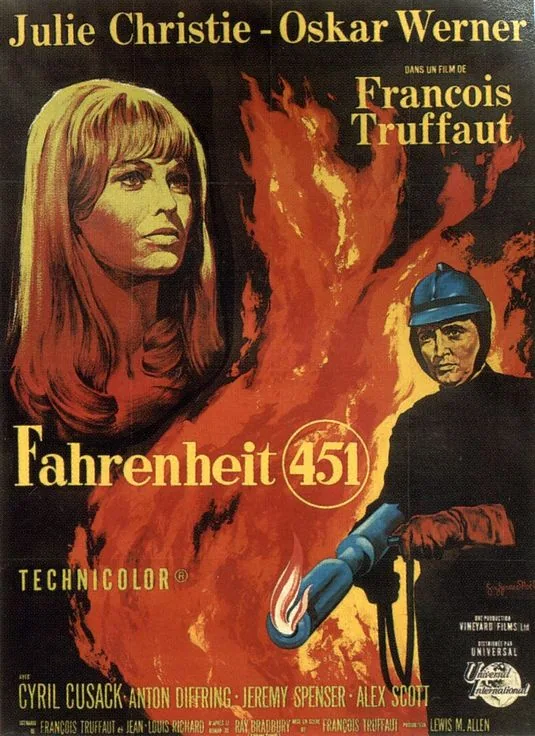
A fireman in a society that burns books begins secretly reading what he is paid to destroy. Encounters with a questioning neighbor and a reader willing to die with her library make his work harder to separate from the emotional and intellectual life it suppresses. Concealment turns his own home into a contested space, while a community beyond official routines offers preservation through memory rather than permanent possession of endangered objects.
A politically motivated surveillance assignment turns a loyal operative's access to private evidence into a conflict between bureaucratic obedience and covert protection.
Why this matches +
Selected for the central appeal: A state employee's forbidden relationship and private dissent are crushed by pervasive surveillance and control of truth.
Genres: Drama / Thriller
Shared film traits
Based on recorded story, mood and style. Your preferences can change the order.
Political resistance
What changes A surveillance officer's encounter with private lives exposes the human cost of state control; historical East Germany rather than speculative dystopia.
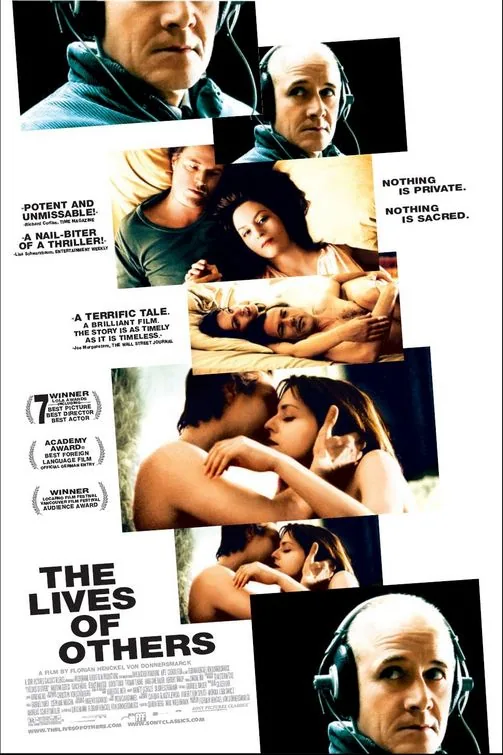
An East German surveillance officer is assigned to monitor a celebrated playwright and his partner, ostensibly for national security. Listening to their private life reveals artistic friendships, fear and a senior official's exploitative motive behind the operation. The officer's identification with people he is meant to expose creates small opportunities to intervene, but every altered report risks his position within an institution that treats conscience as disloyalty.
A revenge campaign attempts to transform private evidence of state violence into collective refusal, using symbolic attacks and controlled revelation to challenge manufactured public consent.
Why this matches +
Selected for the central appeal: A state employee's forbidden relationship and private dissent are crushed by pervasive surveillance and control of truth.
Genres: Science fiction / Drama
Shared film traits
Based on recorded story, mood and style. Your preferences can change the order.
Political resistance
What changes People resist an authoritarian government that uses surveillance, propaganda and fear; more action-driven and revolutionary.
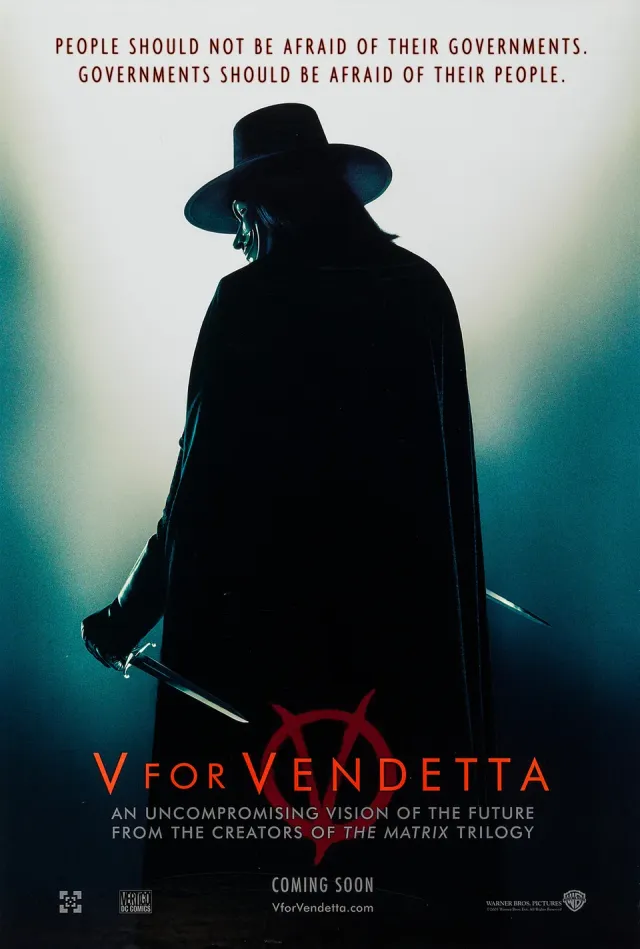
A masked insurgent rescues a young woman from agents of an authoritarian British state and draws her into a campaign timed around public spectacle and historical remembrance. His attacks expose connections between state security, propaganda and an earlier crime, but his methods also challenge the boundary between liberation and coercion. The woman's changing relationship to fear makes participation more complicated than simply choosing a heroic side against an obvious regime.
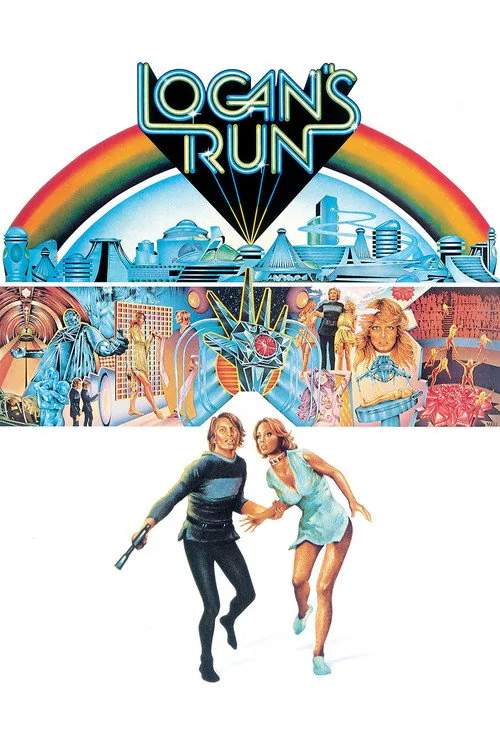
Logan's search for Sanctuary turns from an undercover assignment into a flight that challenges the city's central promise.
Why this matches +
These offer a related experience with a meaningful difference in story, tone, or presentation.
An adjacent discovery: a related idea with a different viewing experience.
Genres: Science fiction / Action
Shared film traits
Based on recorded story, mood and style. Your preferences can change the order.
Political resistance
What changes A citizen discovers the cruelty of a tightly controlled futuristic society and tries to escape; more colorful action-adventure.
In a sealed city of the twenty-third century, citizens live in comfort under a system that promises renewal but requires everyone to die at thirty. Logan 5 is a Sandman tasked with hunting people who try to escape the ritual; when he is sent undercover to find the rumored Sanctuary, he begins to question the society he serves. He and Jessica 6 flee the city toward the world outside, where their beliefs meet unfamiliar conditions. This classic dystopian adventure combines pursuit with questions about age, control, and freedom.
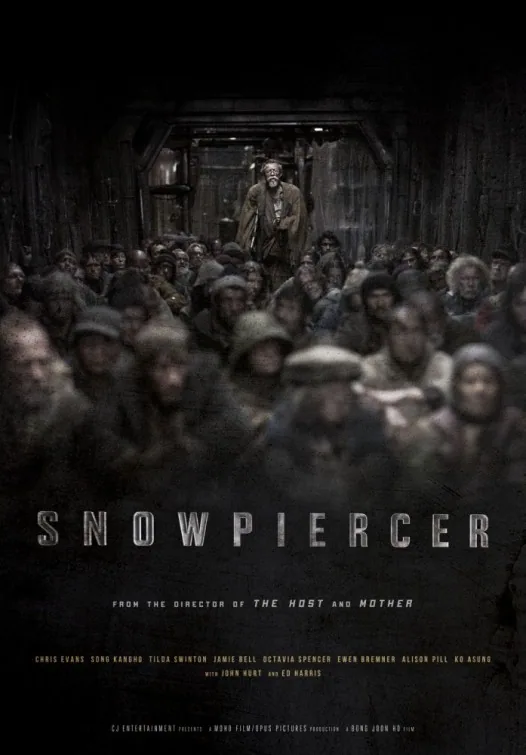
The train’s layout turns social inequality into physical distance: the uprising must literally pass through the system it hopes to overthrow.
Why this matches +
These offer a related experience with a meaningful difference in story, tone, or presentation.
An adjacent discovery: a related idea with a different viewing experience.
Genres: Science fiction / dystopian thriller
Shared film traits
Based on recorded story, mood and style. Your preferences can change the order.
Political resistance
What changes People challenge an oppressive social hierarchy that controls daily life; a train-bound class allegory rather than intimate surveillance.
A failed climate intervention has frozen Earth, leaving the last human survivors aboard a continuously moving train divided by class. Tail-section passenger Curtis leads a revolt toward the engine, pushing through cars whose comfort and privilege increase with each step forward. The group frees security specialist Namgoong and his daughter Yona, whose knowledge of the train and the changing world complicates Curtis’s plan. Reaching the front means confronting both the train’s order and the rebellion’s own history of survival at others’ expense.
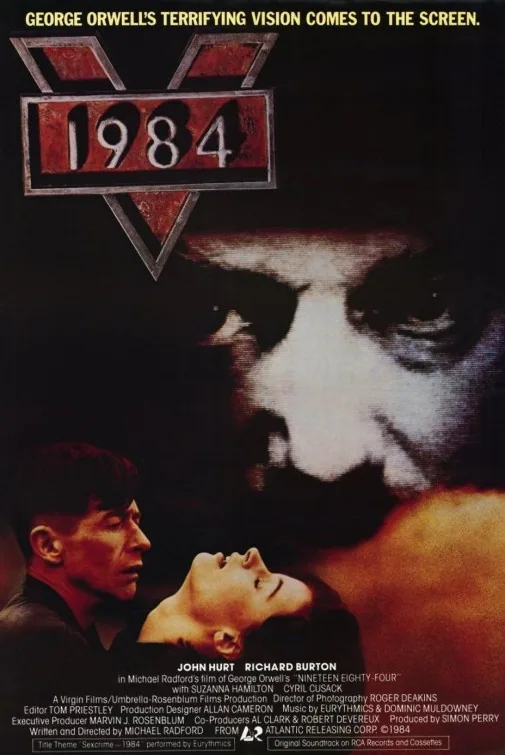
Winston Smith works at the Ministry of Truth in Oceania, where he rewrites past records to fit the ruling Party's current claims. In private he begins a forbidden relationship with Julia and imagines that a life beyond constant surveillance might still be possible. Their attempt to resist the state brings them into contact with underground opposition, but the Party's control of language, memory, and intimacy reaches far beyond the visible telescreens.
What drives the story
Winston's work falsifying records and his relationship with Julia become intertwined acts of resistance against the Party.
The people at its centre
Both lovers seek private freedom, but their different instincts and the state's power test what they can trust.
What it feels like
The film presents an austere dystopia in which routine procedures and intimate spaces feel monitored.
Worth knowing
Its political science fiction focuses on psychological coercion and historical control rather than futuristic technology or adventure.