Explore films connected to Hart's War through justice under captivity, racial prejudice, duty and deception. Choose the qualities you want to carry into your next watch.
What should feel similar?
Find your next favourite
9 films · Closest overall matches
Hide films you’ve seen or don’t want. Saved on this device.
No matches for this combination yet.
Try another option or reset your choices to see more films.
Based on recorded story, mood and style. Your preferences can change the order.
Investigation
What changes Hart's War: capture and camp setup, courtroom investigation and war-film action climax. Operation Finale: intelligence gathering, covert extraction and ethical and diplomatic aftermath.
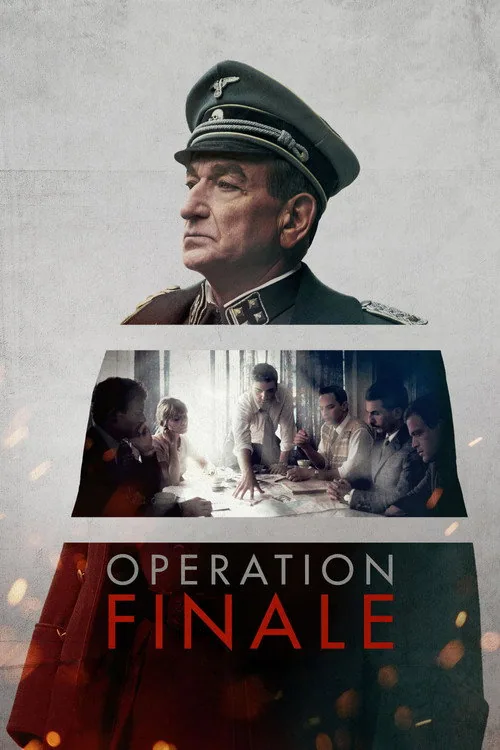
In 1960, Mossad agents locate Adolf Eichmann in Buenos Aires and organize a covert mission to capture him and bring him to Israel for trial. Agent Peter Malkin leads the team, which must keep Eichmann hidden while navigating surveillance, bureaucratic demands, and a difficult extraction plan. His conversations with the former Nazi official reveal the psychological challenge of confronting a man responsible for mass murder. The historical thriller follows the operation as both an intelligence mission and an effort to create a public record of the Holocaust.
Based on recorded story, mood and style. Your preferences can change the order.
War and civilian life
What changes Hart's War: capture and camp setup, courtroom investigation and war-film action climax. Tora! Tora! Tora!: measured buildup and combat climax.
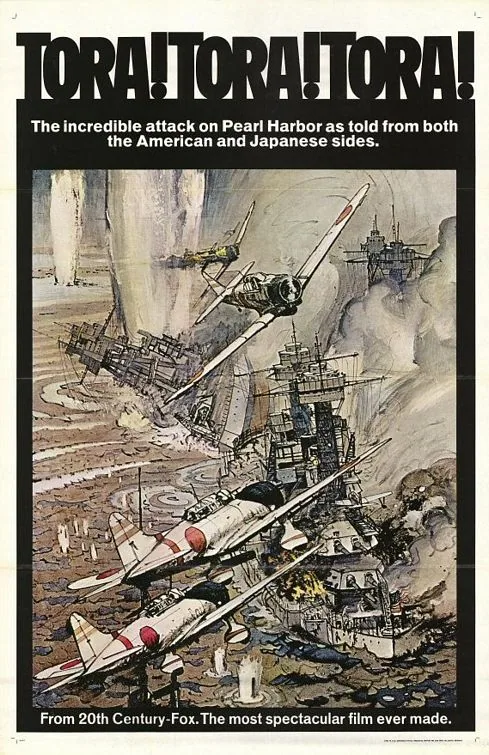
This Japanese-American production reconstructs the decisions and communication failures leading to the December 1941 attack on Pearl Harbor from both Japanese and American perspectives. Japanese military leaders debate the risks and objectives of the operation, while U.S. officials and commanders struggle to interpret intelligence and coordinate a response. The narrative follows diplomatic messages, naval planning and the unfolding air assault rather than a single fictional hero. Its dual structure gives attention to decision-making on both sides, but it remains a dramatization shaped by the historical record and the film’s own era. The attack’s surprise results from accumulated choices and intelligence misreadings rather than one isolated failure.
Based on recorded story, mood and style. Your preferences can change the order.
War and civilian life
What changes Hart's War: capture and camp setup, courtroom investigation and war-film action climax. The Sum of All Fears: measured and escalating.
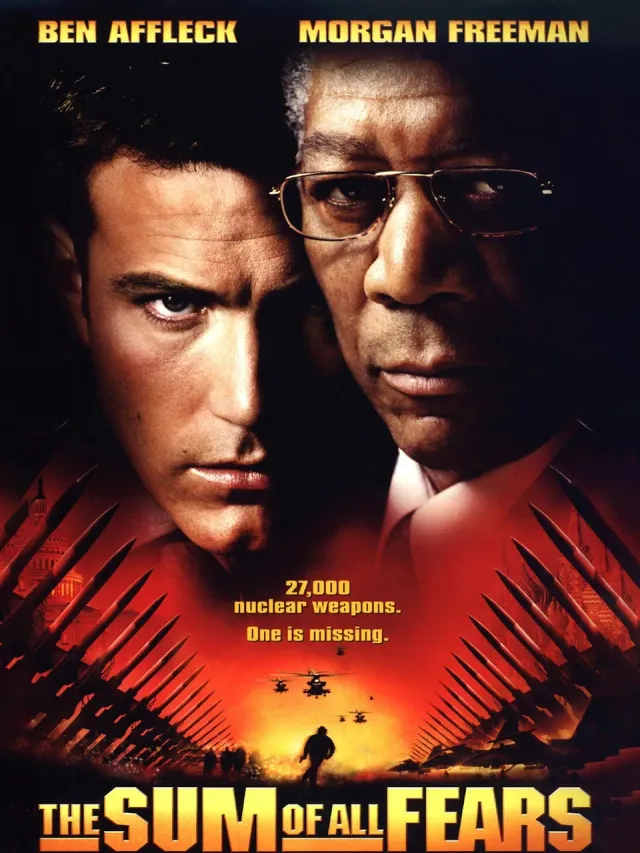
Young CIA analyst Jack Ryan becomes involved in a dangerous international crisis after a nuclear bomb is smuggled into the United States and detonated during a major football game. CIA director William Cabot relies on Ryan to assess the device and its likely origin, while leaders in Washington and Moscow interpret incomplete information under pressure. The bomb was intended to provoke the two powers into war, but the investigation moves faster than the channels of trust needed to prevent escalation. Ryan's access to intelligence gives him a way to challenge the assumptions driving the crisis, though he remains far from the usual image of a field operative. The thriller turns on whether evidence can arrive before retaliation becomes irreversible.
Based on recorded story, mood and style. Your preferences can change the order.
War and civilian life · Investigation
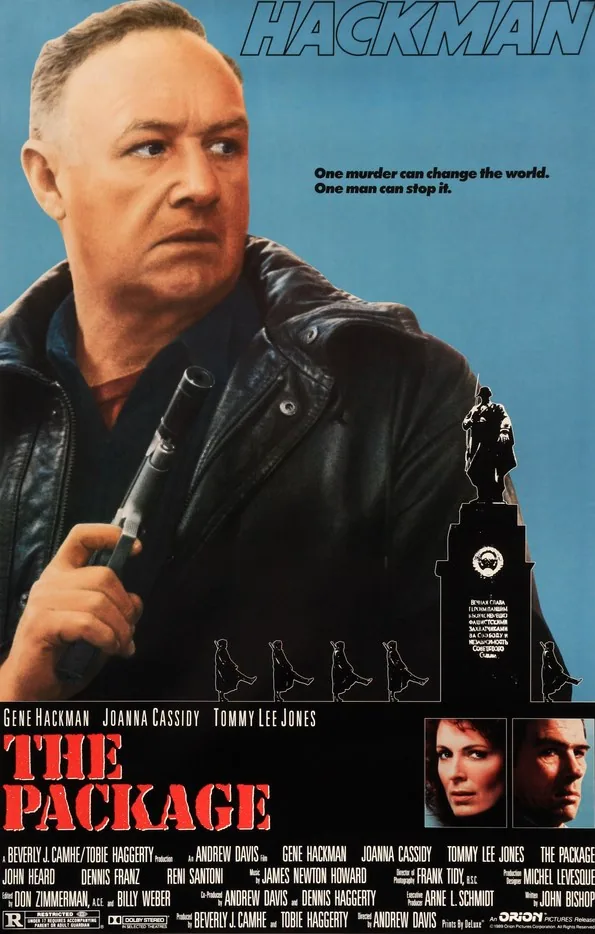
What changes Hart's War: capture and camp setup, courtroom investigation and war-film action climax. The Package: a mystery of substitutions expands into a race to intercept the conspiracy.
Army sergeant Johnny Gallagher is blamed for a killing during disarmament talks in West Berlin and ordered to escort another sergeant, Walter Henke, to the United States for court-martial. At Dulles Airport, an undercover team takes the prisoner away, and Gallagher discovers that the man he delivered was an impostor. Framed for a second murder, he joins forces with his ex-wife Eileen, also an Army officer, and her assistant to uncover a conspiracy among military figures. Their search leads toward Chicago and the real Henke, while Gallagher tries to stop a plot that threatens the president and the fragile peace negotiations.
Based on recorded story, mood and style. Your preferences can change the order.
War and civilian life
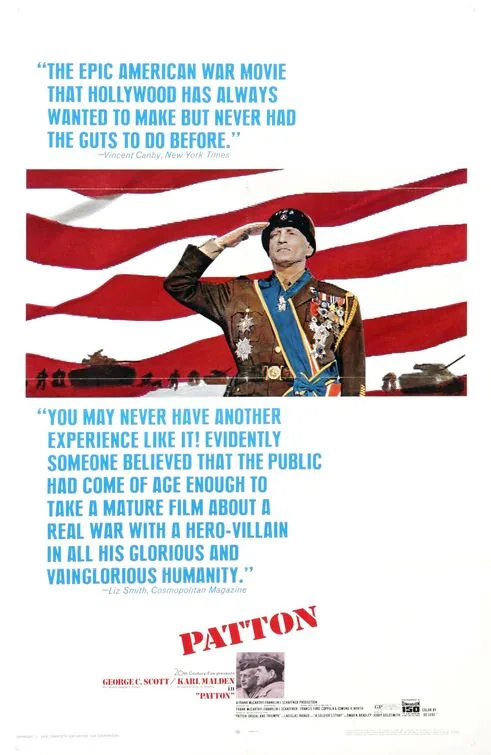
What changes Hart's War: capture and camp setup, courtroom investigation and war-film action climax. Patton: episodic, building and measured.
After the American defeat at Kasserine Pass, General George S. Patton takes command of the II Corps and imposes demanding discipline. His rivalry with British General Bernard Montgomery sharpens during the campaign in Sicily, where Patton pushes for a more ambitious advance. Two historical incidents in which he struck hospitalized soldiers there trigger a reprimand and temporarily sideline him; the film compresses that scandal into its own dramatic portrait. Later, his command of the Third Army brings rapid victories across France, but his public remarks and political conduct repeatedly threaten his position. The film follows his military drive alongside his pride, theatrical self-image and belief that battle is the route to lasting glory.
Based on recorded story, mood and style. Your preferences can change the order.
Investigation
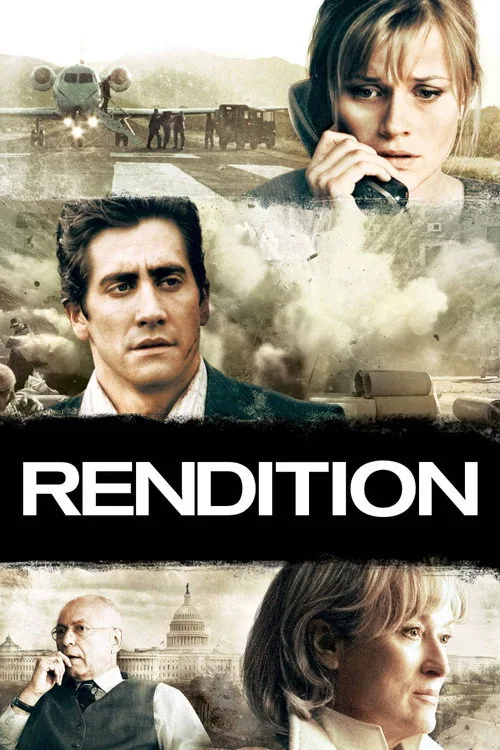
What changes Hart's War: capture and camp setup, courtroom investigation and war-film action climax. Rendition: interlocking storylines, interrogation pressure and political convergence.
After a bombing in North Africa, Egyptian-born American engineer Anwar is detained during a flight and transferred to a secret interrogation site. His pregnant wife Isabella searches for answers in Washington while CIA analyst Douglas Freeman is assigned to observe the questioning and begins to doubt the process. A parallel story follows a young woman whose family is connected to the attack. The political thriller weaves these lives together to examine extraordinary rendition, torture, and the uncertain line between security work and abuse.
Based on recorded story, mood and style. Your preferences can change the order.
War and civilian life · Investigation
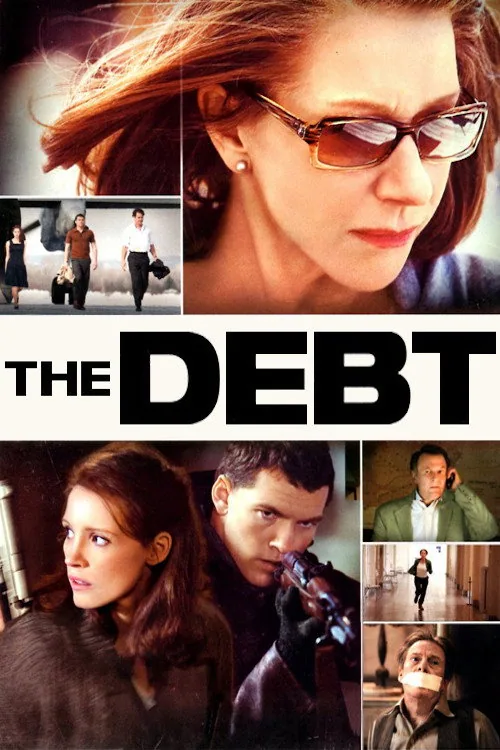
What changes Hart's War: capture and camp setup, courtroom investigation and war-film action climax. The Debt: dual-timeline suspense, espionage operation and moral reckoning.
In 1960s East Berlin, young Mossad agents Rachel, Stefan, and David undertake a dangerous mission to capture Nazi war criminal Dieter Vogel and bring him to justice. Decades later, their celebrated account of the operation is unsettled by new information, forcing the aging agents to confront what happened and the story they told. John Madden’s thriller moves between two periods of espionage and memory, examining the moral weight of the Holocaust, a mission’s legacy, and the cost of preserving a national hero narrative.
Based on recorded story, mood and style. Your preferences can change the order.
War and civilian life
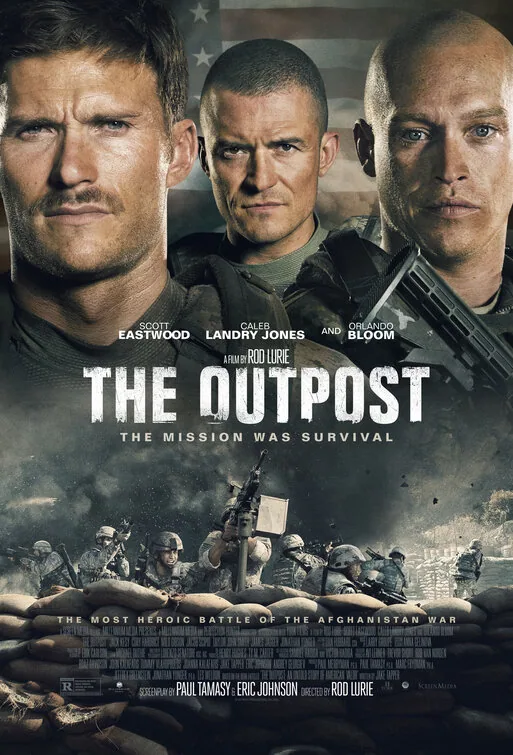
What changes Hart's War: capture and camp setup, courtroom investigation and war-film action climax. The Outpost: base routines and patrols, attacks escalate, battle geography narrows options and collective defense climax.
U.S. soldiers stationed at Combat Outpost Keating in Afghanistan face repeated attacks from Taliban fighters and the dangers of holding an exposed base in a remote mountain valley. Captain Keating and later Staff Sergeant Clint Romesha lead a unit whose daily routines, patrols, and relationships unfold under sustained pressure. When a major assault overwhelms the position, the soldiers must defend one another and find a way to survive. Rod Lurie’s war film adapts Jake Tapper’s account of the Battle of Kamdesh as an ensemble story of isolation, leadership, and combat duty.
Based on recorded story, mood and style. Your preferences can change the order.
War and civilian life
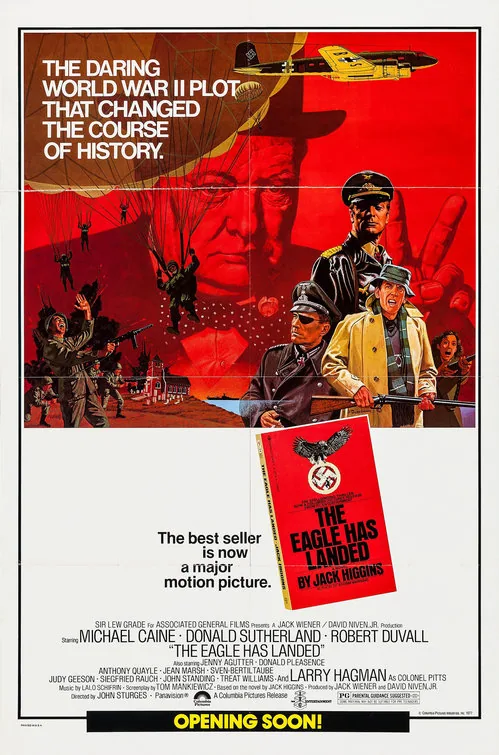
What changes Hart's War: capture and camp setup, courtroom investigation and war-film action climax. The Eagle Has Landed: building, tactical and escalating.
German intelligence plans a commando operation to kidnap Winston Churchill from a quiet English village during World War II. Colonel Kurt Steiner and Irish operative Liam Devlin lead a unit disguised as Polish paratroopers, supported by local agent Joanna Grey. Their cover begins to fail after an act of rescue reveals the uniforms beneath, drawing villagers, resistance forces and British troops into a confrontation. The film frames a high-risk military plot through shifting loyalties and civilian lives.
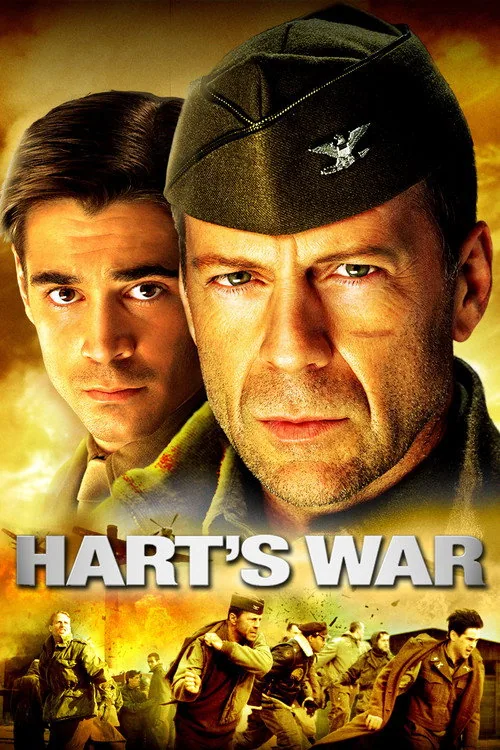
During the Battle of the Bulge, American intelligence officer Thomas Hart is captured and sent to a German prisoner-of-war camp. When a Black pilot is accused of murdering a fellow prisoner, Colonel William McNamara arranges a military trial inside the camp. Hart is appointed to defend him and must navigate prejudice, evidence, and the camp commander's control. The courtroom drama unfolds under wartime conditions, where the case and a larger escape plan may be linked in ways Hart does not initially understand.
What drives the story
A murder accusation forces Hart to build a defense while prisoners and officers maneuver inside the camp.
The people at its centre
Hart's legal responsibility brings him into conflict and uneasy cooperation with McNamara and the men whose lives depend on the verdict.
What it feels like
A war drama blends courtroom questioning with camp tension and questions about honor, race, and strategic sacrifice.
Worth knowing
The film's central conflict is a trial inside a POW camp, rather than a battlefield mission or escape story alone.
justice under captivityracial prejudiceduty and deception