Explore films connected to Hellbound: Hellraiser II through desire and obsession, trauma and disbelief, identity transformed by pain. Choose the qualities you want to carry into your next watch.
Related films and versions
Hellraiser films
The 2022 film is a separate reimagining of Clive Barker’s material. · Catalogue films in release order
Based on recorded story, mood and style. Your preferences can change the order.
Dream worlds
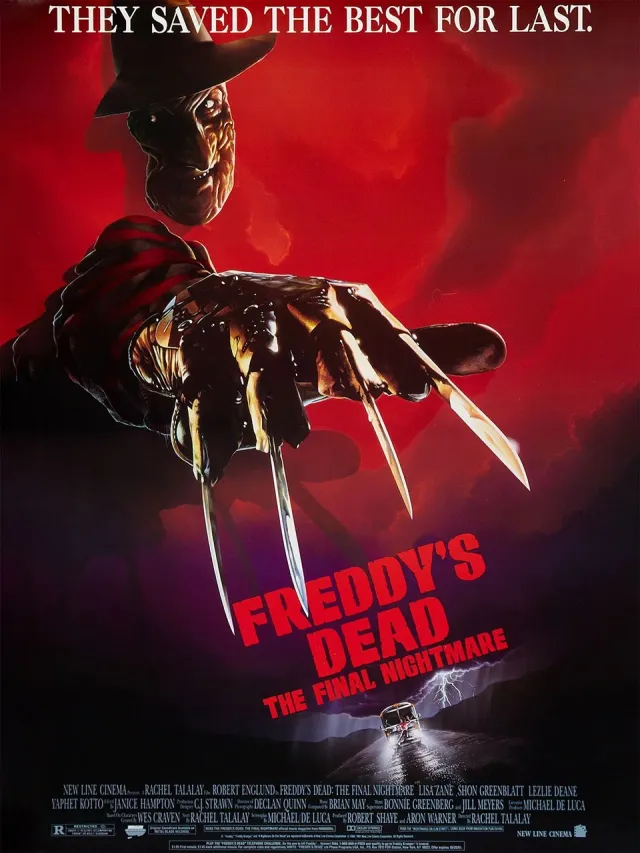
What changes Hellbound: Hellraiser II: institutional horror buildup, surreal descent and creature-driven confrontation. Freddy's Dead: The Final Nightmare: escalating and set-piece horror.
A young man with amnesia is brought to a town where Freddy Krueger's influence has left a generation of children dead or missing. As he uncovers his past, a counselor and a small group of survivors try to keep the nightmare from spreading. The film combines dream imagery, grim backstory and deliberately exaggerated set pieces in a story about inherited trauma and escape.
Based on recorded story, mood and style. Your preferences can change the order.
Dream worlds · Survival
What changes Hellbound: Hellraiser II: institutional horror buildup, surreal descent and creature-driven confrontation. The Cell: escalating and suspense-led.
A child psychologist enters a comatose serial killer’s mind to locate his latest victim before the captive woman dies. The search moves through a shifting inner landscape where clinical observation gives way to symbolic rooms and violent, unstable rules. The film makes empathy a risky act of interpretation because mental images can mislead as readily as they reveal a person. Tarsem Singh’s elaborate compositions turn a procedural hunt into a passage through a disturbing gallery of memory and power.
Based on recorded story, mood and style. Your preferences can change the order.
Dream worlds
What changes Hellbound: Hellraiser II: institutional horror buildup, surreal descent and creature-driven confrontation. Twin Peaks: Fire Walk with Me: fractured and last-days countdown.
An FBI investigation into Teresa Banks’s murder begins the film before it turns to the final week of Laura Palmer’s life in Twin Peaks. Laura is publicly admired but privately surrounded by fear, addiction, secrecy and sexual abuse by her father, Leland. The supernatural figure BOB shapes how that abuse is represented, but does not remove Leland’s human responsibility. Sheryl Lee’s performance gives the prequel a close emotional center as Laura tries to maintain school, friendship and desire while living with violence at home. The film trades the series’ central whodunit for a painful view of the harm behind its mystery.
Based on recorded story, mood and style. Your preferences can change the order.
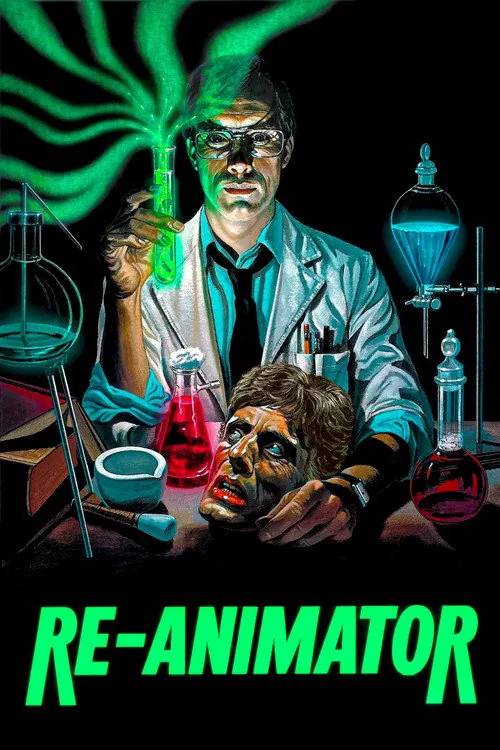
What changes Hellbound: Hellraiser II: institutional horror buildup, surreal descent and creature-driven confrontation. Re-Animator: escalating laboratory chaos, fast tonal shifts and graphic climax.
Medical student Herbert West arrives at Miskatonic University with a glowing reagent that he claims can restore life to the dead. His roommate Dan Cain becomes involved in West’s secret experiments in the hospital morgue, where revived bodies prove unstable and increasingly dangerous. Dean Halsey and his daughter Megan are drawn into the fallout, as West’s ambition overcomes ordinary medical ethics. Stuart Gordon’s adaptation of H. P. Lovecraft’s stories blends science-fiction horror, black comedy, and graphic practical effects.
Based on recorded story, mood and style. Your preferences can change the order.
Survival
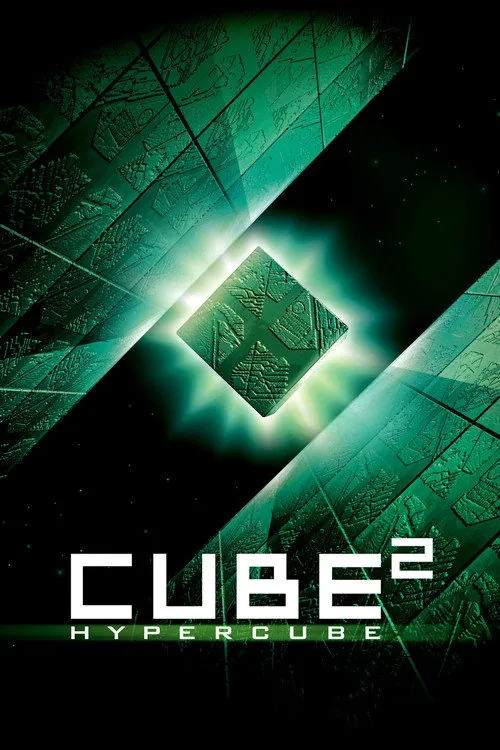
What changes Hellbound: Hellraiser II: institutional horror buildup, surreal descent and creature-driven confrontation. Cube 2: Hypercube: enigma-driven, trap-to-trap escalation and revelation near the climax.
Eight strangers wake in a sealed geometric structure and try to understand how they arrived there and which rooms are safe. The space behaves like a shifting multidimensional puzzle, with altered gravity, time distortions, and rooms that can become lethal. As the survivors compare what they know, conflicts emerge over identity and the purpose of the structure. Andrzej Sekuła’s science-fiction horror sequel expands the original Cube’s mathematical trap into a more unstable and surreal environment.
Based on recorded story, mood and style. Your preferences can change the order.
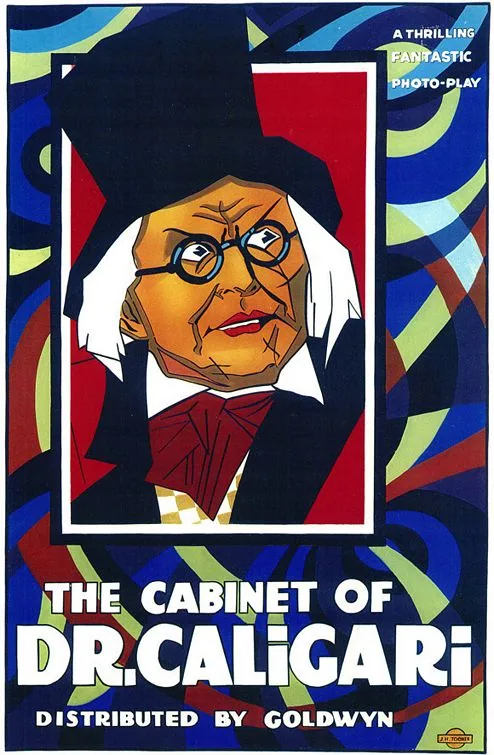
What changes Hellbound: Hellraiser II: institutional horror buildup, surreal descent and creature-driven confrontation. The Cabinet of Dr. Caligari: nested unreliable narration and revelatory ending.
In a framing sequence, Francis begins telling a companion about a terrible experience in the town of Holstenwall. In his account, he and friend Alan visit a fair where Dr. Caligari exhibits Cesare, a somnambulist who predicts Alan's death. When Alan is murdered, Francis investigates with Jane and her father, but the evidence and the people he trusts become increasingly uncertain. A twist in the frame story changes how the audience can interpret the murders and Francis's account, making the film's visual distortions part of its central puzzle.
Based on recorded story, mood and style. Your preferences can change the order.
What changes Hellbound: Hellraiser II: institutional horror buildup, surreal descent and creature-driven confrontation. The Mummy: monster awakening and urban escalation.
Military officer Nick Morton and archaeologist Jenny Halsey uncover an ancient tomb in Iraq, where they release Princess Ahmanet from a centuries-long imprisonment. Ahmanet seeks to complete the ritual that will restore her power, while Nick becomes connected to the god Set in ways he cannot control. The pair turn to Dr. Henry Jekyll’s secret organization for help as supernatural threats spread toward London. Alex Kurtzman’s film reimagines The Mummy as a modern action-horror adventure and introduces a planned shared universe that never developed as intended.
Based on recorded story, mood and style. Your preferences can change the order.
What changes Hellbound: Hellraiser II: institutional horror buildup, surreal descent and creature-driven confrontation. Seed of Chucky: resurrection and reunion, celebrity possession scheme and meta slasher finale.
A living doll named Glen discovers that Chucky and Tiffany have been rebuilt for a Hollywood movie and uses a voodoo amulet to bring them back to life. The child struggles with whether to follow their parents' violent legacy or choose a gentler identity. Chucky and Tiffany, meanwhile, attempt to possess actors Jennifer Tilly and Redman while trying to create a family of their own. The fifth Child's Play film turns the slasher series into a self-referential horror comedy about parenthood, performance, and the unstable boundary between character and actor.
Based on recorded story, mood and style. Your preferences can change the order.
Dream worlds · Survival
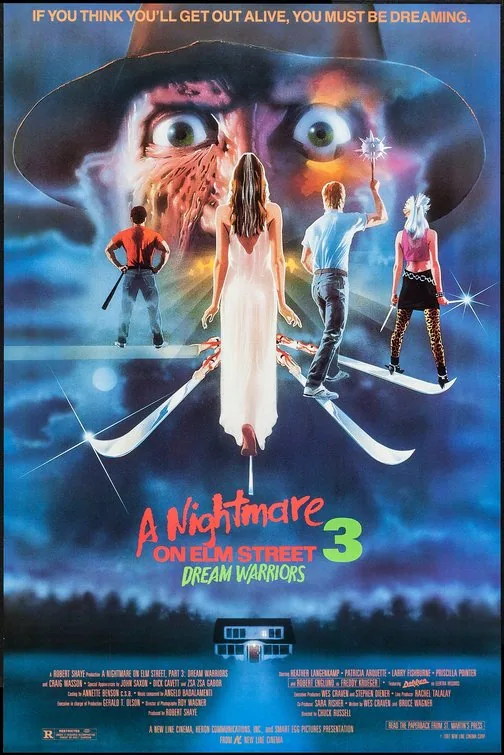
What changes Hellbound: Hellraiser II: institutional horror buildup, surreal descent and creature-driven confrontation. A Nightmare on Elm Street 3: Dream Warriors: fast.
Teenagers in a psychiatric institution suffer nightmares that adults interpret as signs of self harm. Nancy, now working with vulnerable patients, recognizes Freddy Krueger's attacks and helps them discover abilities within their dreams. Their attempt to act together offers an alternative to isolated terror, but institutional restrictions and the killer's exploitation of personal fears make cooperation difficult to sustain safely.
After surviving the events of the first film, Kirsty is confined to a psychiatric hospital, where Dr. Channard becomes fascinated by the puzzle box that opens a passage to the Cenobites. When he revives Julia, Kirsty and the doctor's assistant Kyle are drawn into a shifting labyrinth ruled by the entity Leviathan. The sequel expands the series' cosmology and imagery, turning a hospital's rooms and patients into portals for a descent through memory, obsession, and bodily horror.
What drives the story
Kirsty is pulled back toward the Cenobites when a doctor uses a puzzle box to pursue the supernatural realm for himself.
The people at its centre
Kirsty and Kyle try to understand and survive the doctor's obsession while Julia returns with a new appetite and agenda.
What it feels like
A surreal horror sequel expands its mythos with grotesque transformations, practical effects, and a journey through the Labyrinth.
Worth knowing
It continues Kirsty's story and enlarges the Cenobite mythology, rather than retelling the original film's family-centered trap.
desire and obsessiontrauma and disbeliefidentity transformed by pain