Explore films connected to Homebound through friendship and inequality, caste and religion, dignity. Choose the qualities you want to carry into your next watch.
What should feel similar?
Find your next favourite
9 films · Closest overall matches
Hide films you’ve seen or don’t want. Saved on this device.
No matches for this combination yet.
Try another option or reset your choices to see more films.
Based on recorded story, mood and style. Your preferences can change the order.
Coming of age · Survival
What changes Homebound is tagged empathetic and somber; Tourist Family is tagged warm and hopeful.
A Tamil family fleeing Sri Lanka's economic crisis reaches India seeking safety and a fresh start. Their arrival brings them into contact with local authorities and neighbors, and small acts of kindness gradually turn an uncertain migration story into a community comedy-drama. Tourist Family balances the risks of displacement with domestic humor, following parents and children as they adapt to unfamiliar surroundings and discover how hospitality can bridge national and cultural boundaries.
Based on recorded story, mood and style. Your preferences can change the order.
Expect somber and tense, with character-led and gradual escalation pacing.
After fifteen years in prison, Nishan returns to a world that has moved on without him. His earlier life was entangled with smuggling, and he hopes to rebuild outside the criminal network, but an old acquaintance soon reappears and draws him back toward familiar dangers. Rivalries ignite as buried truths resurface, placing Nishan between the possibility of redemption and the pull of the past. The Bangladeshi crime drama centers on the difficult, incomplete work of reintegration after incarceration.
Based on recorded story, mood and style. Your preferences can change the order.
Coming of age
What changes Homebound: measured, years-spanning and character-led. Left-Handed Girl: slice-of-life, ensemble-driven and gradual emotional turns.
Single mother Shu-Fen moves to Taipei with her five-year-old I-Jing and university-aged I-Ann to open a night-market noodle stand. Money troubles and an estranged husband's illness deepen the family's strain, while I-Jing's grandfather tells her that using her left hand is evil. The child misreads the superstition and begins to believe her left hand excuses misbehavior, even as her older sister faces adult pressures of work, sex, and pregnancy. The Taiwanese family drama views a busy market through the different understandings and burdens of three generations of women.
Based on recorded story, mood and style. Your preferences can change the order.
What changes Homebound: measured, years-spanning and character-led. Main Vaapas Aaunga: reflective, past-and-present structure and emotional.
At 95, Ishar Singh Grewal is nearing the end of his life but remains fixated on returning to Sargodha, the home he left during Partition. His grandson Nirvair tries to understand his fragmented memories, which carry the story back to the young Ishar's romance with Afsana and their separation amid the mass displacement of 1947. The historical drama links dementia and family memory to a love story interrupted by political violence and the unresolved ache of an abandoned homeland.
Based on recorded story, mood and style. Your preferences can change the order.
Coming of age · Political resistance
What changes Homebound is tagged empathetic and somber; Subedaar is tagged gritty and forceful.
Recently retired Subedaar Arjun Maurya returns to civilian life in the Indian heartland, grieving his wife and living at a distance from his daughter. One reckless act draws him into a confrontation with local disorder and people accustomed to abusing their power. Arjun's military discipline can settle immediate threats, but it cannot by itself repair his family or teach him how to live outside the army. The action drama grounds its fights in the difficult transition from service to ordinary life.
Based on recorded story, mood and style. Your preferences can change the order.
Coming of age
What changes Homebound: measured, years-spanning and character-led. Hanuman Ansh: biographical, episodic and reflective.
At thirteen, Lakshminarayan leaves his home in the Braj region after his mother's death, believing that devotion to Rama may allow them to be reunited. Guided by the Hanuman Chalisa, he travels to a Vaishnava temple, where an elderly mahant recognizes his spiritual inclination and tests his commitment. The Hindi biographical drama follows the childhood and formation of a future religious leader, placing grief, discipline, and faith at the center of a coming-of-age journey.
Based on recorded story, mood and style. Your preferences can change the order.
Coming of age · Political resistance
What changes Homebound: measured, years-spanning and character-led. Haq: legal-procedural, argument-driven and dramatic.
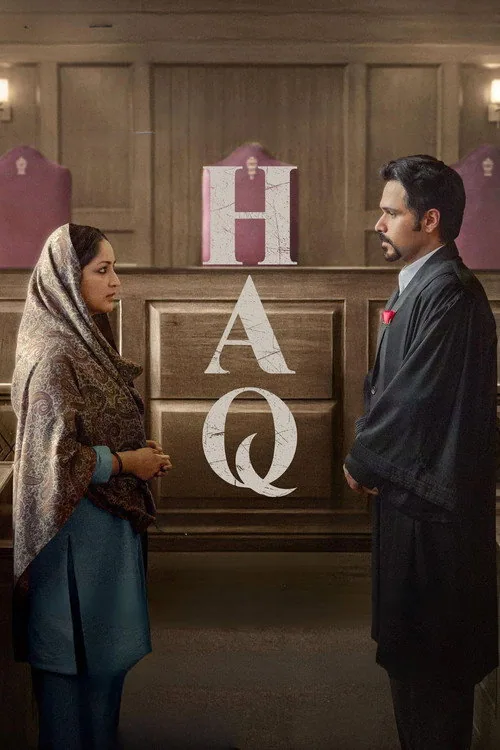
In 1970s India, Shazia Bano's marriage collapses when her husband returns with a second wife and later uses religious divorce to abandon her. Shazia takes the fight for maintenance and dignity into the courts, where lawyer and public figure C. Sankaran Nair becomes involved in a dispute that echoes a landmark national debate. Haq is a legal and social drama about a woman's effort to claim financial security and recognition within systems that make her private life a public battleground.
Based on recorded story, mood and style. Your preferences can change the order.
Coming of age
What changes Homebound is tagged empathetic and somber; Kaalidhar Laapata is tagged gentle and hopeful.
Middle-aged Kaalidhar, who is experiencing memory loss, overhears his family planning to leave him behind during a religious gathering and decides to leave on his own. On the road he meets Ballu, an eight-year-old orphan, and the two form an unexpected bond. They travel across India to complete items on Kaalidhar's bucket list, turning a private fear of abandonment into a shared adventure. The Hindi drama balances humor and poignancy as an older man and child help each other rediscover a sense of purpose and belonging.
Based on recorded story, mood and style. Your preferences can change the order.
Survival · Political resistance
What changes Homebound: measured, years-spanning and character-led. Kantara: gradual awakening, community conflict and ritual climax.
In coastal Karnataka, the villagers' relationship with the forest is shaped by a longstanding promise involving a local spirit deity and the land. Years later, Kambala performer Shiva avoids his family's history until a landlord's claim and a forest officer's enforcement bring that inheritance into direct conflict. The Kannada drama combines village life, ritual, land rights, and action as Shiva is pulled toward a spiritual role that his community understands differently from him.
Childhood friends Chandan and Shoaib leave their North Indian village to pursue police jobs, hoping a uniform will bring them dignity and economic stability. Caste prejudice, religious discrimination, and structural barriers complicate their shared ambition, placing pressure on a friendship that once seemed unshakeable. Spanning several years and culminating during the pandemic, Homebound follows how unequal treatment shapes two young men's chances of returning home with the life they imagined.
What drives the story
A shared dream of police work tests two friends as social discrimination and economic hardship narrow their choices.
The people at its centre
Chandan and Shoaib's loyalty strains under unequal treatment and the different pressures each must absorb.
What it feels like
The drama builds through everyday setbacks and accumulates emotional weight across years of friendship.
Worth knowing
Its social stakes remain grounded in two friends' lives instead of turning into a broad political thriller.
friendship and inequalitycaste and religiondignity
Mood
empathetic · somber · intimate
Pacing
measured · years-spanning · character-led
Visual style
naturalistic rural imagery · social realist framing · intimate performances