Both share an investigation, plus an unsettling atmosphere.
Why this matches +
Genres: Fantasy / Horror
Shared film traits
Based on recorded story, mood and style. Your preferences can change the order.
Investigation
What changes In the Mouth of Madness: mystery-led, surreal escalation and revelatory. Sleepy Hollow: steady.
A constable committed to scientific methods arrives in a secluded New York settlement to investigate a succession of beheadings attributed to a headless rider. Local inheritance disputes and concealed relationships complicate his effort to replace superstition with evidence. As the attacks continue, the inquiry forces him to accept a real supernatural danger while investigating the human interests directing its violence.
Based on recorded story, mood and style. Your preferences can change the order.
Memory and identity · Investigation
What changes In the Mouth of Madness: mystery-led, surreal escalation and revelatory. The Fourth Kind: slow-building and found-footage framing.
A psychologist in Alaska investigates patients who report disturbing experiences and gaps in memory, while her own family history makes the work personal. The film presents the case through a documentary-style frame and dramatized scenes, blurring the boundary between recorded evidence and genre storytelling. Its horror depends on uncertainty about what the witnesses experienced, how much can be remembered and whether any explanation can be verified.
Based on recorded story, mood and style. Your preferences can change the order.
Investigation
What changes In the Mouth of Madness: mystery-led, surreal escalation and revelatory. The Frighteners: a fraudulent ghost hunter investigates a supernatural killer whose victims seem to be chosen in sequence..
After his wife’s death, architect Frank Bannister discovers that he can see and communicate with ghosts. He turns the ability into a con, arranging fake hauntings with ghostly partners and charging residents to clear their homes. When an unseen killer begins causing fatal heart attacks, Frank sees a number marking its next victims and tries to stop the deaths before he is blamed. Peter Jackson’s supernatural horror comedy mixes ghostly slapstick with a murder mystery, moving its guilt-ridden protagonist from confidence trickster to reluctant investigator.
Based on recorded story, mood and style. Your preferences can change the order.
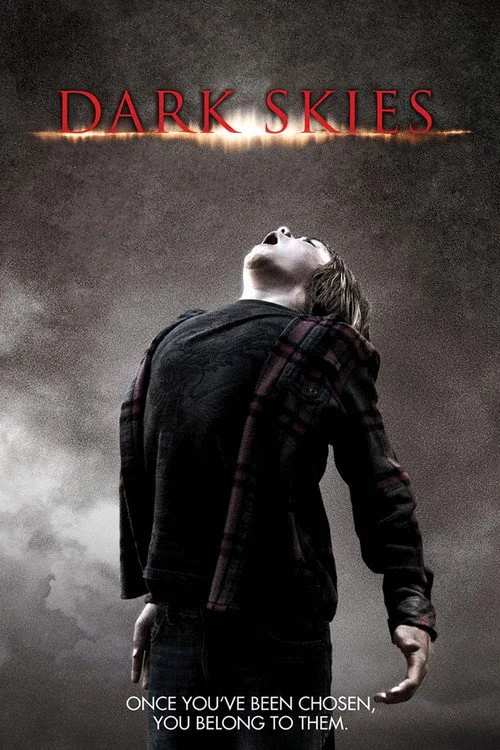
What changes In the Mouth of Madness: mystery-led, surreal escalation and revelatory. Dark Skies: gradual escalation, suspense-led and horror set pieces.
The Barrett family is already under strain: Lacy works to support them while Daniel struggles to find work, and their two sons live an ordinary suburban life. That stability begins to fracture when unexplained events escalate around the house and the children experience gaps in memory and strange marks. As the parents search for a rational explanation, they consult an investigator of alleged abductions and take increasingly drastic steps to protect their family. The film turns domestic anxiety into a science-fiction horror story about an unseen presence selecting a child.
Based on recorded story, mood and style. Your preferences can change the order.
Investigation
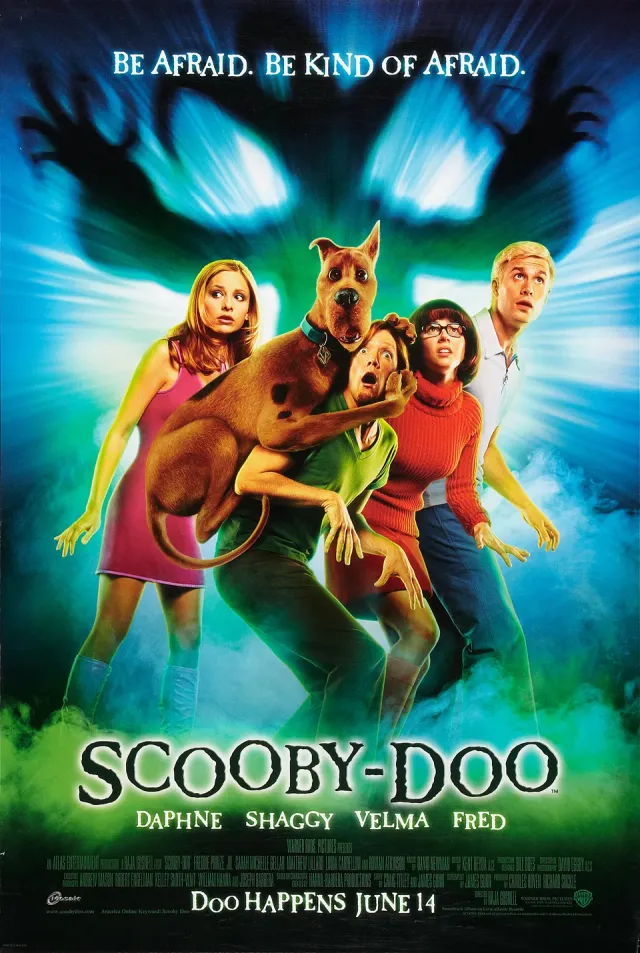
What changes In the Mouth of Madness: mystery-led, surreal escalation and revelatory. Scooby-Doo: episodic, comic and escalating.
After years of solving cases together, Fred, Daphne, Velma, Shaggy and Scooby split up over credit, control and simmering resentments. Two years later, resort owner Emile Mondavarious brings them separately to Spooky Island, where visitors are behaving strangely and the local spectacle may conceal a real threat. Shaggy and Scooby hope the invitation will reunite the friends, while the others arrive determined to prove themselves alone. Their investigation exposes an elaborate plan involving stolen souls and an enemy from inside the gang’s own history, forcing Mystery Inc. to recover the trust that made its earlier cases work.
Based on recorded story, mood and style. Your preferences can change the order.
Memory and identity · Investigation
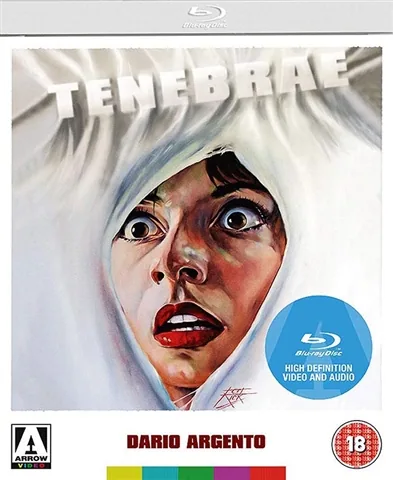
What changes In the Mouth of Madness: mystery-led, surreal escalation and revelatory. Tenebrae: clue-driven, deliberate camera movement, escalating reversals and sudden violent interruptions.
American horror novelist Peter Neal arrives in Rome to promote his latest book, Tenebrae, and soon receives a message from someone claiming that his fiction has inspired a killing spree. Police captain Germani, an admirer of Neal’s work, asks him to assist as murders unsettle the people around the writer. The investigation draws in Neal’s assistant Anne, agent Bullmer, television interviewer Cristiano Berti and Neal’s former fiancée Jane. Suspects and evidence keep shifting as the crimes appear to borrow details from the novel. The film turns its clue trail into a study of authorship, obsession and how easily a confident explanation can become another form of deception.
Based on recorded story, mood and style. Your preferences can change the order.
Memory and identity · Investigation
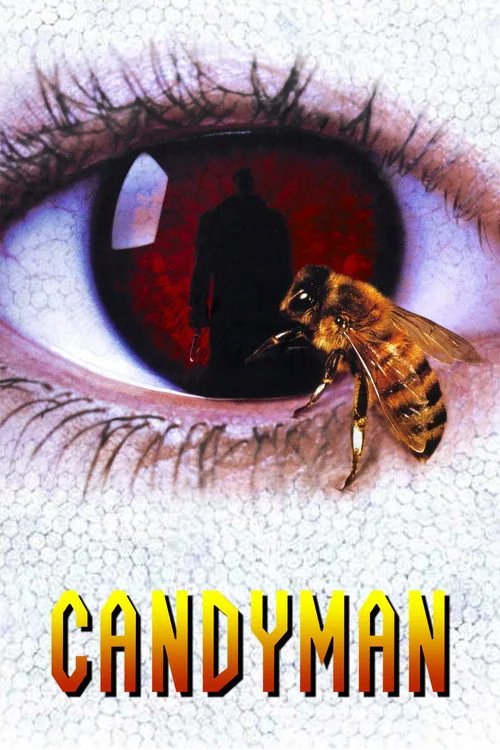
What changes In the Mouth of Madness: mystery-led, surreal escalation and revelatory. Candyman: helen’s fieldwork turns into evidence inside the legend she is trying to document..
Graduate student Helen Lyle researches the Candyman urban legend and the murders attributed to it in Chicago’s Cabrini-Green housing project. Although initially skeptical, she repeats the legend’s ritual and encounters a figure who claims that her disbelief threatens his story. Helen is then framed for violence as the legend begins to shape her own life and the fate of Anne-Marie’s infant son. Bernard Rose’s gothic horror adaptation relocates Clive Barker’s story to Chicago, connecting supernatural fear to race, class, local memory, and the power of urban myths.
Both share an investigation, plus a paranoid atmosphere.
Why this matches +
Genres: Horror / Science fiction
Shared film traits
Based on recorded story, mood and style. Your preferences can change the order.
Investigation
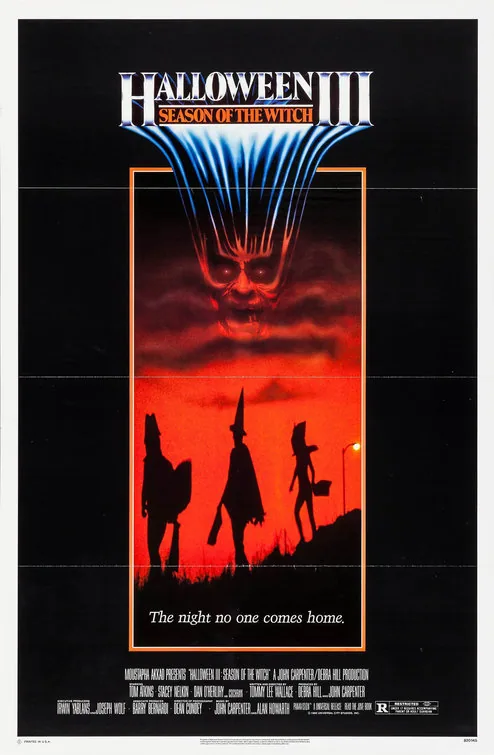
What changes In the Mouth of Madness: mystery-led, surreal escalation and revelatory. Halloween III: Season of the Witch: escalating.
Doctor Dan Challis investigates a suspicious death that leads him to Silver Shamrock, a company selling Halloween masks through an aggressive national campaign. The company's festive advertisements conceal a plan involving its masks and a dangerous technology, while Challis and Ellie Grimbridge try to uncover the scheme before children across the country wear them. Their search brings medical mystery, corporate menace, and a holiday ritual into conflict.
Based on recorded story, mood and style. Your preferences can change the order.
Constructed reality · Memory and identity
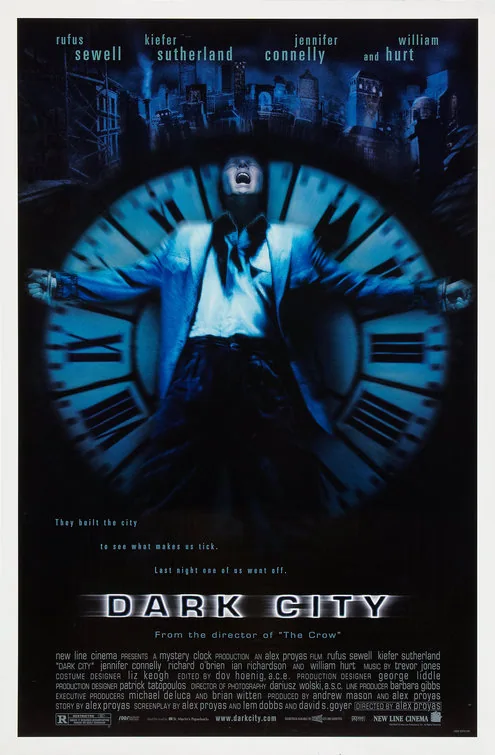
What changes In the Mouth of Madness: mystery-led, surreal escalation and revelatory. Dark City: steadily escalating.
John Murdoch wakes in an unfamiliar hotel with no memory and learns that people are being murdered across a city trapped in permanent night. He is pursued by police and by mysterious strangers who can alter buildings and memories when the population sleeps. As John searches for his identity and for a woman who may know him, the city itself becomes evidence in a struggle over who controls reality.
Insurance investigator John Trent is hired to find Sutter Cane, a best-selling horror novelist whose disappearance has disrupted his publisher. Trent follows clues from Cane’s books to the fictional New Hampshire town of Hobb’s End, where streets, residents, and events seem to follow the author’s writing. As reality becomes unstable, Trent questions whether the case is a publicity scheme or something far more dangerous. John Carpenter’s horror film uses a detective’s investigation to explore the influence of stories and fear.
What drives the story
A skeptical insurance investigator follows a missing author’s trail into a town apparently shaped by fiction.
The people at its centre
Trent’s certainty conflicts with editor Linda Styles’s direct experience of the anomalies they encounter together.
What it feels like
Contains disturbing imagery, violence, madness, supernatural horror, and themes of reality destabilization.
Worth knowing
The film draws on cosmic horror and metafiction, making its mystery deliberately destabilize the investigator’s point of view.