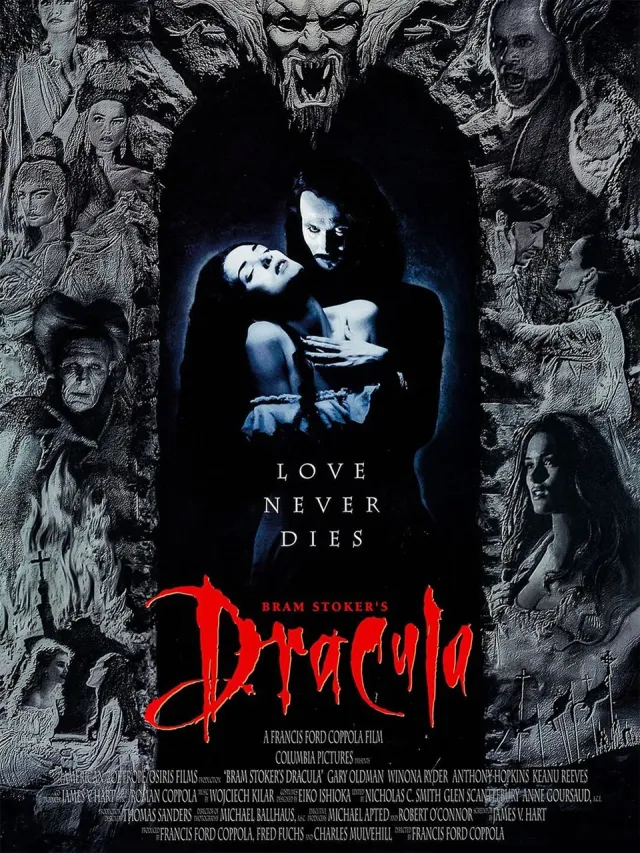
Dracula's pursuit is reframed as a lost-love story, allowing private longing to disguise a predatory campaign that expands from Transylvania into Victorian England. The reincarnation idea belongs to this film's adaptation choices.
Why this matches +
These offer a related experience with a meaningful difference in story, tone, or presentation.
An adjacent discovery: a related idea with a different viewing experience.
Genres: Horror / Romance
Shared film traits
Based on recorded story, mood and style. Your preferences can change the order.
What changes A Gothic vampire story intertwines immortality, grief and a possessive romantic attachment across generations.
Jonathan Harker travels to Transylvania on a property matter and becomes captive to Count Dracula, whose arrival in England brings a circle of victims and protectors into conflict. The Count interprets Mina as the return of a lost beloved, a story that lends his desire romantic grandeur while obscuring its coercion. Mina's responses are part of the film's tension, but attraction cannot make the vampire's possessive claim mutual. Coppola's adaptation fuses erotic melodrama with highly theatrical Gothic horror rather than reproducing the novel unchanged. Lucy and Mina's different encounters with the Count widen the danger beyond a single romance.
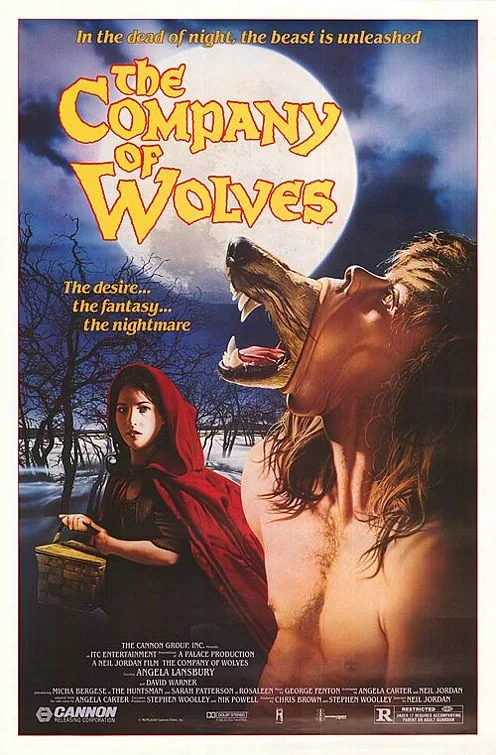
Rosaleen’s inherited warnings offer protection, but her curiosity and sympathy complicate the boundary between safety and desire.
Why this matches +
These offer a related experience with a meaningful difference in story, tone, or presentation.
An adjacent discovery: a related idea with a different viewing experience.
Genres: Fantasy / Horror
Shared film traits
Based on recorded story, mood and style. Your preferences can change the order.
What changes Gothic tales explore predatory desire, transformation and the danger concealed within intimate relationships.
In a modern country house, young Rosaleen dreams of a forest world where her sister is killed by wolves. Her grandmother gives her a red shawl and warns her not to leave the path, eat a fallen apple or trust a man whose eyebrows meet. As Rosaleen returns to the forest, she hears stories of villagers whose encounters with wolves blur the line between human and beast. A huntsman reaches her grandmother’s cottage first and reveals his dangerous nature. Rosaleen’s fear of him is complicated by fascination, and her response to his injury separates her from the villagers who come looking for a werewolf. The dream’s fairy-tale episodes gather around her movement toward adulthood and desire.
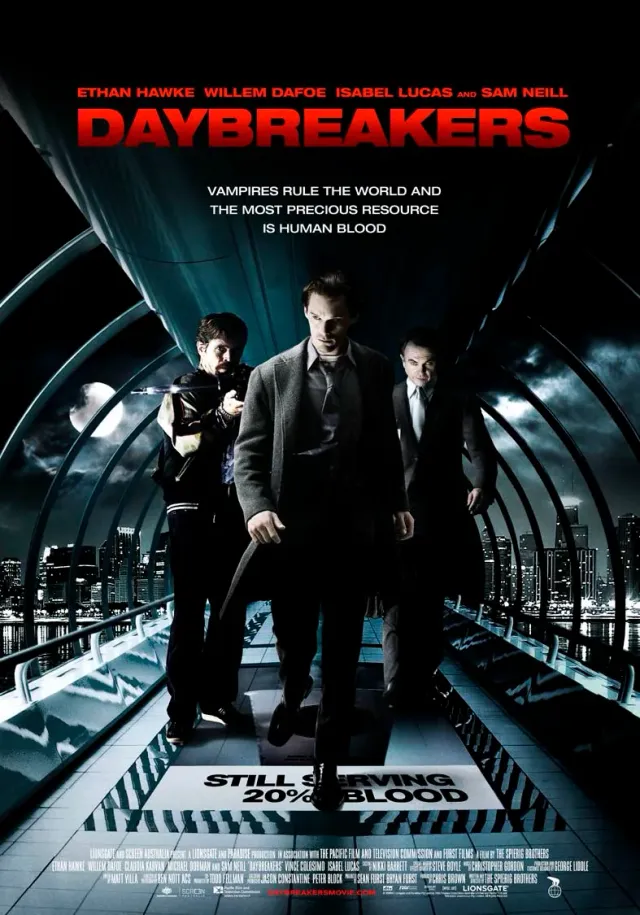
The blood shortage makes a familiar monster premise into a problem of systems and resource control.
Why this matches +
These offer a related experience with a meaningful difference in story, tone, or presentation.
An adjacent discovery: a related idea with a different viewing experience.
Genres: Horror / Science fiction
Shared film traits
Based on recorded story, mood and style. Your preferences can change the order.
What changes A vampire society treats human life as a resource while individuals question the morality of their own dependence.
A decade after a plague transforms most people into vampires, the shrinking human population threatens the blood supply that sustains the new majority. Hematologist Edward Dalton searches for a substitute while an underground human resistance offers a possible alternative to the system. The science-fiction horror turns vampirism into an economic and political structure, using a dark urban future to explore scarcity, corporate power and the possibility of reversing a global transformation.
The mechanism’s gift of restored youth forces Jesús to confront a hunger that threatens the family bonds he values.
Why this matches +
These offer a related experience with a meaningful difference in story, tone, or presentation.
An adjacent discovery: a related idea with a different viewing experience.
Genres: Horror / Fantasy
Shared film traits
Based on recorded story, mood and style. Your preferences can change the order.
What changes A supernatural route to immortality binds a vulnerable person to an appetite that threatens family relationships.
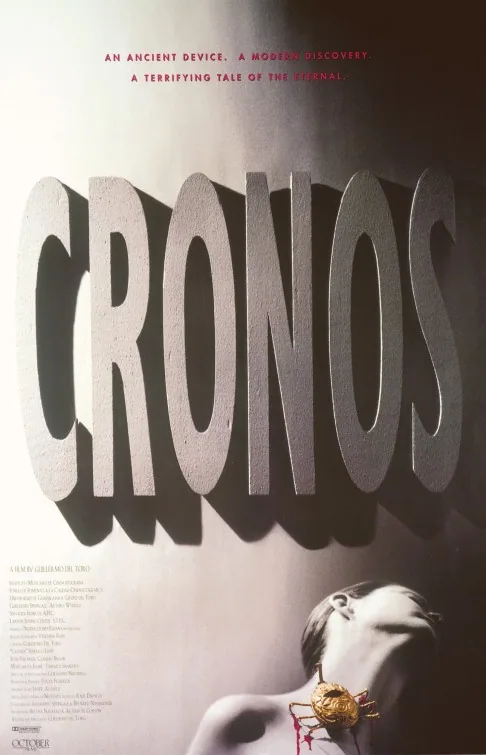
Antique dealer Jesús Gris discovers a hidden, scarab-shaped mechanism inside a statue. The device attaches itself to his body and restores his vigor, but it also creates a growing hunger for blood and changes his relationship to mortality. Wealthy industrialist Dieter de la Guardia has spent years trying to recover the mechanism, and his nephew Angel is sent to obtain it from Gris. As Gris’s granddaughter Aurora becomes his closest ally, the dealer must choose between the promise of renewed life and the cost of the transformation. Guillermo del Toro’s debut feature turns an immortality device into an intimate story of family, aging and bodily horror.
An experiment creates a life whose demand for recognition follows Victor across the story, turning scientific ambition into a conflict over responsibility and abandonment. Victor’s account loses authority when the creature’s own experience changes the audience’s moral alignment.
Why this matches +
These offer a related experience with a meaningful difference in story, tone, or presentation.
An adjacent discovery: a related idea with a different viewing experience.
Genres: Horror / Drama
Shared film traits
Based on recorded story, mood and style. Your preferences can change the order.
What changes A being created through unnatural means confronts rejection, loneliness and the responsibilities of the person who made him.
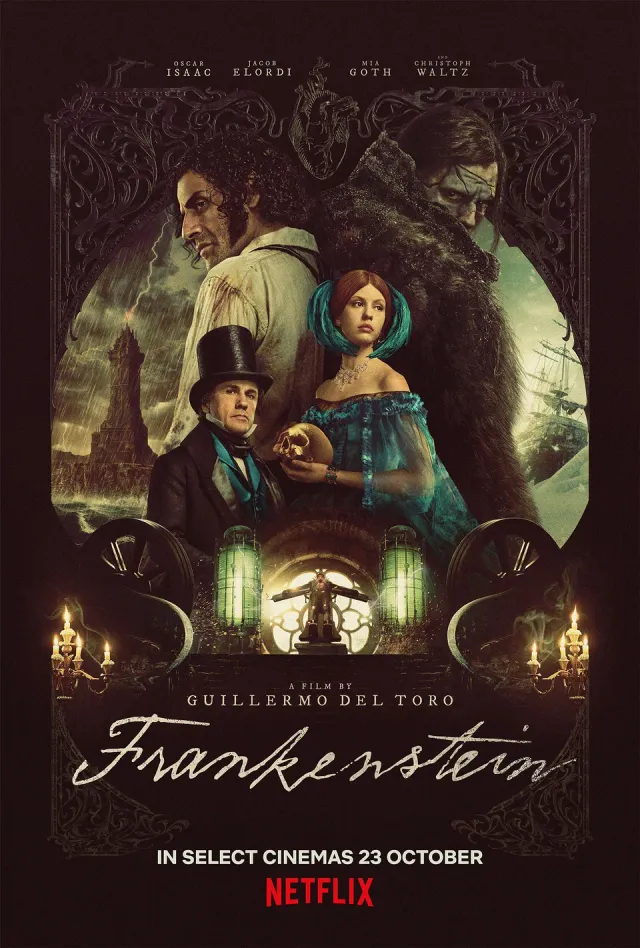
Victor Frankenstein brings a creature to life through a brilliant experiment, then treats the being he created as a problem to escape rather than a person who needs an account of his origin. Guillermo del Toro’s adaptation gives both creator and creature narrative space, shifting the question of monstrosity toward abandonment, recognition and the responsibilities that follow an act of creation. Gothic spectacle and bodily violence coexist with a compassionate interest in the creature’s experience. This is the 2025 film’s own version of Mary Shelley’s novel, not the 1931 Universal film, and its adaptation-specific character choices and resolution should be kept separate from the source novel’s details.
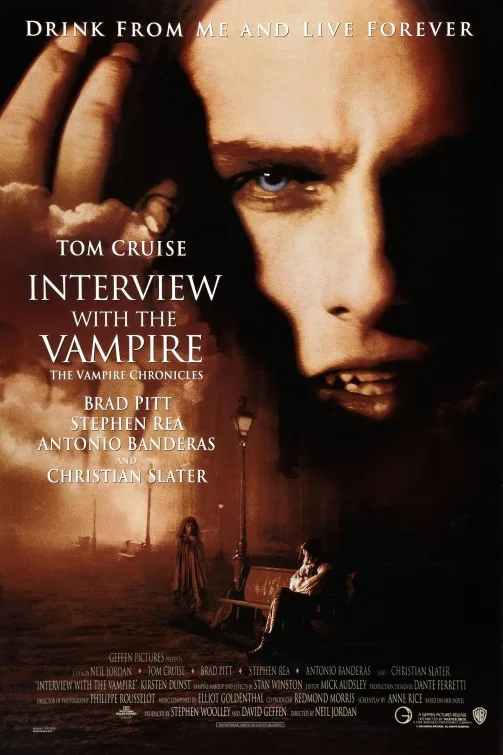
A man tells a reporter how grief led him into an existence that cannot end through ordinary means. His new companion welcomes the appetite that horrifies him, and turning a child into a vampire binds them into a household built on incompatible needs. Centuries of travel expose other communities whose apparent recognition carries its own control. The Gothic narrative makes immortality a duration of unequal attachments, with confession revealing guilt without guaranteeing either reliable self-understanding or freedom from the desire to be understood.
What drives the story
An account of reluctant vampirism follows attempts to escape a controlling creator and find belonging without resolving the dependence on predation.
The people at its centre
Louis's attachment to Claudia conflicts with Lestat's possessive care, while Claudia's maturing consciousness within a child's body exposes the cruelty of a gift she never chose.
What it feels like
Ornate period environments, intimate narration and sudden bodily violence combine sensuality with mourning rather than treating eternal life as uncomplicated glamorous power.
Worth knowing
The interview frame belongs to a self-interpreting speaker; preserve Claudia's imposed bodily limit and the household's coercion instead of describing it as a conventional protective family.