Based on recorded story, mood and style. Your preferences can change the order.
Artificial life
Expect tragic and uneasy, with measured and escalating pacing.
A scientist assembles a body and succeeds in animating it, but creating life proves easier than understanding the being now dependent on him. Fear, confinement and mistreatment shape a creature whose gestures of curiosity others read as menace. As harm spreads beyond the laboratory, the experiment becomes a public emergency. The horror depends on an unstable division between the maker's ambition, the creature's limited understanding and a community mobilizing to destroy what it cannot accommodate.
Based on recorded story, mood and style. Your preferences can change the order.
Artificial life
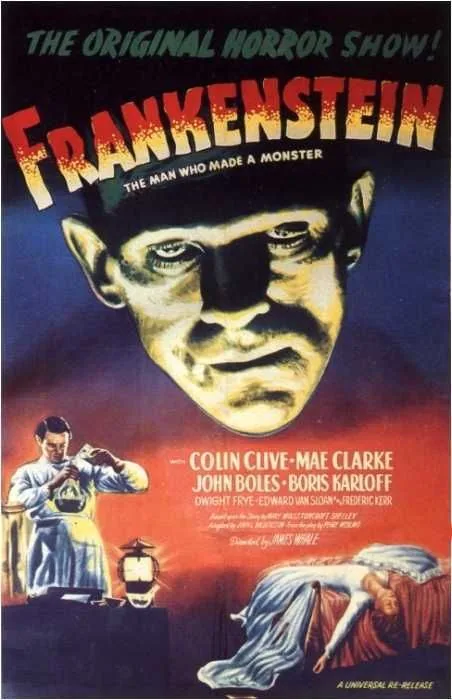
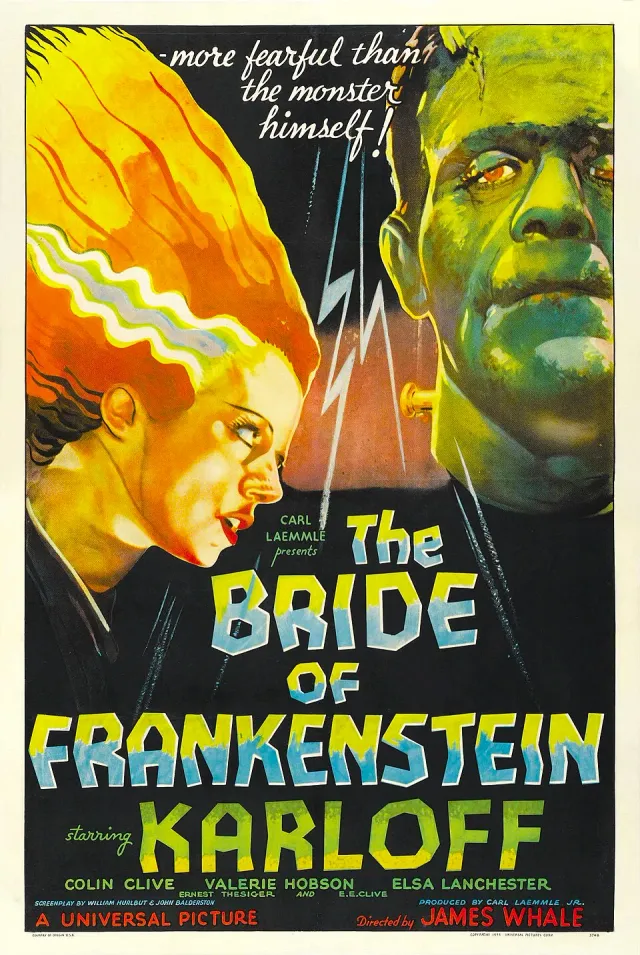
What changes Frankenstein: measured and nonlinear. Bride of Frankenstein: dramatic escalation and dark humor.
After the destruction at the windmill, Frankenstein’s creature survives and struggles to find sympathy in a world that fears him. The eccentric Dr. Pretorius wants Henry Frankenstein to resume his experiments and create a companion for the lonely being. As pressure mounts on Frankenstein and his family, the search for a mate raises new questions about creation, rejection and responsibility.
Shared characteristics
Theme: Creation
Genre: Horror
Genre: Drama
Poster: Film rights holders; original promotional poster documented by Wikipedia · Image source
Based on recorded story, mood and style. Your preferences can change the order.
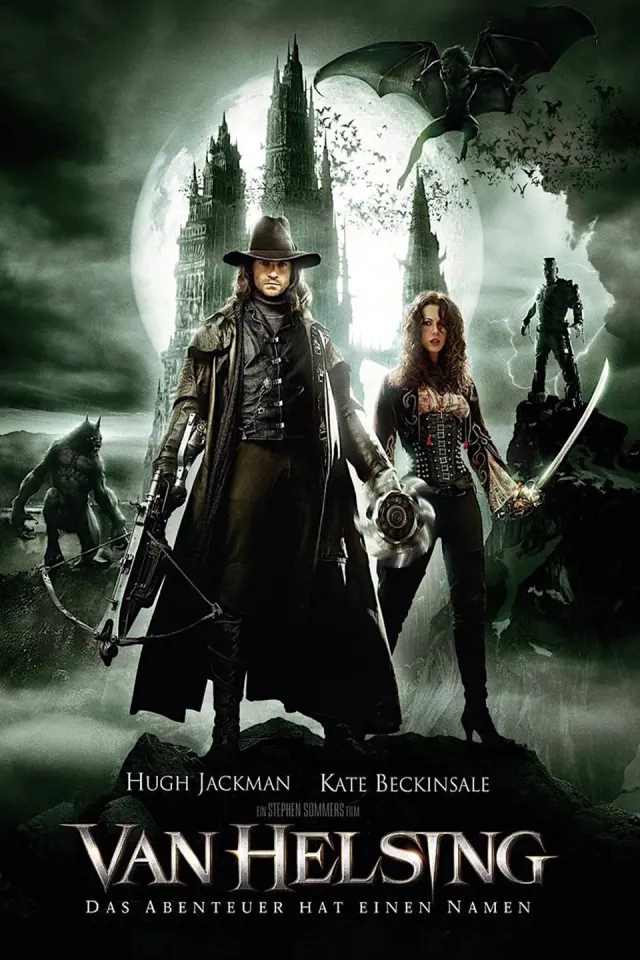
What changes Frankenstein: measured and nonlinear. Van Helsing: quest structure and escalating encounters.
Monster hunter Gabriel Van Helsing is sent by the Vatican to Transylvania, where Anna Valerious is trying to stop Count Dracula from destroying her family. Dracula’s plan depends on bringing his unborn offspring to life, and Frankenstein’s creature may hold the key. Van Helsing’s assignment becomes tangled with Anna’s family duty, his own missing memories and the werewolf curse that ties him to Dracula’s world. The pair move through castles and laboratories where familiar Gothic monsters are connected by one expanding adventure plot. The film treats its classic creatures as pieces of an action spectacle rather than as separate literary studies, using their intersecting histories to build a monster-hunting quest.
Based on recorded story, mood and style. Your preferences can change the order.
Artificial life
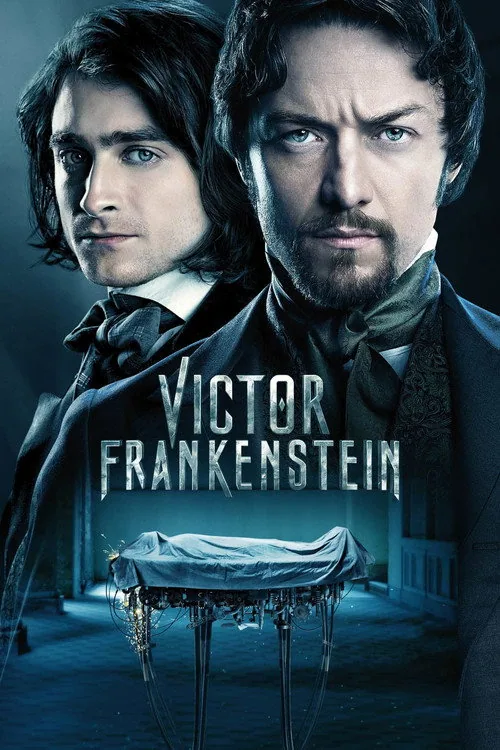
What changes Frankenstein: measured and nonlinear. Victor Frankenstein: fast adventure beats, laboratory escalation and pursuit and action climax.
Told through the perspective of Igor, a mistreated circus performer with remarkable anatomical knowledge, the film follows his rescue by medical student Victor Frankenstein. Igor becomes Victor's partner in a dangerous effort to assemble and animate a body, even as an inspector and the consequences of their experiments close in. Their friendship is tested by Victor's ambition and by Igor's desire for a life beyond the laboratory. This adventure-horror reimagining shifts the familiar Frankenstein story toward the assistant's viewpoint and the uneasy bond between two collaborators.
Based on recorded story, mood and style. Your preferences can change the order.
Memory and identity
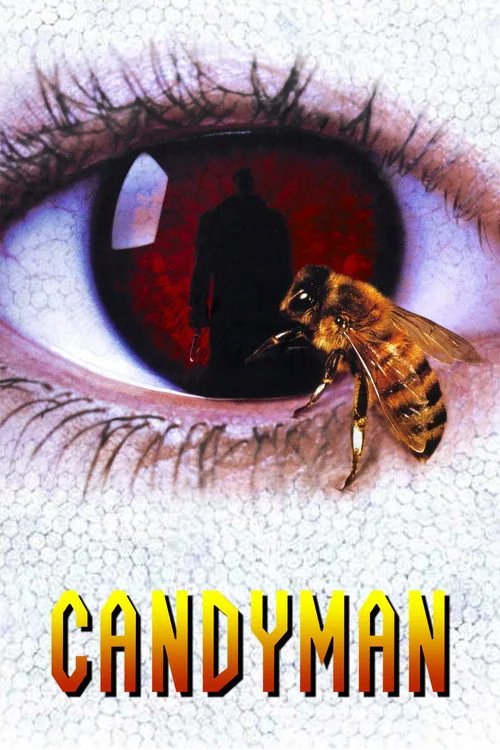
What changes Frankenstein: measured and nonlinear. Candyman: helen’s fieldwork turns into evidence inside the legend she is trying to document..
Graduate student Helen Lyle researches the Candyman urban legend and the murders attributed to it in Chicago’s Cabrini-Green housing project. Although initially skeptical, she repeats the legend’s ritual and encounters a figure who claims that her disbelief threatens his story. Helen is then framed for violence as the legend begins to shape her own life and the fate of Anne-Marie’s infant son. Bernard Rose’s gothic horror adaptation relocates Clive Barker’s story to Chicago, connecting supernatural fear to race, class, local memory, and the power of urban myths.
Based on recorded story, mood and style. Your preferences can change the order.
Artificial life
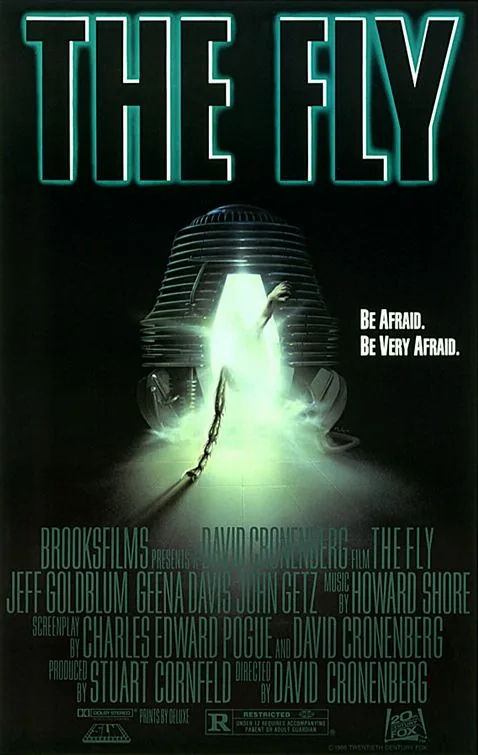
What changes Frankenstein: measured and nonlinear. The Fly: gradual deterioration and body-horror escalation.
Scientist Seth Brundle invites journalist Veronica Quaife to document his experiments with teleportation. When he tests the device on himself without noticing a fly has entered the pod, his body begins changing in stages. At first Seth mistakes the increased strength and appetite for improvement; Veronica recognizes the physical and emotional deterioration before he can accept it. As the transformation becomes irreversible, their intimacy turns into a struggle over care, fear and whether there is anything left to save. The film treats scientific ambition as the trigger, but its central horror is watching a person remain emotionally present while his body becomes frighteningly unfamiliar.
Based on recorded story, mood and style. Your preferences can change the order.
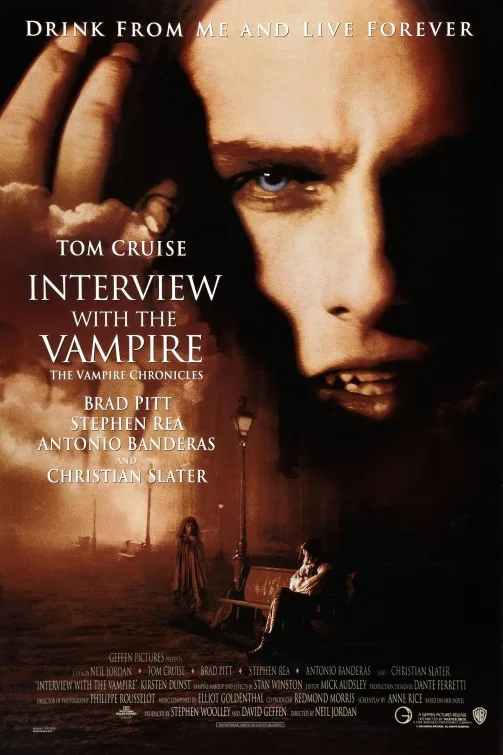
What changes Frankenstein is tagged tragic and compassionate; Interview with the Vampire is tagged mournful and sensual.
A man tells a reporter how grief led him into an existence that cannot end through ordinary means. His new companion welcomes the appetite that horrifies him, and turning a child into a vampire binds them into a household built on incompatible needs. Centuries of travel expose other communities whose apparent recognition carries its own control. The Gothic narrative makes immortality a duration of unequal attachments, with confession revealing guilt without guaranteeing either reliable self-understanding or freedom from the desire to be understood.
Based on recorded story, mood and style. Your preferences can change the order.
Artificial life
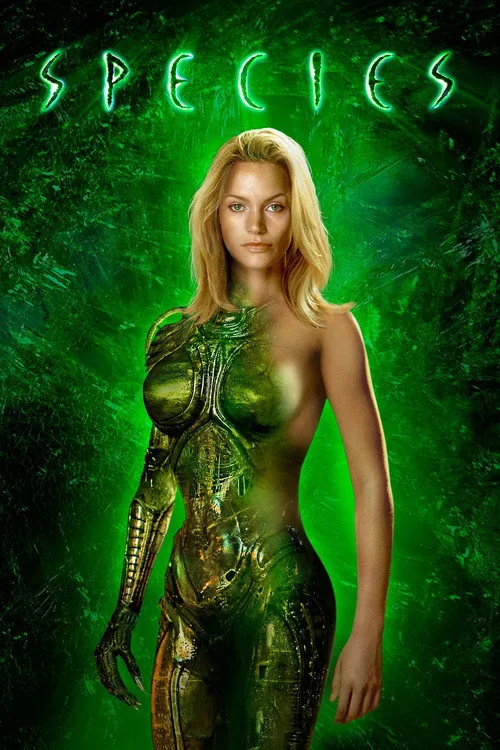
What changes Frankenstein: measured and nonlinear. Species: pursuit-driven, escalating and creature-feature suspense.
Scientists receive an extraterrestrial message containing genetic information and create Sil, a human-alien hybrid who matures rapidly. When she escapes from confinement, a government team tracks her across Los Angeles, fearing that she may reproduce and threaten humanity. Sil’s intelligence and changing appearance complicate the pursuit as investigators disagree about how to understand her. Roger Donaldson’s science-fiction horror film combines a creature chase with anxieties about genetic experimentation, desire, and the creation of life beyond human control.
Based on recorded story, mood and style. Your preferences can change the order.
Expect somber and tragic, with measured and escalating pacing.
A Japanese fishing vessel is destroyed after nuclear testing awakens Godzilla, and Tokyo’s growing casualties turn the monster story into a drama about radiation, public responsibility and scientific power. Dr. Serizawa’s destructive oxygen weapon might stop the creature, but using it risks creating another weapon whose future cannot be controlled. The original Japanese cut ties disaster to contemporary nuclear memory, while the later U.S. recut inserted new scenes and removed material. This profile describes the 1954 Japanese film: it is a grief-struck civic story with a moral refusal at its center, not the more generic hero-monster spectacle of later franchise entries.
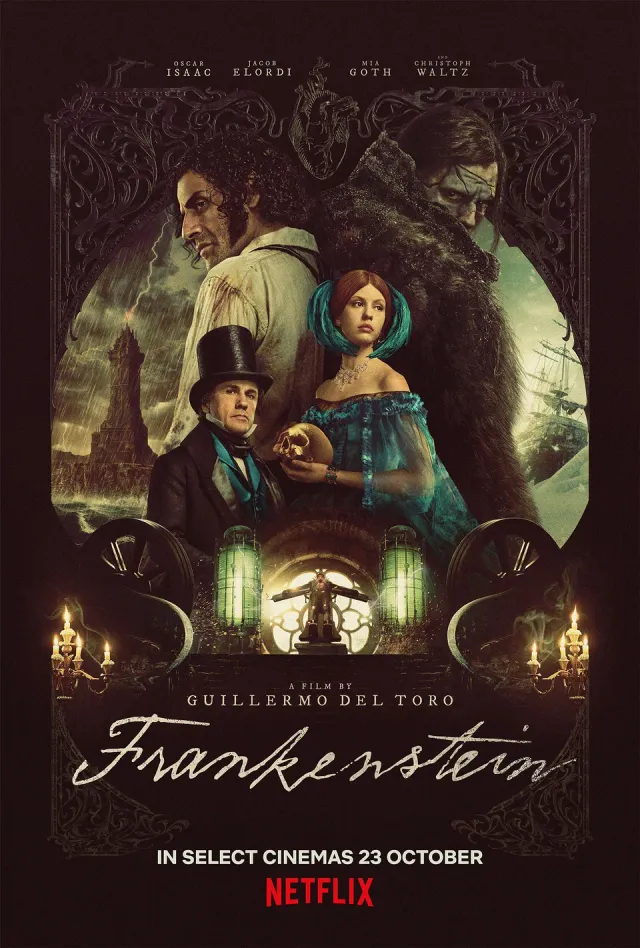
Victor Frankenstein brings a creature to life through a brilliant experiment, then treats the being he created as a problem to escape rather than a person who needs an account of his origin. Guillermo del Toro’s adaptation gives both creator and creature narrative space, shifting the question of monstrosity toward abandonment, recognition and the responsibilities that follow an act of creation. Gothic spectacle and bodily violence coexist with a compassionate interest in the creature’s experience. This is the 2025 film’s own version of Mary Shelley’s novel, not the 1931 Universal film, and its adaptation-specific character choices and resolution should be kept separate from the source novel’s details.
What drives the story
An experiment creates a life whose demand for recognition follows Victor across the story, turning scientific ambition into a conflict over responsibility and abandonment. Victor’s account loses authority when the creature’s own experience changes the audience’s moral alignment.
The people at its centre
Victor’s self-justifying account is challenged when the creature gains narrative perspective, making paternal authority and the created being’s agency central to the moral balance. Creation becomes a parental obligation that Victor repeatedly tries to evade.
What it feels like
Elaborate Gothic design and violent creation imagery frame an emotionally expansive retelling that alternates horror with sympathy for the rejected creature. Gothic laboratories and bodily horror carry the story’s violence alongside its sympathy.
Worth knowing
Compare with adaptations that recast creator-child responsibility and creature agency; identify del Toro’s 2025 film and do not import events or character emphasis from other Frankenstein versions. The film’s perspective shifts distinguish it from both Shelley’s text and the 1931 screen version.