The monster’s attack forces the family into a rescue effort while public authorities compound the crisis.
Why this matches +
Selected for the central appeal: Grave monster stories about human responsibility, destructive power and a community facing catastrophe.
Genres: Science fiction / Drama
Shared film traits
Based on recorded story, mood and style. Your preferences can change the order.
Investigation · Survival
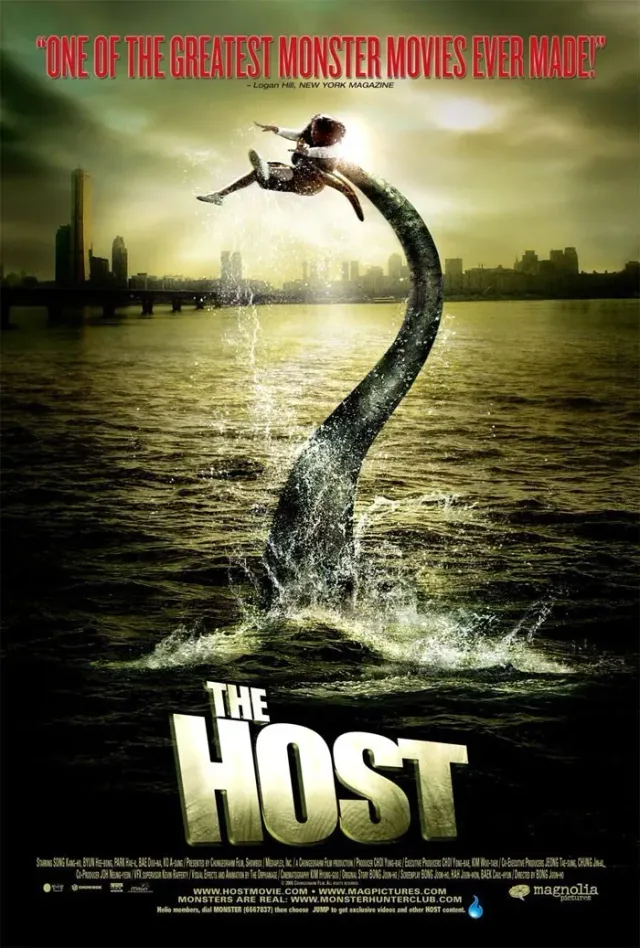
What changes The Host combines a giant creature's attack with civic fear and questions about institutional responsibility.
After a creature emerges from Seoul’s river and abducts a young girl, her family searches for her while officials impose quarantines and spread alarming explanations. The rescue effort becomes both a monster-film pursuit and a family struggle against institutions that offer little help. The Korean film mixes horror, comedy and social satire, shifting from creature spectacle to the stubborn, imperfect care that binds its central family.
Successful creation produces an obligation of care that the laboratory cannot fulfill, turning a private experiment into a collective pursuit.
Why this matches +
These offer a related experience with a meaningful difference in story, tone, or presentation.
An adjacent discovery: a related idea with a different viewing experience.
Genres: Horror / Drama
Shared film traits
Based on recorded story, mood and style. Your preferences can change the order.
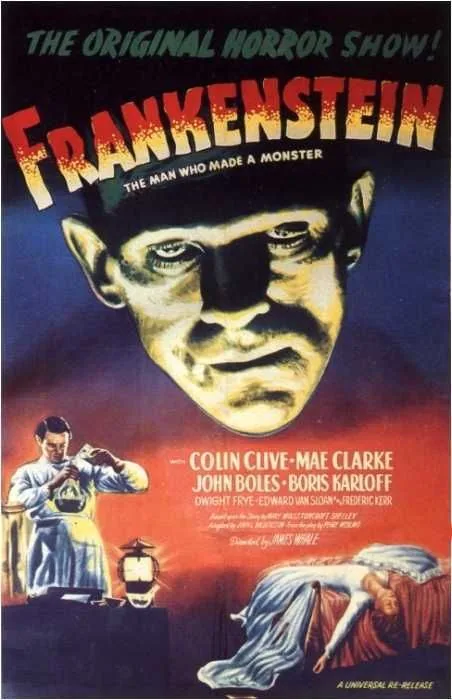
What changes Frankenstein examines the consequences of scientific ambition and a frightened community's response to a creature.
A scientist assembles a body and succeeds in animating it, but creating life proves easier than understanding the being now dependent on him. Fear, confinement and mistreatment shape a creature whose gestures of curiosity others read as menace. As harm spreads beyond the laboratory, the experiment becomes a public emergency. The horror depends on an unstable division between the maker's ambition, the creature's limited understanding and a community mobilizing to destroy what it cannot accommodate.
Denham’s effort to turn an animal into an attraction drives the chain from capture to escape and recapture. The plot condemns exploitation emotionally while still giving the filmmaker-entrepreneur the narrative authority to define the island and its inhabitants.
Why this matches +
These offer a related experience with a meaningful difference in story, tone, or presentation.
An adjacent discovery: a related idea with a different viewing experience.
Genres: Adventure / Horror
Shared film traits
Based on recorded story, mood and style. Your preferences can change the order.
Survival
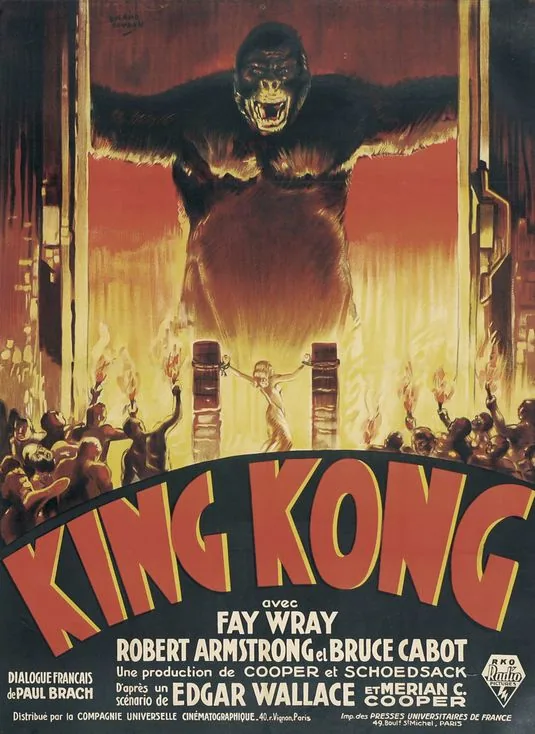
What changes King Kong follows a giant creature brought into conflict with a city that responds with overwhelming force.
A film crew travels to a remote island to capture Kong, a giant ape whose forced removal turns an expedition into a commercial spectacle. After he escapes in New York, the creature becomes a public attraction and then a threat in the city where Ann Darrow’s safety is repeatedly used to justify control over him. The film’s miniature effects, stop-motion movement and monumental sets make Kong both frightening spectacle and a figure of pathos. That sympathy exists within a colonial adventure structure that depicts the island’s people through racialized stereotypes and treats their land as an obstacle to white explorers. Read the creature’s tragedy alongside the film’s hierarchy of human characters; later remakes’ romantic reciprocity should not be projected backward onto this original.
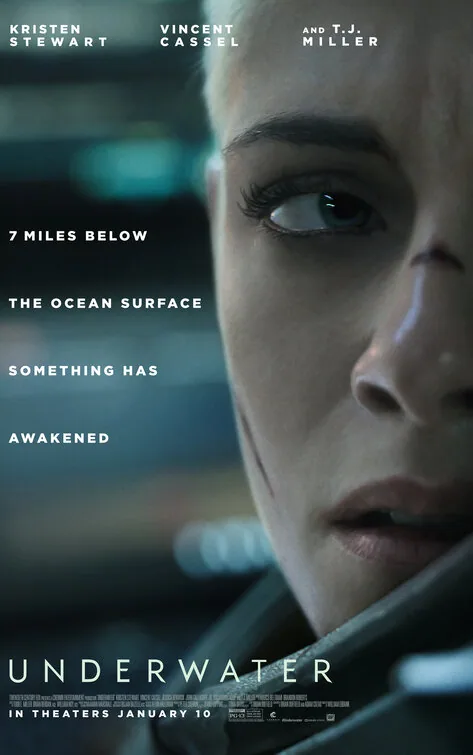
The damaged station turns routine maintenance spaces into hazards that the crew must cross.
Why this matches +
These offer a related experience with a meaningful difference in story, tone, or presentation.
An adjacent discovery: a related idea with a different viewing experience.
Genres: Science Fiction / Horror
Shared film traits
Based on recorded story, mood and style. Your preferences can change the order.
Survival
What changes Underwater follows people facing a huge unknown threat after human activity disturbs a remote environment.
An accident devastates an undersea drilling facility on the ocean floor, leaving engineer Norah and a small group of survivors searching for a way to reach safety. Their route takes them outside the damaged station, where pressure, failing equipment and an unknown threat make each decision urgent. The film compresses disaster and creature horror into a hostile environment, emphasizing teamwork and the physical limits of human survival far below the surface.
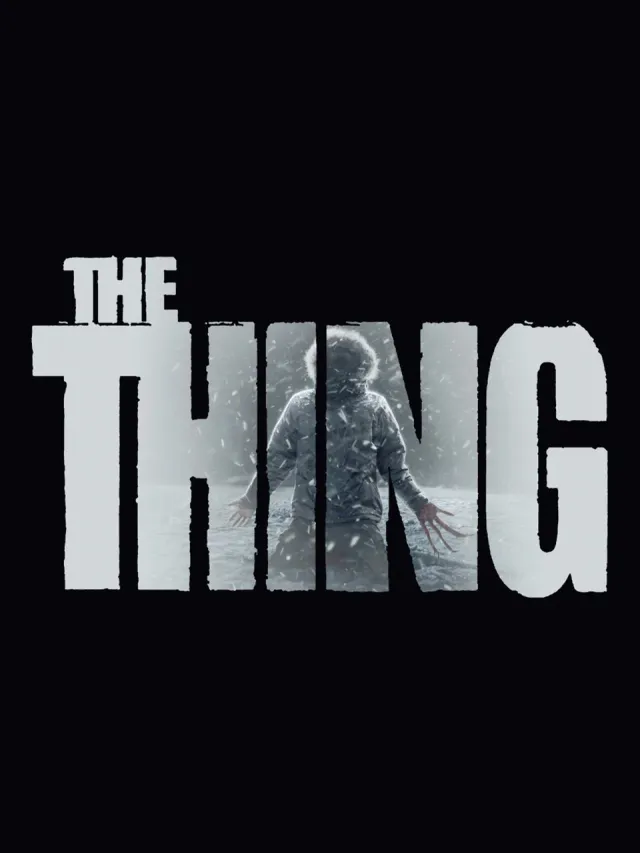
The imitation threat makes ordinary recognition unreliable for the people trapped together.
Why this matches +
These offer a related experience with a meaningful difference in story, tone, or presentation.
An adjacent discovery: a related idea with a different viewing experience.
Genres: Horror / Science Fiction
Shared film traits
Based on recorded story, mood and style. Your preferences can change the order.
Survival
What changes The Thing follows a group confronting an unfamiliar creature while debating destructive methods of stopping it.
A Norwegian research team in Antarctica uncovers an alien craft and a life-form preserved in ice, then brings paleontologist Kate Lloyd to investigate. When the organism begins to imitate its hosts, the station’s isolation turns every encounter into a test of identity and trust. Matthijs van Heijningen Jr. connects this prequel to the 1982 film through practical creature horror, frozen landscapes and the escalating problem of knowing who is still human.
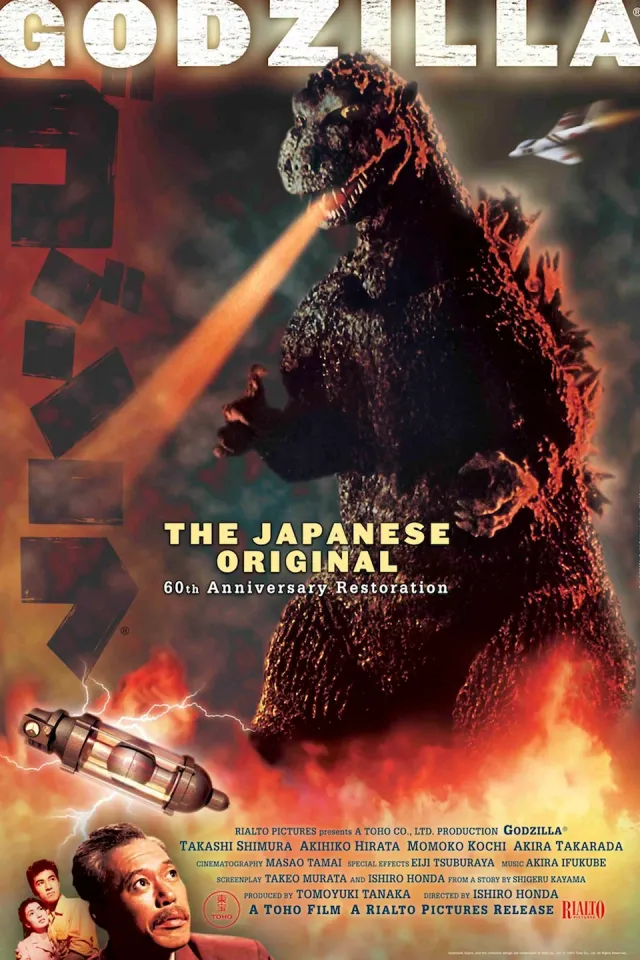
A Japanese fishing vessel is destroyed after nuclear testing awakens Godzilla, and Tokyo’s growing casualties turn the monster story into a drama about radiation, public responsibility and scientific power. Dr. Serizawa’s destructive oxygen weapon might stop the creature, but using it risks creating another weapon whose future cannot be controlled. The original Japanese cut ties disaster to contemporary nuclear memory, while the later U.S. recut inserted new scenes and removed material. This profile describes the 1954 Japanese film: it is a grief-struck civic story with a moral refusal at its center, not the more generic hero-monster spectacle of later franchise entries.
What drives the story
Godzilla’s attacks force the scientist to decide whether ending immediate destruction justifies releasing a technology that could generate another arms race. Serizawa’s decision follows the disaster’s human cost rather than a simple desire to defeat a monster.
The people at its centre
Serizawa’s fear of his own invention collides with the demands of the state and the grief of people losing loved ones to a disaster they did not cause. His weapon presents scientific knowledge as a responsibility that survives the immediate crisis.
What it feels like
Rubble, alarms, crowds and measured monster reveals produce a mournful disaster film whose spectacle remains attached to human injury and nuclear anxiety. The black-and-white images of ruin connect spectacle to mourning and radiation anxiety.
Worth knowing
Compare with postwar nuclear allegory and civic disaster dramas, identifying the original Japanese version and keeping the 1956 U.S. recut and later franchise interpretations separate. The Americanized 1956 recut changes context and footage, so it is a separate comparison target.