An expedition's guide redirects its route toward his own predator hunt, making dependence on expertise part of the trap.
Why this matches +
These offer a related experience with a meaningful difference in story, tone, or presentation.
An adjacent discovery: a related idea with a different viewing experience.
Genres: Adventure / Horror
Shared film traits
Based on recorded story, mood and style. Your preferences can change the order.
Survival
What changes A film crew's expedition into remote territory encounters a giant predator and the risks of exploiting an unfamiliar environment.
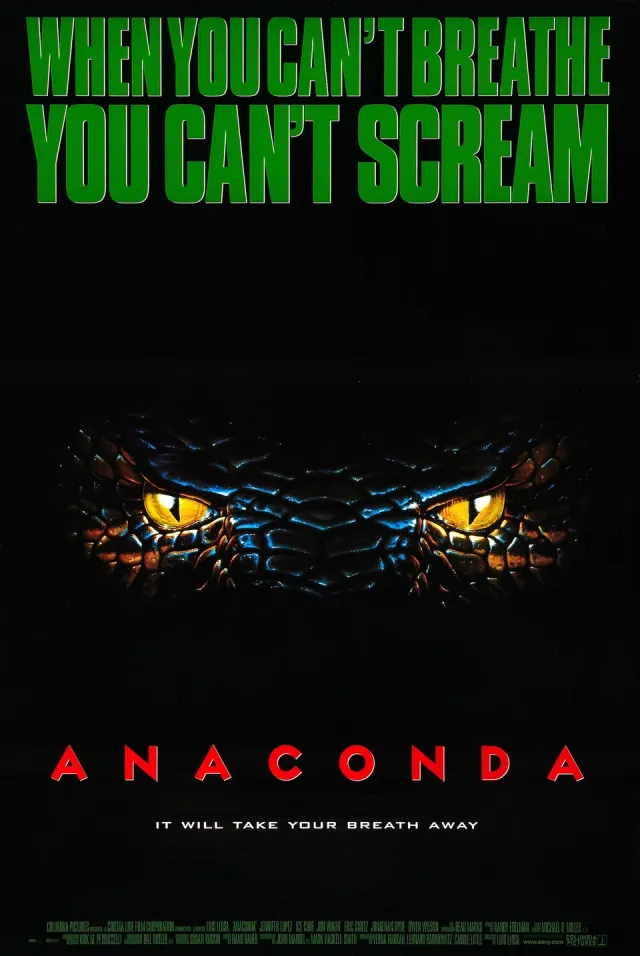
A documentary crew travels into the Amazon and takes aboard a stranded man who claims to know the river. His guidance increasingly serves a private hunt for a giant snake, forcing the filmmakers into danger they did not choose. The creature threat and the human commandeering of the expedition reinforce one another, turning limited transport and uncertain local knowledge into means of confinement.
The creature’s response to being observed turns the desire for a spectacular image into the immediate source of danger.
Why this matches +
These offer a related experience with a meaningful difference in story, tone, or presentation.
An adjacent discovery: a related idea with a different viewing experience.
Genres: Science fiction / Horror
Shared film traits
Based on recorded story, mood and style. Your preferences can change the order.
What changes People attempt to capture an extraordinary creature as spectacle, exposing the danger and exploitation behind the pursuit.
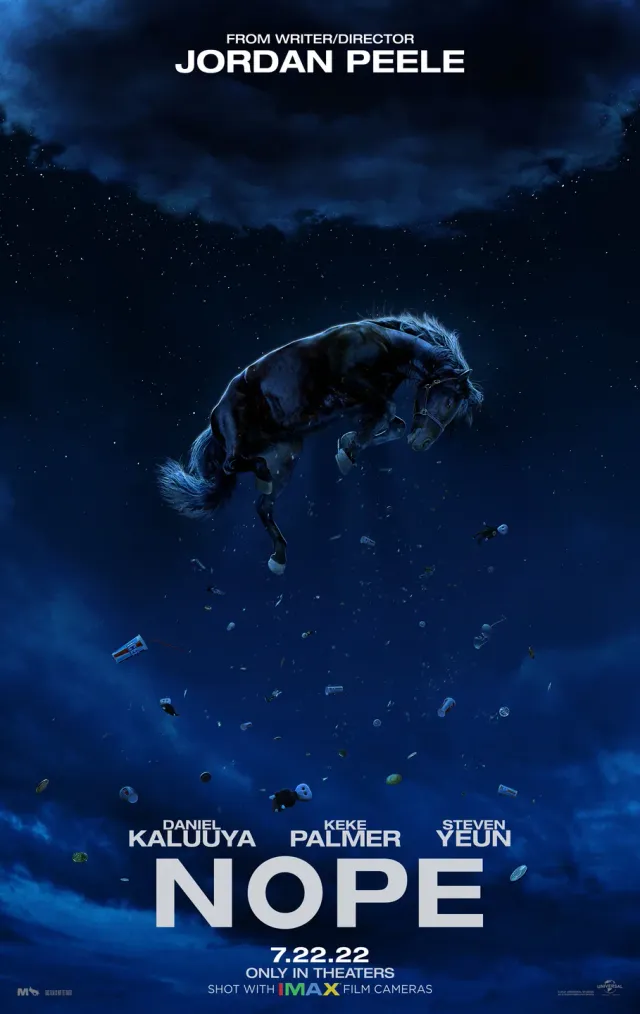
After objects fall from the sky and kill their father, siblings Otis “OJ” Haywood and Emerald struggle to keep their family’s horse ranch operating. They begin seeing an unidentified presence above Agua Dulce and enlist electronics-store worker Angel to record it, hoping to sell proof. Nearby theme-park owner Jupe treats the presence as an attraction, drawing a crowd to a spectacle he cannot control. The siblings learn that what looks like a craft is a territorial creature reacting to being watched, so their attempt to film it becomes a dangerous contest over attention, business and survival.
Godzilla’s attacks force the scientist to decide whether ending immediate destruction justifies releasing a technology that could generate another arms race. Serizawa’s decision follows the disaster’s human cost rather than a simple desire to defeat a monster.
Why this matches +
These offer a related experience with a meaningful difference in story, tone, or presentation.
An adjacent discovery: a related idea with a different viewing experience.
Genres: Science Fiction / Horror
Shared film traits
Based on recorded story, mood and style. Your preferences can change the order.
Survival
What changes A gigantic creature becomes a destructive urban spectacle, prompting questions about human responsibility and fear.
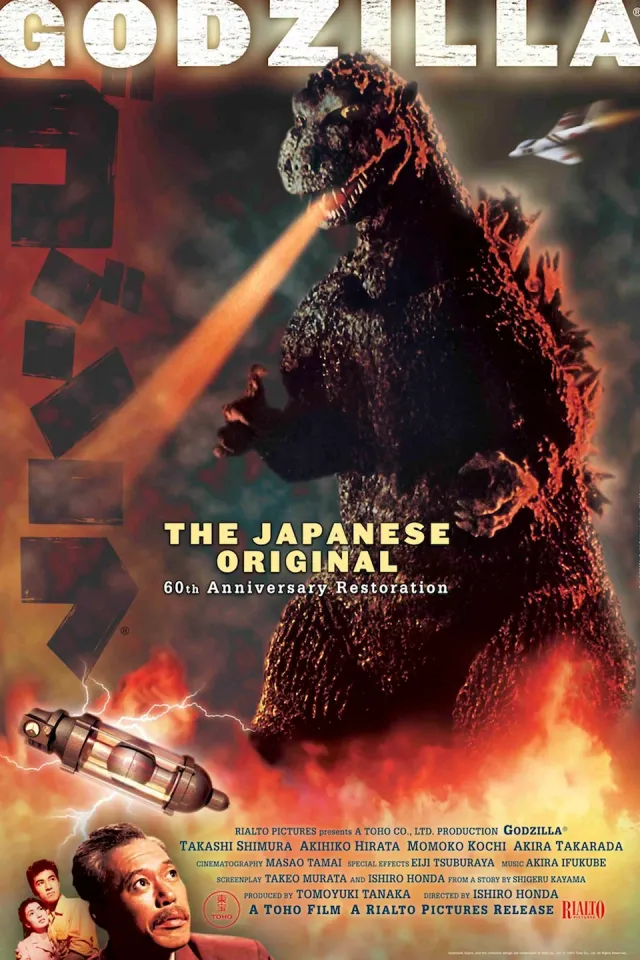
A Japanese fishing vessel is destroyed after nuclear testing awakens Godzilla, and Tokyo’s growing casualties turn the monster story into a drama about radiation, public responsibility and scientific power. Dr. Serizawa’s destructive oxygen weapon might stop the creature, but using it risks creating another weapon whose future cannot be controlled. The original Japanese cut ties disaster to contemporary nuclear memory, while the later U.S. recut inserted new scenes and removed material. This profile describes the 1954 Japanese film: it is a grief-struck civic story with a moral refusal at its center, not the more generic hero-monster spectacle of later franchise entries.
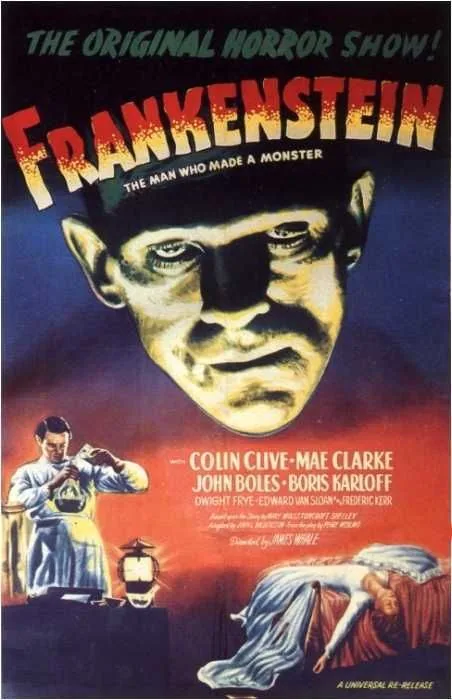
Successful creation produces an obligation of care that the laboratory cannot fulfill, turning a private experiment into a collective pursuit.
Why this matches +
These offer a related experience with a meaningful difference in story, tone, or presentation.
An adjacent discovery: a related idea with a different viewing experience.
Genres: Horror / Drama
Shared film traits
Based on recorded story, mood and style. Your preferences can change the order.
What changes A nonhuman figure displayed or feared as monstrous becomes a tragic focus of human attempts to control life.
A scientist assembles a body and succeeds in animating it, but creating life proves easier than understanding the being now dependent on him. Fear, confinement and mistreatment shape a creature whose gestures of curiosity others read as menace. As harm spreads beyond the laboratory, the experiment becomes a public emergency. The horror depends on an unstable division between the maker's ambition, the creature's limited understanding and a community mobilizing to destroy what it cannot accommodate.
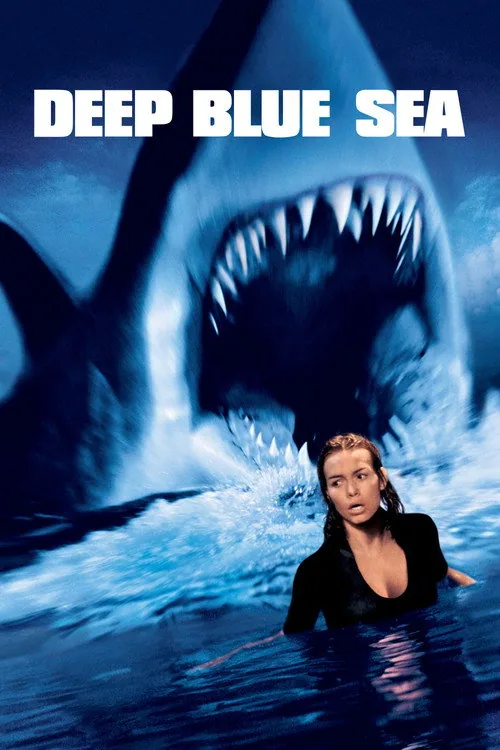
The facility’s failure leaves the crew with damaged escape routes and sharks that can anticipate their movements.
Why this matches +
These offer a related experience with a meaningful difference in story, tone, or presentation.
An adjacent discovery: a related idea with a different viewing experience.
Genres: Science fiction / Horror
Shared film traits
Based on recorded story, mood and style. Your preferences can change the order.
Survival
What changes Scientific exploitation of powerful creatures escapes human control, placing captors and bystanders in danger.
Scientists at an isolated underwater facility genetically enlarge mako sharks while seeking a treatment for Alzheimer’s disease. When an accident floods the station and the sharks prove more dangerous than expected, the surviving researchers and crew must cross collapsing corridors and reach the surface. The science-fiction horror film turns a research experiment into a contained siege, using the submerged setting, shifting alliances, and the animals’ strategic behavior to keep escape uncertain.
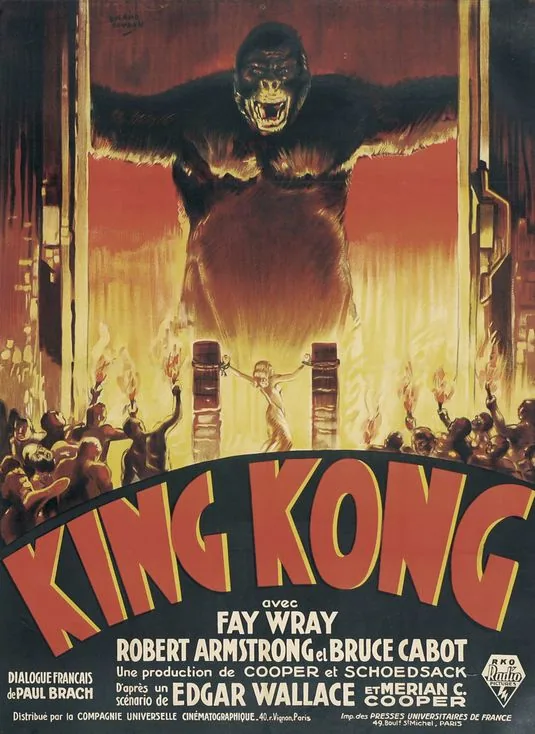
A film crew travels to a remote island to capture Kong, a giant ape whose forced removal turns an expedition into a commercial spectacle. After he escapes in New York, the creature becomes a public attraction and then a threat in the city where Ann Darrow’s safety is repeatedly used to justify control over him. The film’s miniature effects, stop-motion movement and monumental sets make Kong both frightening spectacle and a figure of pathos. That sympathy exists within a colonial adventure structure that depicts the island’s people through racialized stereotypes and treats their land as an obstacle to white explorers. Read the creature’s tragedy alongside the film’s hierarchy of human characters; later remakes’ romantic reciprocity should not be projected backward onto this original.
What drives the story
Denham’s effort to turn an animal into an attraction drives the chain from capture to escape and recapture. The plot condemns exploitation emotionally while still giving the filmmaker-entrepreneur the narrative authority to define the island and its inhabitants.
The people at its centre
Ann is threatened by both the crew’s spectacle and Kong’s physical power; her fear does not make her a willing romantic partner. The ape’s attachment can evoke pity without transforming captivity into mutual courtship.
What it feels like
Stop-motion animation, rear projection and towering urban sets make scale itself a source of wonder. Kong’s movements invite empathy, while the visual spectacle can obscure how the expedition frames the island’s people as exotic background.
Worth knowing
The 1933 film’s colonial and racial imagery belongs to its central representational structure, not only to outdated dialogue. Compare versions carefully: the original’s Ann-Kong relationship is not the same as the more reciprocal framing adopted by later films.
SpectacleExploitationPossession
Mood
Adventurous · Tragic · Uneasy
Pacing
Steady · Escalating
Visual style
Stop-motion creatures · Miniature city destruction
Storytelling
Film expedition · Creature capture · City exhibition catastrophe