An isolated observer transforms private grievance and failed intimacy into a plan for decisive action against a world he believes contaminated.
Why this matches +
These films share central story, tone or viewing experiences with this selection.
Genres: Crime / Drama
Shared film traits
Based on recorded story, mood and style. Your preferences can change the order.
What changes A disturbing urban character study with a different form of isolation and violence.
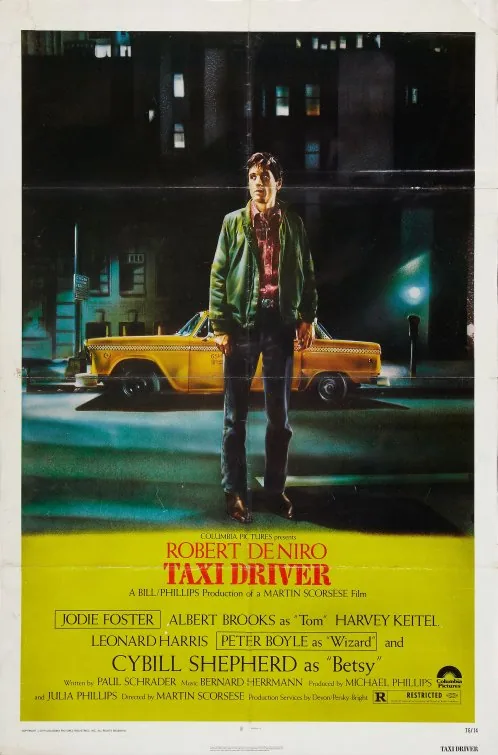
A lonely former serviceman drives through New York at night, interpreting the city through disgust, longing and an increasingly rigid account of moral decline. Failed attempts at romantic connection intensify his isolation as he becomes preoccupied with a young person trapped in sexual exploitation. His wish to act acquires a violent form that makes the difference between rescue, self-invention and public recognition disturbingly unstable.
A beginner's rapid adaptation to a market's incentives escalates from opportunistic documentation towards manufacturing the conditions of valuable footage.
Why this matches +
These films share central story, tone or viewing experiences with this selection.
Genres: Crime / Thriller
Shared film traits
Based on recorded story, mood and style. Your preferences can change the order.
What changes An ambitious outsider exploits television news rather than pursuing stand-up recognition.
An unemployed outsider discovers that graphic footage of crime and disaster can be sold to local television news. Learning what a producer rewards, he turns observation into increasingly active manipulation of scenes and people. Professional self-improvement language conceals a predatory account of success, while the relationship between an ambitious freelancer and an institution hungry for sensational material makes exploitation look like efficient business practice.
The journey home accumulates weapons and coercive encounters as the detective’s investigation makes clear that the destination is endangered by its supposed returning provider. Each small refusal compounds the walker's belief that force is a reasonable way to reclaim control.
Why this matches +
These films share central story, tone or viewing experiences with this selection.
Genres: Drama / Thriller
Shared film traits
Based on recorded story, mood and style. Your preferences can change the order.
What changes A man’s angry urban breakdown unfolds as a road-like escalation.
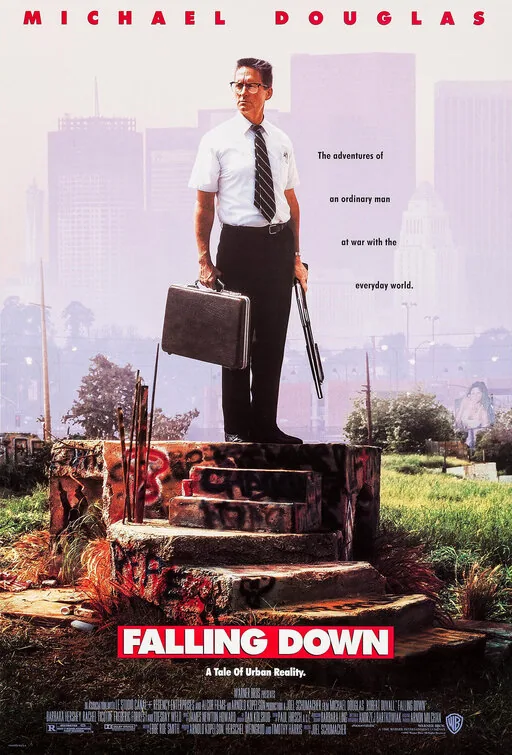
A divorced, armed man abandons his car in Los Angeles traffic and walks toward the home from which he has been excluded. He narrates each encounter as proof that ordinary rules have become intolerable, but his demand for recognition repeatedly becomes intimidation and injury. A nearing-retirement detective follows the accumulating violence while trying to reach the family before the walker does. The film’s satire gives the grievance momentum, then exposes how a self-image of victimhood can conceal both racialized aggression and a direct threat to people who owe the protagonist no access.
Rupert’s belief that he is owed a stage turns rejection into a hostage scheme; the broadcast is both his forced entry into show business and an act with serious consequences.
Why this matches +
These films share central story, tone or viewing experiences with this selection.
Genres: Crime / Drama
Shared film traits
Based on recorded story, mood and style. Your preferences can change the order.
What changes A satirical obsession with celebrity, played with darker comedy.
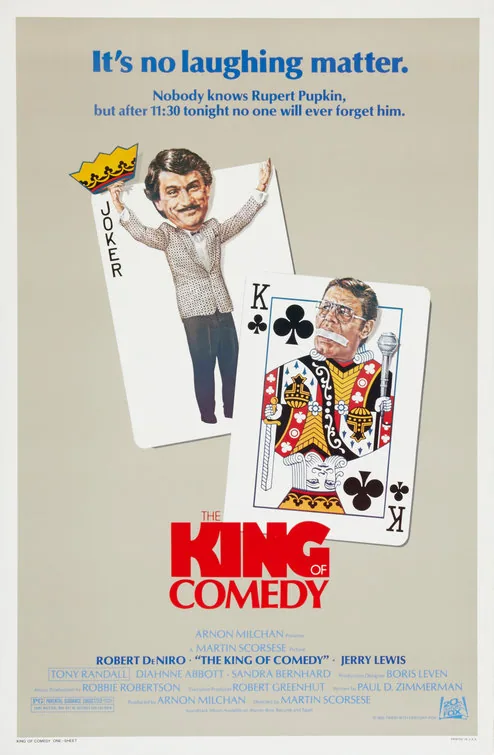
Aspiring comedian Rupert Pupkin becomes fixated on successful talk-show host Jerry Langford after a brief encounter. Rupert treats the meeting as the start of a friendship even as Langford’s staff reject his repeated requests for a performance slot. When ordinary persistence fails, Rupert and fellow stalker Masha kidnap Langford and demand that the network broadcast Rupert’s stand-up routine. The hostage plan gives Rupert the audience he has spent the film imagining, but its cost and aftermath remain troubling. Martin Scorsese’s film follows the gap between Rupert’s fantasy of celebrity and the actual isolation of a person who mistakes access to a famous stranger for intimacy.
A coveted dual role turns perfectionism into a demand to become incompatible versions of oneself under escalating scrutiny.
Why this matches +
These films explore a related idea in a different style, setting or audience.
An adjacent discovery: a related idea with a different viewing experience.
Genres: Drama / Thriller
Shared film traits
Based on recorded story, mood and style. Your preferences can change the order.
What changes Psychological collapse emerges from ballet and performance pressure rather than urban grievance.
A tightly controlled ballet dancer is chosen to perform a lead role demanding both precision and a sensual spontaneity she struggles to express. Pressure from a manipulative director, a possessive mother and an apparently freer rival intensifies her fear of being replaced. As rehearsal consumes her private life, bodily disturbance and unreliable perception blur the line between artistic transformation and a dangerous collapse of self.
An obsessive performance of professional normality collides with violent impulses inside a culture too self-absorbed to notice reliable differences.
Why this matches +
These films explore a related idea in a different style, setting or audience.
An adjacent discovery: a related idea with a different viewing experience.
Genres: Crime / Drama
Shared film traits
Based on recorded story, mood and style. Your preferences can change the order.
What changes A colder satirical portrait of wealthy corporate culture and unreliable violence.
A wealthy investment banker maintains an immaculate public identity through grooming rituals, status competition and rehearsed social behaviour. Beneath that performance he recounts increasingly extreme acts of violence while colleagues struggle to distinguish one interchangeable professional from another. The certainty of his account becomes unstable, making personal monstrosity inseparable from a social world that treats appearances as more important than recognising the person underneath.
Trevor’s attempts to verify Ivan’s presence and understand the accident lead him toward a memory he has kept out of view.
Why this matches +
These films explore a related idea in a different style, setting or audience.
An adjacent discovery: a related idea with a different viewing experience.
Genres: Drama / Thriller
Shared film traits
Based on recorded story, mood and style. Your preferences can change the order.
What changes Insomnia and guilt drive a more inward psychological mystery.
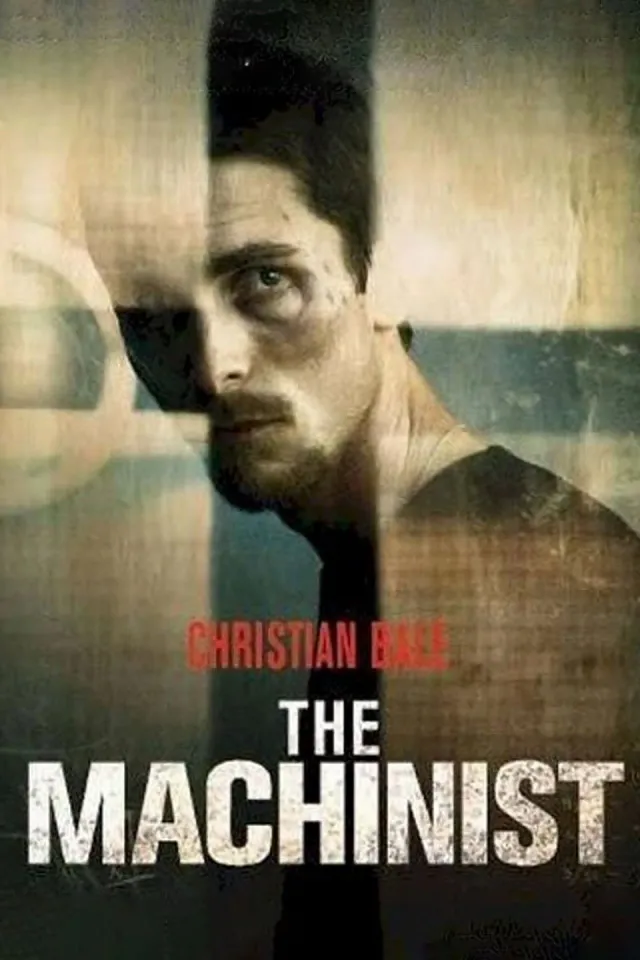
Factory machinist Trevor Reznik has not slept for a year and is growing dangerously thin. An accident at work leaves a colleague injured, but Trevor’s coworkers dispute his account of the events. He begins noticing a mysterious stranger named Ivan and finds cryptic messages that seem to implicate him in a hidden incident. As insomnia fractures his grasp on ordinary life, Trevor tries to reconstruct what happened and why people around him appear to be withholding information. Brad Anderson’s psychological thriller uses a shrinking, unreliable perspective to make guilt and exhaustion part of the mystery.
Joe’s attempt to extract Nina pulls him into a larger cover-up and forces him to reconsider his own wish to die.
Why this matches +
These films explore a related idea in a different style, setting or audience.
An adjacent discovery: a related idea with a different viewing experience.
Genres: Crime / Drama
Shared film traits
Based on recorded story, mood and style. Your preferences can change the order.
What changes A traumatized rescuer’s fragmented story is quieter and more elliptical.
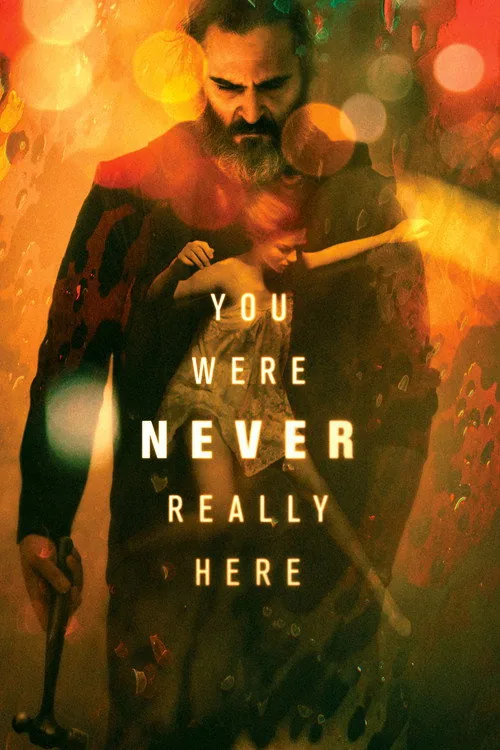
Joe is a traumatized hired gun who specializes in rescuing girls from trafficking networks while caring for his elderly mother in New York. A politician hires him to find his abducted daughter Nina, but the job exposes a conspiracy involving powerful officials and leaves Joe pursued by people who want the girl silenced. Lynne Ramsay’s neo-noir thriller uses compressed scenes, memory fragments, and aftermath rather than conventional action coverage to explore violence, trauma, and the possibility of choosing to stay alive.
An isolated party clown hoping to become a comedian struggles with unreliable support, humiliating work and a precarious relationship with his mother. After an act of violence attracts public meaning he did not initially intend, his search for recognition entangles personal grievance with a city's class resentment. Subjective episodes and disputed family history make his transformation into a public figure difficult to separate from self-invention.
What drives the story
Accumulating humiliation and ruptured support lead a marginalised man to reinterpret violence as recognition while others turn his image into a political symbol.
The people at its centre
Dependence on a mother, fantasies of intimacy and longing for a television mentor expose a need for acknowledgment that becomes increasingly coercive.
What it feels like
Oppressive urban spaces, bodily discomfort and an intimate performance sustain unease, interrupted by abrupt violence and uncertain subjective passages.
Worth knowing
Its comic-book identity frames an adult psychological descent, rather than conventional superhero heroism; mental distress alone is not an explanation or justification for violence.