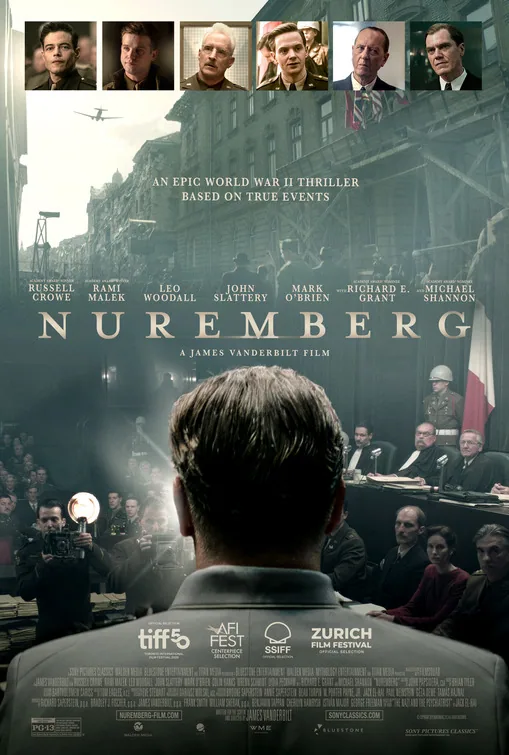
Kelley’s psychiatric role creates access but not neutrality toward Göring.
Why this matches +
Selected for the central appeal: Courtroom dramas about institutional responsibility, persecution and the limits of obedience to authority.
Genres: Drama / History
Shared film traits
Based on recorded story, mood and style. Your preferences can change the order.
Investigation
What changes Nuremberg dramatizes postwar trials of Nazi leaders and questions of responsibility for persecution.
As World War II ends, psychiatrist Douglas Kelley is assigned to evaluate Hermann Göring and other Nazi leaders awaiting trial. His conversations with Göring develop into an unsettling contest over guilt, authority, and the explanations people offer for atrocity, while prosecutor Robert Jackson works to establish an international tribunal. The historical drama focuses on the human and institutional work of making war crimes answerable to law.
Strassera and Moreno Ocampo must recruit a team and assemble testimony after the military courts decline to prosecute the junta.
Why this matches +
Selected for the central appeal: Courtroom dramas about institutional responsibility, persecution and the limits of obedience to authority.
Genres: Drama / History
Shared film traits
Based on recorded story, mood and style. Your preferences can change the order.
What changes Argentina, 1985 follows prosecutors bringing officials of a repressive regime to trial.
In newly restored democracy, prosecutor Julio César Strassera is assigned to build the civilian case against Argentina’s former military junta. With deputy prosecutor Luis Moreno Ocampo, he assembles a young legal team when established lawyers are reluctant to take part. The film follows their collection of testimony, the pressure surrounding the trial and the work of making individual accounts heard in a courtroom charged with national consequence.
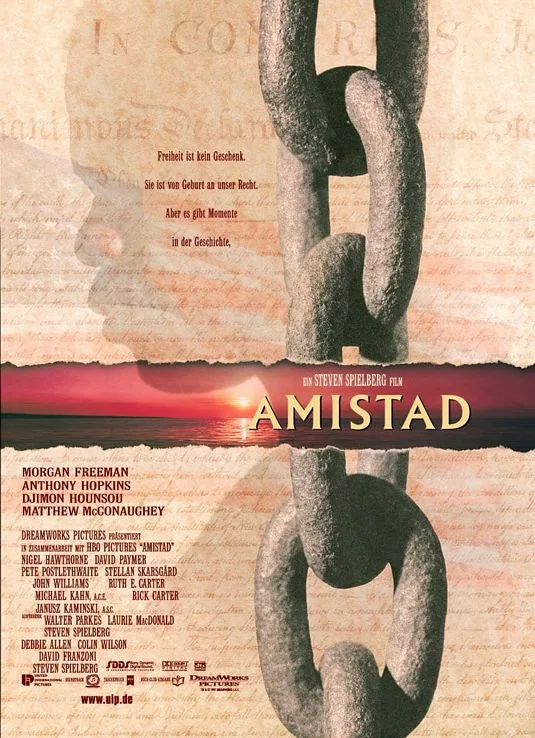
A shipboard revolt becomes a jurisdictional fight over whether the captives are free people or property. Each legal stage changes the venue and argument without making the underlying violence disappear.
Why this matches +
These offer a related experience with a meaningful difference in story, tone, or presentation.
An adjacent discovery: a related idea with a different viewing experience.
Genres: Drama / History
Shared film traits
Based on recorded story, mood and style. Your preferences can change the order.
Investigation
What changes Amistad uses a courtroom to confront enslavement and the human consequences concealed by legal procedure.
In 1839, enslaved Africans aboard the Spanish ship La Amistad revolt and take control, but the vessel is intercepted and the survivors are imprisoned in the United States. The legal struggle turns on whether they were kidnapped and enslaved or could be treated as property under Spanish law. Cinqué and the other captives seek recognition through testimony that must be translated, while abolitionists, lawyers and John Quincy Adams shape access to the courts. Spielberg's film gives the courtroom a polished dramatic climax, but that frame is not a complete account of the captives, the transatlantic slave trade or the case's history.
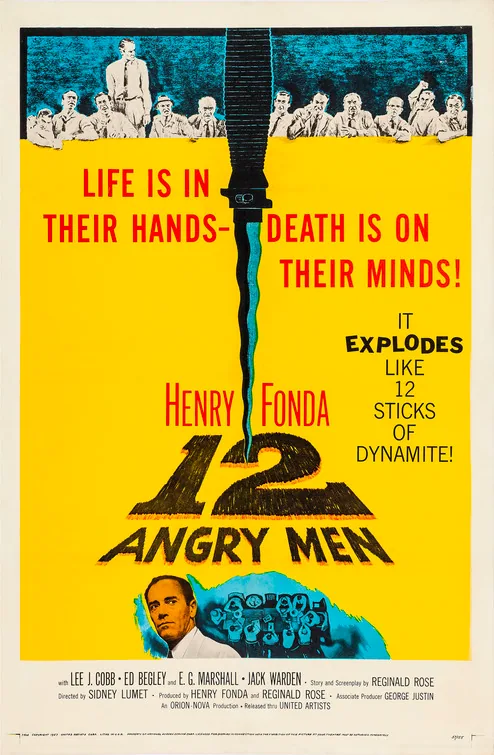
A required unanimous decision becomes a contest over whether uncertainty will be examined or dismissed for the convenience of the group.
Why this matches +
These offer a related experience with a meaningful difference in story, tone, or presentation.
An adjacent discovery: a related idea with a different viewing experience.
Genres: Drama / Huis-clos
Shared film traits
Based on recorded story, mood and style. Your preferences can change the order.
What changes 12 Angry Men examines how jurors' assumptions and moral duties shape a life-changing verdict.
A jury assembled after a murder trial initially expects to return a quick guilty verdict against a young defendant. One member's insistence on discussing the evidence interrupts that consensus and forces the others to revisit testimony they have accepted as settled. Confined deliberation exposes impatience, personal resentment and prejudice as influences on an apparently factual decision whose consequences cannot be reversed.
A teenage affair resurfaces in a war-crimes trial, forcing Michael to reconcile private memory with Hanna's public culpability and concealed shame.
Why this matches +
These offer a related experience with a meaningful difference in story, tone, or presentation.
An adjacent discovery: a related idea with a different viewing experience.
Genres: Drama / Romance
Shared film traits
Based on recorded story, mood and style. Your preferences can change the order.
What changes The Reader considers personal responsibility and legal judgment in the aftermath of Nazi crimes.
In 1958, fifteen-year-old Michael Berg begins a secret relationship with Hanna Schmitz, an older tram conductor who asks him to read aloud to her. Hanna disappears without explanation; years later, Michael sees her among former Nazi camp guards on trial for the deaths of prisoners during a death march. As a law student observing the proceedings, he recognizes details from their relationship and learns that shame about illiteracy is shaping how Hanna responds to the court. The revelation complicates Michael's memory of the affair without erasing the power imbalance or Hanna's crimes. He later records books for her in prison, but the connection remains defined by what he cannot say. The film links intimacy, literacy and postwar responsibility through one man's long, conflicted recollection.
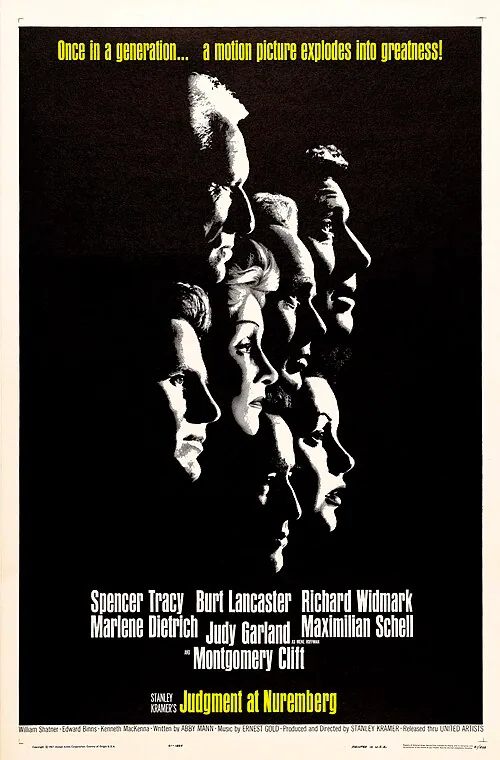
An American tribunal tries four German judges for helping make Nazi persecution appear lawful. The defendants describe their work through professional duty, political pressure and the conditions of wartime Germany; testimony from victims forces the court to confront what procedure concealed. Judge Haywood’s conversations beyond the courtroom show a country seeking to resume ordinary life even as Cold War priorities make a severe judgment less convenient. The film draws on the real Judges’ Trial but reshapes the tribunal and participants into dramatic composites. Its characters’ defenses are arguments to examine, not neutral statements of history, and the film’s willingness to consider national context does not erase the personal and institutional responsibility at issue.
What drives the story
The prosecution asks when legal professionals become responsible for the uses of law they administer. The case is about judges and judicial systems, not only a courtroom debate over whether individual officials were personally cruel.
The people at its centre
Haywood’s effort to understand Ernst Janning encounters testimony that resists abstraction. The victims’ accounts and the defendants’ self-descriptions do not occupy morally equivalent positions, even when the screenplay gives each a forceful speech.
What it feels like
Long courtroom exchanges, composed reaction shots and documentary footage create a measured rhythm that periodically breaks into images the characters cannot fully absorb. Political pressure outside court narrows the space for an uncomplicated verdict.
Worth knowing
The film’s composite characters and invented testimony should be kept distinct from the historical 1947 case. Cold War expedience shapes its dramatic stakes, but neither a character’s explanation nor the movie alone supplies a complete account of postwar justice.
ResponsibilityLawComplicity
Mood
Somber · Confrontational · Reflective
Pacing
Measured
Visual style
Extended testimony · Documentary atrocity images
Storytelling
Judges on trial · Professional obedience defense · Political leniency pressure