An abducted free man must preserve both life and a recoverable identity within institutions organised to make his account inadmissible.
Why this matches +
Selected for the central appeal: Historical dramas about enslavement, legal recognition and struggles for freedom.
Genres: Drama / Biography
Shared film traits
Based on recorded story, mood and style. Your preferences can change the order.
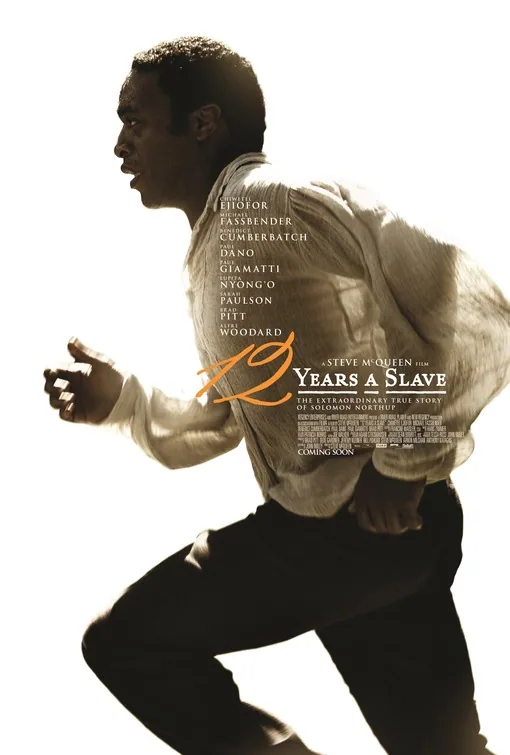
What changes 12 Years a Slave follows a kidnapped man fighting to regain freedom within the American slave system.
A free Black musician is kidnapped and sold into slavery, leaving him unable to prove the identity that once offered legal protection. Survival among different enslavers requires evaluating when skill, apparent cooperation or speaking the truth might expose him or others to greater harm. His effort to retain a route back to his family unfolds inside a system whose ordinary work depends on denying personhood through law, commerce and violence.
Harriet’s own escape becomes the beginning of a repeated effort to bring others to safety.
Why this matches +
Selected for the central appeal: Historical dramas about enslavement, legal recognition and struggles for freedom.
Genres: Biography / Drama
Shared film traits
Based on recorded story, mood and style. Your preferences can change the order.
Political resistance
What changes Harriet follows an enslaved woman escaping and returning to help others reach freedom.
Harriet Tubman escapes enslavement in Maryland and repeatedly returns to guide other enslaved people to freedom. The biographical drama follows her work on the Underground Railroad and later service during the Civil War, while emphasizing the risks of family separation and surveillance. Its central story is one of self-directed action, spiritual conviction and organized resistance against a system built to deny escape.
The prosecution asks when legal professionals become responsible for the uses of law they administer. The case is about judges and judicial systems, not only a courtroom debate over whether individual officials were personally cruel.
Why this matches +
These offer a related experience with a meaningful difference in story, tone, or presentation.
An adjacent discovery: a related idea with a different viewing experience.
Genres: Drama / History
Shared film traits
Based on recorded story, mood and style. Your preferences can change the order.
Investigation
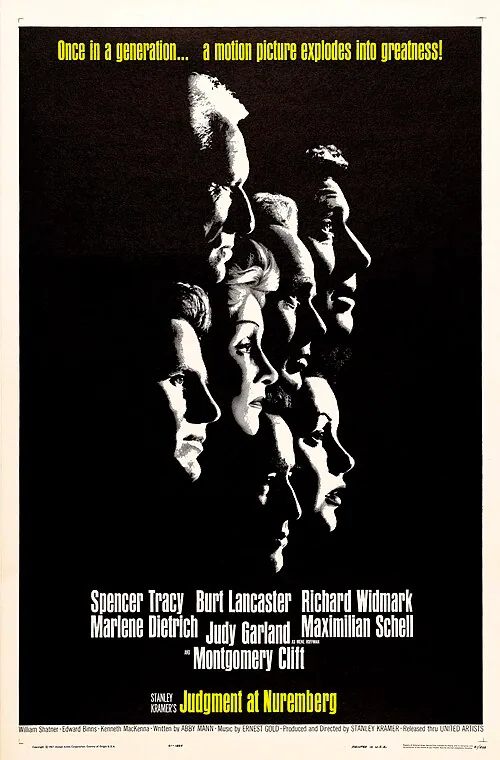
What changes Judgment at Nuremberg uses courtroom testimony to confront large-scale crimes and questions of legal responsibility.
An American tribunal tries four German judges for helping make Nazi persecution appear lawful. The defendants describe their work through professional duty, political pressure and the conditions of wartime Germany; testimony from victims forces the court to confront what procedure concealed. Judge Haywood’s conversations beyond the courtroom show a country seeking to resume ordinary life even as Cold War priorities make a severe judgment less convenient. The film draws on the real Judges’ Trial but reshapes the tribunal and participants into dramatic composites. Its characters’ defenses are arguments to examine, not neutral statements of history, and the film’s willingness to consider national context does not erase the personal and institutional responsibility at issue.
The treaty puts the mission’s survival at stake; the clergy and community must decide how to respond before Portuguese forces arrive.
Why this matches +
These offer a related experience with a meaningful difference in story, tone, or presentation.
An adjacent discovery: a related idea with a different viewing experience.
Genres: Drama / Historical
Shared film traits
Based on recorded story, mood and style. Your preferences can change the order.
Political resistance
What changes The Mission examines colonial power, enslavement and different forms of resistance in South America.
In eighteenth-century South America, mercenary and slave trader Rodrigo Mendoza enters Jesuit territory after a personal tragedy and eventually seeks atonement among the Guaraní people he once exploited. Jesuit Father Gabriel has built a mission where the community lives under growing threat from colonial authorities. When a treaty transfers the territory from Spain to Portugal, both the missionaries and Guaraní face the prospect of enslavement or expulsion. Mendoza and Gabriel disagree over whether to defend the mission through force or spiritual resistance. Roland Joffé’s drama turns a colonial political crisis into a moral conflict between two forms of action.
Bryan’s first meetings with Walter turn a legal file into a relationship grounded in listening.
Why this matches +
These offer a related experience with a meaningful difference in story, tone, or presentation.
An adjacent discovery: a related idea with a different viewing experience.
Genres: Biography / Drama
Shared film traits
Based on recorded story, mood and style. Your preferences can change the order.
Political resistance · Investigation
What changes Just Mercy follows legal advocates challenging a system that denies fair treatment to marginalized people.
Young lawyer Bryan Stevenson travels to Alabama to defend people who cannot afford representation and takes up Walter McMillian’s case after a questionable murder conviction. The legal fight reveals suppressed evidence, racial bias and the unequal power of the state. Adapted from Stevenson’s memoir, the drama follows the patient work of investigation and advocacy while showing how one case reflects a much wider pattern.
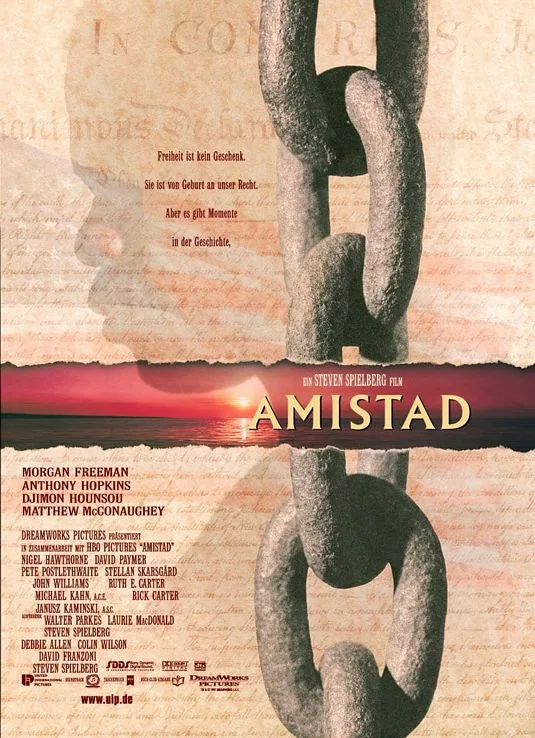
In 1839, enslaved Africans aboard the Spanish ship La Amistad revolt and take control, but the vessel is intercepted and the survivors are imprisoned in the United States. The legal struggle turns on whether they were kidnapped and enslaved or could be treated as property under Spanish law. Cinqué and the other captives seek recognition through testimony that must be translated, while abolitionists, lawyers and John Quincy Adams shape access to the courts. Spielberg's film gives the courtroom a polished dramatic climax, but that frame is not a complete account of the captives, the transatlantic slave trade or the case's history.
What drives the story
A shipboard revolt becomes a jurisdictional fight over whether the captives are free people or property. Each legal stage changes the venue and argument without making the underlying violence disappear.
The people at its centre
Cinqué's leadership and the captives' demand for recognition remain central, even as white lawyers and activists control much of their access to the courts. Translation mediates testimony, and the imbalance in who can address an American audience is part of the film's subject.
What it feels like
The film shifts from the terror of capture and revolt to courtroom procedure, ending in a performance of legal argument. The shift grants the trial dramatic force but risks centering American advocates over the Africans' experience.
Worth knowing
Compare historical courtroom dramas about abolition and legal personhood, while distinguishing cinematic compression from the documented Amistad case. The film's heroic speeches do not make slavery's history reducible to one trial or one advocate.