A shipboard revolt becomes a jurisdictional fight over whether the captives are free people or property. Each legal stage changes the venue and argument without making the underlying violence disappear.
Why this matches +
Selected for the central appeal: A free Black musician is kidnapped and enslaved, struggling to preserve his identity and return to his family.
Genres: Drama / History
Shared film traits
Based on recorded story, mood and style. Your preferences can change the order.
What changes Enslaved Africans fight for recognition as people and seek freedom through a legal system structured to deny their rights.
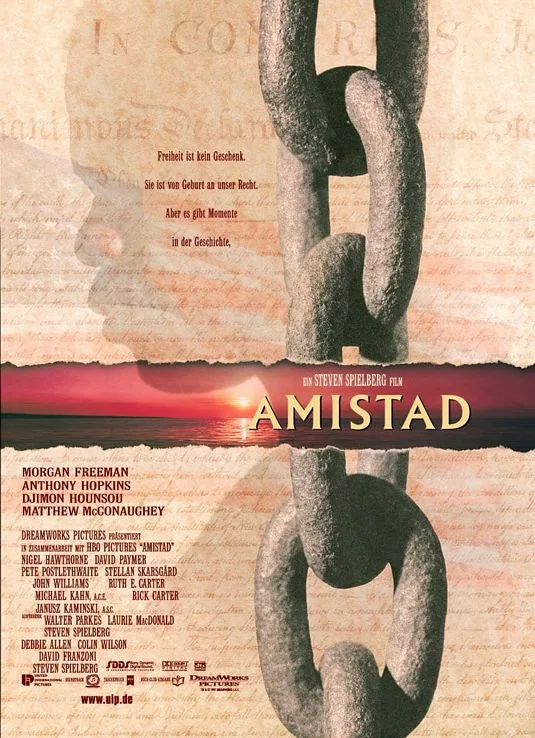
In 1839, enslaved Africans aboard the Spanish ship La Amistad revolt and take control, but the vessel is intercepted and the survivors are imprisoned in the United States. The legal struggle turns on whether they were kidnapped and enslaved or could be treated as property under Spanish law. Cinqué and the other captives seek recognition through testimony that must be translated, while abolitionists, lawyers and John Quincy Adams shape access to the courts. Spielberg's film gives the courtroom a polished dramatic climax, but that frame is not a complete account of the captives, the transatlantic slave trade or the case's history.
Escalating persecution reduces a musician's social world to unstable shelters and practical survival, with each reprieve exposing dependence on another person's risk or restraint.
Why this matches +
These offer a related experience with a meaningful difference in story, tone, or presentation.
An adjacent discovery: a related idea with a different viewing experience.
Genres: Drama / Biography
Shared film traits
Based on recorded story, mood and style. Your preferences can change the order.
What changes A musician stripped of legal protection must survive persecution and separation from family through precarious help and concealment.
Polish Jewish musician Władysław Szpilman watches the Nazi occupation of Warsaw progressively strip his family of livelihood, movement and safety. Separated from them during deportation, he survives through forced labour, help from acquaintances and prolonged hiding in a city being destroyed around him. Music remains part of his identity, but endurance depends on contingent aid and temporary shelter rather than the protection professional distinction might once have promised.
An improvised refuge survives through repeated negotiations whose apparent protections remain vulnerable to both armed intimidation and international abandonment.
Why this matches +
These offer a related experience with a meaningful difference in story, tone, or presentation.
An adjacent discovery: a related idea with a different viewing experience.
Genres: Drama / Biography
Shared film traits
Based on recorded story, mood and style. Your preferences can change the order.
What changes People targeted by systematic violence depend on uncertain protection and individual courage to survive a system that denies their humanity.
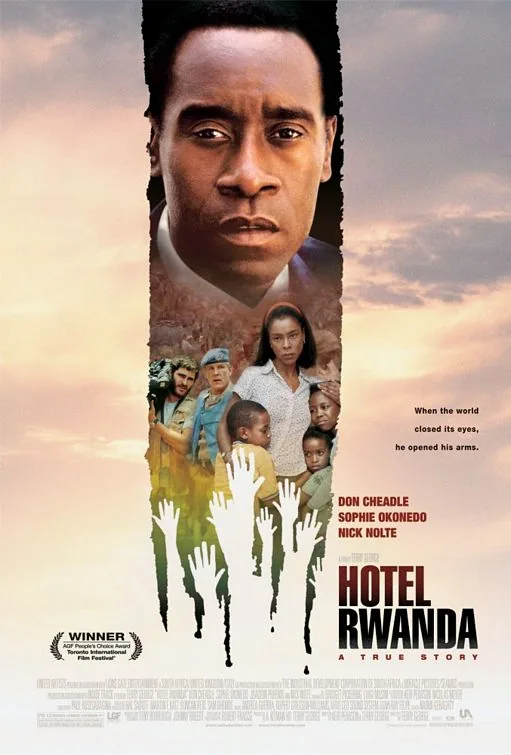
A hotel manager in Kigali tries to keep guests, neighbours and his own family alive as organised anti-Tutsi violence makes ordinary professional routines inadequate. Contacts, supplies and the hotel's international status create temporary leverage, but outside promises repeatedly prove less protective than expected. Each negotiation exposes the limits of treating rescue as a question of commercial influence when the wider institutions with the power to intervene choose restricted obligations or withdrawal.
An opportunist's factory operation becomes a rescue effort as escalating persecution turns employment, paperwork and money into fragile instruments of survival.
Why this matches +
These offer a related experience with a meaningful difference in story, tone, or presentation.
An adjacent discovery: a related idea with a different viewing experience.
Genres: Drama / Biography
Shared film traits
Based on recorded story, mood and style. Your preferences can change the order.
What changes People reduced to forced labor by an oppressive regime struggle to survive violence, exploitation and the denial of their personhood.
A businessman joins the Nazi occupation economy in Kraków intending to profit from factories staffed by exploited Jewish workers. His dependence on a Jewish accountant brings practical contact with lives that the regime treats as disposable. As ghetto clearance and camp violence expose the machinery of extermination, his priorities change, and commercial access becomes a precarious means of protecting workers from deportation and death.
An escape pact develops across successive failures and punishments, testing whether preserving the will to leave is possible under sustained coercion.
Why this matches +
These offer a related experience with a meaningful difference in story, tone, or presentation.
An adjacent discovery: a related idea with a different viewing experience.
Genres: Drama / Adventure
Shared film traits
Based on recorded story, mood and style. Your preferences can change the order.
Escape and pursuit
What changes A man unjustly imprisoned endures brutal forced labor while trying to preserve hope of freedom and a return to ordinary life.
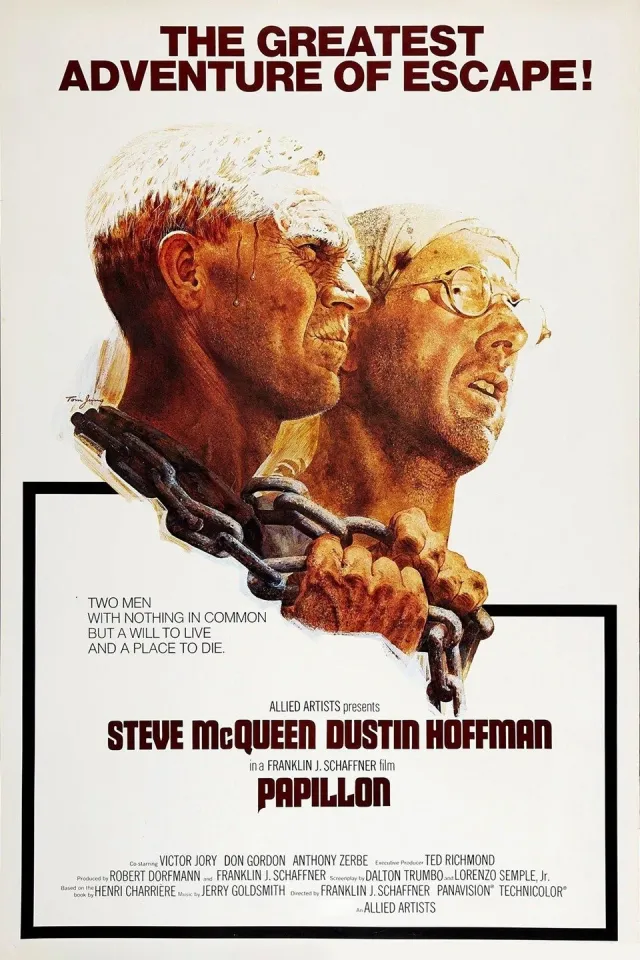
A convicted French safecracker is sent to a penal colony in French Guiana and forms a bargain with a financially resourceful fellow prisoner: protection in exchange for help financing escape. Repeated attempts expose him to betrayal, harsh punishment and increasingly restrictive confinement. Their relationship outlasts immediate practical advantages, while the desire to leave must survive the possibility that years of institutional control can make apparent safety another kind of surrender.
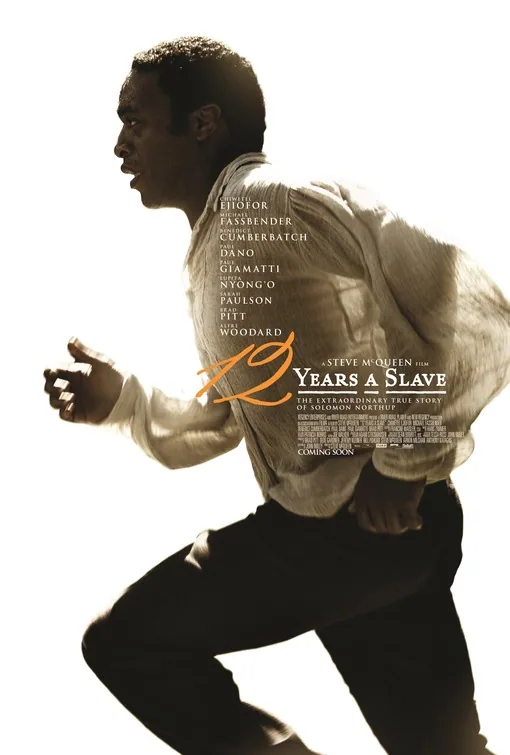
A free Black musician is kidnapped and sold into slavery, leaving him unable to prove the identity that once offered legal protection. Survival among different enslavers requires evaluating when skill, apparent cooperation or speaking the truth might expose him or others to greater harm. His effort to retain a route back to his family unfolds inside a system whose ordinary work depends on denying personhood through law, commerce and violence.
What drives the story
An abducted free man must preserve both life and a recoverable identity within institutions organised to make his account inadmissible.
The people at its centre
A captive negotiates owners and fellow enslaved people whose unequal vulnerabilities make apparent opportunities for resistance morally and practically complex.
What it feels like
Patient attention to bodies, work and forced witnessing produces an unsparing experience of institutional brutality and constrained agency.
Worth knowing
Its occasional kindness does not soften the systemic violence; this is historical enslavement experienced intimately, rather than an uplifting generic endurance adventure.