An opportunist's factory operation becomes a rescue effort as escalating persecution turns employment, paperwork and money into fragile instruments of survival.
Why this matches +
Selected for the central appeal: A Kigali hotel manager uses contacts and scarce resources to shelter people during the genocide against Tutsi people.
Genres: Drama / Biography
Shared film traits
Based on recorded story, mood and style. Your preferences can change the order.
War and civilian life
What changes A businessman uses institutional access and negotiation to protect people threatened by organized mass murder.
A businessman joins the Nazi occupation economy in Kraków intending to profit from factories staffed by exploited Jewish workers. His dependence on a Jewish accountant brings practical contact with lives that the regime treats as disposable. As ghetto clearance and camp violence expose the machinery of extermination, his priorities change, and commercial access becomes a precarious means of protecting workers from deportation and death.
An evacuation is assembled through intersecting efforts whose different clocks and incomplete information create repeated risks of misinterpretation and delay.
Why this matches +
These offer a related experience with a meaningful difference in story, tone, or presentation.
An adjacent discovery: a related idea with a different viewing experience.
Genres: Drama / Historical
Shared film traits
Based on recorded story, mood and style. Your preferences can change the order.
Survival · War and civilian life
What changes A large-scale evacuation depends on improvised coordination as vulnerable people wait for help under overwhelming danger.
Soldiers trapped on a French beach seek a way home while small civilian boats cross the Channel and pilots attempt to protect the withdrawal. The three strands unfold over different spans of time, repeatedly exposing how one group's temporary safety can depend on work occurring elsewhere. Limited knowledge and overwhelming material danger leave little room for a conventional account of personal heroism, making survival a collective achievement that no participant can see in full.
an extraction expanding into an evacuation. This pressure determines what the protagonist must do next and which risks become unavoidable.
Why this matches +
These offer a related experience with a meaningful difference in story, tone, or presentation.
An adjacent discovery: a related idea with a different viewing experience.
Genres: Action / Drama
Shared film traits
Based on recorded story, mood and style. Your preferences can change the order.
Survival · War and civilian life
What changes A rescue effort in a conflict zone confronts the limits of military orders while civilians face widespread violence.
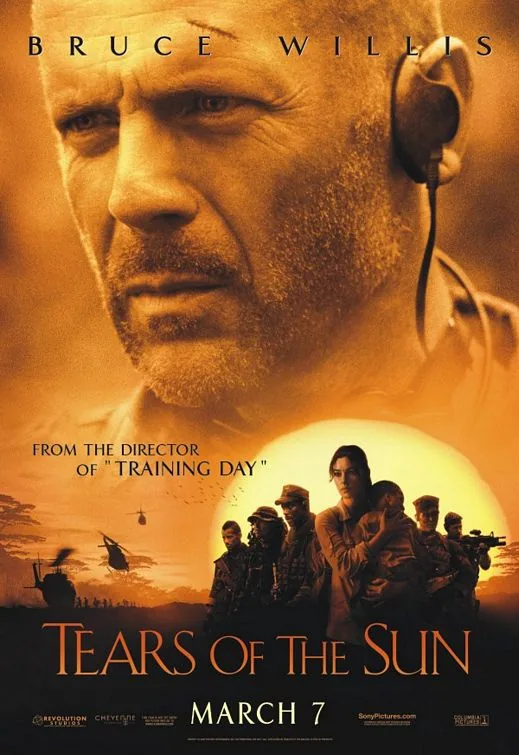
A Navy SEAL team enters Nigeria during political collapse to extract an American doctor from a remote clinic. She refuses to leave the people in her care, forcing soldiers to decide whether to follow orders narrowly or help civilians reach safety. The war drama follows the decision through a dangerous trek where protection, duty and military force carry conflicting meanings.
Escalating persecution reduces a musician's social world to unstable shelters and practical survival, with each reprieve exposing dependence on another person's risk or restraint.
Why this matches +
These offer a related experience with a meaningful difference in story, tone, or presentation.
An adjacent discovery: a related idea with a different viewing experience.
Genres: Drama / Biography
Shared film traits
Based on recorded story, mood and style. Your preferences can change the order.
Survival · War and civilian life
What changes A person targeted by systematic persecution survives through precarious shelter and help from people willing to take risks.
Polish Jewish musician Władysław Szpilman watches the Nazi occupation of Warsaw progressively strip his family of livelihood, movement and safety. Separated from them during deportation, he survives through forced labour, help from acquaintances and prolonged hiding in a city being destroyed around him. Music remains part of his identity, but endurance depends on contingent aid and temporary shelter rather than the protection professional distinction might once have promised.
A romantic comic courtship gives way to a father's sustained attempt to translate coercive, lethal conditions into rules his child can emotionally survive.
Why this matches +
These offer a related experience with a meaningful difference in story, tone, or presentation.
An adjacent discovery: a related idea with a different viewing experience.
Genres: Drama / Comedy
Shared film traits
Based on recorded story, mood and style. Your preferences can change the order.
Survival · War and civilian life
What changes A parent uses improvisation and care to protect a child while facing genocidal violence and confinement.
A playful Italian waiter courts a schoolteacher by treating everyday obstacles as occasions for invention. Years later, persecution and deportation transform the meaning of his improvisations when he tries to shelter their young son from understanding the concentration camp around them. His invented game becomes an act of parental care under conditions it cannot control, holding a child's limited perspective beside the audience's knowledge of the danger.
A hotel manager in Kigali tries to keep guests, neighbours and his own family alive as organised anti-Tutsi violence makes ordinary professional routines inadequate. Contacts, supplies and the hotel's international status create temporary leverage, but outside promises repeatedly prove less protective than expected. Each negotiation exposes the limits of treating rescue as a question of commercial influence when the wider institutions with the power to intervene choose restricted obligations or withdrawal.
What drives the story
An improvised refuge survives through repeated negotiations whose apparent protections remain vulnerable to both armed intimidation and international abandonment.
The people at its centre
A manager balances care for his family with expanding responsibility for strangers while allies and officials differ sharply in what risks they are willing to accept.
What it feels like
Contained suspense and emotionally direct personal stakes make mass atrocity visible through the precarious maintenance of one place of shelter.
Worth knowing
Its focus is a dramatised individual perspective on genocide, not a complete historical account, and its moments of courage coexist with extreme civilian vulnerability.