Karamakate’s two journeys make cultural loss visible through his changing relationship to memory.
Why this matches +
Selected for the central appeal: Historical dramas about colonial exploitation, faith and the moral choices of resistance.
Genres: Drama / Adventure
Shared film traits
Based on recorded story, mood and style. Your preferences can change the order.
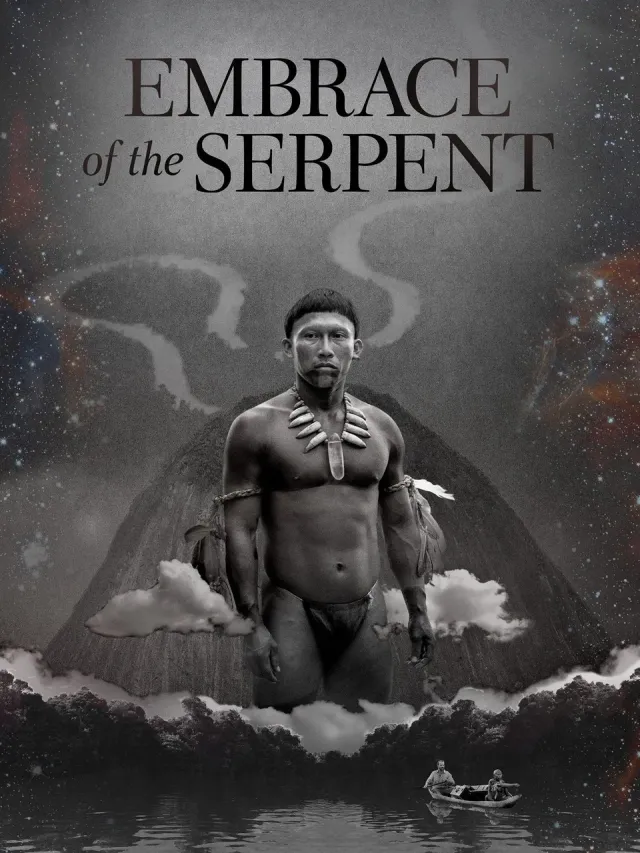
What changes Embrace of the Serpent explores the damage of colonial exploitation in the Amazon through encounters between Indigenous people and outsiders.
Karamakate, a shaman in the Colombian Amazon, guides two foreign scientists on journeys separated by decades as they search for the sacred plant yakruna. The parallel expeditions reveal how colonial exploitation damages communities, knowledge and the natural world, while Karamakate confronts changes in his own culture and memory. Ciro Guerra films the story in evocative monochrome for much of its length, creating a meditative adventure about encounter, loss and the limits of translation.
A shipboard revolt becomes a jurisdictional fight over whether the captives are free people or property. Each legal stage changes the venue and argument without making the underlying violence disappear.
Why this matches +
These offer a related experience with a meaningful difference in story, tone, or presentation.
An adjacent discovery: a related idea with a different viewing experience.
Genres: Drama / History
Shared film traits
Based on recorded story, mood and style. Your preferences can change the order.
Political resistance
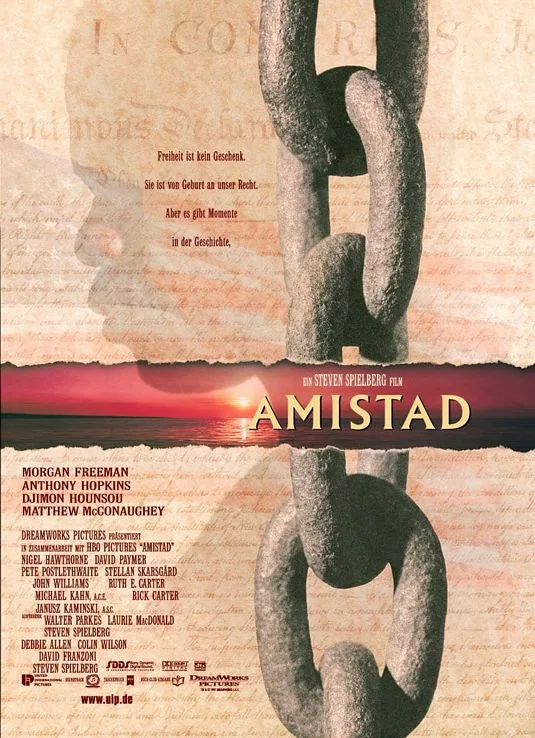
What changes Amistad confronts enslavement, colonial power and a struggle for freedom.
In 1839, enslaved Africans aboard the Spanish ship La Amistad revolt and take control, but the vessel is intercepted and the survivors are imprisoned in the United States. The legal struggle turns on whether they were kidnapped and enslaved or could be treated as property under Spanish law. Cinqué and the other captives seek recognition through testimony that must be translated, while abolitionists, lawyers and John Quincy Adams shape access to the courts. Spielberg's film gives the courtroom a polished dramatic climax, but that frame is not a complete account of the captives, the transatlantic slave trade or the case's history.
The expedition's logistical crisis gives Aguirre an opening to overthrow command. Once he controls the party, each renewed claim to empire postpones the practical recognition that the journey is failing.
Why this matches +
These offer a related experience with a meaningful difference in story, tone, or presentation.
An adjacent discovery: a related idea with a different viewing experience.
Genres: Adventure / Drama
Shared film traits
Based on recorded story, mood and style. Your preferences can change the order.
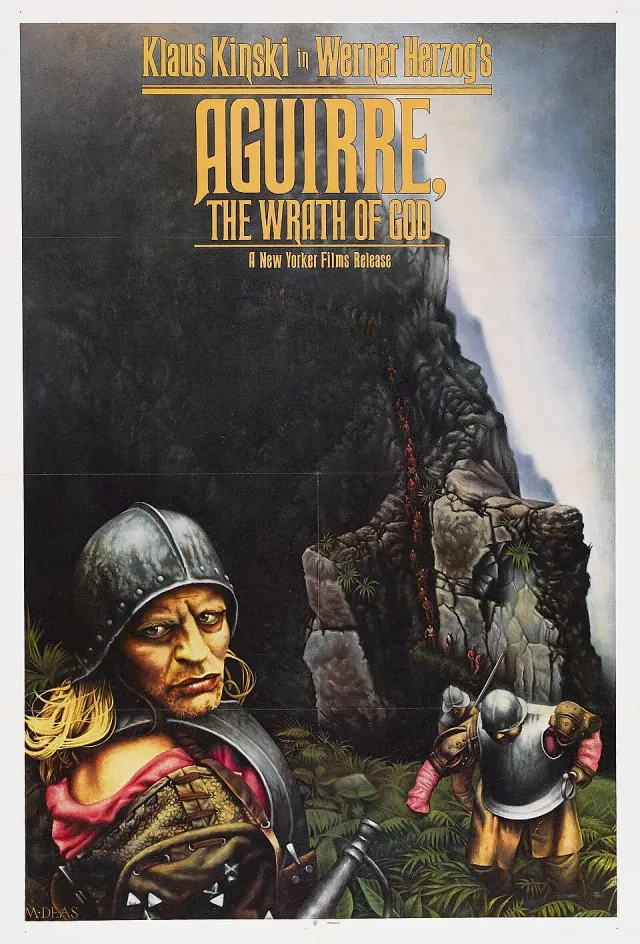
What changes Aguirre, the Wrath of God follows a destructive colonial expedition in South America and its delusions of power.
In the sixteenth-century Spanish conquest of South America, an expedition descends a river in search of El Dorado and sends a smaller party ahead through dangerous territory. Lope de Aguirre turns the difficulty of return into an opportunity to seize command, then insists on an imperial future that the group lacks the food and strength to reach. The river journey pares away the certainty of military hierarchy and conquest, leaving the expedition's grand declarations increasingly detached from its physical collapse. Herzog's film is a fictionalized, formally spare meditation on power and delusion, not a documentary reconstruction.
A cave expedition is followed by an accusation that becomes a public trial shaped by colonial power.
Why this matches +
These offer a related experience with a meaningful difference in story, tone, or presentation.
An adjacent discovery: a related idea with a different viewing experience.
Genres: Drama / Historical
Shared film traits
Based on recorded story, mood and style. Your preferences can change the order.
Political resistance
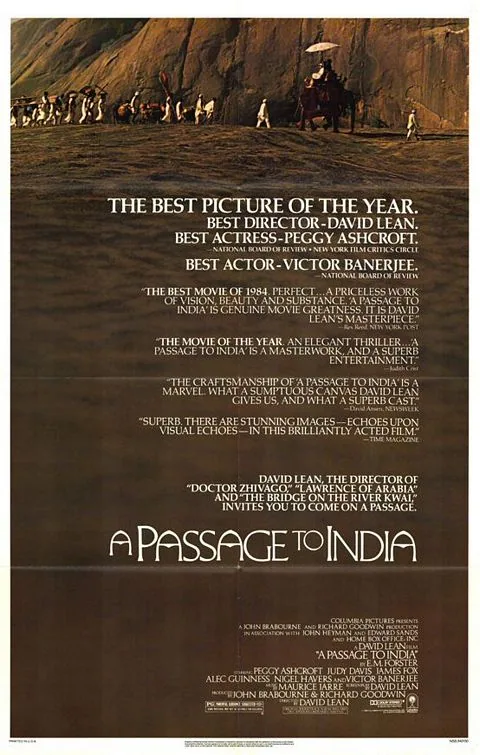
What changes A Passage to India examines relationships and institutional injustice under colonial rule.
In British-ruled India, English visitor Adela Quested travels with Mrs. Moore and meets Dr. Aziz, an Indian physician who hopes for friendship across the colonial divide. A journey to the Marabar Caves ends in a disputed and traumatic incident, after which Adela accuses Aziz of assault. The resulting trial exposes the racial assumptions of the British community and forces Aziz, Adela, and their acquaintances to confront incompatible accounts of what happened.
A newcomer's search for redemption becomes a test of leadership when factional ambition destroys an unstable peace and forces a defensive siege.
Why this matches +
These offer a related experience with a meaningful difference in story, tone, or presentation.
An adjacent discovery: a related idea with a different viewing experience.
Genres: Historical / War
Shared film traits
Based on recorded story, mood and style. Your preferences can change the order.
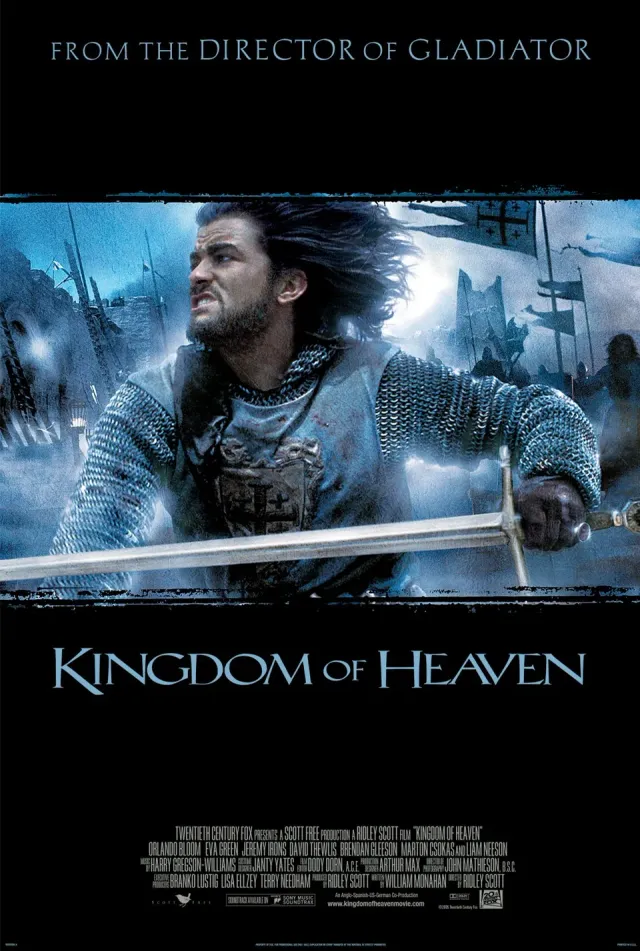
What changes Kingdom of Heaven combines religious conflict, political power and differing approaches to defending a community.
A grieving blacksmith follows his father toward Jerusalem, hoping to find meaning after personal loss. There he enters a fragile political settlement in which competing leaders use faith, honour and military power for incompatible ends. As aggression threatens the city, his obligations shift from earning spiritual absolution to protecting people whose survival depends on choices made by those claiming religious authority.
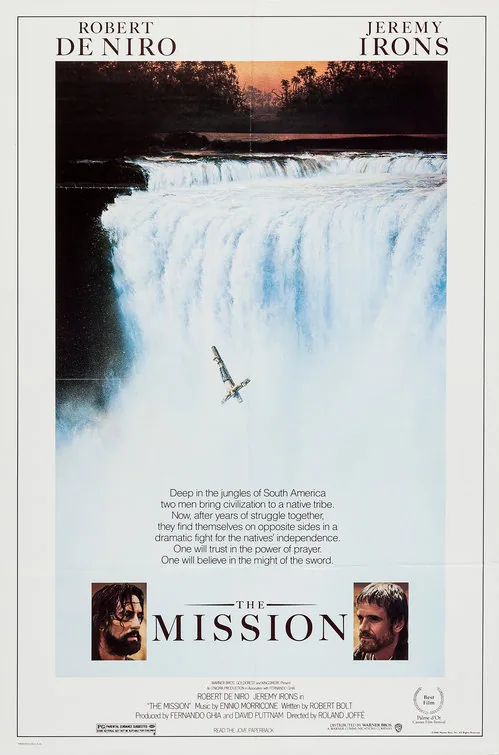
In eighteenth-century South America, mercenary and slave trader Rodrigo Mendoza enters Jesuit territory after a personal tragedy and eventually seeks atonement among the Guaraní people he once exploited. Jesuit Father Gabriel has built a mission where the community lives under growing threat from colonial authorities. When a treaty transfers the territory from Spain to Portugal, both the missionaries and Guaraní face the prospect of enslavement or expulsion. Mendoza and Gabriel disagree over whether to defend the mission through force or spiritual resistance. Roland Joffé’s drama turns a colonial political crisis into a moral conflict between two forms of action.
What drives the story
The treaty puts the mission’s survival at stake; the clergy and community must decide how to respond before Portuguese forces arrive.
The people at its centre
Mendoza’s penance leads him toward armed defense, while Gabriel’s faith commits him to nonviolence. The Guaraní people face the consequences of decisions made by European powers and missionaries.
What it feels like
Lush landscape photography, Ennio Morricone’s score and a tragic historical scale shape a solemn, emotionally direct drama.
Worth knowing
For viewers interested in moral conflict and colonial-era drama. The film’s Guaraní story is framed largely through European characters, and its historical perspective merits a fuller Indigenous review.
AtonementFaithColonial power
Mood
Solemn · Tragic · Contemplative
Pacing
Conversion arc · Political crisis escalation
Visual style
Lush landscape photography · Religious imagery
Storytelling
Jesuit mission · Treaty conflict · Pacifism versus armed resistance