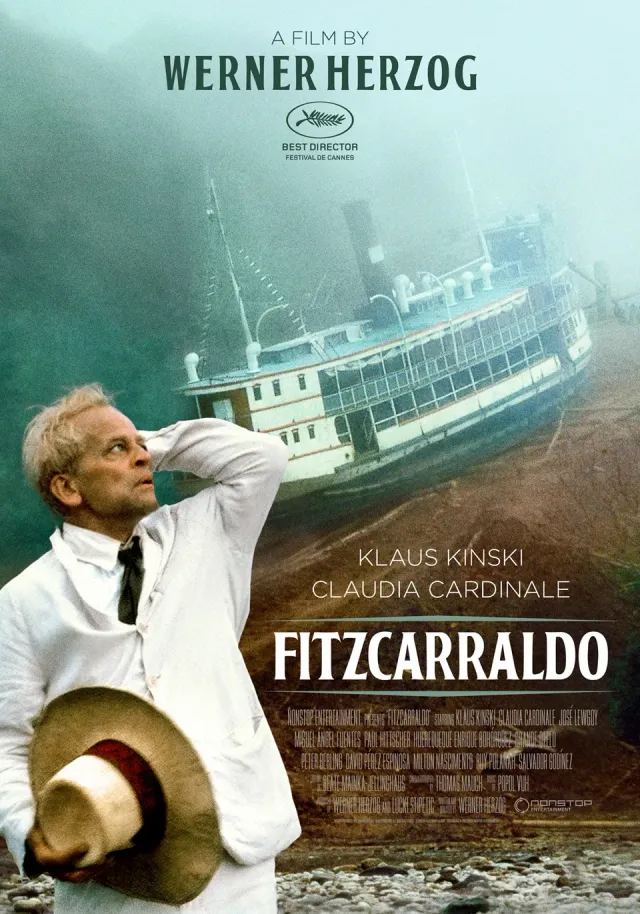
A cultural ambition becomes an immense transport operation, with practical success failing to settle whether the people assisting share Fitzcarraldo’s purpose. The ship portage fulfills a spectacular feat without securing a shared purpose among its participants.
Why this matches +
Selected for the central appeal: Haunting journeys into remote landscapes where colonial ambition collapses into obsession.
Genres: Drama / Adventure
Shared film traits
Based on recorded story, mood and style. Your preferences can change the order.
Both directed by Werner Herzog.
What changes Fitzcarraldo shares Herzog's focus on an obsessive European undertaking an audacious Amazonian venture.
Opera devotee Fitzcarraldo wants to bring a grand performance to Iquitos and sees a rubber concession as the money that can make it possible. Reaching it requires hauling a steamship over a narrow land barrier between rivers, an undertaking dependent on Molly’s financing, the crew’s labor and Indigenous people whose aims do not necessarily coincide with his. The physical feat invites awe, yet the stated artistic dream rests inside a commercial project tied to rubber extraction. The film’s visionary language therefore needs to be read alongside the asymmetry between the person who names the goal and those whose labor and land make it possible.
A colonial officer’s unanswered requests for transfer prolong his dependence on officials and lead him toward a dangerous expedition.
Why this matches +
Selected for the central appeal: Haunting journeys into remote landscapes where colonial ambition collapses into obsession.
Genres: Drama / Historical
Shared film traits
Based on recorded story, mood and style. Your preferences can change the order.
What changes Zama follows a colonial official whose ambitions and authority unravel in a remote South American outpost.
Don Diego de Zama, an officer of the Spanish crown stationed in a remote South American outpost, waits for a transfer that he believes will restore his status and reunite him with his family. Successive governors arrive and leave while his requests go unanswered. As the years erode his position, Zama becomes entangled in an expedition after a notorious bandit and the violence of the colonial world he serves.
Shared characteristics
Theme: Colonialism
Genre: Drama
Poster: Film rights holders; original film promotional poster from the identified source · Image source
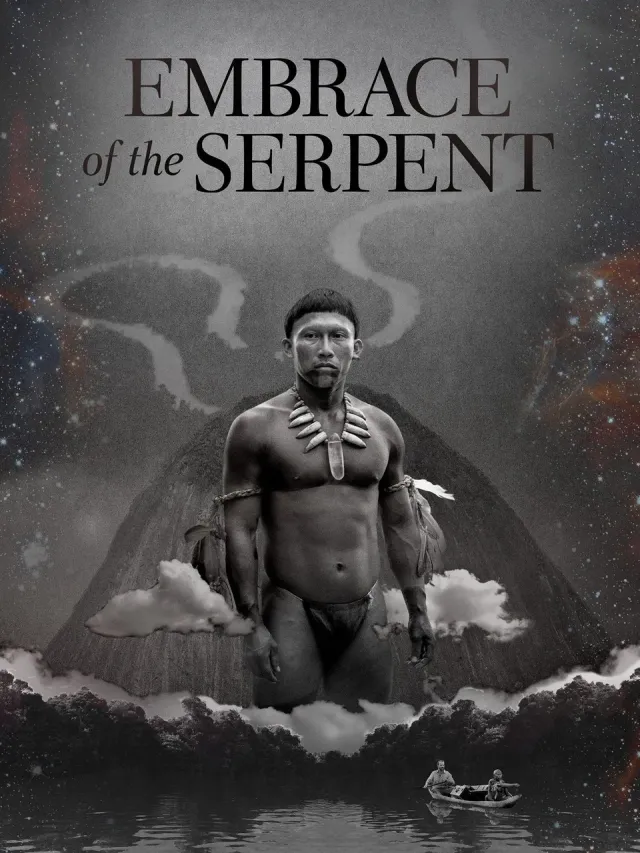
Karamakate’s two journeys make cultural loss visible through his changing relationship to memory.
Why this matches +
Selected for the central appeal: Haunting journeys into remote landscapes where colonial ambition collapses into obsession.
Genres: Drama / Adventure
Shared film traits
Based on recorded story, mood and style. Your preferences can change the order.
What changes Embrace of the Serpent follows river journeys through the Amazon and reckons with the violence of outsiders' quests.
Karamakate, a shaman in the Colombian Amazon, guides two foreign scientists on journeys separated by decades as they search for the sacred plant yakruna. The parallel expeditions reveal how colonial exploitation damages communities, knowledge and the natural world, while Karamakate confronts changes in his own culture and memory. Ciro Guerra films the story in evocative monochrome for much of its length, creating a meditative adventure about encounter, loss and the limits of translation.
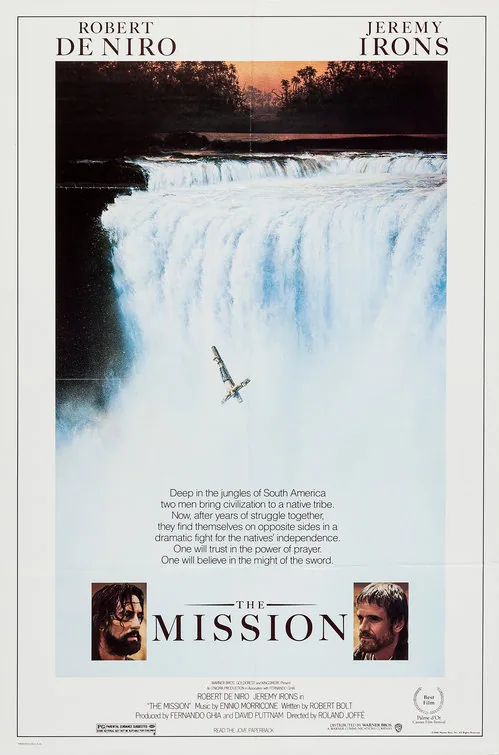
The treaty puts the mission’s survival at stake; the clergy and community must decide how to respond before Portuguese forces arrive.
Why this matches +
These offer a related experience with a meaningful difference in story, tone, or presentation.
An adjacent discovery: a related idea with a different viewing experience.
Genres: Drama / Historical
Shared film traits
Based on recorded story, mood and style. Your preferences can change the order.
What changes The Mission examines colonial ambitions and their consequences in eighteenth-century South America.
In eighteenth-century South America, mercenary and slave trader Rodrigo Mendoza enters Jesuit territory after a personal tragedy and eventually seeks atonement among the Guaraní people he once exploited. Jesuit Father Gabriel has built a mission where the community lives under growing threat from colonial authorities. When a treaty transfers the territory from Spain to Portugal, both the missionaries and Guaraní face the prospect of enslavement or expulsion. Mendoza and Gabriel disagree over whether to defend the mission through force or spiritual resistance. Roland Joffé’s drama turns a colonial political crisis into a moral conflict between two forms of action.
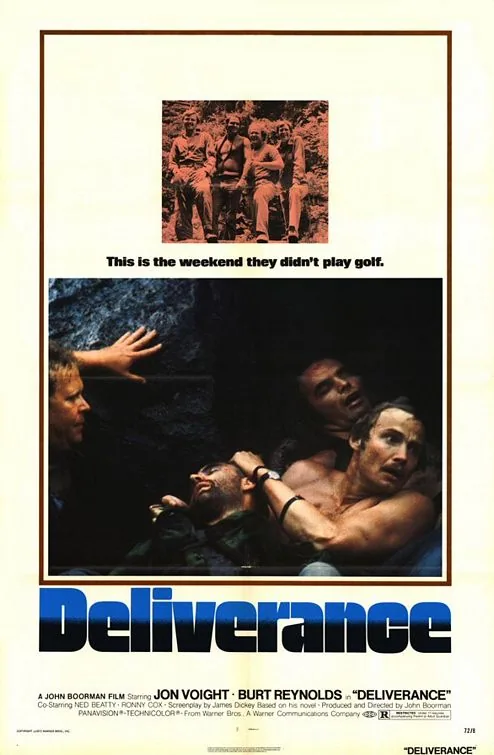
A recreational expedition becomes a survival journey in which concealment of a killing ties practical escape to collective agreement about uncertain further threats.
Why this matches +
These offer a related experience with a meaningful difference in story, tone, or presentation.
An adjacent discovery: a related idea with a different viewing experience.
Genres: Thriller / Drama
Shared film traits
Based on recorded story, mood and style. Your preferences can change the order.
Survival
What changes Deliverance follows a river journey that strips away travelers' confidence and exposes them to mounting danger.
Four city men take a canoe trip along a river about to be transformed by a dam, hoping to experience a landscape one of them treats as a test of self-reliance. An assault breaks their apparent confidence and forces a decision about reporting the resulting violence. Continuing downstream becomes both an environmental ordeal and a struggle over the account they will carry home, while certainty about what happened grows less secure than the wish to survive it. What begins as a test of self-reliance becomes a moral trap whose survivors cannot simply restore their former identities.
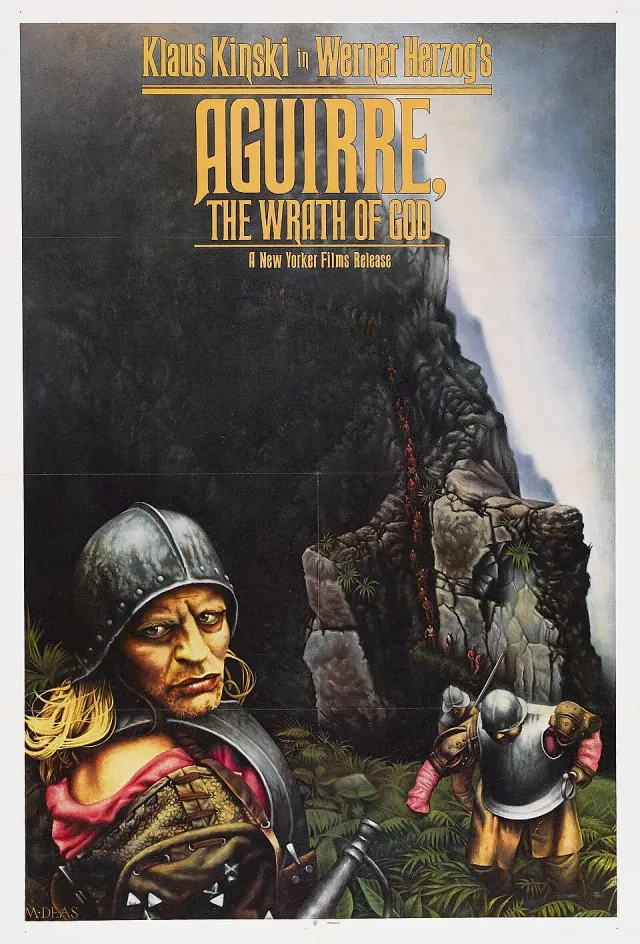
In the sixteenth-century Spanish conquest of South America, an expedition descends a river in search of El Dorado and sends a smaller party ahead through dangerous territory. Lope de Aguirre turns the difficulty of return into an opportunity to seize command, then insists on an imperial future that the group lacks the food and strength to reach. The river journey pares away the certainty of military hierarchy and conquest, leaving the expedition's grand declarations increasingly detached from its physical collapse. Herzog's film is a fictionalized, formally spare meditation on power and delusion, not a documentary reconstruction.
What drives the story
The expedition's logistical crisis gives Aguirre an opening to overthrow command. Once he controls the party, each renewed claim to empire postpones the practical recognition that the journey is failing.
The people at its centre
Aguirre demands loyalty through menace, while the other men cling to titles, ritual and obedience as if those forms could restore control. His daughter becomes part of the fantasy he projects onto a future no one can reach.
What it feels like
Long river passages, exhausted bodies and sparse dialogue make the landscape feel indifferent to the expedition's ambitions. The final images compress the conquest fantasy into a grotesque spectacle of isolation.
Worth knowing
Pair it with anti-conquest journeys in which command dissolves into obsession, not with a triumphant exploration adventure. The film draws on the 1541 and 1560–61 expeditions associated with Pizarro and Ursúa, but its raft, coronation, dialogue and Indigenous characters are cinematic constructions rather than historical testimony.
PowerGreedDelusion
Mood
Hypnotic · Bleak · Unsettling
Pacing
Slow
Visual style
Naturalistic · Expansive
Storytelling
Expedition collapse · Mutiny · Authoritarian control