A football match gives Allied prisoners a choice between a risky escape plan and a public act of resistance.
Why this matches +
These offer a related experience with a meaningful difference in story, tone, or presentation.
An adjacent discovery: a related idea with a different viewing experience.
Genres: War / Sport
Shared film traits
Based on recorded story, mood and style. Your preferences can change the order.
Escape and pursuit · War and civilian life
What changes Escape to Victory gathers prisoners for a wartime escape plan through a football match, combining adventure and teamwork rather than a civilian farce across occupied France.
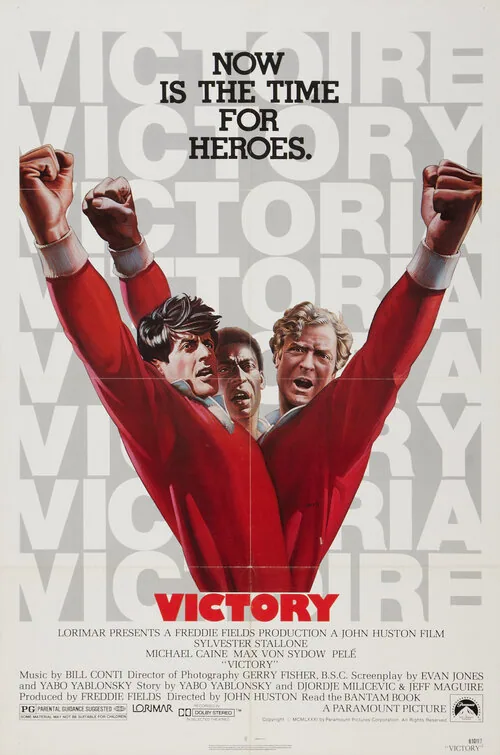
During the Second World War, Allied prisoners in a German camp are invited to play an exhibition football match against a German team. Captain Robert Hatch initially sees the event as a chance to organize an escape, while his fellow prisoners and their British officer must decide whether to risk the plan or play before a huge crowd. The match turns sport into a public test of courage, solidarity, and survival.
A private bank robbery is organized as a military advance, and its growing logistics make the unauthorized mission resemble the institutional campaign it exploits.
Why this matches +
These offer a related experience with a meaningful difference in story, tone, or presentation.
An adjacent discovery: a related idea with a different viewing experience.
Genres: War / Comedy
Shared film traits
Based on recorded story, mood and style. Your preferences can change the order.
War and civilian life
What changes Kelly's Heroes uses irreverent ensemble comedy amid World War II danger, following soldiers after hidden gold rather than civilians helping downed airmen.
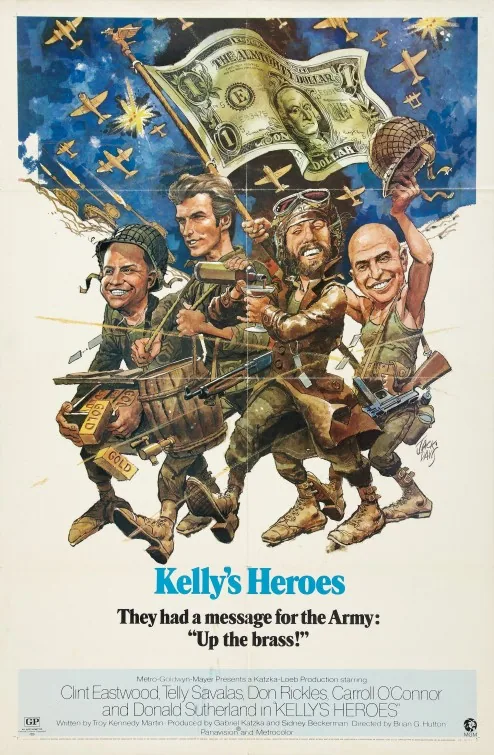
An American soldier learns of gold held behind enemy lines and recruits men willing to use their military access for private profit. Planning requires supplies, armor and passage through a battlefield where even friendly forces can destroy the means of escape. As the operation expands, commanders misread its progress as exemplary aggression. The war caper turns dissatisfaction with official purpose into an opportunistic alternative, mixing anti-authoritarian humor with danger that cannot be entirely converted into a joke or a clean division of spoils.
The shipwreck removes the unit’s immediate military objective, and the island’s isolation stretches a temporary posting into a new way of life. Italy’s surrender brings the deferred war back into their choices.
Why this matches +
These offer a related experience with a meaningful difference in story, tone, or presentation.
An adjacent discovery: a related idea with a different viewing experience.
Genres: War / Comedy
Shared film traits
Based on recorded story, mood and style. Your preferences can change the order.
War and civilian life
What changes Mediterraneo finds comedy and human connection among soldiers separated from the main war, focusing on an Italian unit on a Greek island rather than helping British airmen flee.
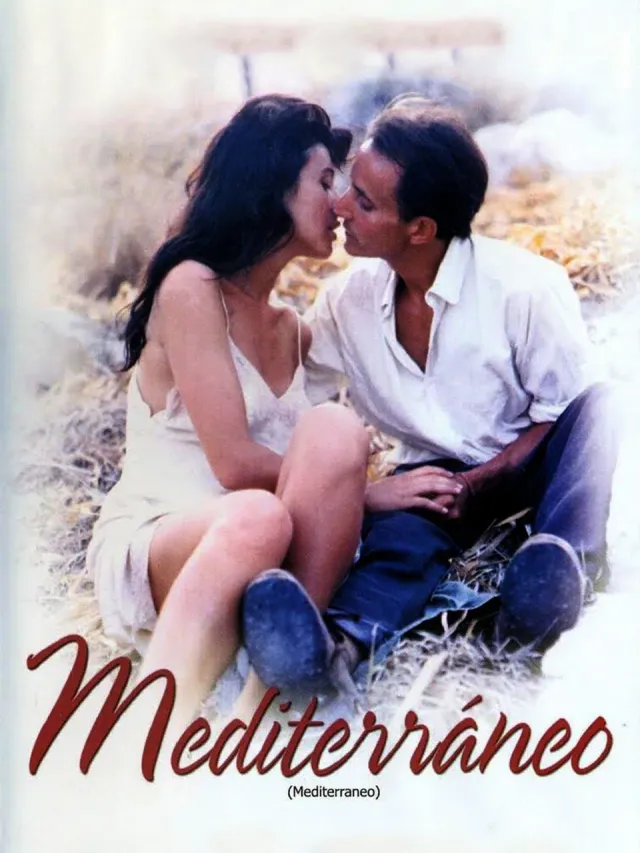
In 1941, an Italian unit is stranded on the Greek island of Megisti after its transport is destroyed. The villagers, who had fled under earlier German occupation, gradually return; the soldiers settle into local routines and relationships while the wider war recedes from view. When news of Italy’s surrender reaches the island, the men face a choice between leaving and the life they have made there. Salvatores frames the story as a sunlit comic fable told from the soldiers’ point of view. That perspective makes the occupation’s unequal relationship with Greek residents easy to overlook, especially when one character says, ‘one face, one race.’ The line signals a breezy Italian self-image, not a neutral statement about local experience or wartime history.
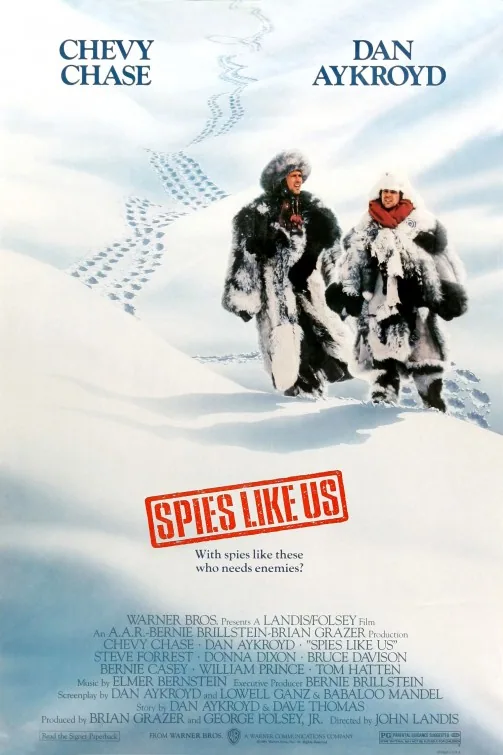
Two expendable recruits stumble into a real Cold War operation they were never meant to control.
Why this matches +
These offer a related experience with a meaningful difference in story, tone, or presentation.
An adjacent discovery: a related idea with a different viewing experience.
Genres: Comedy / Adventure
Shared film traits
Based on recorded story, mood and style. Your preferences can change the order.
Escape and pursuit
What changes Spies Like Us sends mismatched amateurs through a dangerous comic mission, using Cold War espionage rather than the French occupation.
Two underqualified government employees are selected for a secret assignment and believe their training will prepare them for a dangerous mission abroad. They gradually discover that their superiors have hidden the real plan and that their role may be expendable, forcing the mismatched pair to improvise through espionage set pieces while military officials pursue a scheme whose logic is as absurd as the agents' credentials.
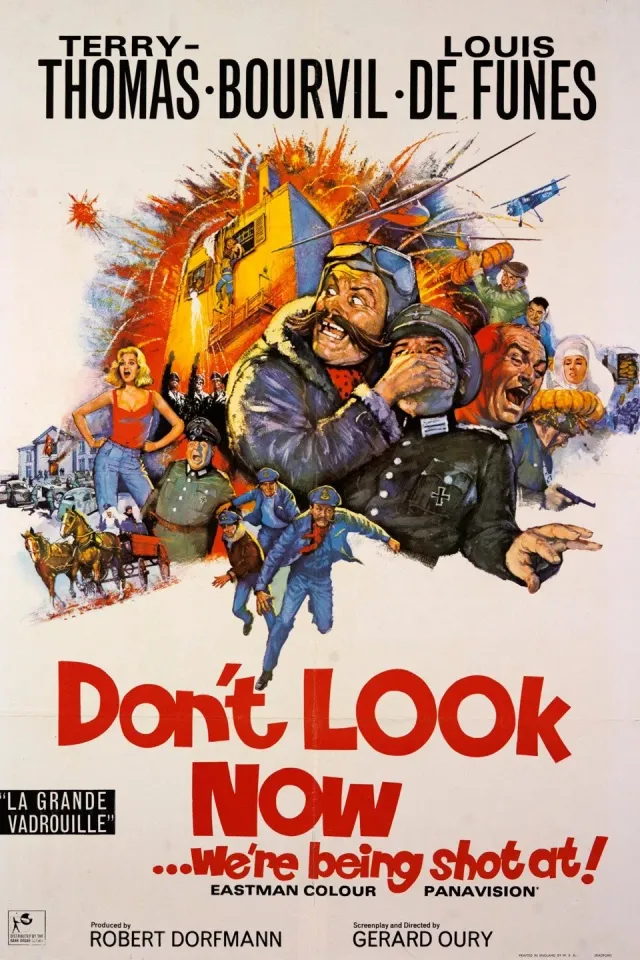
A British bomber crew bails out over occupied Paris and draws two civilians with very different temperaments into its attempt to reach safety. Rendezvous plans repeatedly fail, forcing disguises and new alliances as the route extends into the countryside. A painter and a conductor must cooperate despite competing claims to authority, while ordinary workplaces and religious spaces become sites of clandestine help. The farce makes national danger legible through comic misidentification and practical ingenuity rather than battlefield victory.
What drives the story
A dispersed aircrew's evacuation recruits reluctant civilians whose successive improvisations turn pursuit across occupied territory into a chain of mistaken identities.
The people at its centre
Bouvet's practical resourcefulness collides with Lefort's status-conscious command, while resistance helpers make their progress possible beyond the noisy central partnership.
What it feels like
Musical misunderstanding, physical slapstick and repeated near-discovery create an expansive wartime escape comedy with recognizable danger but an ultimately buoyant rhythm.
Worth knowing
The occupation setting does not make this a somber resistance chronicle; distinguish its comic civilian escort from either a competent military raid or an uncomplicated portrait of universal national unity.