The World Cup supplies a clear dramatic clock, but the film’s central action is Mandela’s decision to preserve and repurpose a symbol associated with the former regime rather than erase it. Sporting cooperation becomes a tactic whose effects remain limited.
Why this matches +
These offer a related experience with a meaningful difference in story, tone, or presentation.
An adjacent discovery: a related idea with a different viewing experience.
Genres: Drama / Sport
Shared film traits
Based on recorded story, mood and style. Your preferences can change the order.
Sport and competition
What changes Invictus uses a major sporting contest as a symbol of collective possibility across deep social divisions.
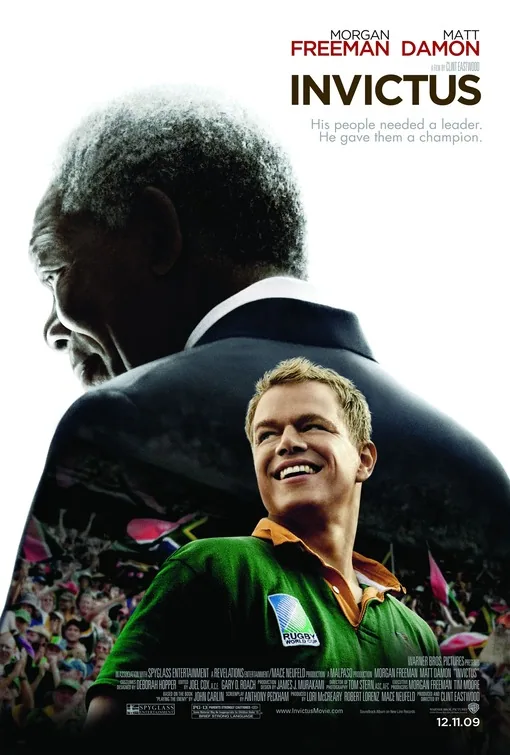
After becoming South Africa’s president, Nelson Mandela backs the Springboks, a rugby team many Black South Africans associate with apartheid, as the country prepares to host the 1995 World Cup. His meeting with captain François Pienaar turns a tournament into an invitation to imagine national responsibility beyond winning. The team’s public progress is intercut with changes among Mandela’s bodyguards, where distrust cannot be dissolved by a speech. The final match offers an affecting image of shared identification, but the film’s focus on a single symbolic event compresses a longer and unresolved political transition. Its optimism is best read as a practical wager on what a visible gesture might make possible, not a claim that sport repaired structural inequality.
Disgraced former captain Kabir Khan coaches a divided women’s hockey team and seeks to restore his place in the sport.
Why this matches +
These offer a related experience with a meaningful difference in story, tone, or presentation.
An adjacent discovery: a related idea with a different viewing experience.
Genres: Drama / Sport
Shared film traits
Based on recorded story, mood and style. Your preferences can change the order.
Sport and competition
What changes Chak De! India follows a coach forging a team across regional and social divisions.
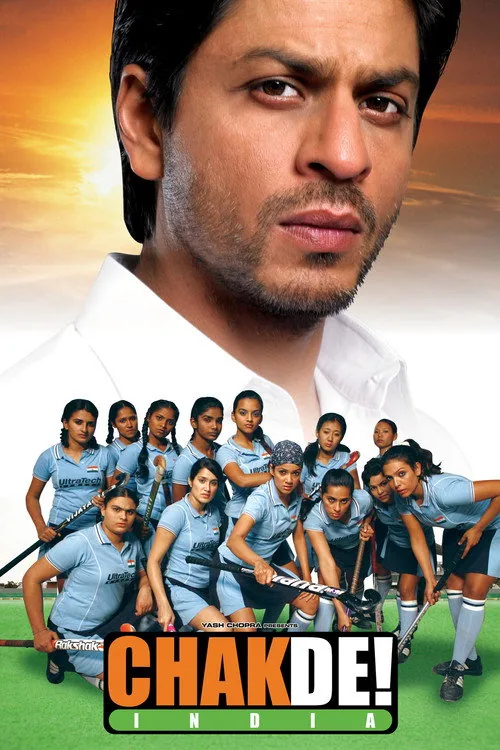
Former men’s field-hockey captain Kabir Khan is ostracized after India loses to Pakistan and a photograph of him greeting the opposing captain fuels religious prejudice. Seven years later, he returns as coach of the neglected women’s national team. The sixteen players bring regional rivalries, unequal expectations, and pressure from families and officials; Khan must build trust and prepare them to compete internationally. Shimit Amin’s sports drama follows the team’s development alongside Khan’s effort to reclaim a place in Indian hockey.
Balli's attempt to advance under a corrupt system changes when he discovers how his father challenged that system.
Why this matches +
These offer a related experience with a meaningful difference in story, tone, or presentation.
An adjacent discovery: a related idea with a different viewing experience.
Genres: Action / Drama
Shared film traits
Based on recorded story, mood and style. Your preferences can change the order.
Political resistance
What changes Shamshera follows a community resisting an oppressive colonial authority through a heightened historical adventure.
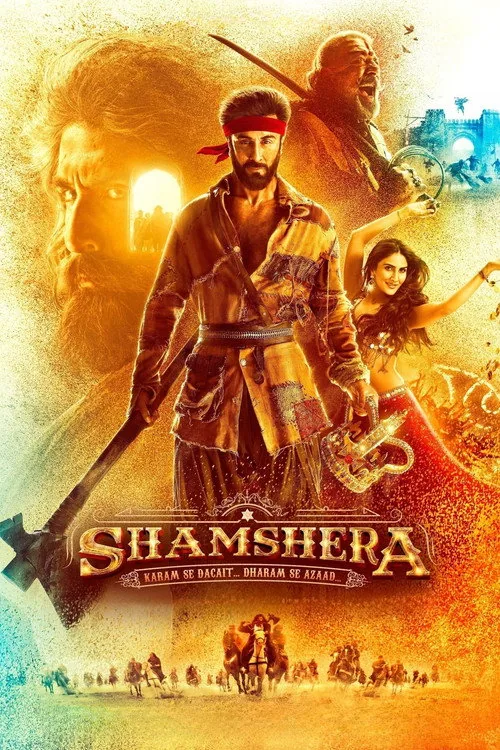
In 1871, Khameran tribesman Shamshera resists the oppression of a ruling kingdom and is forced to lead his people into conflict. Decades later, his son Balli hopes to rise within the same society but learns the story of his father's struggle and the violence inflicted on their community. A corrupt officer and colonial power maintain the tribe's subjugation, setting Balli on a path from self-interest toward rebellion. The Hindi period action film combines family legacy, social injustice, and a large-scale revolt.
A political biography follows the effort to turn principled nonviolence into a mass practice under colonial pressure and internal disagreement.
Why this matches +
These offer a related experience with a meaningful difference in story, tone, or presentation.
An adjacent discovery: a related idea with a different viewing experience.
Genres: Drama / Biography
Shared film traits
Based on recorded story, mood and style. Your preferences can change the order.
Political resistance
What changes Gandhi follows organized resistance to colonial rule, without the sports framing.
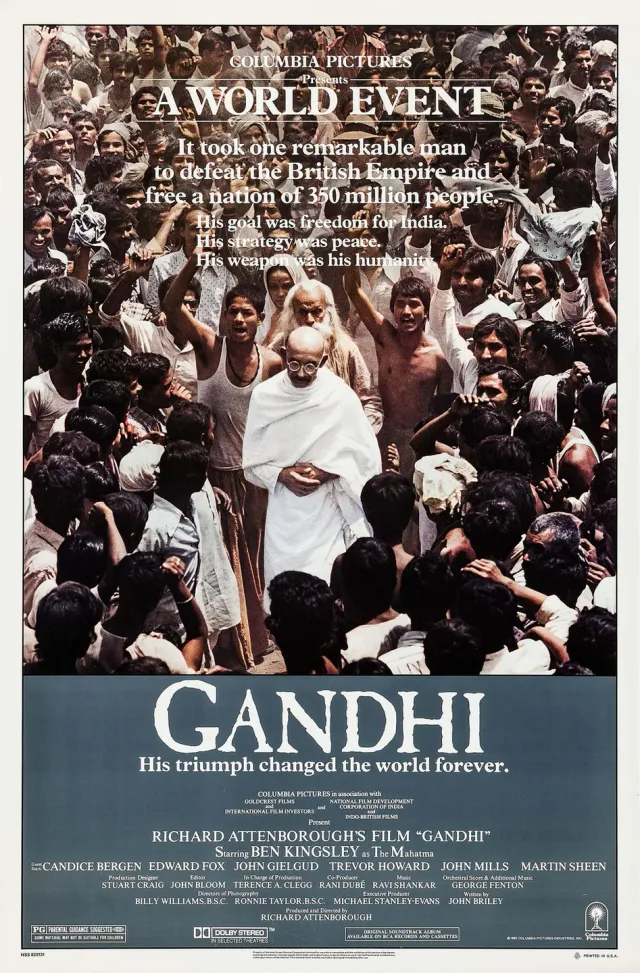
A lawyer confronting racial exclusion in South Africa develops methods of collective resistance that he later brings to the struggle against British rule in India. Political organising connects imprisonment, public protest and negotiation to experiments in personal discipline and nonviolence. Expanding influence does not give him complete control over the movement or the divisions within the society he hopes to change, making national independence inseparable from conflicts that persist beyond the apparent goal.
The film's engine follows the tournament gives a clear progression of matches and absurd obstacles; this keeps the stakes tied to observable choices.
Why this matches +
These offer a related experience with a meaningful difference in story, tone, or presentation.
An adjacent discovery: a related idea with a different viewing experience.
Genres: Comedy / Sport
Shared film traits
Based on recorded story, mood and style. Your preferences can change the order.
Sport and competition
What changes DodgeBall follows an unlikely team training for a high-stakes contest against a powerful opponent.
Peter LaFleur’s failing gym is threatened by a wealthy rival who wants the property, so Peter and friends enter a dodgeball tournament with the prize money they need. Their ragtag team faces stronger opponents and its own uneven discipline. The sports comedy turns competition into a battle over community, pride and the future of a local gathering place.
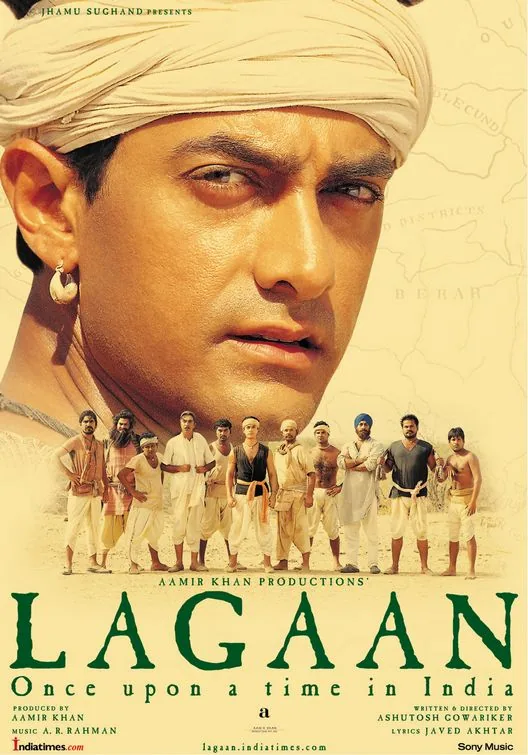
In an 1893 village under British rule, farmer Bhuvan accepts a wager that will free his community from an oppressive tax if a group of villagers can defeat the colonial officers at cricket. The wager is imposed from a position of power, not chosen on equal terms, and the villagers must learn the sport while facing divisions of caste, religion and gender. Elizabeth teaches the rules against her brother’s wishes, but the team’s victory depends on the players’ own work and varied skills. The musical sports epic turns a cricket match into an anti-colonial allegory; its inclusive team is an aspirational image that the film’s own treatment of caste should be examined against, rather than accepted as proof that hierarchy vanished.
What drives the story
The tax wager provides a long training-and-match structure, but the villagers are already coerced by colonial power before they agree. The tournament is a strategy for survival under imposed terms, not a freely chosen sporting contest.
The people at its centre
Bhuvan’s leadership brings together villagers with different skills and social positions, including Kachra, whose participation challenges the village’s caste exclusion. Elizabeth’s teaching helps, yet the team’s agency belongs to the players themselves.
What it feels like
Songs, comic training scenes and an extended match build from local detail to epic spectacle. The final overs make technical action emotionally legible even for viewers unfamiliar with cricket’s rules.
Worth knowing
The victory is allegorical wish fulfillment, not a historical account of one match ending colonial extraction. Consider both the film’s anti-colonial force and its limits around caste, gender and the story’s outsider ally.
DignityCooperationColonial power
Mood
Hopeful · Defiant · Suspenseful
Pacing
Extended · Escalating
Visual style
Large musical ensemble · Prolonged match
Storytelling
Tax wager · Unfamiliar cricket · Inclusive village training