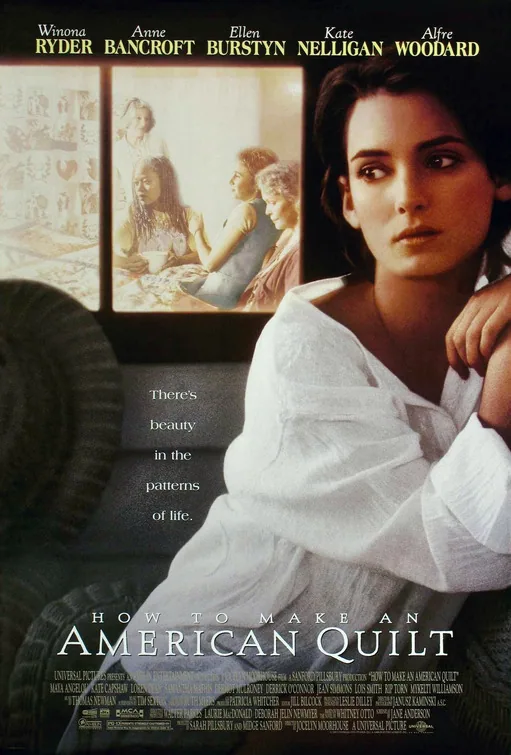
A young woman reconsiders marriage while listening to the life stories of her grandmother's quilting circle.
Why this matches +
These offer a related experience with a meaningful difference in story, tone, or presentation.
An adjacent discovery: a related idea with a different viewing experience.
Genres: Drama / Romance
Shared film traits
Based on recorded story, mood and style. Your preferences can change the order.
Memory and identity
What changes How to Make an American Quilt brings women's stories of love, ambition and family together across generations.
Graduate student Finn spends the summer with her grandmother and great-aunt while deciding whether to marry her boyfriend. The older women work on a quilt and recount their own relationships, giving Finn a set of intimate but conflicting examples of love, loss and independence. The ensemble drama links a present-day decision to stories carried across generations.
A separated family of writers tries to begin new relationships without escaping old wounds. Romance and setbacks prompt reconsideration of estrangement.
Why this matches +
These offer a related experience with a meaningful difference in story, tone, or presentation.
An adjacent discovery: a related idea with a different viewing experience.
Genres: Drama / Romance
Shared film traits
Based on recorded story, mood and style. Your preferences can change the order.
Coming of age
What changes Stuck in Love follows a family of writers whose relationships and creative aspirations overlap.
Novelist Bill Borgens remains fixated on his former wife Erica while their adult daughter Sam publishes a novel and teenage son Rusty tries to write. Sam avoids commitment after her parents’ separation; Rusty develops feelings for a classmate and writes poetry about her. Relationships unfold over a year of family dinners, creative ambitions, romance, and setbacks. Josh Boone’s ensemble drama follows how family loyalty and old resentments shape each member’s approach to love and art.
The daughter's effort to make sense of her mother's past becomes a family reconciliation story rather than a single apology scene.
Why this matches +
These offer a related experience with a meaningful difference in story, tone, or presentation.
An adjacent discovery: a related idea with a different viewing experience.
Genres: Comedy drama / Drama
Shared film traits
Based on recorded story, mood and style. Your preferences can change the order.
Memory and identity
What changes The Divine Secrets of the Ya-Ya Sisterhood uses memories and shifting perspectives to explore women's family bonds.
A playwright's public comments about her childhood deepen a long-running rift with her mother and threaten to disrupt her upcoming wedding. The mother's lifelong friends intervene, bringing the daughter into a shared history that spans girlhood, marriage and painful family choices. The drama uses memories and an ensemble of older women to ask how adult children can understand parents without excusing the harm they experienced.
A holiday visit brings several relationships to a breaking point, and the film lets revelation change family bonds without neatly resolving every conflict.
Why this matches +
These offer a related experience with a meaningful difference in story, tone, or presentation.
An adjacent discovery: a related idea with a different viewing experience.
Genres: Comedy / Drama
Shared film traits
Based on recorded story, mood and style. Your preferences can change the order.
Memory and identity
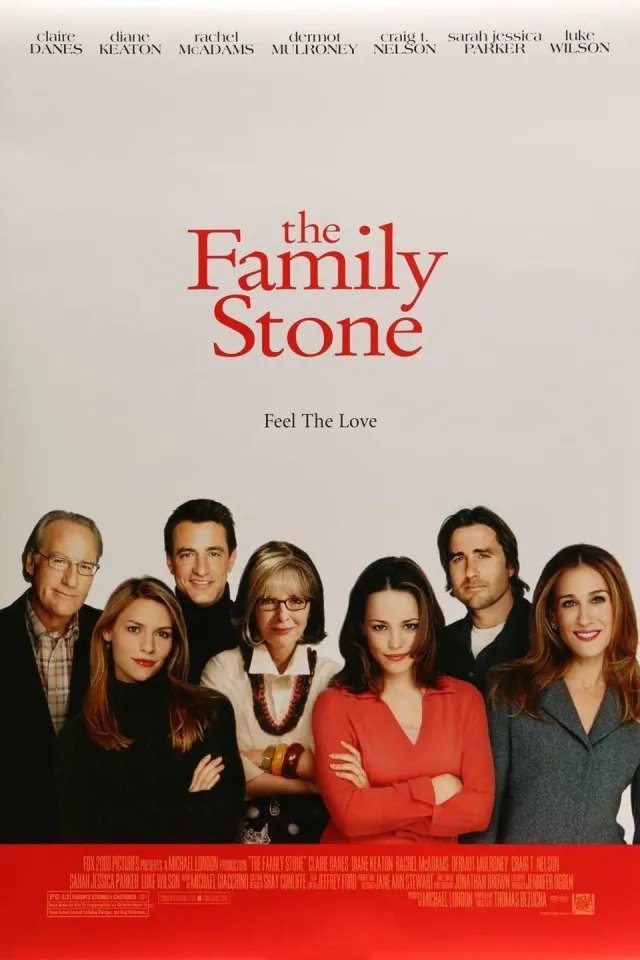
What changes The Family Stone follows siblings and parents through conflict, affection and illness.
A tightly knit family meets the reserved woman their eldest son plans to marry during a tense holiday visit. The arrival of her sister and the family’s bluntness expose differences that challenge everyone’s idea of acceptance. The dramedy treats family belonging as a messy negotiation shaped by affection, grief and mismatched expectations. A crowded home, overlapping dialogue and an ensemble cast create both comic discomfort and emotional warmth.
A planned sequence of departures becomes a test of how new pleasures and practices can change the terms on which the traveler approaches intimacy.
Why this matches +
These offer a related experience with a meaningful difference in story, tone, or presentation.
An adjacent discovery: a related idea with a different viewing experience.
Genres: Drama / Romance
Shared film traits
Based on recorded story, mood and style. Your preferences can change the order.
What changes Eat Pray Love follows a woman reconsidering personal independence and the life expected of her.
After ending a marriage and another relationship, a writer uses extended travel to reconsider the routines through which she has understood success and intimacy. Food, spiritual practice and new friendships offer different kinds of attention, but the possibility of another attachment threatens to feel like surrendering a freedom she has only just begun to claim. The journey asks whether self-direction requires permanent withdrawal or a different way of entering dependence.
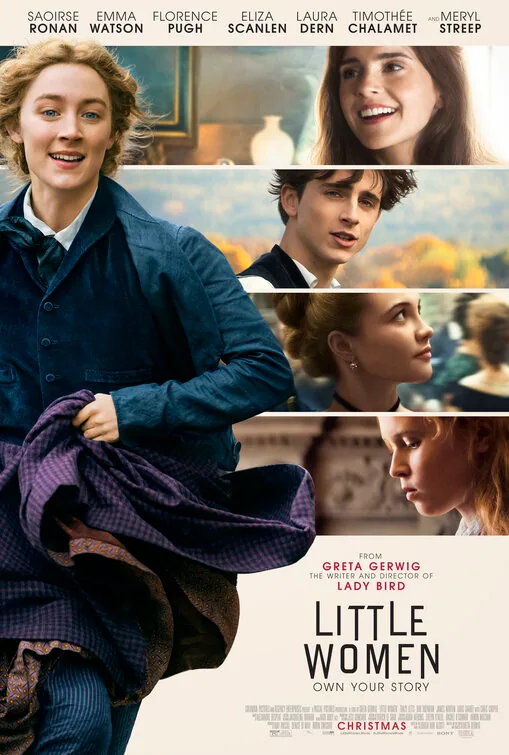
Greta Gerwig’s adaptation moves between the March sisters’ youthful household and their adult lives, using a non-linear structure to make memory, loss and ambition speak across time. Jo pursues writing and financial independence, Meg chooses a less publicly celebrated domestic life, Amy weighs artistic aspiration against material limits, and Beth’s illness shapes the family’s sense of what can be preserved. The publisher’s demand that Jo’s novel end in marriage creates a final ambiguity between character and author: the film gives her a romantic conclusion while also showing her negotiate ownership and payment for her book. This is neither a simple rejection of Alcott’s ending nor an unambiguous confirmation of romance. The two timelines let Jo’s authorship and lived future remain productively entangled.
What drives the story
The film begins near its later turning points and revisits childhood through warm memory sequences. This structure makes Beth’s illness and Jo’s writing feel like forces shaping the sisters’ futures rather than a single chronological march.
The people at its centre
Meg, Jo and Amy make different choices around money, marriage and artistic work; the movie values their differences without pretending all options offer equal independence. Jo’s bond with Laurie changes as both mature.
What it feels like
Handheld movement and candlelit interiors create a tactile family world, while the publisher negotiation brings authorship and market conditions into the plot. The final wedding imagery is intentionally complicated by what it costs Jo to publish.
Worth knowing
Gerwig has described the ending as a negotiation between Alcott’s life, the novel’s demanded marriage and Jo’s fictional future. Preserve that ambiguity: the ending is not simply ‘Jo marries’ or ‘Jo stays single.’
AuthorshipFamilyEconomic choice
Mood
Warm · Bittersweet · Reflective
Pacing
Nonlinear · Episodic
Visual style
Warm-cool temporal contrast · Overlapping household energy
Storytelling
Nonlinear sister lives · Publishing negotiation · Repeated scenes changed by loss