The reporter’s constructed persona creates situations in which subjects reveal their own assumptions while reacting to him.
Why this matches +
These offer a related experience with a meaningful difference in story, tone, or presentation.
An adjacent discovery: a related idea with a different viewing experience.
Genres: Comedy
Shared film traits
Based on recorded story, mood and style. Your preferences can change the order.
What changes A fictional performer conducts provocative encounters with unsuspecting people, using discomfort to reveal social attitudes and the lure of celebrity.
A flamboyant Austrian fashion reporter travels to the United States seeking celebrity and attention, staging encounters that expose the prejudices and social performance he meets. The mockumentary uses provocation and awkward improvisation to challenge its subjects while also relying on the comic persona’s excess. Its satire asks who is being observed and what a performance can reveal about an audience.
A performed outsider identity creates encounters designed to reveal what people will tolerate, affirm or fail to question.
Why this matches +
These offer a related experience with a meaningful difference in story, tone, or presentation.
An adjacent discovery: a related idea with a different viewing experience.
Genres: Comedy
Shared film traits
Based on recorded story, mood and style. Your preferences can change the order.
What changes A fictional outsider interacts with real people in provocative, documentary-style comedy that exposes public attitudes and media performance.
A fictional television reporter travels across the United States seeking material for an account of American life. His exaggerated ignorance and offensive assumptions provoke responses from people who do not all share the same understanding of the encounter. A shifting personal objective turns the trip into an episodic performance in which embarrassment, staged situations and unscripted reactions expose prejudices as well as the uncertain ethics of manufacturing their public display.
A returning fictional reporter brings his daughter on a diplomatic mission that becomes a series of social provocations.
Why this matches +
These offer a related experience with a meaningful difference in story, tone, or presentation.
An adjacent discovery: a related idea with a different viewing experience.
Genres: Comedy
Shared film traits
Based on recorded story, mood and style. Your preferences can change the order.
Constructed reality
What changes A satirical fictional persona moves through real-world encounters and political spectacle, testing how audiences respond to dangerous assumptions.
Years after his first visit, Borat Sagdiyev returns to the United States with his daughter Tutar, hoping to regain standing in Kazakhstan through a diplomatic offering. Their journey becomes a series of staged interactions with unsuspecting people and public figures, while Tutar's changing expectations alter the mission. Jason Woliner's mockumentary sequel uses provocation and performance to examine gender, politics and public behaviour.
A political crisis becomes a media production in which a fictional war is assembled from repeatable images and a marketable narrative.
Why this matches +
These offer a related experience with a meaningful difference in story, tone, or presentation.
An adjacent discovery: a related idea with a different viewing experience.
Genres: Drama / Comedy
Shared film traits
Based on recorded story, mood and style. Your preferences can change the order.
Constructed reality
What changes Media professionals construct a persuasive political spectacle, showing how entertainment can shape public beliefs and distract from consequences.
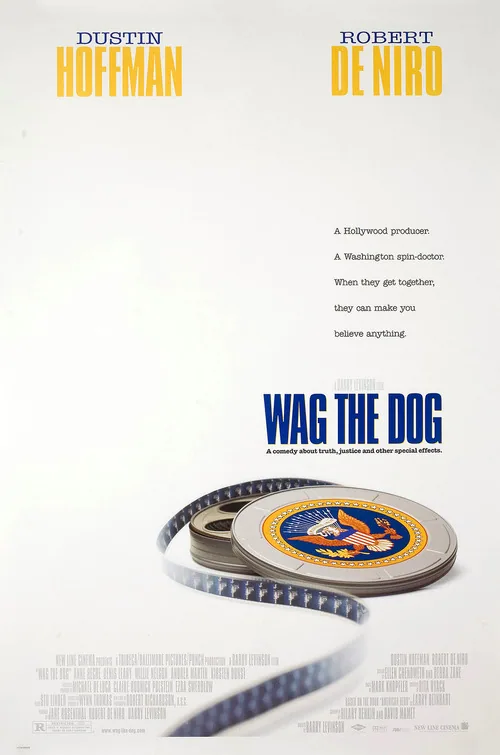
With a presidential sex scandal threatening an election, political consultant Conrad Brean hires Hollywood producer Stanley Motss to invent a distant war that can redirect the news. Motss treats the crisis as a production problem, assembling images, slogans, music and a fictional hero with the same craft he would use for a movie. Brean manages government messaging while the fabricated conflict begins to acquire an independent life in the media. The film’s comedy comes from watching public belief depend on the details of a story that exists mainly because two professionals know how to stage it. As the campaign grows, it becomes less controllable, even for the people who made it. The satire targets both political spin and entertainment’s ability to make images feel like evidence.
Ratings convert Beale's breakdown into a product, and every attempt to restore control becomes another negotiation between truth, profit and public appetite.
Why this matches +
These offer a related experience with a meaningful difference in story, tone, or presentation.
An adjacent discovery: a related idea with a different viewing experience.
Genres: Drama / Comedy
Shared film traits
Based on recorded story, mood and style. Your preferences can change the order.
Constructed reality
What changes A media organization turns a disturbing public figure into profitable entertainment, exposing how spectacle rewards harmful rhetoric.
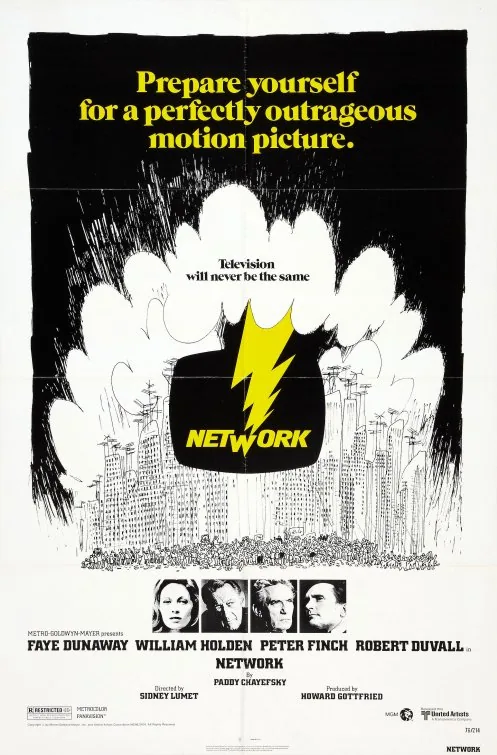
When veteran news anchor Howard Beale learns he will be dismissed, he announces on air that he will kill himself, then turns a farewell broadcast into an angry ratings sensation. Network executive Diana Christensen sells the outburst as entertainment, while division president Max Schumacher worries about the erosion of journalism and begins an affair with her. As Beale's populist persona grows, corporate leaders exploit his audience and eventually object when his message threatens a merger. The network answers a business problem with a lethal programming decision, turning the news division's cynicism into the plot's final spectacle.
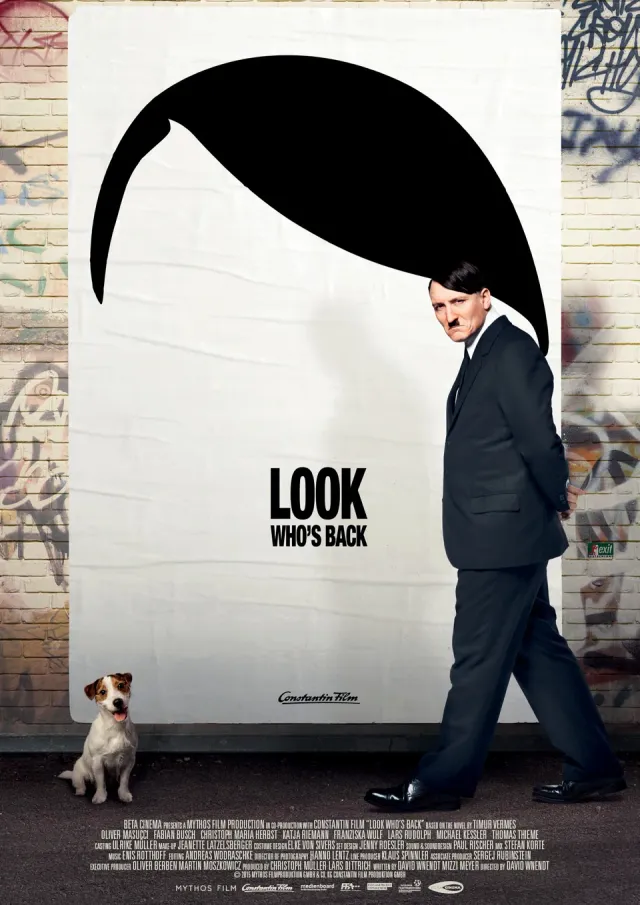
Adolf Hitler reappears in modern Berlin and is mistaken for an impersonator, then attracts attention through unscripted encounters and television appearances. A media producer sees commercial potential, while the visitor’s political ideas gain a platform under the cover of comedy. David Wnendt alternates fictional satire with documentary-style street interactions, asking how spectacle and entertainment can normalize dangerous rhetoric when audiences treat a performance as harmless.
What drives the story
The media company’s profit motive helps turn a grotesque premise into a public spectacle.
The people at its centre
The street encounters blur scripted performance and genuine audience response.
What it feels like
Its mockumentary form makes the boundary between satire and normalization a central question.
Worth knowing
The film uses Hitler imagery and political provocation that may be uncomfortable for many viewers.
MediaPoliticsSatire
Mood
Provocative · Uneasy · Darkly comic
Pacing
Episodic · Mock-documentary
Visual style
Street footage · Handheld camera · Newsroom settings
Storytelling
Political impersonation · Television satire · Public reaction