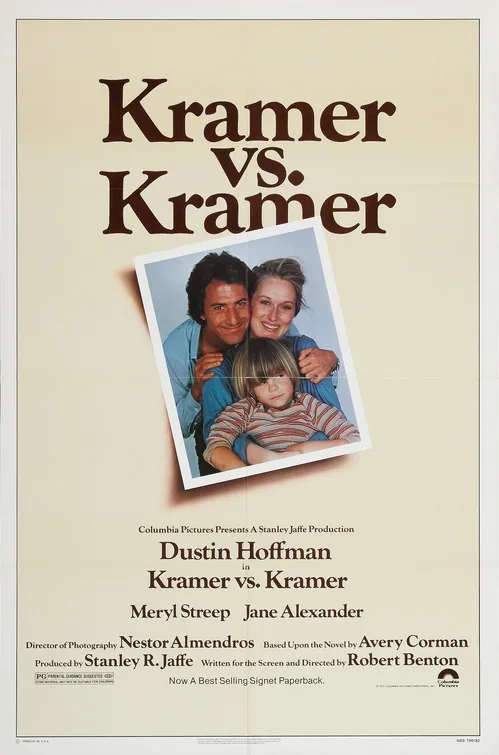
An abrupt change in caregiving exposes the imbalance of a marriage, then a custody dispute converts personal growth into competing public arguments.
Why this matches +
Selected for the central appeal: Relationship dramas about separation, parenting and the emotional costs of legal conflict.
Genres: Drama
Shared film traits
Based on recorded story, mood and style. Your preferences can change the order.
What changes Kramer vs. Kramer follows divorcing parents through custody disputes and changing parental roles, focusing more closely on a father's adjustment after his wife leaves.
An advertising executive's wife leaves their marriage, forcing him to become the everyday parent to a son whose routines he barely knows. Awkward practical tasks gradually create a deeper relationship, while the demands of his job begin to conflict with care. When the mother returns seeking custody, their private reassessment of family becomes an adversarial legal process that threatens to simplify both parents' motives.
Three widely separated periods of contact turn reunion into an encounter with alternative lives rather than a simple opportunity to resume a childhood romance.
Why this matches +
These offer a related experience with a meaningful difference in story, tone, or presentation.
An adjacent discovery: a related idea with a different viewing experience.
Genres: Drama / Romance
Shared film traits
Based on recorded story, mood and style. Your preferences can change the order.
What changes Past Lives considers how affection and life choices persist across distance and time, using a quieter reunion rather than a marriage dissolving through lawyers.
Two childhood friends separated when one family leaves South Korea reconnect years later across video calls and another long interval of separate lives. When they finally meet in New York, she is married and has built a language, career and identity that her old friend only partly knows. Their time together brings affection for an unrealised future into contact with responsibility toward the present they have actually chosen.
An unexpected guardianship forces a grieving man to revisit the place and history he has been unable to re-enter.
Why this matches +
These offer a related experience with a meaningful difference in story, tone, or presentation.
An adjacent discovery: a related idea with a different viewing experience.
Genres: Drama
Shared film traits
Based on recorded story, mood and style. Your preferences can change the order.
What changes Manchester by the Sea depicts former partners whose shared history and grief remain painful after separation, centering bereavement and guardianship rather than a custody case.
After his brother Joe dies, Lee Chandler returns to the Massachusetts town he left and learns that he has been named guardian of Joe's teenage son, Patrick. The practical arrangements bring him face to face with an earlier catastrophe: a house fire accidentally killed Lee's three children, and he could not remain in the community afterward. Patrick wants to stay with friends and his band, while Lee cannot imagine rebuilding a life there. The two negotiate care without a consoling cure, settling on a future that preserves a relationship Lee can bear.
Ben and Katie must listen to each other as partners rather than only coordinating the life they built for their children.
Why this matches +
These offer a related experience with a meaningful difference in story, tone, or presentation.
An adjacent discovery: a related idea with a different viewing experience.
Genres: Comedy / Drama
Shared film traits
Based on recorded story, mood and style. Your preferences can change the order.
What changes The Story of Us examines a couple's separation and the accumulated hurts of a long marriage, using a more comic retrospective structure rather than the same legal focus.
After fifteen years of marriage, Ben and Katie Jordan find that their shared family life hides growing resentment and silence. Once their children leave for summer camp, the couple begins a trial separation and tries to remember why they fell in love. Flashbacks to their courtship and to years of arguments sit beside awkward phone calls, counseling and small attempts to reconnect. Time apart offers both spouses a chance to see the marriage from the other’s point of view, but affection alone does not erase their habits or the questions they must answer.
Theatre director Charlie and actor Nicole try to separate without turning their life with young son Henry into a legal contest. Nicole takes a television role in Los Angeles and returns to her family there, while Charlie's work and home remain in New York. Their attempt to use a mediator breaks down; lawyers turn private disappointments into strategic claims over custody and money. A bitter argument makes years of resentment audible, but practical care and shared history remain after the marriage ends. They reach an arrangement that lets Nicole and Henry stay in California while Charlie keeps an active role.
What drives the story
A mutually chosen separation becomes adversarial when distance, career choices and lawyers make custody a proxy for unresolved marital grievances.
The people at its centre
Nicole's wish for a life recognized on her terms conflicts with Charlie's assumption that the established family routine can continue; both remain loving parents and flawed former partners.
What it feels like
Naturalistic conversations and a long central argument let small negotiations accumulate into painful conflict without courtroom spectacle dominating the film.
Worth knowing
The divorce is not caused by one villain or one act of betrayal; the film follows a relationship ending while parental commitment persists.