Explore films connected to Mary Shelley's Frankenstein through creation and responsibility, grief and ambition, isolation and rejection. Choose the qualities you want to carry into your next watch.
What should feel similar?
Find your next favourite
9 films · Closest overall matches
Hide films you’ve seen or don’t want. Saved on this device.
No matches for this combination yet.
Try another option or reset your choices to see more films.
Based on recorded story, mood and style. Your preferences can change the order.
Artificial life
What changes Mary Shelley's Frankenstein: framed narrative, romantic and scientific episodes and tragic escalation. Young Frankenstein: comic escalation.
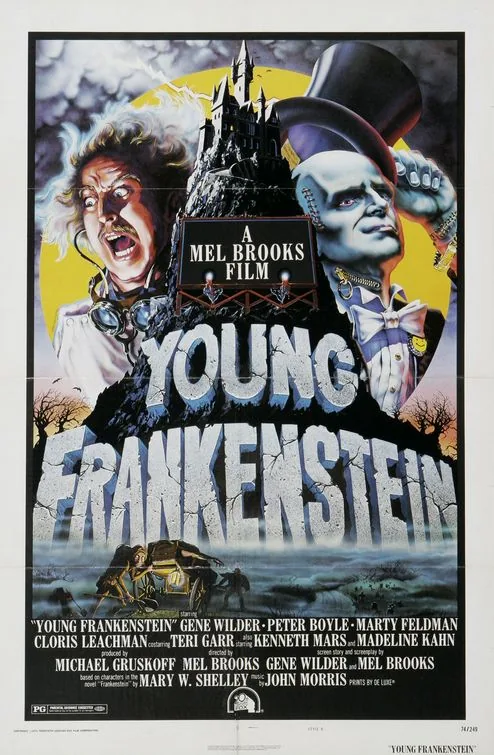
Frederick Frankenstein, a respected surgeon who insists his name is pronounced “Fronkensteen,” inherits his grandfather Victor’s Transylvanian estate. There he meets Igor, assistant Inga and the formidable Frau Blücher, then discovers the laboratory that draws him back into the family’s forbidden experiments. Frederick creates a monster, but the film turns the familiar horror premise into a succession of formal jokes, physical comedy and affectionately precise references to Universal’s classic Frankenstein films. Gene Wilder and Mel Brooks use the black-and-white look and old-fashioned production design to make the parody feel like a lovingly reconstructed monster movie. The result treats scientific responsibility as a running joke while still giving the Creature a recognizable emotional need.
Based on recorded story, mood and style. Your preferences can change the order.
Artificial life
What changes Mary Shelley's Frankenstein: framed narrative, romantic and scientific episodes and tragic escalation. The Fly: gradual deterioration and body-horror escalation.
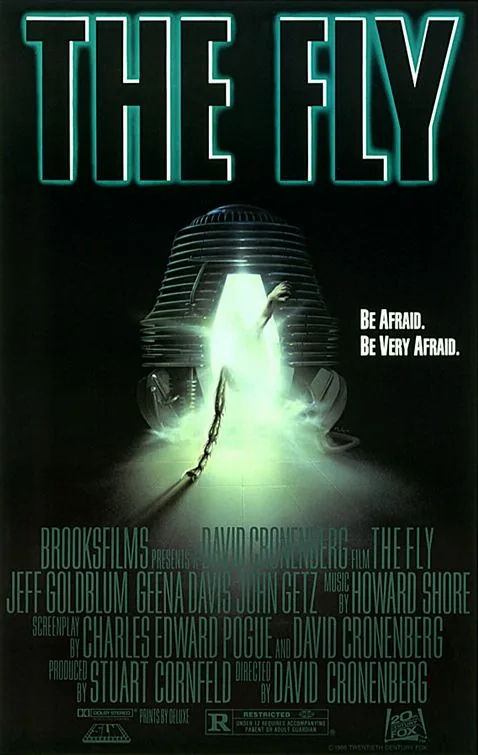
Scientist Seth Brundle invites journalist Veronica Quaife to document his experiments with teleportation. When he tests the device on himself without noticing a fly has entered the pod, his body begins changing in stages. At first Seth mistakes the increased strength and appetite for improvement; Veronica recognizes the physical and emotional deterioration before he can accept it. As the transformation becomes irreversible, their intimacy turns into a struggle over care, fear and whether there is anything left to save. The film treats scientific ambition as the trigger, but its central horror is watching a person remain emotionally present while his body becomes frighteningly unfamiliar.
Based on recorded story, mood and style. Your preferences can change the order.
Artificial life
What changes Mary Shelley's Frankenstein: framed narrative, romantic and scientific episodes and tragic escalation. Victor Frankenstein: fast adventure beats, laboratory escalation and pursuit and action climax.
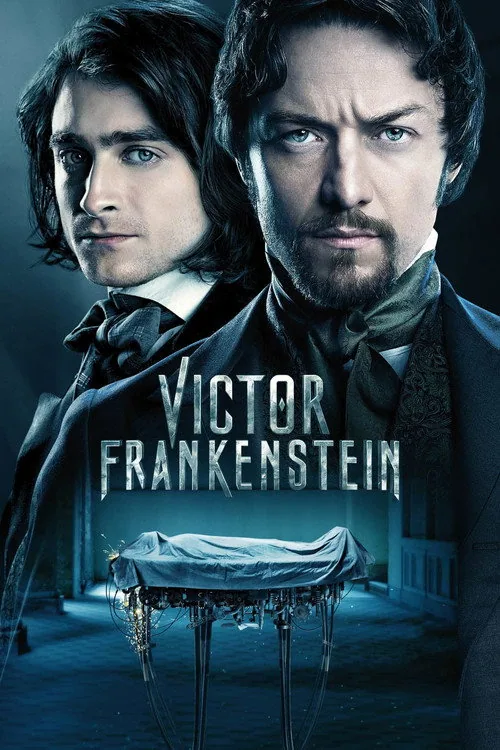
Told through the perspective of Igor, a mistreated circus performer with remarkable anatomical knowledge, the film follows his rescue by medical student Victor Frankenstein. Igor becomes Victor's partner in a dangerous effort to assemble and animate a body, even as an inspector and the consequences of their experiments close in. Their friendship is tested by Victor's ambition and by Igor's desire for a life beyond the laboratory. This adventure-horror reimagining shifts the familiar Frankenstein story toward the assistant's viewpoint and the uneasy bond between two collaborators.
Based on recorded story, mood and style. Your preferences can change the order.
Artificial life
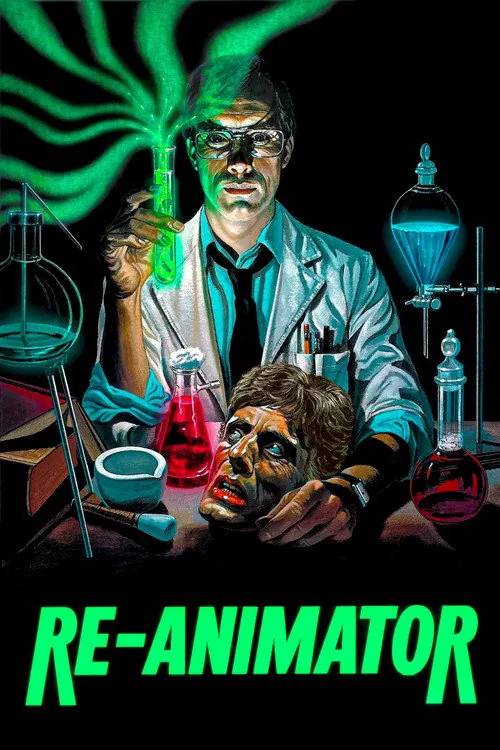
What changes Mary Shelley's Frankenstein: framed narrative, romantic and scientific episodes and tragic escalation. Re-Animator: escalating laboratory chaos, fast tonal shifts and graphic climax.
Medical student Herbert West arrives at Miskatonic University with a glowing reagent that he claims can restore life to the dead. His roommate Dan Cain becomes involved in West’s secret experiments in the hospital morgue, where revived bodies prove unstable and increasingly dangerous. Dean Halsey and his daughter Megan are drawn into the fallout, as West’s ambition overcomes ordinary medical ethics. Stuart Gordon’s adaptation of H. P. Lovecraft’s stories blends science-fiction horror, black comedy, and graphic practical effects.
Based on recorded story, mood and style. Your preferences can change the order.
Memory and identity
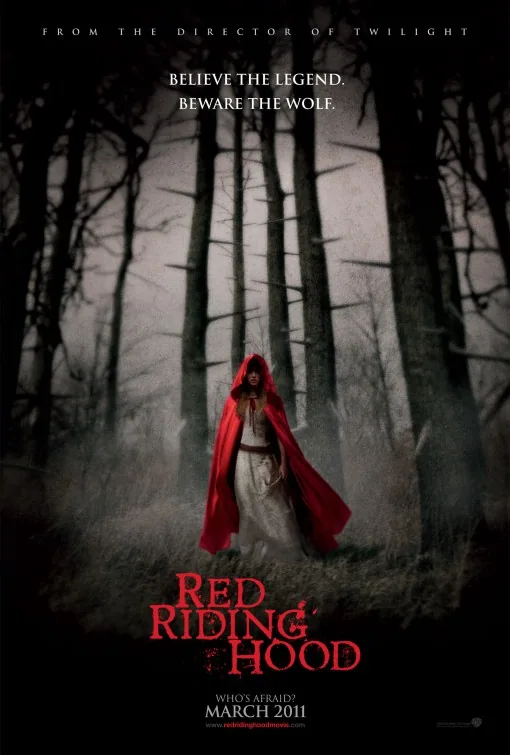
What changes Mary Shelley's Frankenstein: framed narrative, romantic and scientific episodes and tragic escalation. Red Riding Hood: mystery-led and escalating.
In the village of Daggerhorn, Valerie is drawn between her childhood love Peter and an arranged match with Henry. Their plans are interrupted by a werewolf that has haunted the community for years, and the villagers turn to a visiting hunter for protection. As fear and suspicion rise, Valerie learns that the danger may be closer to home than the village believes. Catherine Hardwicke recasts the fairy tale as a romantic mystery with horror and fantasy elements.
Based on recorded story, mood and style. Your preferences can change the order.
Artificial life · Memory and identity
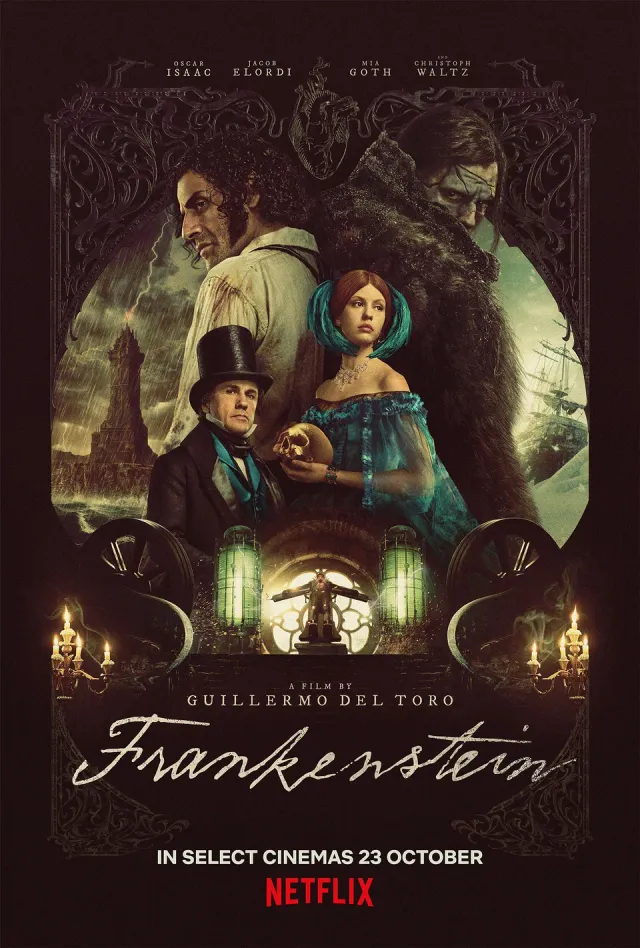
What changes Mary Shelley's Frankenstein: framed narrative, romantic and scientific episodes and tragic escalation. Frankenstein: measured and nonlinear.
Victor Frankenstein brings a creature to life through a brilliant experiment, then treats the being he created as a problem to escape rather than a person who needs an account of his origin. Guillermo del Toro’s adaptation gives both creator and creature narrative space, shifting the question of monstrosity toward abandonment, recognition and the responsibilities that follow an act of creation. Gothic spectacle and bodily violence coexist with a compassionate interest in the creature’s experience. This is the 2025 film’s own version of Mary Shelley’s novel, not the 1931 Universal film, and its adaptation-specific character choices and resolution should be kept separate from the source novel’s details.
Based on recorded story, mood and style. Your preferences can change the order.
Artificial life
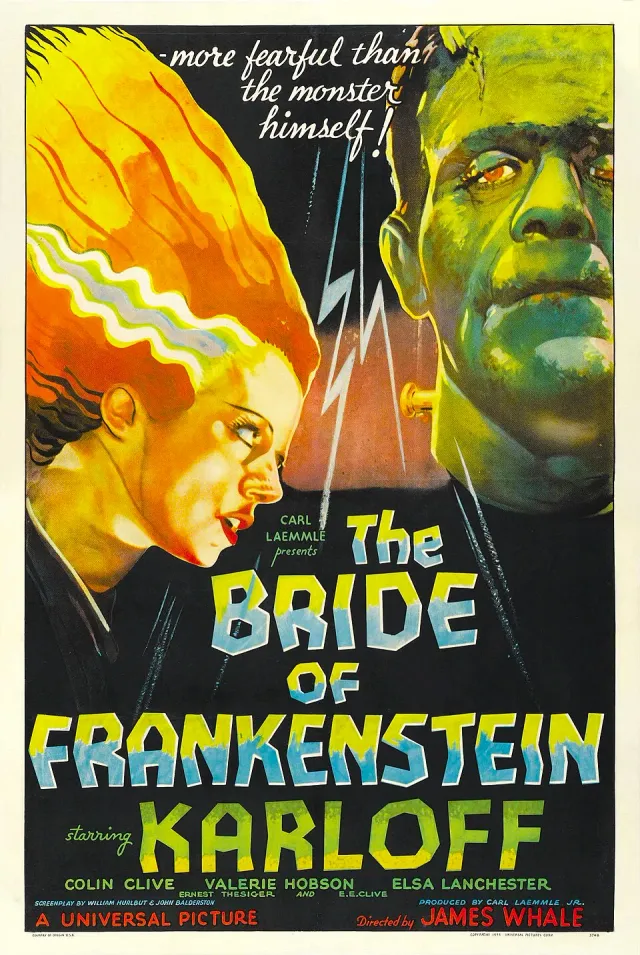
What changes Mary Shelley's Frankenstein: framed narrative, romantic and scientific episodes and tragic escalation. Bride of Frankenstein: dramatic escalation and dark humor.
After the destruction at the windmill, Frankenstein’s creature survives and struggles to find sympathy in a world that fears him. The eccentric Dr. Pretorius wants Henry Frankenstein to resume his experiments and create a companion for the lonely being. As pressure mounts on Frankenstein and his family, the search for a mate raises new questions about creation, rejection and responsibility.
Shared characteristics
Mood: Gothic
Genre: Science fiction
Genre: Horror
Genre: Drama
Poster: Film rights holders; original promotional poster documented by Wikipedia · Image source
Based on recorded story, mood and style. Your preferences can change the order.
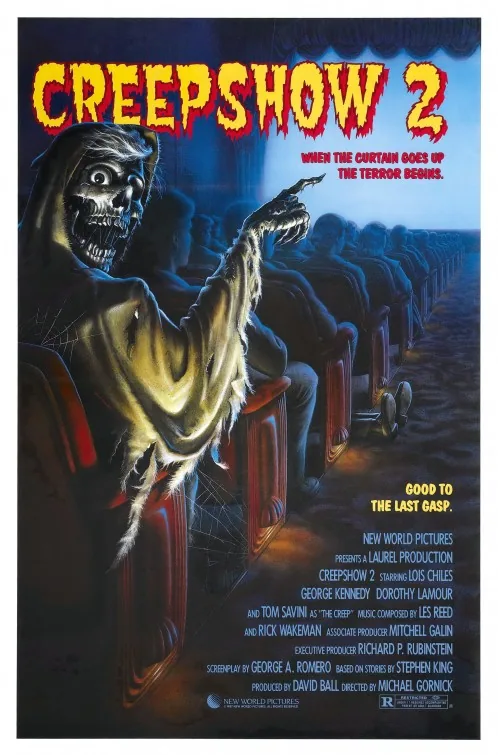
What changes Mary Shelley's Frankenstein: framed narrative, romantic and scientific episodes and tragic escalation. Creepshow 2: three escalating short stories.
A comic-book horror host introduces three separate stories of ordinary people encountering curses, predatory forces and unnatural survival. The segments move from a lonely creature on a lake to a revenge-haunted object and a roadside threat, with an animated frame linking them. Adapted from Stephen King stories, the sequel keeps its focus on compact supernatural shocks and pulp storytelling.
Based on recorded story, mood and style. Your preferences can change the order.
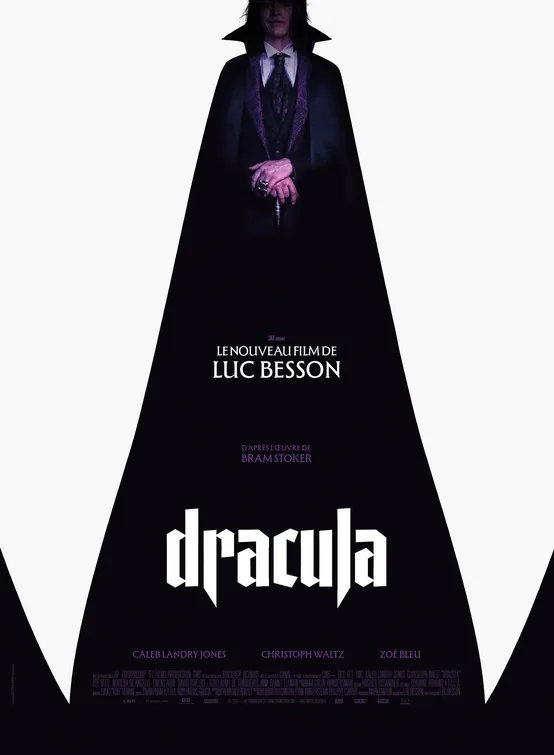
What changes Mary Shelley's Frankenstein: framed narrative, romantic and scientific episodes and tragic escalation. Dracula: A Love Tale: a centuries-spanning pursuit links historical loss to modern encounter.
After his wife dies during a war, Prince Vlad rejects the faith and life he once held and becomes an immortal figure consumed by the hope of seeing her again. Centuries later, he searches for a woman who resembles his lost love, confronting the cost of the vow that preserved him. The gothic romance approaches the Dracula legend through grief, obsession, and the destructive persistence of desire.
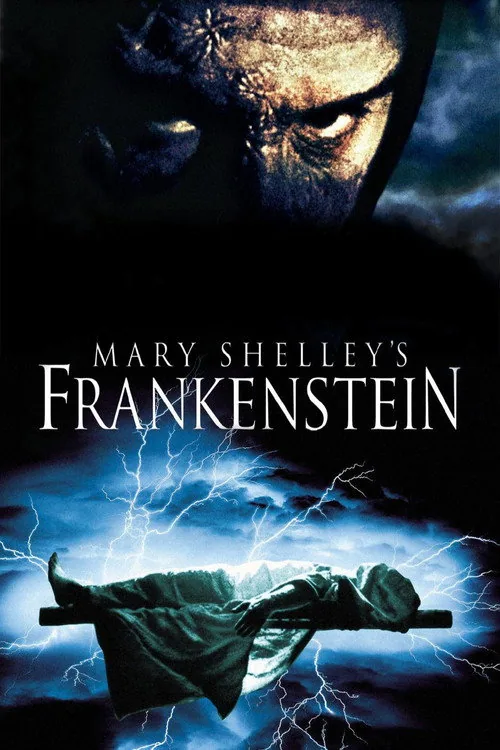
While trapped in Arctic ice, explorer Robert Walton encounters Victor Frankenstein and hears the story of the creature Victor assembled from human remains. Victor's early grief over his mother's death drives his experiments, but the creation of life brings loneliness, rejection, and revenge rather than triumph. The film follows both creator and creature through a tragic chain of choices, framed as a recollection addressed to the explorers. Kenneth Branagh's adaptation places romance and family loss beside Gothic science, emphasizing the consequences of refusing responsibility for what one makes.
What drives the story
Victor's pursuit of life beyond death creates a being whose abandonment turns scientific ambition into a personal reckoning.
The people at its centre
Creator and creature mirror one another in isolation, each seeking recognition while blaming the other for their suffering.
What it feels like
A sweeping Gothic melodrama combines family tragedy, romantic intensity, and elaborate laboratory spectacle.
Worth knowing
This adaptation gives its own emphasis to the novel's frame, romance, and family history; it is not the 1931 Universal film.
creation and responsibilitygrief and ambitionisolation and rejection
Mood
Gothic · tragic · intense
Pacing
framed narrative · romantic and scientific episodes · tragic escalation
Visual style
elaborate period production design · Gothic laboratory imagery · stormy Arctic framing
Storytelling
explorer hears creator's account in flashback · scientist animates a constructed being · abandonment drives mutual conflict