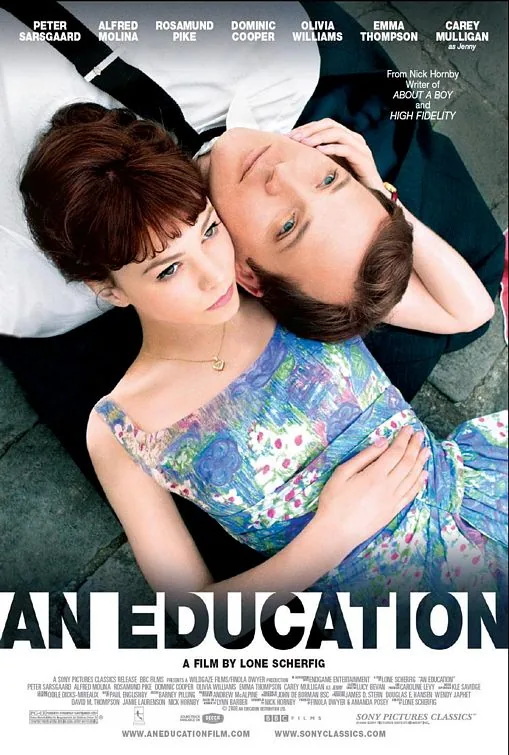
An older man's curated access to culture makes a student's future seem disposable until concealed information exposes the cost of dependence.
Why this matches +
These offer a related experience with a meaningful difference in story, tone, or presentation.
An adjacent discovery: a related idea with a different viewing experience.
Genres: Drama / Romance
Shared film traits
Based on recorded story, mood and style. Your preferences can change the order.
What changes An Education follows a young woman whose attraction to a more privileged world complicates her ambitions.
A gifted schoolgirl in early 1960s London is offered an apparently sophisticated escape from exams and parental restrictions by an older man. His access to music, travel, and adult approval makes formal education seem small beside a life already available. As inconsistencies emerge, the attraction becomes a test of how glamour can disguise unequal knowledge and how easily ambition can be redirected by someone presenting himself as its shortcut.
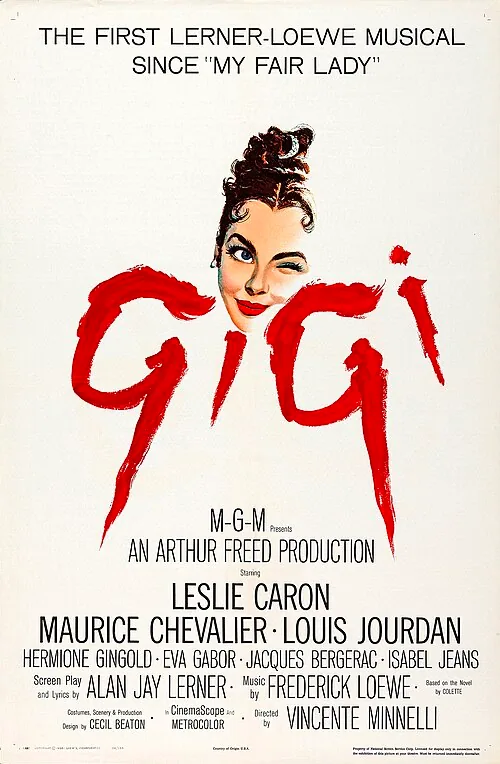
A social education intended to make Gigi financially valuable collides with her own refusal to accept the prescribed courtesan arrangement as the only available future. The training is presented as protection from poverty, but it also scripts the future Gigi is expected to accept.
Why this matches +
These offer a related experience with a meaningful difference in story, tone, or presentation.
An adjacent discovery: a related idea with a different viewing experience.
Genres: Musical / Romance
Shared film traits
Based on recorded story, mood and style. Your preferences can change the order.
What changes Gigi follows a young woman trained for a socially prescribed role while romance and status shape her choices.
Raised by female relatives to enter Parisian high society as a courtesan, young Gigi is expected to turn charm and training into financial security through an arrangement with the wealthy Gaston. The musical presents this education with wit and elegant color, yet the age difference and economic dependence complicate the romance its ending celebrates. Gigi’s final refusal of the role she has been prepared for changes the terms of the relationship, but does not make the constraints around her upbringing disappear. The film’s nostalgic musical framing is part of its pleasure and part of the question: whose choices does that style make look charming?
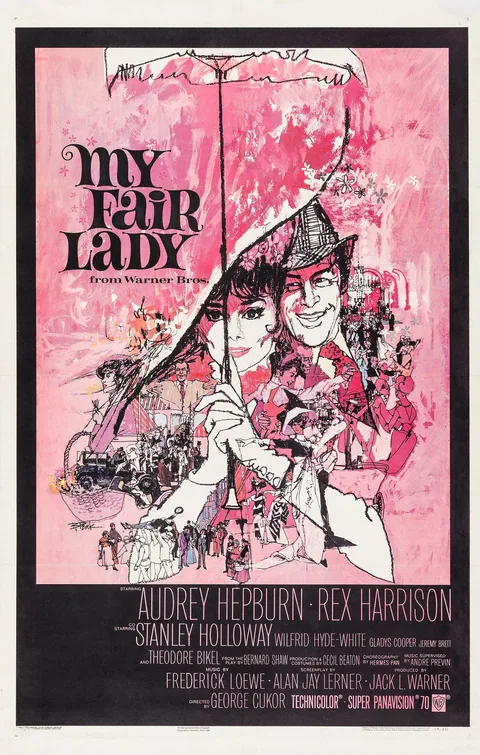
An experiment in accent and manners achieves its public aim while producing a private crisis over recognition, ownership and the student's future.
Why this matches +
These offer a related experience with a meaningful difference in story, tone, or presentation.
An adjacent discovery: a related idea with a different viewing experience.
Genres: Drama / Romance
Shared film traits
Based on recorded story, mood and style. Your preferences can change the order.
What changes My Fair Lady follows a woman trained in performance and manners by a powerful mentor.
A London flower seller seeks speech lessons that could improve her prospects, only to become the subject of a professor's wager about class performance. Intensive training changes how strangers receive her without resolving how her teacher values her as a person. Success in elite society creates a new problem of independence: she has acquired another social voice while losing certainty about where she can live on her own terms.
Two time-separated chapters make private choices accumulate into different adult lives, asking whether love, work and security can coexist under changing circumstances.
Why this matches +
These offer a related experience with a meaningful difference in story, tone, or presentation.
An adjacent discovery: a related idea with a different viewing experience.
Genres: Drama / Romance
Shared film traits
Based on recorded story, mood and style. Your preferences can change the order.
What changes Moscow Does Not Believe in Tears follows a woman navigating class, work and romance over many years.
The film follows three provincial young women who share a Moscow workers' dormitory in 1958 and revisits them twenty years later. Katerina's promising romance with television cameraman Rudolf ends in rejection when she becomes pregnant; she raises their daughter while studying and building a career. Lyudmila pursues status through marriage and later faces her husband's alcoholism, while Antonina creates a steady family with Nikolay. In 1978, Katerina is a factory director but lonely. A chance train meeting with toolmaker Gosha begins a new relationship that forces her to reconsider the self-sufficiency she has relied on.
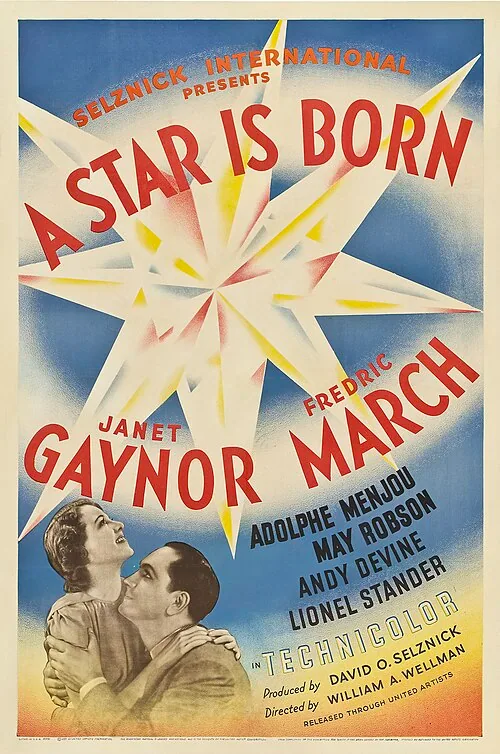
An industry ascent unfolds alongside a spouse's decline, turning professional support into an intimate conflict over dependence, dignity and sacrifice.
Why this matches +
These offer a related experience with a meaningful difference in story, tone, or presentation.
An adjacent discovery: a related idea with a different viewing experience.
Genres: Drama / Romance
Shared film traits
Based on recorded story, mood and style. Your preferences can change the order.
What changes A Star Is Born follows a talented performer whose career and intimate relationships become intertwined.
An aspiring actress arrives in Hollywood and receives help from an established actor whose career is beginning to collapse. Their professional collaboration becomes marriage, but her growing recognition intensifies the imbalance between public success and his dependence on alcohol. Attempts to protect one another become tangled with pride and sacrifice, exposing the cost of a relationship whose partners are moving in opposite directions within the same industry.
Sold away from her fishing family as a child, Chiyo enters a Kyoto okiya and eventually becomes Sayuri, a celebrated geisha trained in dance, music and conversation. Mameha mentors her, Hatsumomo competes for status, and Sayuri’s attraction to the Chairman gives her ambition a personal focus. War displaces the women and interrupts the world of the house before Sayuri returns to Kyoto. Rob Marshall’s lush adaptation of Arthur Golden’s novel turns training, patronage and romance into a Cinderella-like story, but it is not a memoir or ethnographic account of geisha practice. The source novel drew criticism from a retired geisha who had advised Golden, and the film’s casting and visual choices prompted further debate. Its central perspective is cinematic fiction shaped by outsiders’ storytelling decisions.
What drives the story
Training, rivalry and patronage organize Sayuri’s ascent, while war disrupts the social world on which her status depends. The romance with the Chairman shapes her goal but does not explain geisha life as a whole.
The people at its centre
Mameha’s mentorship and Hatsumomo’s hostility offer competing strategies within the okiya, while Sayuri’s dependence on sponsors limits the freedom suggested by her rising fame.
What it feels like
Elaborate costumes, choreography and production design create a polished historical spectacle. The beauty of the images can obscure the film’s simplification of a specialized profession and the gap between theatrical fiction and lived cultural practice.
Worth knowing
Arthur Golden’s novel and this adaptation are fiction, not ethnography. Mineko Iwasaki’s dispute over the source novel and criticism of the film’s casting and cultural framing should be acknowledged without claiming that one account represents all geisha.