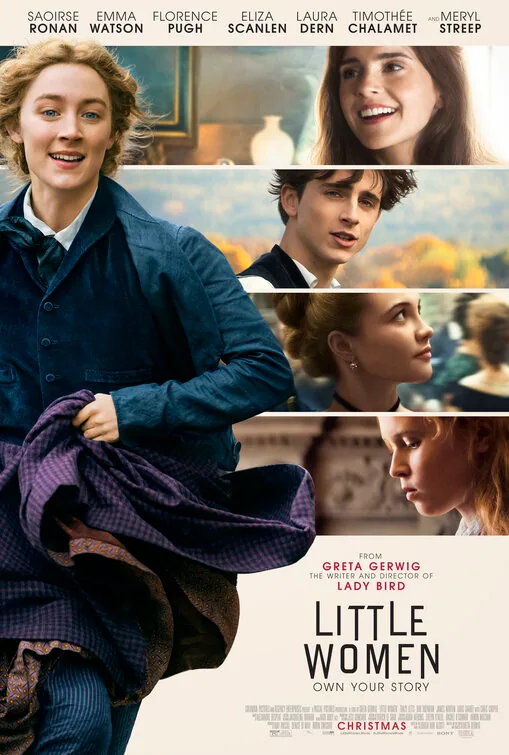
The film begins near its later turning points and revisits childhood through warm memory sequences. This structure makes Beth’s illness and Jo’s writing feel like forces shaping the sisters’ futures rather than a single chronological march.
Why this matches +
Selected for the central appeal: Long-view dramas about women's friendship, work, family and changing romantic possibilities.
Genres: Drama / Romance
Shared film traits
Based on recorded story, mood and style. Your preferences can change the order.
What changes Little Women follows a group of women balancing family bonds, work and romance across changing years.
Greta Gerwig’s adaptation moves between the March sisters’ youthful household and their adult lives, using a non-linear structure to make memory, loss and ambition speak across time. Jo pursues writing and financial independence, Meg chooses a less publicly celebrated domestic life, Amy weighs artistic aspiration against material limits, and Beth’s illness shapes the family’s sense of what can be preserved. The publisher’s demand that Jo’s novel end in marriage creates a final ambiguity between character and author: the film gives her a romantic conclusion while also showing her negotiate ownership and payment for her book. This is neither a simple rejection of Alcott’s ending nor an unambiguous confirmation of romance. The two timelines let Jo’s authorship and lived future remain productively entangled.
A chain of encounters repeatedly lets Cabiria imagine a new life, then tests whether optimism can survive exploitation without becoming foolishness.
Why this matches +
These offer a related experience with a meaningful difference in story, tone, or presentation.
An adjacent discovery: a related idea with a different viewing experience.
Genres: Drama / Romance
Shared film traits
Based on recorded story, mood and style. Your preferences can change the order.
What changes Nights of Cabiria follows a resilient woman seeking love and a better life despite repeated disappointments.
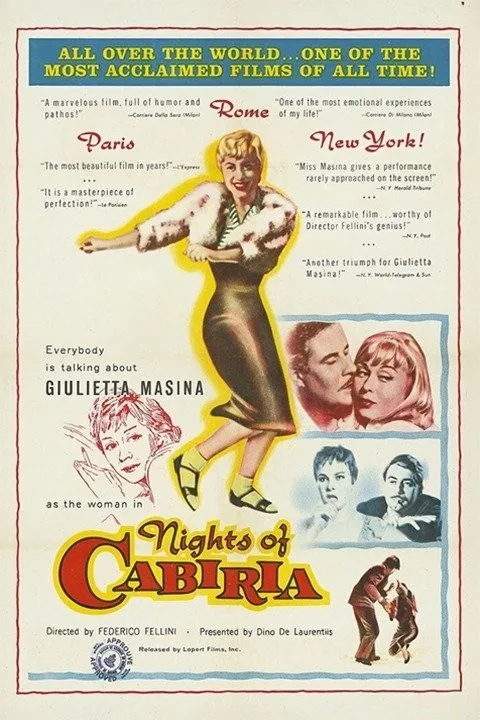
Roman sex worker Cabiria survives a riverbank robbery by her lover Giorgio, then returns to her small home and tries to rebuild her faith in happiness. A chance night with a film star and a later pilgrimage briefly offer forms of recognition and hope, but a magician’s public hypnosis exposes how deeply she longs for marriage. When Oscar courts her and promises a future, Cabiria sells her home and trusts him with her savings. His betrayal leaves her walking alone through Rome, where a group of young revelers draws a tentative smile from her.
Classroom discussions and students' private decisions echo each other, testing whether education opens choices or simply replaces one prescriptive ideal with another.
Why this matches +
These offer a related experience with a meaningful difference in story, tone, or presentation.
An adjacent discovery: a related idea with a different viewing experience.
Genres: Drama / Romance
Shared film traits
Based on recorded story, mood and style. Your preferences can change the order.
What changes Mona Lisa Smile explores women's ambitions and social expectations around marriage and work.
In 1953, art-history lecturer Katherine Watson arrives at Wellesley and challenges students who can recite the syllabus but rarely question it. Her encouragement of careers unsettles Betty Warren, who defends traditional marriage and attacks a campus nurse for providing contraception. Katherine also supports Joan Brandwyn's application to Yale law school, but Joan chooses marriage instead, prompting Katherine to confront the difference between expanding a woman's choices and deciding for her. Betty's own marriage disappoints her, while Connie and Giselle navigate romance and independence under the school's expectations.
Three widely separated periods of contact turn reunion into an encounter with alternative lives rather than a simple opportunity to resume a childhood romance.
Why this matches +
These offer a related experience with a meaningful difference in story, tone, or presentation.
An adjacent discovery: a related idea with a different viewing experience.
Genres: Drama / Romance
Shared film traits
Based on recorded story, mood and style. Your preferences can change the order.
What changes Past Lives revisits a relationship over many years as its characters' lives and ambitions change.
Two childhood friends separated when one family leaves South Korea reconnect years later across video calls and another long interval of separate lives. When they finally meet in New York, she is married and has built a language, career and identity that her old friend only partly knows. Their time together brings affection for an unrealised future into contact with responsibility toward the present they have actually chosen.
A work-focused mother forms a relationship that challenges her assumptions about age and intimacy.
Why this matches +
These offer a related experience with a meaningful difference in story, tone, or presentation.
An adjacent discovery: a related idea with a different viewing experience.
Genres: Romance / Drama
Shared film traits
Based on recorded story, mood and style. Your preferences can change the order.
What changes How Stella Got Her Groove Back follows an accomplished woman reconsidering romance and independence later in life.
Stella, a successful San Francisco stockbroker and divorced mother, takes a vacation in Jamaica with her friend Delilah. There she meets Winston, a younger local man, and the attraction unsettles the careful routines that have kept work and parenting in balance. The romance asks how desire, age and responsibility can coexist when a woman is used to placing everyone else's needs first.
The film follows three provincial young women who share a Moscow workers' dormitory in 1958 and revisits them twenty years later. Katerina's promising romance with television cameraman Rudolf ends in rejection when she becomes pregnant; she raises their daughter while studying and building a career. Lyudmila pursues status through marriage and later faces her husband's alcoholism, while Antonina creates a steady family with Nikolay. In 1978, Katerina is a factory director but lonely. A chance train meeting with toolmaker Gosha begins a new relationship that forces her to reconsider the self-sufficiency she has relied on.
What drives the story
Two time-separated chapters make private choices accumulate into different adult lives, asking whether love, work and security can coexist under changing circumstances.
The people at its centre
The women remain friends without becoming interchangeable examples: Katerina's ambition, Lyudmila's romantic calculation and Antonina's steadiness lead to distinct costs.
What it feels like
A warm, patient ensemble drama spans decades through domestic scenes, work and the texture of Soviet urban life.
Worth knowing
Its female friendship may recall other life-spanning dramas, but its two-part structure and grounded contrast between career, romance and class aspirations are distinctive.