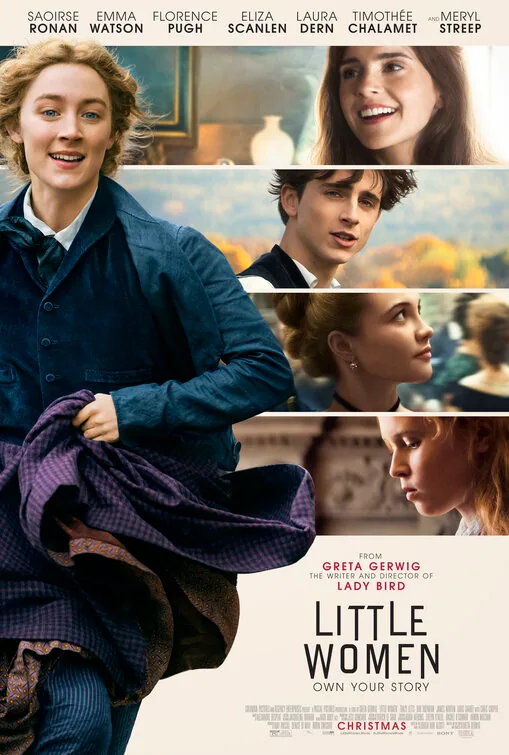
The film begins near its later turning points and revisits childhood through warm memory sequences. This structure makes Beth’s illness and Jo’s writing feel like forces shaping the sisters’ futures rather than a single chronological march.
Why this matches +
Selected for the central appeal: Education dramas about encouraging independent thought and confronting expectations placed on women.
Genres: Drama / Romance
Shared film traits
Based on recorded story, mood and style. Your preferences can change the order.
What changes Little Women follows women balancing education, work, family and marriage under restrictive expectations.
Greta Gerwig’s adaptation moves between the March sisters’ youthful household and their adult lives, using a non-linear structure to make memory, loss and ambition speak across time. Jo pursues writing and financial independence, Meg chooses a less publicly celebrated domestic life, Amy weighs artistic aspiration against material limits, and Beth’s illness shapes the family’s sense of what can be preserved. The publisher’s demand that Jo’s novel end in marriage creates a final ambiguity between character and author: the film gives her a romantic conclusion while also showing her negotiate ownership and payment for her book. This is neither a simple rejection of Alcott’s ending nor an unambiguous confirmation of romance. The two timelines let Jo’s authorship and lived future remain productively entangled.
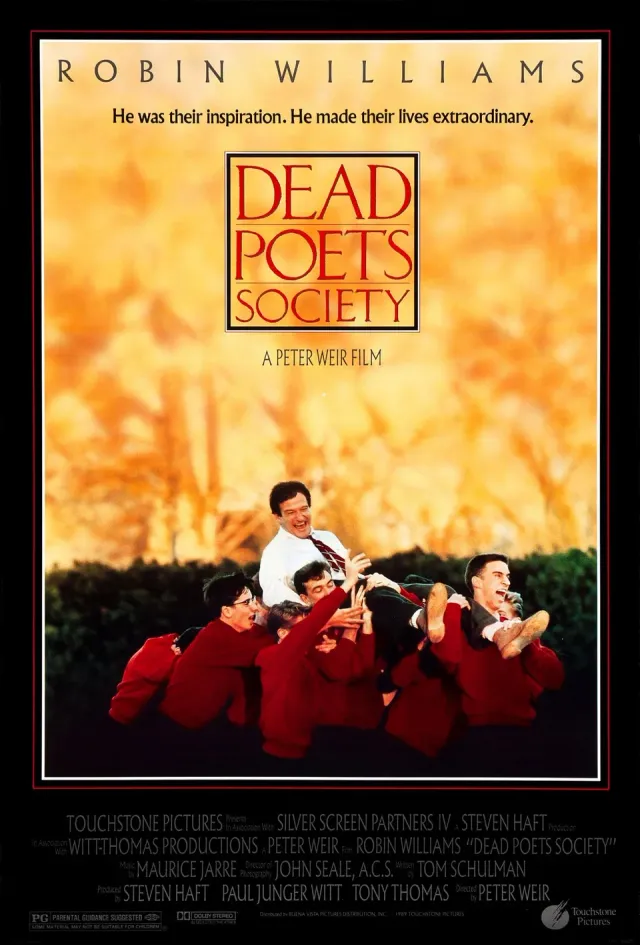
An unconventional teacher's encouragement creates choices whose consequences unfold within families and a school unwilling to surrender control.
Why this matches +
Selected for the central appeal: Education dramas about encouraging independent thought and confronting expectations placed on women.
Genres: Drama / Coming-of-age
Shared film traits
Based on recorded story, mood and style. Your preferences can change the order.
What changes Dead Poets Society follows an unconventional teacher encouraging students to question a rigid institution.
Students at a prestigious boys' school encounter an English teacher whose approach encourages them to treat literature as an invitation to individual experience rather than another credential. Their private experiments in poetry and self-expression expose tensions between personal desire, peer approval and parental control. The institution's response to an escalating crisis reveals how quickly inspiration can become a dispute about responsibility when young people have limited authority over their own futures.
Two time-separated chapters make private choices accumulate into different adult lives, asking whether love, work and security can coexist under changing circumstances.
Why this matches +
These offer a related experience with a meaningful difference in story, tone, or presentation.
An adjacent discovery: a related idea with a different viewing experience.
Genres: Drama / Romance
Shared film traits
Based on recorded story, mood and style. Your preferences can change the order.
What changes Moscow Does Not Believe in Tears follows women building careers and relationships amid social expectations about marriage.
The film follows three provincial young women who share a Moscow workers' dormitory in 1958 and revisits them twenty years later. Katerina's promising romance with television cameraman Rudolf ends in rejection when she becomes pregnant; she raises their daughter while studying and building a career. Lyudmila pursues status through marriage and later faces her husband's alcoholism, while Antonina creates a steady family with Nikolay. In 1978, Katerina is a factory director but lonely. A chance train meeting with toolmaker Gosha begins a new relationship that forces her to reconsider the self-sufficiency she has relied on.
A final school year turns the wish to escape into successive tests of class aspiration, loyalty and a newly invented identity.
Why this matches +
These offer a related experience with a meaningful difference in story, tone, or presentation.
An adjacent discovery: a related idea with a different viewing experience.
Genres: Drama / Comedy
Shared film traits
Based on recorded story, mood and style. Your preferences can change the order.
What changes Lady Bird follows a young woman seeking education and independence while negotiating family expectations.
A Sacramento high-school senior gives herself a new name and imagines escape to a more exciting life on the opposite coast. Her experiments with friendship, romance and social status repeatedly reveal how strongly money and family shape the choices she treats as personal reinvention. Conflict with her mother turns applications and ordinary household arguments into a struggle over how love can coexist with criticism and the desire to leave.
A present-day search reconstructs how an unconventional student's influence unsettled a school and changed his friends' choices.
Why this matches +
These offer a related experience with a meaningful difference in story, tone, or presentation.
An adjacent discovery: a related idea with a different viewing experience.
Genres: Comedy / Drama
Shared film traits
Based on recorded story, mood and style. Your preferences can change the order.
What changes 3 Idiots challenges a rigid educational system and its assumptions about success and individual choice.
Two friends searching for an absent college companion revisit years spent inside an engineering school that equated achievement with rank and obedience. Their friend's curiosity repeatedly challenged a severe director and exposed the fears driving classmates towards careers chosen by others. The remembered friendships connect comic rebellion with serious pressures around family expectation, economic security and the consequences of treating education as a competition to avoid failure.
In 1953, art-history lecturer Katherine Watson arrives at Wellesley and challenges students who can recite the syllabus but rarely question it. Her encouragement of careers unsettles Betty Warren, who defends traditional marriage and attacks a campus nurse for providing contraception. Katherine also supports Joan Brandwyn's application to Yale law school, but Joan chooses marriage instead, prompting Katherine to confront the difference between expanding a woman's choices and deciding for her. Betty's own marriage disappoints her, while Connie and Giselle navigate romance and independence under the school's expectations.
What drives the story
Classroom discussions and students' private decisions echo each other, testing whether education opens choices or simply replaces one prescriptive ideal with another.
The people at its centre
Katherine's feminism is catalytic but not infallible; Joan's refusal of Yale and Betty's changing outlook complicate any simple teacher-as-savior story.
What it feels like
Period campus detail and a polished ensemble drama frame changing social expectations through debate, romance and friendship.
Worth knowing
It resembles inspirational teacher stories, yet its more useful comparison is a women's ensemble negotiating distinct versions of agency rather than a single triumph over tradition.