Both share themes of fame, plus a restless atmosphere.
Why this matches +
Genres: Biography / Drama
Shared film traits
Based on recorded story, mood and style. Your preferences can change the order.
Music and performance
Expect sensual and restless, with episodic and performance-driven pacing.
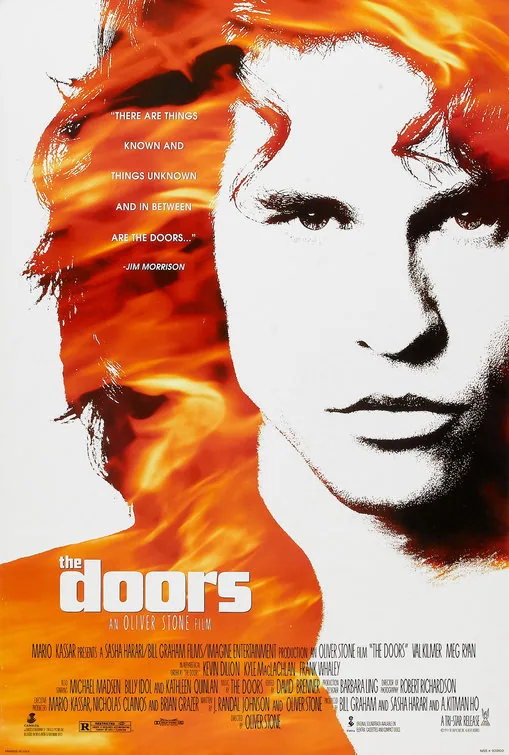
The story follows Jim Morrison from his early creative ambitions through the rise of the Doors and the pressures of becoming a celebrated rock frontman. Concerts, recording sessions, relationships, and public controversy all feed the image Morrison builds and the band must live beside. The film presents performance as both artistic release and a source of escalating excess, asking how a public persona can overtake the people who create it.
Based on recorded story, mood and style. Your preferences can change the order.
Music and performance
Expect melancholic and wry, with measured pacing.
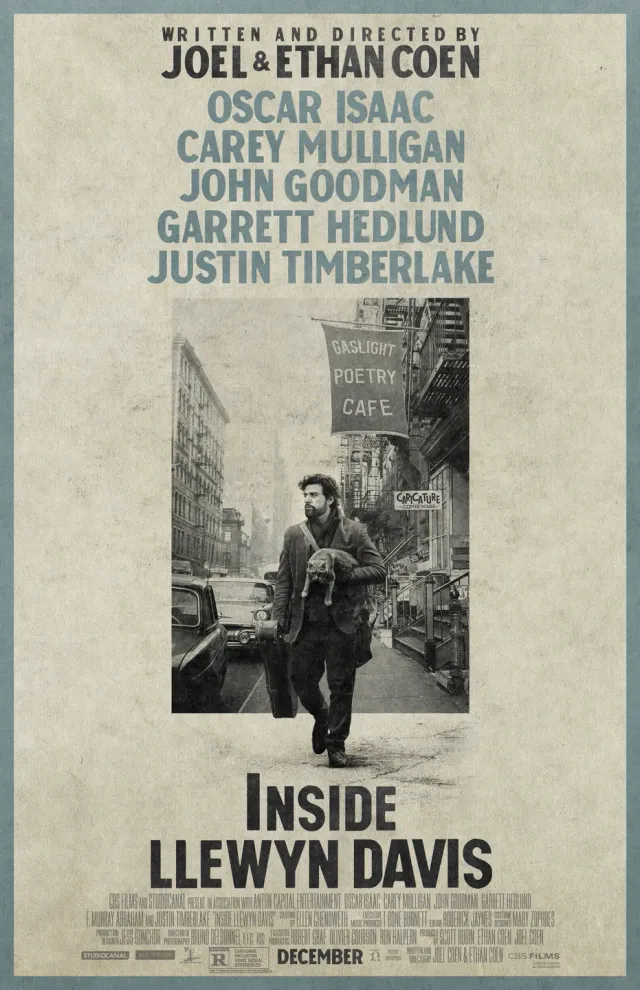
A struggling folk singer moves between borrowed sofas, uncertain gigs and failed professional opportunities in an early-1960s music scene. Small obligations and self-defeating encounters interrupt every attempt to gain momentum. Grief and pride remain difficult for him to articulate, leaving his artistry at odds with the practical and emotional cooperation that a sustainable life might require.
Based on recorded story, mood and style. Your preferences can change the order.
Music and performance
What changes Nashville: episodic, measured and building. Bohemian Rhapsody: steady.
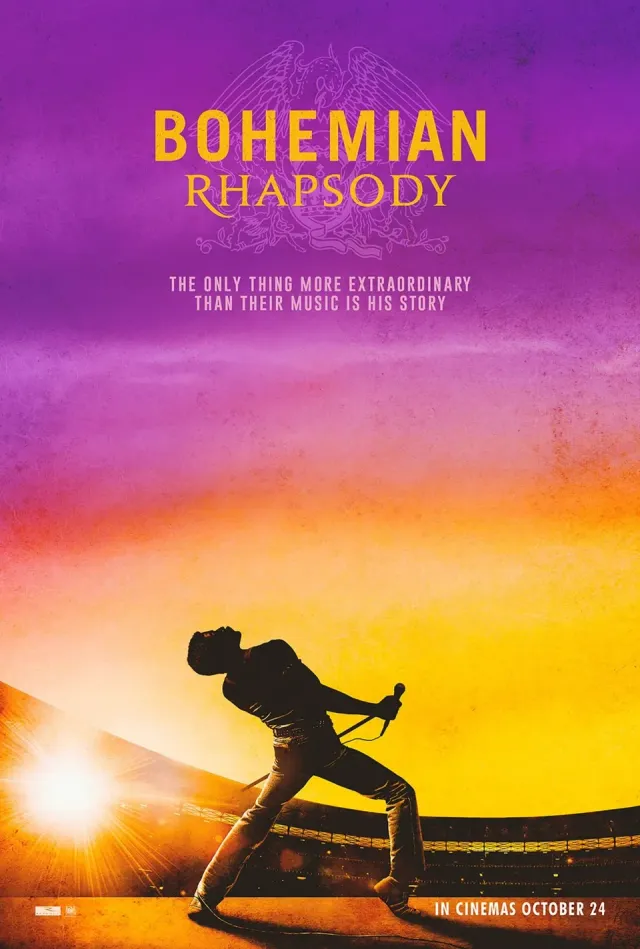
A young singer joins a band whose contrasting members gradually develop a distinctive sound and public identity. Creative ambition and growing fame offer personal reinvention while exposing disagreements about authorship, belonging and the demands of a shared career. As the frontman's private life becomes more difficult to reconcile with the group, a major performance creates an opportunity to recover a sense of connection without erasing the costs that preceded it.
Based on recorded story, mood and style. Your preferences can change the order.
Music and performance
What changes Nashville: episodic, measured and building. Pure Country: a career break leads through songs and old ties and a final public choice.
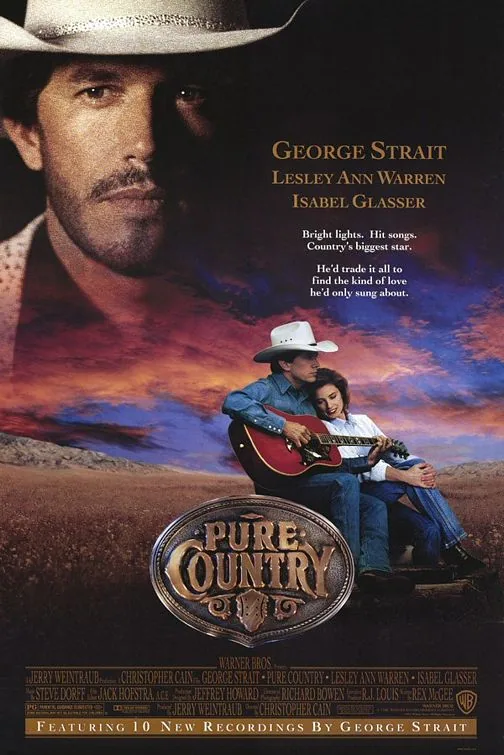
Country star Dusty Chandler feels that his elaborate concert production has overwhelmed the songs he wants people to hear. He leaves his tour without warning and returns incognito to the small Texas town where he grew up, reconnecting with old friends and the quieter country life he left behind. A romance and his manager's attempt to keep the tour running bring his public and private identities into conflict.
Based on recorded story, mood and style. Your preferences can change the order.
Music and performance
What changes Nashville is tagged observational and wry; Crazy Heart is tagged melancholy and intimate.
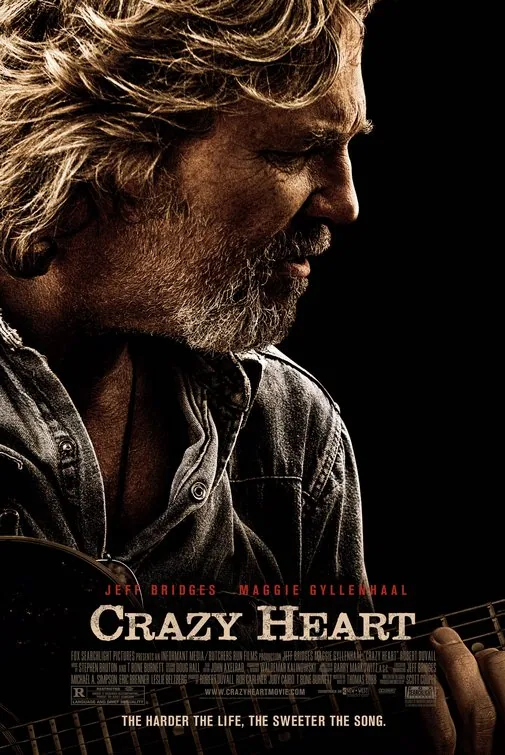
A once-successful country singer performs in modest venues while alcohol and a drifting life erode his work and relationships. A journalist’s interest and a bond with her young son offer a reason to imagine change, but recovery requires choices romance cannot make for him. The drama follows an aging musician through music, regret and accepting responsibility for his future.
Based on recorded story, mood and style. Your preferences can change the order.
Music and performance
What changes Nashville: episodic, measured and building. Dreamgirls: epic.
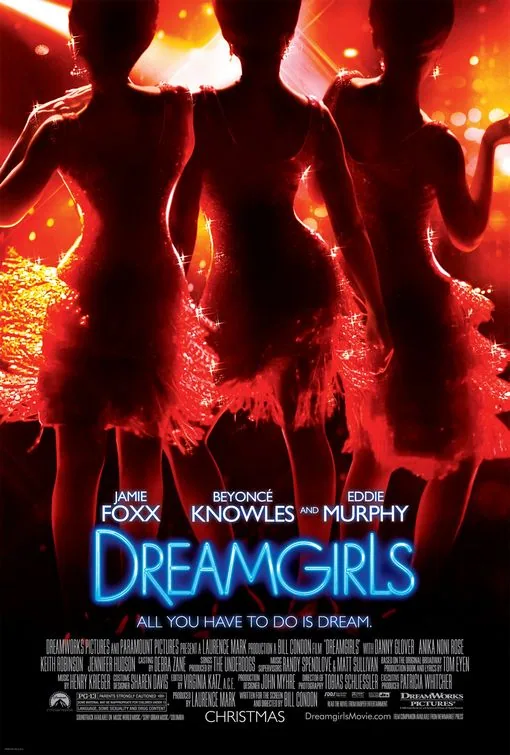
A vocal trio enters the recording business through a manager who can see a route to success in markets structured by racial exclusion. The pursuit of crossover appeal changes the group's sound, public image and distribution of attention, pushing its most distinctive singer out of the center. Romantic dependence and professional control become difficult to separate as different women seek a voice in the work and futures being sold under their names. Effie’s vocal power does not protect her from a business model that increasingly sells another face and sound.
Based on recorded story, mood and style. Your preferences can change the order.
Music and performance
What changes Nashville: episodic, measured and building. Krush Groove: music-led rise with intersecting personal conflicts.
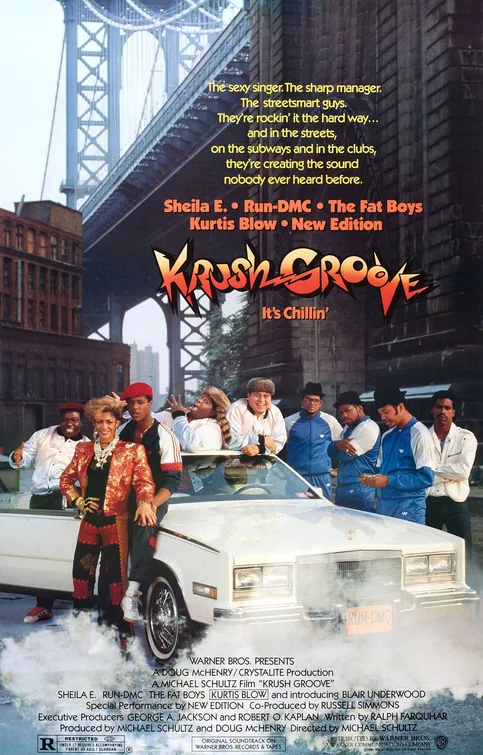
Record producer Russell Walker is building a hip-hop label with a roster that includes Run-D.M.C., Kurtis Blow and other rising performers. When a hit record outpaces the money available to press it, Russell borrows from a street lender while competing with his brother over singer Sheila E. The semi-fictional music story blends performances with the financial and personal pressures around a new label.
Based on recorded story, mood and style. Your preferences can change the order.
Music and performance
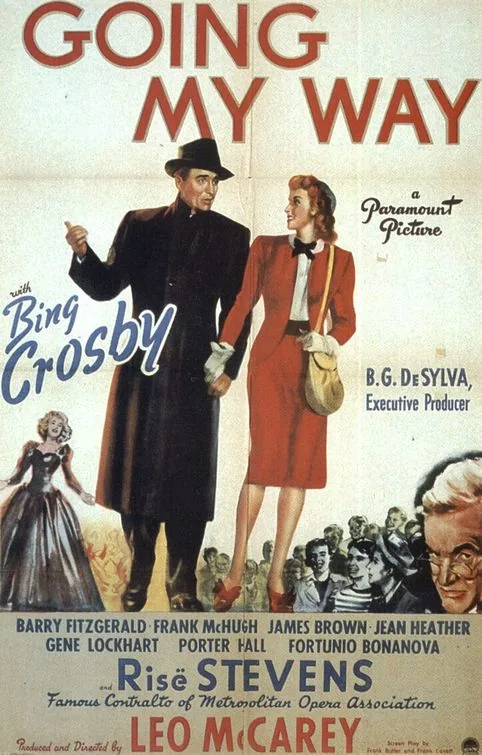
What changes Nashville is tagged observational and wry; Going My Way is tagged warm and sentimental.
A young priest arrives at an indebted New York parish with an informal style that unsettles its aging pastor. Rather than announce the authority he has been given, he works through neighborhood relationships, music and practical help, trying to preserve the older man's dignity while changing how the parish serves people. Everyday encounters gradually make institutional succession a question of care instead of victory. The episodic drama turns songs and modest acts of generosity into resources for sustaining a vulnerable community.
Both share themes of performance and community, plus an observational atmosphere.
Why this matches +
Genres: Documentary / Comedy
Shared film traits
Based on recorded story, mood and style. Your preferences can change the order.
Music and performance
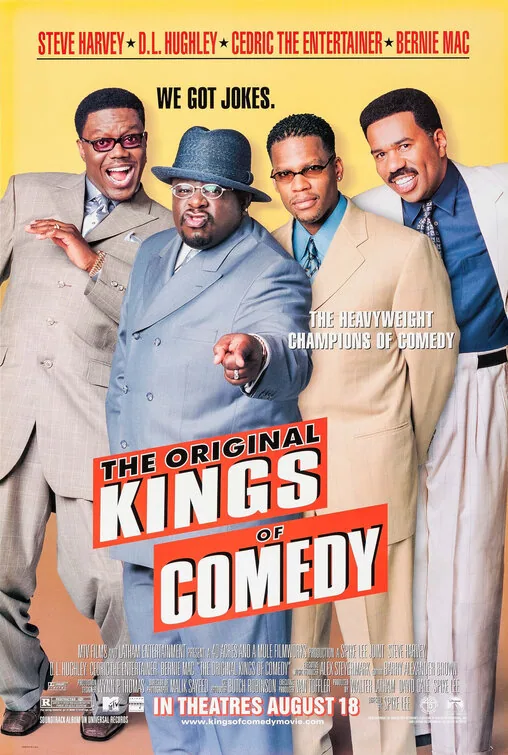
What changes Nashville: episodic, measured and building. The Original Kings of Comedy: set-piece and performance-led.
Spike Lee's concert film follows four comedians as they perform before a live audience during the Kings of Comedy tour. Steve Harvey, D.L. Hughley, Cedric the Entertainer and Bernie Mac each bring a distinct stage persona, using family stories and observations about culture, race and everyday life. The film frames the routines as both individual performances and a shared event, preserving the crowd's response as part of the experience.
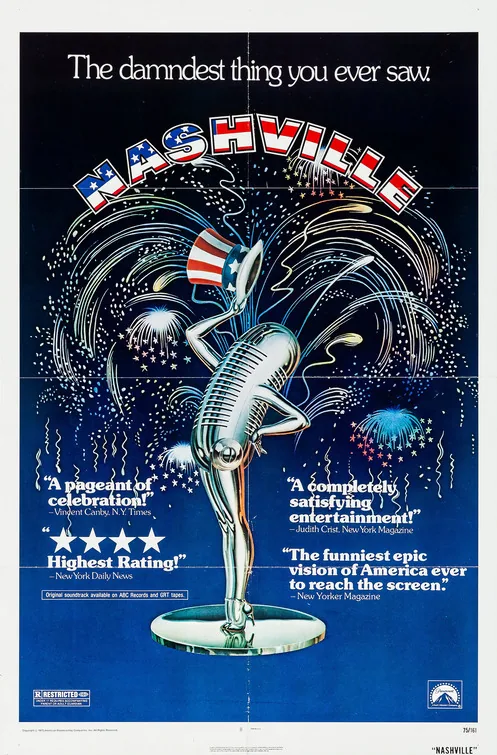
Over several days in Nashville, an ambitious country singer, a gospel performer, a folk trio, fans, managers and local workers move through recording sessions and public appearances as third-party candidate Hal Phillip Walker campaigns nearby. Their paths repeatedly cross without settling into one lead character; the sequence culminates at a rally where music, political spectacle and private tensions converge.
What drives the story
A presidential campaign and a cluster of recording sessions bring many Nashville lives into contact, letting songs and public appearances carry the story between characters.
The people at its centre
Performers, spouses, managers, relatives, fans and workers bargain for attention; fame and intimacy shift across racial, generational and professional lines.
What it feels like
Country and gospel performances sit inside an overlapping ensemble mosaic, then converge at a rally where public spectacle turns abruptly dangerous.
Worth knowing
Unlike a backstage drama centered on one star, the film gives equal weight to political theater, ordinary labor and intersecting private ambitions.