Both centre on professional pursuit and concealed identity.
Why this matches +
Genres: Action / Comedy
Shared film traits
Based on recorded story, mood and style. Your preferences can change the order.
Investigation
What changes Spy is tagged broad and energetic; Argylle is tagged playful and high-gloss.
A reclusive spy novelist discovers that the plots she writes resemble real operations closely enough to attract the attention of people who want her silenced. A real operative insists her imagination contains buried intelligence, pulling her from book tours into a chain of shifting identities and extravagant escapes. The adventure keeps asking where performance ends and self-knowledge begins.
Both centre on concealed identity and communication and trust.
Why this matches +
Genres: Thriller / Political thriller
Shared film traits
Based on recorded story, mood and style. Your preferences can change the order.
Espionage and covert operations · Investigation
What changes Spy: fast, episodic and action-comedy. Torn Curtain: mission-driven and improvisational.
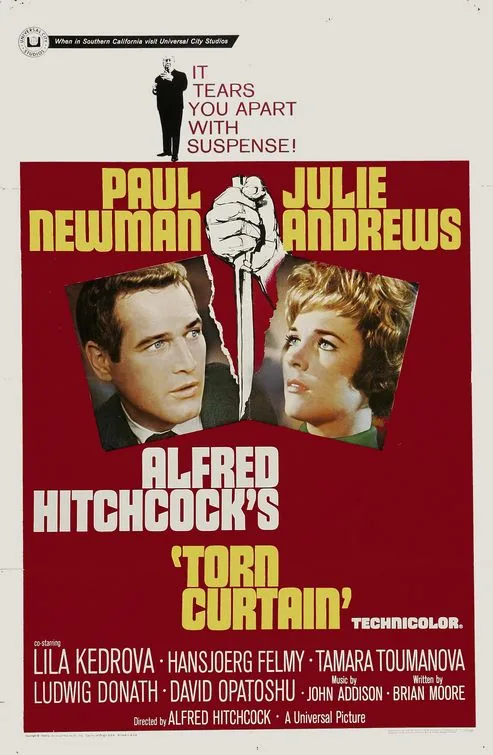
American physicist Michael Armstrong appears to defect to East Germany with his assistant and fiancée Sarah Sherman, but his real purpose is to reach a scientist who may help him solve a crucial technical problem. Once across the border, Michael has to keep his cover from the security services while Sarah discovers that she cannot treat his mission as a private professional decision. Their attempt to leave with the information turns espionage into a chain of hurried improvisations and mistrust. The film’s central suspense comes from how long a convincing lie can survive under scrutiny. Sarah’s decision to accompany Michael shifts from an act of loyalty into a question of whether either can trust the other’s account.
Based on recorded story, mood and style. Your preferences can change the order.
Espionage and covert operations
What changes Spy is tagged broad and energetic; Get Smart is tagged playful and earnest.
A meticulous intelligence analyst gains the field assignment he has wanted when an attack exposes the agency's established operatives. Paired with a more experienced agent who doubts him, he pursues a nuclear threat through mishaps that make his competence difficult to recognize. His knowledge of ordinary human vulnerabilities sometimes proves more useful than conventional espionage swagger. The comedy makes professional aspiration depend on a partnership in which clumsiness and perceptiveness must be judged separately before a compromised institution can be protected.
Both centre on professional pursuit and concealed identity.
Why this matches +
Genres: Action / Comedy
Shared film traits
Based on recorded story, mood and style. Your preferences can change the order.
Espionage and covert operations
What changes Spy is tagged broad and energetic; Agent Cody Banks is tagged humorous and energetic.
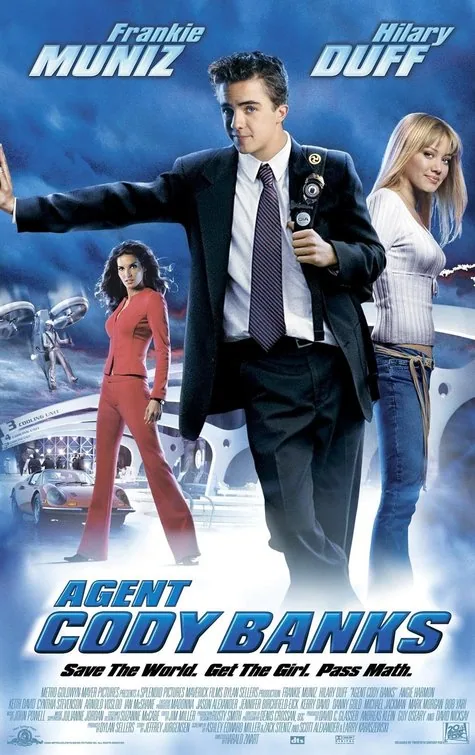
A teenager trained by the CIA receives an assignment to approach a classmate whose scientist father is connected to a dangerous technology. His technical and physical preparation has not taught him how to behave confidently around someone he likes. The mission turns adolescent awkwardness into an operational weakness, requiring him to combine ordinary social risk with the responsibilities and gadgets of a deliberately exaggerated secret-agent fantasy.
Both centre on professional pursuit and communication and trust.
Why this matches +
Genres: Thriller / Action
Shared film traits
Based on recorded story, mood and style. Your preferences can change the order.
What changes Spy: fast, episodic and action-comedy. The 355: action-led and global pursuit.
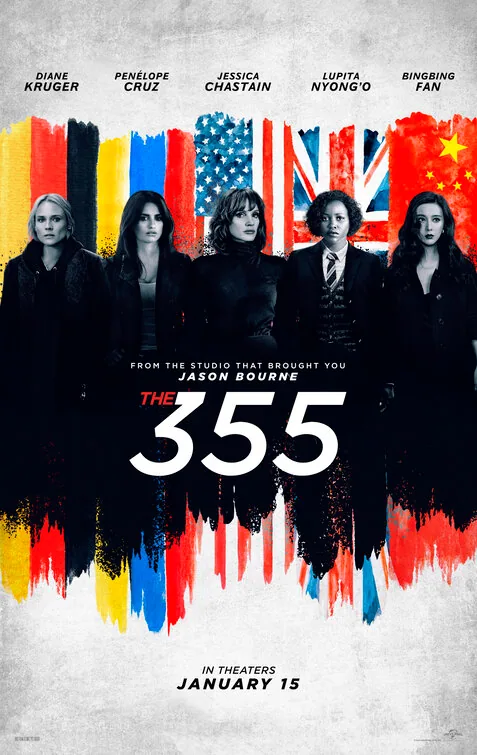
When a classified weapon is stolen, CIA agent Mason Brown forms an uneasy team with a German rival, a former MI6 operative, a Colombian psychologist and a Chinese intelligence agent. The women cross continents to retrieve the device before it can be used, while their cooperation is tested by competing agencies and personal histories. The title references an early American woman spy, and the team must turn scattered expertise into trust under pressure.
Based on recorded story, mood and style. Your preferences can change the order.
Investigation
What changes Spy: fast, episodic and action-comedy. Operation Fortune: Ruse de Guerre: quick mission-based turns.
MI6 agent Orson Fortune is assigned to recover a stolen device known as the Handle before it reaches an arms dealer. He assembles a team that includes a technology specialist and a movie star recruited to get close to their target, turning espionage into a performance as well as an operation. The caper follows international surveillance, shifting alliances and comic clashes between Fortune’s confidence and his team’s improvisation.
Both centre on professional pursuit and concealed identity.
Why this matches +
Genres: Action / Crime
Shared film traits
Based on recorded story, mood and style. Your preferences can change the order.
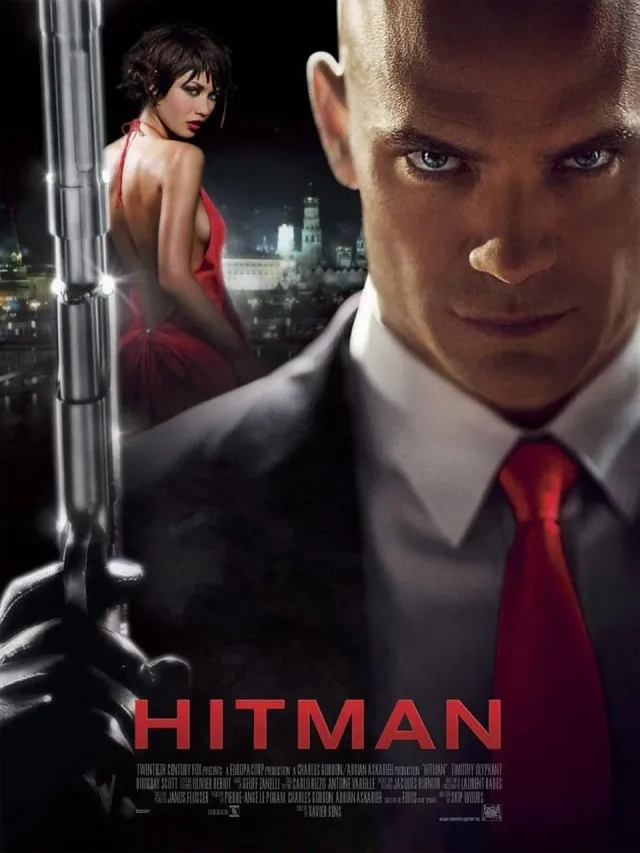
What changes Spy: fast, episodic and action-comedy. Hitman: propulsive and set-piece driven.
An elite assassin known as Agent 47 becomes entangled in a political conspiracy and the target of agencies pursuing him. His training has made him capable but emotionally detached, and an unexpected connection complicates his use of violence. This action thriller adapts a video-game world around disguise, pursuit and engineered identity, emphasizing staged confrontations over ordinary crime drama.
Based on recorded story, mood and style. Your preferences can change the order.
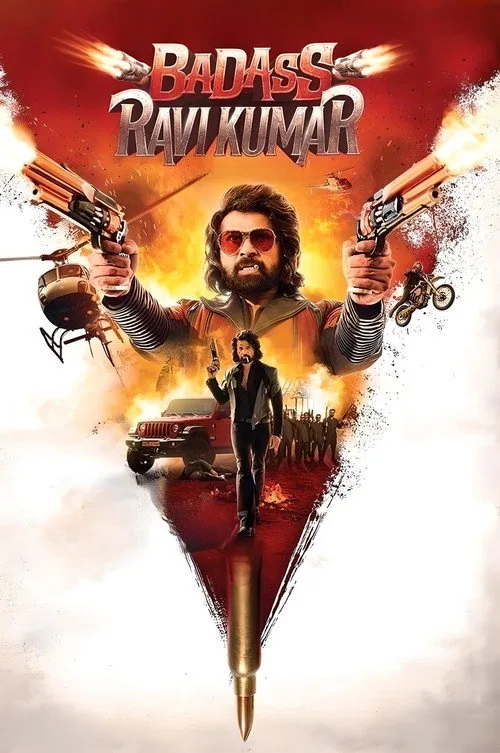
What changes Spy is tagged broad and energetic; Badass Ravi Kumar is tagged boisterous and campy.
In 1989, former Delhi police officer Ravi Kumar is pulled back into service when a secret film reel containing Indian agents' identities and missile codes becomes the prize in a dangerous international chase. A dance-loving crime boss, a deadly intermediary, Interpol, and local police converge as Ravi races to recover the reel. The film turns espionage into a knowingly extravagant action musical, with a maverick hero whose irreverence is as central as his marksmanship.
Based on recorded story, mood and style. Your preferences can change the order.
Investigation
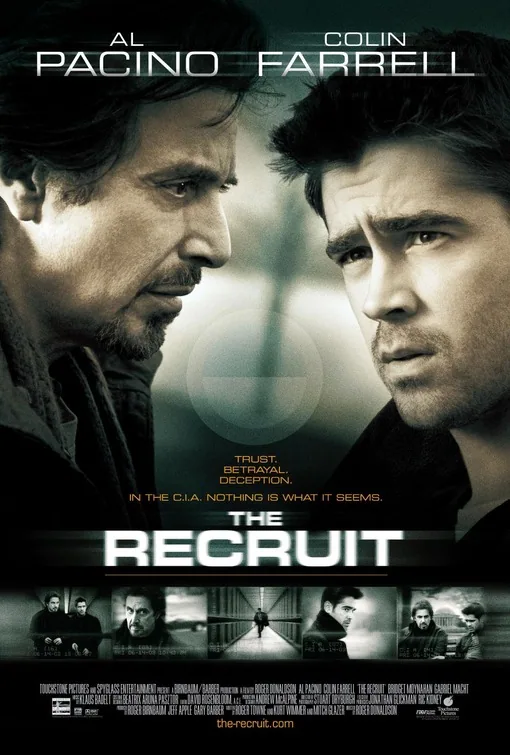
What changes Spy: fast, episodic and action-comedy. The Recruit: measured and escalating.
A gifted young recruit enters the CIA’s training program and comes under a demanding veteran instructor’s wing. As exercises give way to an operation involving a suspected mole, he learns that the agency’s tests and loyalties are harder to read than they first appeared. The thriller builds around tradecraft, manipulation and uncertainty about whether his guides are telling the truth.
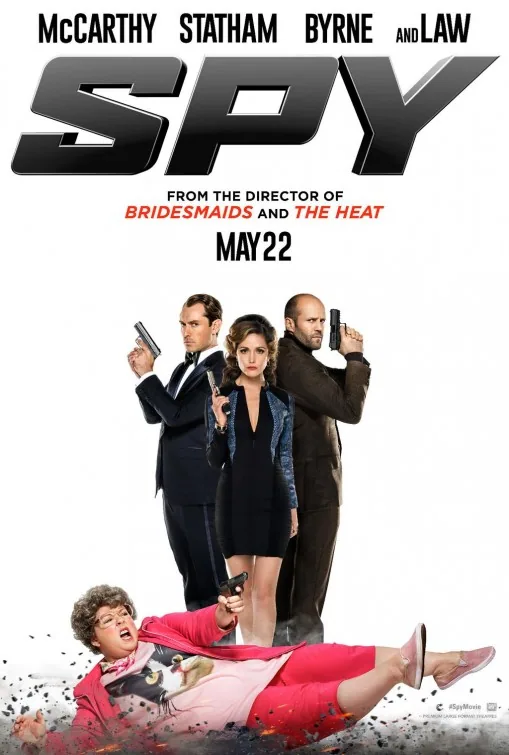
CIA analyst Susan Cooper works remotely with field agent Bradley Fine until a failed operation leaves the agency’s known operatives exposed. Because Rayna, the arms dealer’s daughter, does not know Susan’s identity, Susan volunteers to enter the field. Her first missions take her from Paris to Rome and Budapest, where she must pursue the threat while contending with rogue agent Rick Ford and her own inexperience. The operation’s danger is real, but the film treats status, spy gadgets and action-hero expectations as material for a broad comedy.
What drives the story
Susan’s anonymity is her strategic advantage, but the mission requires her to earn respect from agents who mistake desk work for incompetence.
The people at its centre
Susan’s crush on Fine and her working friendship with Nancy sit beside her professional growth; the story lets competence emerge without turning her into a different person.
What it feels like
The film uses conventional spy locations and action beats as comic setups, puncturing polished field-agent confidence with improvisation and awkward mishaps.
Worth knowing
A good fit for action comedies about an overlooked analyst becoming an effective field agent; it is more affectionate spoof than hard-edged intelligence thriller.
Competencerecognitionloyalty
Mood
Broad · energetic · playful
Pacing
Fast · episodic · action-comedy
Visual style
Glossy spy locations · physical comedy
Storytelling
Undercover pursuit · intelligence leak · mistaken status